Link Copied!
Michel Foucault Quotes (1926-1984)
Philosopher, Writer, Activist












About Michel Foucault
Paul-Michel Doria Foucault (15 October 1926 – 25 June 1984) was a French philosopher, historian of ideas, writer, political activist, literary critic, and Professor of the History of Systems of Thought at the Collège de France from 1970 until his death in 1984. Foucault's theories primarily address the relationship between power and knowledge, and how they are used as a form of social control through societal institutions. He revolutionized the academic study of the history of medicine, sexuality, penality, the liberal state and classical ethics, and contributed to the philosophy of language and aesthetics.
Best Michel Foucault Quotes
Shortest
Earliest
Explore our curated collection of the most famous and impactful Michel Foucault quotes.

“The 'Enlightenment', which discovered the liberties, also invented the disciplines.”
“Is it surprising that prisons resemble factories, schools, barracks, hospitals, which all resemble prisons?”
“In the darkest region of the political field the condemned man represents the symmetrical, inverted figure of the king.”
“The most defenseless tenderness and the bloodiest of powers have a similar need of confession. Western man has become a confessing animal.”
“Absurdity destroys the and of the enumeration by making impossible the in where the things enumerated would be divided up.”
“The disappearance of public executions marks therefore the decline of the spectacle; but it also marks a slackening of the hold on the body.”
“The gesture that divides madness is the constitutive one, not the science that grows up in the calm that returns after the division has been made.”

“In the ceremonies of the public execution, the main character was the people, whose real and immediate presence was required for the performance.”
“Nietzsche was the first to release the desire to know from the sovereignty of knowledge itself: to re-establish the distance and exteriority that Aristotle cancelled.”

“L’important, c’est que le sexe n’ait pas été seulement affaire de sensation et de plaisir, de loi ou d’interdiction, mais aussi de vrai et de faux.”
“It is ugly to be punishable, but there is no glory in punishing. Hence the double system of protection that justice has set up between itself and the punishment it imposes.”

“The public execution is to be understood not only as a judicial, but also as a political ritual. It belongs, even in minor cases, to the ceremonies by which power is manifested.”
“There is no power relation without the correlative constitution of a field of knowledge, nor any knowledge that does not presuppose and constitute at the same time power relations”

“Do not ask who I am and do not ask me to remain the same: leave it to our bureaucrats and our police to see that our papers are in order. At least spare us their morality when we write.”

“This dysfunction of power was related to a central excess: what might be called the monarchical 'super-power', which identified the right to punish with the personal power of the sovereign.”

“We are aware of all the inconveniences of prison, and that it is dangerous when it is not useless. And yet one cannot 'see' how to replace it. It is the detestable solution, which one seems unable to do without.”
“If our intention now is to reveal classical unreason on its own terms, outside of its ties with dreams and error, it must be understood not as a form of reason that is somehow diseased, lost or mad, but quite simply as reason dazzled.”
“Homosexuality appears as one of the forms of sexuality when it was transposed from the practice of sodomy onto a kind of interior androgyny, a hermaphroditism of the soul. The sodomite had been a temporary aberration; the homosexual was now a species.”

“In the old system, the body of the condemned man became the king's property, on which the sovereign left his mark and brought down the effects of his power. Now he will be rather the property of society, the object of a collective and useful appropriation.”

“Not only must people know, they must see with their own eyes. Because they must be made to be afraid; but also because they must be the witnesses, the guarantors, of the punishment, and because they must to a certain extent take part in it. ”

“There is object proof that homosexuality is more interesting than heterosexuality. It's that one knows a considerable number of heterosexuals who would wish to become homosexuals, whereas one knows very few homosexuals who would really like to become heterosexuals.”
“This is the moment when it becomes clear that the images of madness are nothing but dream and error, and that if the unfortunate sufferer who is blinded by them invokes them, it is the better to disappear with them into the annihilation for which they are destined.”
“A real subjection is born mechanically from a fictitious relation. So it is not necessary to use force to constrain the convict to good behavior, the madman to calm, the worker to work, the schoolboy to application, the patient to the observation of the regulations”

“Discipline 'makes' individuals; it is the specific technique of a power that regards individuals both as objects and as instruments of its exercise. It is not a triumphant power...it is a modest, suspicious power, which functions as a calculated, but permanent economy.”
“The man described for us, whom we are invited to free, is already in himself the effect of a subjection much more profound than himself. A 'soul' inhabits him and brings him to existence...the soul is the effect and instrument of political anatomy; the soul is the prison of the body.”

“All these present struggles revolve around the question: Who are we? They are a refusal of these abstractions, of economic and ideological state violence, which ignore who we are individually, and also a refusal of a scientific or administrative inquisition which determines who one is.”

“The problem is not to discover in oneself the truth of one's sex, but, rather, to use one's sexuality henceforth to arrive at a multiplicity of relationships. And, no doubt, homosexuality is not a form of desire but something desirable. Therefore, we have to work at becoming homosexuals.”
“The chief function of the disciplinary power is to 'train', rather than to select and to levy; or, no doubt, to train in order to levy and select all the more. It does not link forces together in order to reduce them; it seeks to bind them together in such a way as to multiply and use them”

“Les discours sont des éléments ou des blocs tactiques dans le champ des rapports de force; il peut y en avoir de différents et même de contradictoires à l'intérieur d'une même stratégie; ils peuvent au contraire circuler sans changer de forme entre des stratégies opposées.”
“I'm very proud that some people think that I'm a danger for the intellectual health of students. When people start thinking of health in intellectual activities, I think there is something wrong. In their opinion I am a dangerous man, since I am a crypto-Marxist, an irrationalist, a nihilist.”

“What all these people are doing is not aggressive; they are inventing new possibilities of pleasure with strange parts of their body — through the eroticization of the body. I think it's ... a creative enterprise, which has as one of its main features what I call the desexualization of pleasure.”

“He who is subjected to a field of visibility, and who knows it, assumes responsibility for the constraints of power; he makes them play spontaneously upon himself; he inscribes in himself the power relation in which he simultaneously plays both roles; he becomes the principle of his own subjection.”
“ Je crois que le pouvoir politique s’exerce encore, s’exerce en outre, de plus, par l’intermédiaire d’un certain nombre d’institutions qui ont l’air comme ça de n’avoir rien de commun avec le pouvoir politique, qui ont l’air d’en être indépendantes et qui ne le sont pas.”
“There has been an inversion in the hierarchy of the two principles of antiquity, “Take care of yourself” and “Know yourself.” In Greco-Roman culture, knowledge of oneself appeared as the consequence of the care of the self. In the modern world, knowledge of oneself constitutes the fundamental principle.”
“To sum up all these steps, each of which is very lengthy and complex, we will have put the game of truth back in the network of constraints and dominations. Truth, I should say rather, the system of truth and falsity, will have revealed the face it turned away from us for so long and which is that of its violence.”

“But what then is this confrontation below the language of reason? Where might this interrogation lead, following not reason in its horizontal becoming, but seeking to retrace in time this constant verticality, which, the length of Western culture, confronts it with what it is not, measuring it with its own extravagance?”
“The guillotine takes life almost without touching the body, just as prison deprives of liberty or a fine reduces wealth. It is intended to apply the law not so to a real body capable of feeling pain as to a juridical subject, the possessor, among other rights, of the right to exist it had to have the abstraction of the law itself.”
“The perfect disciplinary apparatus would make it possible for a single haze to see everything constantly. A central point would be both the source of light illuminating everything, and a locus of convergence for everything that must be known: a perfect eye that nothing would escape and a centre towards which all gazes would be turned.”
“I don't really know what they mean by "intellectuals," all the people who describe, denounce, or scold them. I do know, on the other hand, what I have committed myself to, as an intellectual, which is to say, after all, a cerebro-spinal individual: to having a brain as supple as possible and a spinal column that's as straight as necessary.”
“In its most general form, confinement was explained, or at least justified, by a will to avoid scandal. It thereby signalled an important change in the consciousness of evil. The Renaissance had let unreason in all its forms come out into the light of day, as public exposure gave evil the chance to redeem itself and to serve as an exemplum.”

“We are observing ourselves being observed by the painter, and made visible to his eyes by the same light that enables us to see him. And just as we are about to apprehend ourselves, transcribed by his hand as though in a mirror, we find that we can in fact apprehend nothing of that mirror but its lusterless back. The other side of a psyche.”

“It was an important moment. The old partners of the spectacle of punishment, the body and the blood, gave way. A new character came of the scene, masked. It was the end of a certain kind of tragedy; comedy began, with shadow play, faceless voices, impalpable entities. The apparatus of punitive justice must now bite into this bodiless reality.”
“Exercise is the technique by which one imposes on the body tasks that are both repetitive and different, but always graduated. By bending behavior towards a terminal state, exercise makes possible a perpetual characterization of the individual...It thus assures, in the form of continuity and constraint, a growth, an observation, a qualification.”

“If torture was so strongly embedded in legal practice, it was because it revealed truth and showed the operation of power. It assured the articulation of the written on the oral, the secret on the public, the procedure of investigation on the operation of the confession; it made it possible to reproduce the crime on the visible body of the criminal.”
“A utopia of judicial reticence: take away life, but prevent the patient from feeling it; deprive the prisoner of all rights, but do not inflict pain; impose penalties free of all pain. Recourse to psycho-pharmacology and to various physiological ‘disconnectors’, even if it is temporary, is a logical consequence of this ‘non-corporal’ penalty.”

“The judges of normality are present everywhere. We are in the society of the teacher-judge, the doctor-judge, the educator-judge, the social worker-judge; it is on them that the universal reign of the normative is based; and each individual, wherever he may find himself, subjects to it his body, his gestures, his behavior, his aptitudes, his achievements.”
“This book is intended as a correlative history of the modern soul and of a new power to judge; a genealogy of the present scientifico-legal complex from which the power to punish derives its bases, justifications and rules, from which it extends its effects and by which it extends its effects and by which it masks its exorbitant singularity. ”
“One can say that the author is an ideological product, since we represent him as the opposite of his historically real function. (When a historically given function is represented in a figure that inverts it, one has an ideological production.) The author is therefore the ideological figure by which one marks the manner in which we fear the proliferation of meaning.”
“Il me semble que la tache politique actuelle dans une société comme la notre c’est de critiquer le jeu des institutions apparemment les plus neutres et les plus indépendantes, de les critiquer et les attaquer de telle manière que la violence politique qui s’exerçait obscurément en elles (les institutions) surgissent et qu’on puisse lutter contre elles.”
“My point is not that everything is bad, but that everything is dangerous, which is not exactly the same as bad. If everything is dangerous, then we always have something to do. So my position leads not to apathy but to a hyper- and pessimistic activism. I think that the ethico-political choice we have to make every day is to determine which is the main danger.”
“The political, ethical, social, philosophical problem of our day is not to try to liberate the individual from the state and from the state's institutions but to liberate us both from the state and from the type of individualization which is linked to the state. We have to promote new forms of subjectivity through the refusal of this kind of individuality which has been imposed on us for several centuries.”

“Confession frees, but power reduces one to silence; truth does not belong to the order of power, but shares an original affinity with freedom: traditional themes in philosophy, which a political history of truth would have to overturn by showing that truth is not by nature free--nor error servile--but that its production is thoroughly imbued with relations of power. The confession is an example of this.”
“The critical ontology of ourselves has to be considered not, certainly, as a theory, a doctrine, nor even as a permanent body of knowledge that is accumulating; '''it has to be conceived as an attitude, an ethos, a philosophical life in which the critique of what we are is at one and the same time the historical analysis of the limits that are imposed on us and an experiment with the possibility of going beyond them.”
“Generally speaking, all the authorities exercising individual control function according to a double mode; that of binary division and branding (mad/sane; dangerous/harmless; normal/abnormal); and that of coercive assignment, of differential distribution (who he is; where he must be; how he is to be characterized' how he is to be recognized' how a constant surveillance is to be exercised over him in a individual way, etc.).”
“The constitution of madness as mental illness, at the end of the eighteenth century, bears witness to a rupture in a dialogue, gives the separation as already enacted, and expels from the memory all those imperfect words, of no fixed syntax, spoken falteringly, in which the exchange between madness and reason was carried out. The language of psychiatry, which is a monologue by reason about madness, could only have come into existence in such a silence.”
“In the tragedies of the early seventeenth century, madness too provided the dénouement, but it did so in liberating the truth. It still opened onto language, to a renewed form of speech, that of explanation and of the real regained. The most it could ever be was the penultimate moment of tragedy. Not the closing moment, as in Andromaque, where no truth appears, other than, in Delirium, the truth of a passion that finds its fullest, most perfect expression in madness.”
“[T]ruly to escape Hegel involves an exact appreciation of the price we have to pay to detach ourselves from him. It assumes that we are aware of the extent to which Hegel, insidiously perhaps, is close to us; it implies a knowledge, in that which permits us to think against Hegel, of that which remains Hegelian. We have to determine the extent to which our anti-Hegelianism is possibly one of his tricks directed against us, at the end of which he stands, motionless, waiting for us.”
“I don't feel that it is necessary to know exactly what I am. The main interest in life and work is to become someone else that you were not in the beginning. If you knew when you began a book what you would say at the end, do you think that you would have the courage to write it? What is true for writing and for a love relationship is true also for life. The game is worthwhile insofar as we don't know what will be the end. My field is the history of thought. Man is a thinking being.”

“A great prison structure was planned, whose different levels would correspond exactly to the levels of the centralized administration. The scaffold, where the body of the tortured criminal had been exposed to the ritually manifested force of the sovereign, the punitive theatre in which the representation of punishment was permanently available to the social body, was replaced by a great enclosed, complex and hierarchized structure that was integrated into the very body of the state apparatus.”
“All those movements which took place in the fifteenth and sixteenth centuries and which had the Reformation as their main expression and result should be analyzed as a great crisis of the Western experience of subjectivity and a revolt against the kind of religious and moral power which gave form, during the Middle Ages, to this subjectivity. The need to take a direct part in spiritual life, in the work of salvation, in the truth which lies in the Book—all that was a struggle for a new subjectivity.”
“But a punishment like forced labour or even imprisonment – mere loss of liberty – has never functioned without a certain additional element of punishment that certainly concerns the body itself: rationing of food, sexual deprivation, corporal punishment, solitary confinement ... There remains, therefore, a trace of ‘torture’ in the modern mechanisms of criminal justice – a trace that has not been entirely overcome, but which is enveloped, increasingly, by the non-corporal nature of the penal system”
“At the end of the Middle Ages, leprosy disappeared from the Western world. In the margins of the community, at the gates of cities, there stretched wastelands which sickness had ceased to haunt but had left sterile and long uninhabitable. For centuries, these reaches would belong to the non-human. From the fourteenth to the seventeenth century, they would wait, soliciting with strange incantations a new incarnation of disease, another grimace of terror, renewed rites of purification and exclusion.”
“Recalling all the erroneous things that doctors have been able to say about sex or madness does us a fat lot of good. I think that what is currently politically important is to determine the regime of verediction established at a given moment ... on the basis of which you can now recognize, for example, that doctors in the nineteenth century said so many stupid things about sex. ... It is not so much the history of the true or the history of the false as the history of verediction which has a political significance.”

“The painter is turning his eyes towards us only in so far as we happen to occupy the same position as his subject. We, the spectators, are an additional factor. Though greeted by that gaze, we are also dismissed by it, replaced by that which was always there before we were: the model itself. But, inversely, the painter's gaze, addressed to the void confronting him outside the picture, accepts as many models as there are spectators; in this precise but neutral place, the observer and the observed take part in a ceaseless exchange.”
“Instead of insanity eliminating the crime according to the original meaning of article 64,every crime and even every offense now carries within it, as a legitimate suspicion, but also as a right that may be claimed, the hypothesis of insanity, in any case of anomaly. And the sentence that condemns or acquits is not simply a judgement of guily, a legal decision that lays down punishment; it bears within it an assessment of normality and a technical prescription for a possible normalization Today the judge- magistrate or juror0 certainly does more than 'judge'”
“The appearance in nineteenth-century psychiatry, jurisprudence, and literature of a whole series of discourses on the species and subspecies of homosexuality, inversion, pederasty, and "psychic hermaphroditism" made possible a strong advance of social controls into this area of "perversity"; but it also made possible the formation of a "reverse" discourse: homosexuality began to speak in its own behalf, to demand that its legitimacy or "naturality" be acknowledged, often in the same vocabulary, using the same categories by which it was medically disqualified.”
“But let there be no misunderstanding: it is not that a real man, the object of knowledge, philosophical reflection or technological intervention, has been substituted for the soul, the illusion of theologians. The man described for us, whom we are invited to free, is already in himself the effect of a subjection more profound than himself. A 'soul' inhabits him and brings him to existence, which is itself a factor in the mastery that power exercises over the body. The soul is the effect and instrument of a political anatomy; the soul is the prison of the body.”
“Meaning created links so numerous, so rich and involved that only esoteric knowledge could possibly have the necessary key. Objects became so weighed down with attributes, connections and associations that they lost their own original face. Meaning was no longer read in an immediate perception, and accordingly objects ceased to speak directly: between the knowledge that animated the figures of objects and the forms they were transformed into, a divide began to appear, opening the way for a symbolism more often associated with the world of dreams.”
“The circle of day and night is the law of the classical world: the most restricted but most demanding of the necessities of the world, the most inevitable but the simplest of the legislations of nature.
This was a law that excluded all dialectics and all reconciliation, consequently laying the foundations for the smooth unity of knowledge as well as the uncompromising division of tragic existence. It reigns on a world without darkness, which knows neither effusiveness nor the gentle charms of lyricism. All is waking or dreams, truth or error, the light of being or the nothingness of shadow.”
This was a law that excluded all dialectics and all reconciliation, consequently laying the foundations for the smooth unity of knowledge as well as the uncompromising division of tragic existence. It reigns on a world without darkness, which knows neither effusiveness nor the gentle charms of lyricism. All is waking or dreams, truth or error, the light of being or the nothingness of shadow.”

“There are more ideas on earth than intellectuals imagine. And these ideas are more active, stronger, more resistant, more passionate than "politicians" think. We have to be there at the birth of ideas, the bursting outward of their force: not in books expressing them, but in events manifesting this force, in struggles carried on around ideas, for or against them. Ideas do not rule the world. But it is because the world has ideas (and because it constantly produces them) that it is not passively ruled by those who are its leaders or those who would like to teach it, once and for all, what it must think.”

“It is understandable then that tragic heroes, unlike the baroque characters who had preceded them, could never be mad, and that inversely madness could never take on the tragic value we have known since Nietzsche and Artaud. In the classical epoch, tragic characters and the mad face each other without any possible dialogue or common language, for the one can only pronounce the decisive language of being, where the truth of light and the depths of night meet in a flash, and the other repeats endlessly an indifferent murmur where the empty chatter of the day is cancelled out by the deceptive lies of the shadows.”

“Sometimes, because my position has not been made clear enough, people think I'm a sort of radical anarchist who has an absolute hatred of power. No! What I am trying to do is to approach this extremely important and tangled phenomenon in our society, the exercise of power, with the most reflective, and I would say prudent attitude. Prudent in my analysis, in the moral and theoretical postulates I use: I try to figure out what's at stake. But to question the relations of power in the most scrupulous and attentive manner possible, looking into all the domains of its exercise, that's not the same thing as constructing a mythology of power as the beast of the apocalypse.”
“When I was a student in the 1950s, I read Husserl, Sartre, Merleau-Ponty. When you feel an overwhelming influence, you try to open a window. Paradoxically enough, Heidegger is not very difficult for a Frenchman to understand. When every word is an enigma, you are in a not-too-bad position to understand Heidegger. Being and Time is difficult, but the more recent works are clearer. Nietzsche was a revelation to me. I felt that there was someone quite different from what I had been taught. I read him with a great passion and broke with my life, left my job in the asylum, left France: I had the feeling I had been trapped. Through Nietzsche, I had become a stranger to all that.”
“There is hardly a philosophy which has not invoked something like the will or desire to know, the love of truth, etcetera. But, in truth, very few philosophers—apart, perhaps, from Spinoza and Schopenhauer—have accorded it more than a marginal status; as if there was no need for philosophy to say first of all what the name that it bears actually refers to. As if placing at the head of its discourse the desire to know, which it repeats in its name, was enough to justify its own existence and show—at a stroke—that it is necessary and natural: All men desire to know. Who, then, is not a philosopher, and how could philosophy not be the most necessary thing in the world?”

“The question here is the same as the question I addressed with regard to madness, disease, delinquency and sexuality. In all of these cases, it was not a question of showing how these objects were for a long time hidden before being finally discovered, nor of showing how all these objects are only wicked illusions or ideological products to be dispelled in the light of reason finally having reached its zenith. It was a matter of showing by what conjunctions a whole set of practices—from the moment they become coordinated with a regime of truth—was able to make what does not exist (madness, disease, delinquency, sexuality, etcetera), nonetheless become something.”

“This legible lesson, this ritual recording, must be repeated as often as possible; the punishments must be a school rather than a festival; an ever-open book rather than a ceremony. The duration that makes the punishment effective for the guilty is also useful for the spectators. They must be able to consult at each moment the permanent lexicon of crime and punishment. A secret punishment is a punishment half wasted. Children should be allowed to come to the places where the penalty is being carried out; there they will attend their classes in civics. And grown men will periodically relearn the laws. Let us conceive of places of punishment as a Garden of the Laws that families would visit on Sundays.”
“Water and navigation had that role to play. Locked in the ship from which he could not escape, the madman was handed over to the thousand-armed river, to the sea where all paths cross, and the great uncertainty that surrounds all things. A prisoner in the midst of the ultimate freedom, on the most open road of all, chained solidly to the infinite crossroads. He is the Passenger par excellence, the prisoner of the passage. It is not known where he will land, and when he lands, he knows not whence he came. His truth and his home are the barren wasteland between two lands that can never be his own. [...] One thing is certain: the link between water and madness is deeply rooted in the dream of the Western man.”

“There is little in common between the organised parading of madness in the eighteenth century and the freedom with which madness came to the fore during the Renaissance. The earlier age had found it everywhere, an integral element of each experience, both in images and in real life dangers. During the classical period, it was also on public view, but behind bars. When it manifested itself it was at a carefully controlled distance, under the watchful eye of a reason that denied all kinship with it, and felt quite unthreatened by any hint of resemblance. Madness had become a thing to be observed, no longer the monster within, but an animal moved by strange mechanisms, more beast than man, where all humanity had long since disappeared.”
“The condemned man found himself transformed into a hero by the sheer extend of his widely advertised crimes, and sometimes the affirmation of his belated repentance. Against the law, against the rich, the powerful, the magistrates, the constabulary or the watch, against taxes and their collectors, he appeared to have waged a struggle with which one all too easily identified. The proclamation of these crimes blew up to epic proportions the tiny struggle that passed unperceived in everyday life. If the condemned man was shown to be repentant, accepting the verdict, asking both God and man for forgiveness for his crimes, it was as if he had come through some process of purification: he died, in his own way, like a saint.”

“Beneath the humanization of the penalties, what one finds are all those rules that authorize, or rather demand, 'leniency', as a calculated economy of the powder to punish. But they also provoke a shift in the point of application of this power: it is no longer the body, with the ritual play of excessive pains, spectacular branding in the ritual of the public execution; it is the mind or rather a play of representations and sings circulating discreetly but necessarily and evidently in the minds of all. It is no longer the body, but the soul, said Mably. And we see very clearly what he meant by this term: the correlative of a technique of power. Old 'anatomies' of punishment are abandoned, But have we really entered the age of non-corporal punishment?”
“The public execution, then, has a juridico-political function. It is a ceremonial by which a momentarily injured sovereignty is reconstituted. It restores that sovereignty by manifesting it at its most spectacular. The public execution, however hasty and everyday, belongs to a whole series of great rituals in which power is eclipsed and restored (coronation, entry of the king into a conquered city, the submission of rebellious subjects); over and above the crime that has placed the sovereign in contempt, it deploys before all eyes an invincible force. Its aim is not so much to re-establish a balance as to bring into play, as its extreme point, the dissymmetry between the subject who has dared to violate the law and the all-powerful sovereign who displays his strength.”
“Il y a des moments dans la vie où la question de savoir si on peut penser autrement qu’on ne pense et percevoir autrement qu’on ne voit est indispensable pour continuer à regarder ou à réfléchir… Qu’est-ce donc que la philosophie aujourd’hui… si elle ne consiste pas, au lieu de légitimer ce qu’on sait déjà, à entreprendre de savoir comment et jusqu’où il serait possible de penser autrement ?… L’ « essai »—qu’il faut entendre comme épreuve modificatrice de soi-même dans le jeu de la vérité et non comme appropriation simplificatrice d’autrui à des fins de communication—est le corps vivant de la philosophie, si du moins celle-ci est encore maintenant ce qu’elle était autrefois, c’est-à-dire une « ascèse », un exercice de soi, dans la pensée.”
“In the history of madness, two events signal this change with singular clarity: in 1657, the founding of the Hôpital Général, and the Great Confinement of the poor; and in 1794, the liberation of the mad in chains at Bicêtre. Between these two singular and symmetrical events, something happened, whose ambiguity has perplexed historians of medicine: blind repression in an absolutist regime, according to some, and, according to others, the progressive discovery, by science and philanthropy, of madness in its positive truth. In fact, beneath these reversible meanings, a structure was taking shape, which did not undo that ambiguity but was decisive for it. This structure explains the passage from the medieval and humanist experience of madness to the experience that is our own, which confines madness in mental illness.”

“In France at least, the history of science and thought gives pride of place sciences, sciences of the necessary, all close to philosophy: one can observe in their history the almost uninterrupted emergence of truth and pure reason. The other disciplines, however - those, for example, that concern living beings, languages, or economic facts - are considered too tinged with empirical thought, too exposed to the vagaries of chance or imagery to age old traditions and external events, for it to be supposed that their history could be anything other irregular. At most, they are expected to provide evidence of a state of mind, an intellectual fashion, a mixture of archaism and bold conjecture, of intuition and blindness. But what if empirical knowledge, at a given time and in a given culture, did possess a well defined regularity.”
“The different pieces of evidence did not constitute so many neutral elements, until such time as they could be gathered together into a single body of evidence that would bring the final certainty of guilt. Each piece of evidence aroused a particular degree of abomination. Guilt did not begin when all the evidence was gathered together; piece by piece, it was constituted by each of the elements that made it possible to recognize a guilty person. Thus a semi-proof did not leave the suspect innocent until such time as it was completed; it made him semi-guilty; slight evidence of a serious crime marked someone as slightly criminal. In short, penal demonstration did not obey a dualistic system: true or false; but a principle of continuous gradation; a degree reached in the demonstration already formed a degree of guilt and consequently involved a degree of punishment.”

“The new governmental reason does not deal with what I would call the things in themselves of governmentality, such as individuals, things, wealth, and land. It no longer deals with these things in themselves. It deals with the phenomena of politics, that is to say, interests, which precisely constitute politics and its stakes; it deals with interests, or that respect in which a given individual, thing, wealth, and so on interests other individuals or the collective body of individuals. ... In the new regime, government is basically no longer to be exercised over subjects and other things subjected through these subjects. Government is now to be exercised over what we could call the phenomenal republic of interests. The fundamental question of liberalism is: What is the utility value of government and all actions of government in a society where exchange determines the value of things?”

“Navigation brought man face to face with the uncertainty of destiny, where each is left to himself and every departure might always be the last. The madman on his crazy boat sets sail for the other world, and it is from the other world that he comes when he disembarks. This enforced navigation is both rigorous division and absolute Passage, serving to underline in real and imaginary terms the liminal situation of the mad in medieval society. It was a highly symbolic role, made clear by the mental geography involved, where the madman was confined at the gates of the cities. His exclusion was his confinement, and if he had no prison other than the threshold itself he was still detained at this place of passage. In a highly symbolic position he is placed on the inside of the outside, or vice versa. A posture that is still his today, if we admit that what was once the visible fortress of social order is now the castle of our own consciousness.”

“Well, if identity is only a game, if it is only a procedure to have relations, social and sexual-pleasure relationships that create new friendships, it is useful. But if identity becomes the problem of sexual existence, and if people think that they have to "uncover" their "own identity," and that their own identity has to become the law, the principle, the code of their existence; if the perennial question they ask is "Does this thing conform to my identity?" then, I think, they will turn back to a kind of ethics very close to the old heterosexual virility. If we are asked to relate to the question of identity, it must be an identity to our unique selves. But the relationships we have to have with ourselves are not ones of identity, rather, they must be relationships of differentiation, of creation, of innovation. To be the same is really boring. We must not exclude identity if people find their pleasure through this identity, but we must not think of this identity as an ethical universal rule.”

“Quand j’étudie les mécanismes de pouvoir, j’essaie d’étudier leur spécificité… Je n’admets ni la notion de maîtrise ni l’universalité de la loi. Au contraire, je m’attache à saisir des mécanismes d’exercise effectif de pouvoir ; et je le fais parce que ceux qui sont insérés dans ces relations de pouvoir, qui y sont impliqués peuvent, dans leurs actions, dans leur résistance et leur rébellion, leur échapper, les transformer, bref, ne plus être soumis. Et si je ne dis pas ce qu’il faut faire, ce n’est pas parce que je crois qu’il n’y a rien à faire. Bien au contraire, je pense qu’il y a mille choses à faire, à inventer, à forger par ceux qui, reconnaissant les relations de pouvoir dans lesquelles ils sont impliqués, ont décidé de leur résister ou de leur échapper. De ce point de vue, toute ma recherche repose sur un postulat d’optimisme absolu. Je n’effectue pas mes analyses pour dire : voilà comment sont les choses, vous êtes piégés. Je ne dis ces choses que dans la mesure où je considère que cela permet de les transformer. Tout ce que je fais, je le fais pour que cela serve.”
“We must first rid ourselves of the illusion that penality is above all (if not exclusively) a means of reducing crime and that, in this role, according to the social forms, the political systems or beliefs, it may be severe or lenient, tend towards expiation of obtaining redress, towards the pursuit of individuals or the attribution of collective responsibility. We must analyse rather the ‘concrete systems of punishment’, study them as social phenomena that cannot be accounted for by the juridical structure of society alone, nor by its fundamental ethical choices; we must situate them in their field of operation, in which the punishment of crime is not the sole element; we must show that punitive measures are not simply ‘negative’ mechanisms that make it possible to repress, to prevent, to exclude, to eliminate; but that they are linked to a whole series of positive and useful effects which it is their task to support (and, in this sense,although legal punishment is carried out in order to punish offences, one might say that the definition of offences and their prosecution are carried out in turn in order to maintain the punitive mechanisms and their functions).”
“The pastorate was formed against a sort of intoxication of religious behavior, examples of which are found throughout the Middle East in the second, third, and fourth centuries, and to which certain Gnostic sects in particular bear striking and indisputable testimony. In at least some of these Gnostic sects, in fact, the identification of matter with evil, and as absolute evil, obviously entailed certain consequences. This might be, for example, a kind of vertigo or enchantment provoked by a sort of unlimited asceticism that could lead to suicide: freeing oneself from matter as quickly as possible. There is also the idea, the theme, of destroying matter through the exhaustion of the evils it contains, of committing every possible sin, going to the very end of the domain of evil opened up by matter, and thus destroying matter. Let us sin, then, and sin to infinity. There is also the theme of the nullification of the world of the law, to destroy which one must first destroy the law, that is to say, break every law. One must respond to every law established by the world, or by the powers of the world, by violating it, systematically breaking the law and in effect, overthrowing the reign of the one who created the world.”

“From the knowledge of that fatal necessity that reduces man to dust we pass to a contemptuous contemplation of the nothingness that is life itself. The fear before the absolute limit of death becomes interiorised in a continual process of ironisation. Fear was disarmed in advance, made derisory by being tamed and rendered banal, and constantly paraded in the spectacle of life. Suddenly, it was there to be discerned in the mannerisms, failings and vices of normal people. Death as the destruction of all things no longer had meaning when life was revealed to be a fatuous sequence of empty words, the hollow jingle of a jester's cap and bells. The death's head showed itself to be a vessel already empty, for madness was the being-already-there of death. Death's conquered presence, sketched out in these everyday signs, showed not only that its reign had already begun, but also that its prize was a meagre one. Death unmasked the mask of life, and nothing more: to show the skull beneath the skin it had no need to remove beauty or truth, but merely to remove the plaster or the tawdry clothes. The carnival mask and the cadaver share the same fixed smile. But the laugh of madness is an anticipation of the rictus grin of death, and the fool, that harbinger of the macabre, draws death's sting.”

“To say that madness is dazzlement is to say that the madman sees the day, the same day that rational men see, as both live in the same light, but that when looking at that very light, nothing else and nothing in it, he sees it as nothing but emptiness, night and nothingness. Darkness for him is another way of seeing the day. Which means that in looking at the night and the nothingness of the night, he does not see at all. And that in the belief that he sees, he allows the fantasies of his imagination and the people of his nights to come to him as realities. For that reason, delirium and dazzlement exist in a relation that is the essence of madness, just as truth and clarity, in their fundamental relation, are constitutive of classical reason.
In that sense, the Cartesian progression of doubt is clearly the great exorcism of madness. Descartes closes his eyes and ears the better to see the true light of the essential day, thereby ensuring that he will not suffer the dazzlement of the mad, who open their eyes and only see night, and not seeing at all, believe that they see things when they imagine them. In the uniform clarity of his closed senses, Descartes has broken with all possible fascination, and if he sees, he knows he really sees what he is seeing. Whereas in the madman's gaze, drunk on the light that is night, images rise up and multiply, beyond any possible self-criticism, since the madman sees them, but irremediably separated from being, since the madman sees nothing.
Unreason is to reason as dazzlement is to daylight.”

“Par pouvoir… je n’entends pas un système général de domination exercée par un élément ou un groupe sur un autre, et dont les effets, par dérivations successives, traversaient le corps social tout entier… il me semble qu’il faut comprendre d’abord la multiplicité de rapports de force qui sont immanents au domaine où ils s’exercent, et sont constitutifs de leur organisation ; le jeu qui par voie de luttes et d’affrontements incessants les transforme, les renforce, les inverse ; les appuis que ces rapports de force trouvent les uns dans les autres, de manière à former chaîne ou système, ou, au contraire, les décalages, les contradictions qui les isolent les uns des autres ; les stratégies enfin dans lesquelles ils prennent effet, et dont le dessin général ou la cristallisation institutionnelle prennent corps dans les appareils étatiques, dans la formulation de la loi, dans les hégémonies sociales. La condition de possibilité du pouvoir… il ne fait pas la chercher dans l’existence première d’un point central, dans un foyer unique de souveraineté d’où rayonneraient des formes dérivées et descendantes ; induisent sans cesse, par leur inégalité, des états de pouvoir, mais toujours locaux et instables. Omniprésence du pouvoir : non point parce qu’il aurait le privilège de tout regrouper sous son invincible unité, mais parce qu’il se produit à chaque instant, en tout point, ou plutôt dans toute relation d’un point à un autre. Le pouvoir est partout ; ce n’est pas qu’il englobe tout, c’est qu’il vient de partout.”
“There can be no doubt that the existence of public tortures and executions were connected with something quite other than this internal organization. Rusche and Kirchheimer are right to see it as the effect of a system of production in which labour power, and therefore the human body, has neither the utility nor the commercial value that are conferred on them in an economy of an industrial type. Moreover, this ‘contempt’ for the body is certainly related to a general attitude to death; and, in such an attitude, one can detect not only the values proper to Christianity, but a demographical, in a sense biological, situation: the ravages of disease and hunger, the periodic massacres of the epidemics, the formidable child mortality rate, the precariousness of the bio-economic balances – all this made death familiar and gave rise to rituals intended to integrate it, to make it acceptable and to give a meaning to its permanent aggression. But in analysing why the public executions survived for so long, one must also refer to the historical conjuncture; it must not be forgotten that the ordinance of 1670 that regulated criminal justice almost up to the Revolution had even increased in certain respects the rigour of the old edicts; Pussort, who, among the commissioners entrusted with the task of drawing up the documents, represented the intentions of the king, was responsible for this, despite the views of such magistrates as Lamoignon; the number of uprisings at the very height of the classical age, the rumbling close at hand of civil war, the king's desire to assert his power at the expense of the parlements go a long way to explain the survival of so severe a penal system.”
“This, then, is how one must imagine the punitive city. At the crossroads, in the gardens, at the side of roads being repaired or bridges built, in workshops open to all, in the depths of mines that may be visited, will be hundreds of tiny theatres of punishment. Each crime will have its law; each criminal his punishment. It will be a visible punishment, a punishment that tells all, that explains, justifies itself, convicts: placards, different-coloured caps bearing inscriptions, posters, symbols, texts read or printed, tirelessly repeat the code. Scenery, perspectives, optical effects, trompe-l'œil sometimes magnify the scene, making it more fearful than it is, but also clearer. From where the public is sitting, it is possible to believe in the existence of certain cruelties which, in fact, do not take place. But the essential point, in all these real or magnified severities, is that they should all, according to a strict economy, teach a lesson: that each punishment should be a fable. And that, in counterpoint with all the direct examples of virtue, one may at each moment encounter, as a living spectacle, the misfortunes of vice. Around each of these moral ‘representations’, schoolchildren will gather with their masters and adults will learn what lessons to teach their offspring. The great terrifying ritual of the public execution gives way, day after day, street after street, to this serious theatre, with its multifarious and persuasive scenes. And popular memory will reproduce in rumour the austere discourse of the law. But perhaps it will be necessary, above these innumerable spectacles and narratives, to place the major sign of punishment for the most terrible of crimes: the keystone of the penal edifice.”
“It proved necessary, therefore, to control these illicit practices and introduce new legislation to cover them. The offenses had to be properly defined and more surely punished; out of this mass of irregularities, sometimes tolerated and sometimes punished with a severity out of all proportion to the offense, one had to determine what was an intolerable offense, and the offenders had to be apprehended and punished. With the new forms of capital accumulation, new relations of production and the new legal status of property, all the popular practices that belonged, either in a silent, everyday, tolerated form, or in a violent form, to the illegality of rights were reduced by force to an illegality of property. In that movement which transformed a society of juridico-political levies into a society of the appropriation of the means and products of labour, theft tended to become the first of the great loopholes in legality. Or, to put it another way, the economy of illegalities was restructured with the development of capitalist society. The illegality of property was separated from the illegality of rights. This distinction represents a class opposition because, on the one hand, the illegality that was to be most accessible to the lower classes was that of property – the violent transfer of ownership – and because, on the other, the bourgeoisie was to reserve to itself the illegality of rights: the possibility of getting round its own regulations and its own laws, of ensuring for itself an immense sector of economic circulation by a skillful manipulation of gaps in the law – gaps that were foreseen by its silences, or opened up by de facto tolerance. And this great redistribution of illegalities was even to be expressed through a specialization of the legal circuits: for illegalities of property – for theft – there were the ordinary courts and punishments; for the illegalities of rights – fraud, tax evasion, irregular commercial operations – special legal institutions applied with transactions, accommodations, reduced fines, etc. The bourgeoisie reserved to itself the fruitful domain of the illegality of rights. And at the same time as this split was taking place, there emerged the need for a constant policing concerned essentially with this illegality of property. It became necessary to get rid of the old economy of the power to punish, based on the principles of the confused and inadequate multiplicity of authorities, the distribution and concentration of the power correlative with actual inertia and inevitable tolerance, punishments that were spectacular in their manifestations and haphazard in their application. It became necessary to define a strategy and techniques of punishment in which an economy of continuity and permanence would replace that of expenditure and excess. In short, penal reform was born at the point of junction between the struggle against the super-power of the sovereign and that against the infra-power of acquired and tolerated illegalities.”
“Today, criminal justice functions and justifies itself only by this perpetual reference to something other than itself, by this unceasing reinscription in non-juridical systems.
"Our society is one not of spectacle, but of surveillance; under the surface of images, one invests bodies in depth; behind the great abstraction of exchange there continues the meticulous, concrete training of useful forces; the circuits of communication are the supports of an accumulation and centralization of knowledge; the play of signs defines the anchorage of power; it is not that the beautiful totality of the individual is amputated, repressed, altered by our social order, it is rather that the individual is carefully fabricated in it, according to a whole technique of forces and bodies" (217)."Antiquity had been a civilization of spectacle. 'To render accessible to a multitude of men the inspection of a small number of objects': this was the problem to which the architecture of temples, theatres and circuses responded. With spectacle, there was a predominance of public life, the intensity of festivals, sensual proximity. In these rituals in which blood flowed, society found new vigour and formed for a moment a single great body. The modern age poses the opposite problem: 'To procure for a small number, or even for a single individual, the instantaneous view of the multitude.' In a society in which the principle elements are no longer the community and public life, but, on the one hand, private individuals and, on the other, the state, relations can be regulated only in a form that is the exact reverse of spectacle" (216). "The discipline of the workshop, while remaining a way of enforcing respect for the regulations and authorities, of preventing thefts or losses, tends to increase aptitudes, speeds, output and therefore profits; it still exerts a moral influence over behaviour, but more and more it treats actions in terms of their results, introduces bodies into a machinery, forces into economy ... The disciplines function increasingly as techniques in making useful individuals. Hence [the degenerate's or poor's] emergence from a marginal position on the confines of society, and detachment from the forms of exclusion or expiation, confinement or retreat ... They become attached to some of the great essential functions: factory production, the transmission of knowledge, the diffusion of aptitudes and skills, the war-machine" (210-211).
"But the peculiarity of the disciplines [elements of Panopticism] is that they try to define in relation to the multiplicities a tactics of power that fulfils three criteria: firstly, to obtain the exercise of power at the lowest possible cost (economically, by the low expenditure it involves; politically, by its discretion, its low exteriorization, its relative invisibility, the little resistance it arouses); secondly, to bring the effects of this social power to their maximum intensity and to extend them as far as possible, without either failure or interval; thirdly, to link this 'economic' growth of power with the output of the apparatuses (educational, military, industrial or medical) within which it is exercised; in short, to increase both the docility and the utility of all elements of the system" (218).
"If the economic take-off of the West began with the techniques that made possible the accumulation of capital, it might perhaps be said that the methods for administering the accumulation of men made possible a political take-off in relation to the traditional, ritual, costly, violent forms of power [i.e. torture, public executions, corporal punishment, etc. of the middle ages], which soon fell into disuse and were superseded by a subtle, calculated technology of subjection. In fact, the two processes - the accumulation of men and the accumulation of capital - cannot be separated; it would not be possible to solve the problem of the accumulation of men without the growth of an apparatus of production capable of both sustaining them and using them; conversely, the techniques that made the cumulative multiplicity of men useful accelerated the accumulation of capital ... The growth of the capitalist economy gave rise to the specific modality of disciplinary power, whose general formulas, techniques of submitting forces and bodies, in short, 'political anatomy', could be operated in the most diverse political régimes, apparatuses or institutions" (220-221).”
Michel Foucault Quotes by Topic
Find exactly what you are looking for by browsing this categorized list of Michel Foucault quotes by topic.
Michel Foucault on Anti-psychiatry 8 quotes
“But when the madman laughs, he already laughs with the laugh of death; the lunatic, anticipating the macabre, has disarmed it.”
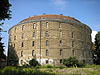
Michel Foucault on Power 6 quotes
“Power is everywhere ... because it comes from everywhere.”
Michel Foucault on State 2 quotes
“I don't think that we should consider the "modern state" as an entity which was developed above individuals, ignoring what they are and even their very existence, but, on the contrary, as a very sophisticated structure, in which individuals can be integrated, under one condition: that this individuality would be shaped in a new form and submitted to a set of very specific patterns.”
Michel Foucault on Prison
“Is it surprising that prisons resemble factories, schools, barracks, hospitals, which all resemble prisons?”
What Michel Foucault Said About Others
Discover personal opinions Michel Foucault shared regarding contemporaries.
Michel Foucault on René Descartes 2 quotes
“Descartes, I think, broke with this when he said, "To accede to truth, it suffices that I be any subject that can see what is evident." Evidence is substituted for ascesis at the point where the relationship to the self intersects the relationship to others and the world. The relationship to the self no longer needs to be ascetic to get into relation to the truth. It suffices that the relationship to the self reveals to me the obvious truth of what I see for me to apprehend the truth definitively. Thus, I can be immoral and know the truth. I believe this is an idea that, more or less explicitly, was rejected by all previous culture. Before Descartes, one could not be impure, immoral, and know the truth. With Descartes, direct evidence is enough. After Descartes, we have a nonascetic subject of knowledge. This change makes possible the institutionalization of modern science.”

Michel Foucault on Friedrich Nietzsche
“Nietzsche was the first to release the desire to know from the sovereignty of knowledge itself: to re-establish the distance and exteriority that Aristotle cancelled.”

Michel Foucault on Jean-Paul Sartre
“The Critique de la raison dialectique is a nineteenth-century man's magnificent and pathetic attempt to think the twentieth century. In that sense, Sartre is the last Hegelian and, I would even say, the last Marxist.”

Michel Foucault on John Maynard Keynes
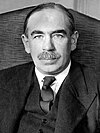
“We can say that around Keynes, around the economic interventionist policy perfected between 1930 and 1960, immediately before and after the war, all these interventions have brought about what we can call a crisis of liberalism, and this crisis manifests itself in a number of re-evaluations, re-appraisals, and new projects in the art of government which were formulated immediately before and after the war in Germany, and which are presently being formulated in America.”
Michel Foucault on Immanuel Kant
“I am obviously schematizing a very long history, which is, however, fundamental. After Descartes, we have a subject of knowledge which poses for Kant the problem of knowing the relationship between the subject of ethics and that of knowledge. There was much debate in the Enlightenment as to whether these two subjects were completely different or not. Kant's solution was to find a universal subject that, to the extent it was universal, could be the subject of knowledge, but which demanded, nonetheless, an ethical attitude-precisely the relationship to the self which Kant proposes in The Critique of Practical Reason.”

Quotes About Michel Foucault
Gain deeper perspective through quotes about Michel Foucault from others.
Gary Becker on Michel Foucault
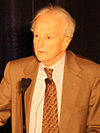
“Foucault has a very good discussion of what the theory of crime—modern economic theory of crime and punishment—has to say. I didn't have much to disagree with him. I think he was accurate on what it has to say. He goes also into a theory of formation of laws, which I had a lot of sympathy with as well.”
Ronald Beiner on Michel Foucault
“The hope may be entertained that some practitioner of the "sociology of knowledge" will one day have an interesting story to tell about -why the work of Michel Foucault generated such wide enthusiasm among certain intellectual elites for several decades in the latter half of the twentieth century. One or two hypotheses of my own may be hazarded. What is interesting about Foucault's unique rhetoric is that he steadfastly resists pronouncing explicit moral-political judgments, yet of course he is judging all the time. Foucault refuses to come clean on his normative commitments, but rather "insinuates" them throughout his work. This constitutes a kind of radical-left positivism that is somehow potently attractive to what I will call the hyper-liberal ethos of late modernity. The idea here is that one must avoid at all costs spelling out a normative vision, since it would ineluctably become the ground for a repressive regime of "normalization." This is clearly connected to the negativism one associates with postmodern writers.”
Peter Brown on Michel Foucault 2 quotes
“At a crucial moment in my own work, I was fortunate to have had the opportunity to take heart from the humbling serenity and unaffected craftsmanship of Michel Foucault, in what I was not to know were his last years.”
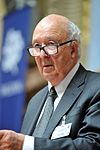
Christopher Bray on Michel Foucault
“And now his own history has been written. What does one learn from these books? Chiefly that Foucault's relativistic outlook can be applied to Foucault himself. He used to say that the 19th century was to Marxism what water is to a fish. Increasingly his own work makes sense only when seen as a product of the Sixties. Not that Foucault would have denied this. He never suggested that he wasn't an interested being too. But one should ask of a body of philosophical work that it has a longer shelf life than a couple of decades. Nine years after his death his achievements, such as they are, are so much historical jetsam, their final worth little more than sweet Foucault.”
Andrew Breitbart on Michel Foucault
“I wanted to read Mark Twain and Emerson and Thoreau, and I remember moments in class where I thought my head was going to explode, going, What the fuck are these people talking about? I don't understand what this deconstructive semiotic bullshit is. Who the fuck is Michel Foucault?”





About Michel Foucault
Paul-Michel Doria Foucault (15 October 1926 – 25 June 1984) was a French philosopher, historian of ideas, writer, political activist, literary critic, and Professor of the History of Systems of Thought at the Collège de France from 1970 until his death in 1984. Foucault's theories primarily address the relationship between power and knowledge, and how they are used as a form of social control through societal institutions. He revolutionized the academic study of the history of medicine, sexuality, penality, the liberal state and classical ethics, and contributed to the philosophy of language and aesthetics.