Link Copied!
Michel de Montaigne Quotes (1533-1592)
Writer, Inventor









































About Michel de Montaigne
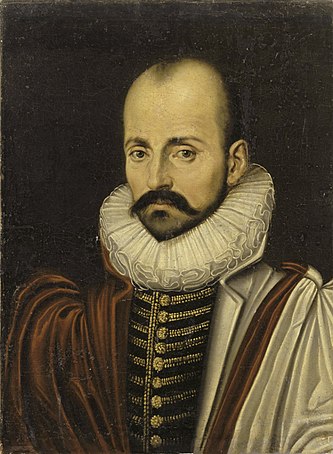
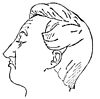
Michel de Montaigne (Michel Eyquem, lord of the manor of Montaigne, Dordogne) (28 February 1533 – 13 September 1592) was an influential French Renaissance writer, generally considered to be the inventor of the personal essay.
Best Michel de Montaigne Quotes
Shortest
Earliest
Explore our curated collection of the most famous and impactful Michel de Montaigne quotes.




“Every rich man is avaricious, in my opinion.”

“Observe, observe perpetually.”
“Death, they say, acquits us of all obligations.”


Michel de Montaigne Quotes by Topic
Find exactly what you are looking for by browsing this categorized list of Michel de Montaigne quotes by topic.
Michel de Montaigne on Comparisons 3 quotes
View all 3 quotes on Comparisons →Michel de Montaigne on Words 3 quotes
View all 3 quotes on Words →Michel de Montaigne on Belief 2 quotes
View all 2 quotes on Belief →Michel de Montaigne on Love 2 quotes
View all 2 quotes on Love →Michel de Montaigne on Nonsense 2 quotes
“No one is exempt from talking nonsense; the misfortune is to do it solemnly.”

Michel de Montaigne on Ignorance 2 quotes
“All wisdom is folly that does not accommodate itself to the common ignorance.”
Michel de Montaigne on Opinion 2 quotes
“Even opinion is of force enough to make itself to be espoused at the expense of life.”
Michel de Montaigne on Cannibalism 2 quotes
“The Cannibals and savage people do not so much offend me with roasting and eating of dead bodies, as those which torment and persecute the living.”

Michel de Montaigne on Cannibalism in literature 2 quotes
“The Cannibals and savage people do not so much offend me with roasting and eating of dead bodies, as those which torment and persecute the living.”

Michel de Montaigne on Growth 2 quotes
“Arts and sciences are not cast in a mould, but are found and perfected by degrees, by often handling and polishing, as bears leisurely lick their cubs into shape.”

What Michel de Montaigne Said About Others
Discover personal opinions Michel de Montaigne shared regarding contemporaries.
Michel de Montaigne on Plutarch 3 quotes
“My very own Plutarch – so perfect, so outstanding a judge of human actions.”

Michel de Montaigne on Homer 3 quotes
“Besides, what renown can be compared with his? Nothing lives like his fame and his works on the lips of men... Homer provides a noble farce in which over the centuries Kings, Republics and Emperors all play their parts and for which this great universe serves as the theatre.”
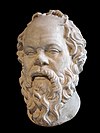
Michel de Montaigne on Socrates 2 quotes
“There is nothing more remarkable in the life of Socrates than that he found time in his old age to learn to dance and play on instruments, and thought it was time well spent.”
Michel de Montaigne on Mother Nature
“Let us a little permit Nature to take her own way; she better understands her own affairs than we.”

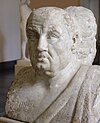
Michel de Montaigne on Seneca the Younger
“Seneca's virtue shows forth so live and vigorous in his writings, and the defense is so clear there against some of these imputations, as that of his wealth and excessive spending, that I would not believe any testimony to the contrary.”
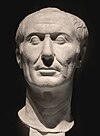
Michel de Montaigne on Julius Caesar
“In his campaigns I find more restraint and reflection than in those of Alexander, who seems to go looking for dangers and charging at them like a rushing torrent which indiscriminately batters and unselectively attacks anything it meets.”
Michel de Montaigne on Horace
“Horace is not satisfied with some superficial vividness; that would betray his sense; he sees further and more clearly into his subject: to describe itself his mind goes fishing and ferreting through the whole treasure-house of words and figures of speech; as his concepts surpass the ordinary, it is not ordinary words that he needs.”
Michel de Montaigne on Cicero
“But to confess the truth boldly (for once you have crossed over the barriers of impudence there is no more curb), his way of writing, and every other similar way, seems to me boring. For his prefaces, definitions, partitions, etymologies, consume the greater part of his work; what life and marrow there is, is smothered by his long-winded preparations. If I have spent an hour in reading him, which is a lot for me, and I remember what juice and substance I have derived, most of the time I find nothing but wind; for he has not yet come to the arguments that serve his purpose and the reasons that properly touch on the crux, which I am looking for.”

Quotes About Michel de Montaigne
Gain deeper perspective through quotes about Michel de Montaigne from others.
Mortimer Adler on Michel de Montaigne
“Montaigne speaks of an “Abecedarian” ignorance that precedes knowledge, and a doctoral ignorance that comes after it. The first is the ignorance of those who, not knowing their A-B-C’s, cannot read at all. The second is the ignorance of those who have misread many books.”

Sarah Bakewell on Michel de Montaigne 3 quotes
“From now on, Montaigne would live for himself rather than for duty.”

Ambrose Bierce on Michel de Montaigne
“The most offensive egotist is he that fears to say "I" and "me." "It will probably rain "—that is dogmatic. "I think it will rain"—that is natural and modest. Montaigne is the most delightful of essayists because so great is his humility that he does not think it important that we see not Montaigne. He so forgets himself that he employs no artifice to make us forget him.”

R. Warwick Bond on Michel de Montaigne
“Montaigne is one of those perennial sources of mental health to which there needs no excuse for returning. He is always necessary and always being rediscovered.”
Elias Canetti on Michel de Montaigne

Peter Farb on Michel de Montaigne
“Europeans had often thought that somewhere in the world must dwell a noble race, remnants of that golden age before man became corrupted by civilization. As reports of Indians filtered back to Europe... Michelle de Montaigne took the trouble to talk with explorers, to read the traveler's chronicles, and even to meet three Indians who had been brought as curiosities to the Court of Versailles. He concluded that the Noble Savage has at last been found, for the Indian "hath... no name of magistrate, nor of politics... no contracts... no apparel but natural... The very words that import a lie, falsehood, treason, covetousness, envy, detraction, were not heard among them." Montaigne presented an idealized notion about the aborigines ...that foreshadowed the Noble Savage of Jean Jacques Rousseau.”
William Carew Hazlitt on Michel de Montaigne 2 quotes
“This great French writer deserves to be regarded as a classic, not only in the land of his birth, but in all countries and in all literatures. His Essays, which are at once the most celebrated and the most permanent of his productions, form a magazine out of which such minds as those of Bacon and Shakespeare did not disdain to help themselves; and, indeed, as Hallam observes, the Frenchman’s literary importance largely results from the share which his mind had in influencing other minds, coeval and subsequent. But, at the same time, estimating the value and rank of the essayist, we are not to leave out of the account the drawbacks and the circumstances of the period: the imperfect state of education, the comparative scarcity of books, and the limited opportunities of intellectual intercourse. Montaigne freely borrowed of others, and he has found men willing to borrow of him as freely. We need not wonder at the reputation which he with seeming facility achieved. He was, without being aware of it, the leader of a new school in letters and morals. His book was different from all others which were at that date in the world. It diverted the ancient currents of thought into new channels. It told its readers, with unexampled frankness, what its writer’s opinion was about men and things, and threw what must have been a strange kind of new light on many matters but darkly understood. Above all, the essayist uncased himself, and made his intellectual and physical organism public property. He took the world into his confidence on all subjects. His essays were a sort of literary anatomy, where we get a diagnosis of the writer’s mind, made by himself at different levels and under a large variety of operating influences”
C. S. Lewis on Michel de Montaigne
“Mr. Sensible learned only catchwords from them. He could talk like Epicurus of spare diet, but he was a glutton. He had from Montaigne the language of friendship, but no friend.”

Maurice Merleau-Ponty on Michel de Montaigne
“Montaigne [puts] not self-satisfied understanding but a consciousness astonished at itself at the core of human existence.”

Blaise Pascal on Michel de Montaigne
“The manner in which Epictetus, Montaigne, and Salomon de Tultie wrote, is the most usual, the most suggestive, the most remembered, and the oftener quoted; because it is entirely composed of thoughts born from the common talk of life.”

Gore Vidal on Michel de Montaigne

Curtis White on Michel de Montaigne
“What the earliest utopians — Montaigne, Thomas More, Tommaso Campanella — understood was that they fought not for a place but for a new set of ideas through which to recognize what would count as Real: Equality, not hierarchical authority. Individual dignity, not slavish subservience. Our preeminent problem is that we recognize the Real in what is most deadly: a culture of duty to legalities that are, finally, cruel and destructive. We need to work inventively — as Christ did, as Thoreau did — in the spirit of disobedience for the purpose of refusing the social order into which we happen to have been born and putting in its place a culture of life-giving things.”

About Michel de Montaigne
Michel de Montaigne (Michel Eyquem, lord of the manor of Montaigne, Dordogne) (28 February 1533 – 13 September 1592) was an influential French Renaissance writer, generally considered to be the inventor of the personal essay.