Link Copied!
Michael Servetus Quotes (1511-1553)
Theologian
About Michael Servetus
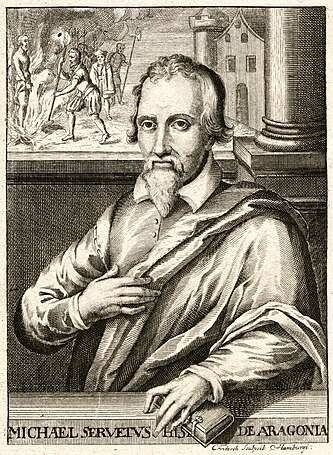
Michael Servetus (29 September 1511 – 27 October 1553) was a Spanish theologian, physician, cartographer, and humanist, renowned in the history of several of these fields, particularly medicine and theology. He participated in the Protestant Reformation, and later developed a nontrinitarian Christology. Condemned by Catholics and Protestants alike, he was arrested in Geneva and burnt at the stake as a heretic by order of the Protestant Geneva governing council.
Best Michael Servetus Quotes
Shortest
Earliest
Explore our curated collection of the most famous and impactful Michael Servetus quotes.
“Poor people always lose in struggles.”
“Michael Servetus, alone, but trusting in Christ’s most sure protection.”

“I have seen with my own eyes how the pope was carried on the shoulders of the princes, with all the pomp, being adored in the streets by the surrounding people.”
“Inherent of human condition is the sickness of believing the rest are impostors and heathen, and not ourselves, because nobody recognizes his own mistakes … If one must condemn everyone that misses in a particular point then every mortal would have to be burnt a thousand times. The apostles and Luther himself have been mistaken … If I have taken the word, by any reason, it has been because I think it is grave to kill men, under the pretext that they are mistaken on the interpretation of some point, for we know that even the chosen ones are not exempt from sometimes being wrong.”
Michael Servetus Quotes by Topic
Find exactly what you are looking for by browsing this categorized list of Michael Servetus quotes by topic.
Michael Servetus on Poverty
“Poor people always lose in struggles.”
Quotes About Michael Servetus
Gain deeper perspective through quotes about Michael Servetus from others.
Sebastian Castellio on Michael Servetus
Sebastian Franck on Michael Servetus
“The Spaniard, Servetus, contends in his tract that there is but one person in God. The Roman church holds that there are three persons in one essence. I agree rather with the Spaniard.”
M. Hillar on Michael Servetus 2 quotes
“Servetus’s death was the turning point in the ideology and mentality dominating since the fourth century.”
Inscription on a monument on Michael Servetus
“Michel Servet[us], . . . geographer, physician, physiologist, contributed to the welfare of humanity by his scientific discoveries, his devotion to the sick and the poor, and the indomitable independence of his intelligence and his conscience … His convictions were invincible. He made a sacrifice of his life for the cause of the truth.”
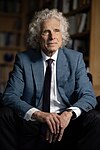
Steven Pinker on Michael Servetus
“By sanctifying cruelty, early Christianity set a precedent for more than a millennium of systematic torture in Christian Europe. If you understand the expressions to burn at the stake, to hold his feet to the fire, to break a butterfly on the wheel, to be racked with pain, to be drawn and quartered, to disembowel, to flay, to press, the thumbscrew, the garrote, a slow burn, and the iron maiden (a hollow hinged statue lined with nails, later taken as the name of a heavy-metal rock band), you are familiar with a fraction of the ways that heretics were brutalized during the Middle Ages and early modern period. During the Spanish Inquisition, church officials concluded that the conversions of thousands of former Jews didn’t take. To compel the conversos to confess their hidden apostasy, the inquisitors tied their arms behind their backs, hoisted them by their wrists, and dropped them in a series of violent jerks, rupturing their tendons and pulling their arms out of their sockets. Many others were burned alive, a fate that also befell Michael Servetus for questioning the trinity, Giordano Bruno for believing (among other things) that the earth went around the sun, and William Tyndale for translating the Bible into English. Galileo, perhaps the most famous victim of the Inquisition, got off easy: he was only shown the instruments of torture (in particular, the rack) and was given the opportunity to recant for “having held and believed that the sun is the center of the world and immovable, and that the earth is not the center and moves.””
About Michael Servetus
Michael Servetus (29 September 1511 – 27 October 1553) was a Spanish theologian, physician, cartographer, and humanist, renowned in the history of several of these fields, particularly medicine and theology. He participated in the Protestant Reformation, and later developed a nontrinitarian Christology. Condemned by Catholics and Protestants alike, he was arrested in Geneva and burnt at the stake as a heretic by order of the Protestant Geneva governing council.