Link Copied!
Max Tegmark Quotes (1967-)
Physicist, Director

About Max Tegmark
Max Tegmark (born May 5, 1967) is a Swedish-American physicist, cosmologist and machine learning researcher. He is a professor at the Massachusetts Institute of Technology and the scientific director of the Foundational Questions Institute. He is also a co-founder of the Future of Life Institute and a supporter of the effective altruism movement, and has received research grants from Elon Musk to investigate existential risk from advanced artificial intelligence.
Best Max Tegmark Quotes
Shortest
Earliest
Explore our curated collection of the most famous and impactful Max Tegmark quotes.
“I believe that consciousness is the way information feels when being processed.”

“There's no better guarantee of failure than convincing yourself that success is impossible...”

“[W]e've repeatedly underestimated not only the size of our cosmos, but also the power of our human mind to understand it.”
“... I would rather have questions that I can't answer than answers that I can't question. (variation of a remark by Richard Feynman)”
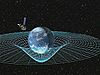
“We're all born with curiosity, but at some point, school usually manages to knock that out of us. ...[M]y main responsibility as a teacher isn't to convey facts, but to rekindle that lost enthusiasm for asking questions.”
“But I’ve suddenly changed my mind and turned more optimistic about our cosmic significance. Why? Because I’ve come to believe that advanced evolved life is very rare, yet has huge future potential, making our place in space and time remarkably significant.”


“My favorite movie of all time is... Life of Brian. We really should try and reenact this epic skit, "What have the Romans ever done for us?" by saying "What has physics ever done for us? ...But ...besides ...the internet and transistors, what has physics ever done for us?"”
“So with each advance in understanding come new questions. So we need to be very humble. We shouldn't have hubris and think that we can understand everything. But history tells us that there is good reason to believe that we will continue making fantastic progress in the years ahead.”

“My guess is that we’ll one day understand consciousness as yet another phase of matter. I’d expect there to be many types of consciousness just as there are many types of liquids, but in both cases, they share certain characteristic traits that we can aim to understand.”
“Some ancients speculated that the stars were small holes in a black sphere through which distant light shone through. ...Giordano Bruno suggested that they were... like our Sun, just much farther away, perhaps with their own planets and civilizations... the Catholic Church had him burned at the stake in 1600.”
“It depends... on what you measure outrageousness in... If what you mean is that something is more extravagant if it... involves somehow having more particles, or reality being bigger... then sure. But... maybe the kind of simplicity that we should value with Occam's razor is rather that the math is simple. The equations are simple.”
“[W]hat I had been missing... and what Feynman realized: physics is the ultimate intellectual adventure, the quest to understand the deepest mysteries of our Universe. ...[I]t makes us see more clearly, adding to the beauty and wonder of the world ...[T]he lens of physics adds more beauty to the world ...”
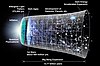
“We don't know for sure that the Schrödinger equation is actually that accurate a description of nature either. That's why it's so exciting to see what's going to happen with the quantum computer efforts... Will they ultimately fail because physics isn't fully described by the Schrödinger equation, or will they actually succeed... This is where ultimately our experimental friends will... give us crucial insights...”
“If there’s a singularity, would the resulting AI, or AIs, feel conscious and self-aware? Would they have an internal reality? If not, they’re for all practical purposes zombies. Of all traits that our human form of life has, I feel that consciousness is by far the most remarkable. As far as I’m concerned, it’s how our Universe gets meaning, so if our Universe gets taken over by life that lacks this trait, then it’s meaningless and just a huge waste of space.”

“(…) no spectator is needed, because your consciousness basically is your reality model. I think that consciousness is the way information feels when being processed in certain complex ways. Since the different parts of your brain interact with each other, different parts of your reality model can interact with each other, so the model of you can interact with your model of the outside world, giving rise to the subjective sensation of the former perceiving the latter.”
“Eratosthenes... knew that the Sun was straight overhead in... Syene at noon on the summer solstice, but that it was 7.2 degrees south of straight overhead in Alexandria, located 794 kilometers farther north. He concluded... 794 kilometers corresponded to 7.2 degrees out of the 360 degrees... around Earth's circumference, so that the circumference must be... 39,700 km...”
“(…) the bottom line is that if you believe in an external reality independent of humans, then you must also believe that our physical reality is a mathematical structure. Nothing else has a baggage-free description. In other words, we all live in a gigantic mathematical object—one that’s more elaborate than a dodecahedron, and probably also more complex than objects with intimidating names such as Calabi-Yau manifolds, tensor bundles and Hilbert spaces, which appear in today’s most advanced physics theories. Everything in our world is purely mathematical—including you.”
“Let’s instead define life very broadly, simply as a process that can retain its complexity and replicate. What’s replicated isn’t matter (made of atoms) but information (made of bits) specifying how the atoms are arranged. When a bacterium makes a copy of its DNA, no new atoms are created, but a new set of atoms are arranged in the same pattern as the original, thereby copying the information. In other words, we can think of life as a self-replicating information-processing system whose information (software) determines both its behavior and the blueprints for its hardware.”
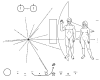
“What is real? Is there more to reality than meets the eye? Yes! was Plato’s answer over two millennia ago. In his famous cave analogy, he likened us to people who’d lived their entire lives shackled in a cave, facing a blank wall, watching the shadows cast by things passing behind them, and eventually coming to mistakenly believe that these shadows were the full reality. Plato argued that what we humans call our everyday reality is similarly just a limited and distorted representation of the true reality, and that we must free ourselves from our mental shackles to begin comprehending it.”
Max Tegmark Quotes by Topic
Find exactly what you are looking for by browsing this categorized list of Max Tegmark quotes by topic.
Max Tegmark on Theory of everything 4 quotes
“The true mathematical structure isomorphic to our world, if it exists, has not been found.”

Max Tegmark on Entropy (thermodynamics)
“Why is entropy at the beginning of time so low, and the entropy in a black hole so high? ...We ...don't know that the entropy was low ...We don't even know if there was a beginning of time. ...[E]ntropy ...is the physicist's measure of how messy things are, so my room ...tends to get higher and higher entropy, messier and messier. Why... eggs fall on the floor and break, and not... fly up and unbreak? People argued about that for a very long time until the shocking insight... that it was very low 13.4 billion years ago at the time when those... baby pictures of our universe were given off... the cosmic microwave background. ...So somehow, our flow of time towards greater messiness has something to do with our origin of our universe? That... we have learned. ...But now the question of why was that is something where many of my colleagues disagree violently... I have written a paper... which... has very little support... anyway, ...if you take seriously the idea of inflation and also this theory that the wave function does not collapse, according to Hugh Everett, you can do some math and get an explanation... but... it's a wonderful mystery, and I'm open to all ideas... and black holes... is something else we know very little... ultimately where there are great truths yet to be discovered.”

Max Tegmark on Scientific revolution
“By analyzing the measurements of Tycho Brahe, Johannes Kepler established that planetary motions weren't circles but ellipses... Through his telescopes, Galileo saw that the Sun had its perfection tarnished by ugly black spots. And the Moon wasn't a perfect sphere but looked like a place, complete with mountains and giant craters. So why didn't it fall down? Isaac Newton finally answered... by exploring... [a radical] idea... that heavenly objects obey the same laws as objects here on Earth. ...Newton ...realized that ...the fate of a horizontally fired cannon ball depends on its speed: it crashes to the ground only if its speed is below some magic value. ...[W]ith ever higher speeds, they'll travel farther ...before landing ...until ...they keep their height over the ground ...constant and never land, merely orbiting ...just like the Moon! Since he knew the strength of gravity near the Earth's surface... he was able to calculate the magic speed... 7.9 kilometers per second. Assuming the Moon... was obeying the same laws... he could similarly predict what speed it needed... Moreover, since the Moon took one month to travel around a circle whose circumference Aristarchos had figured out, Newton already knew its speed... Now he made a remarkable discovery: if he assumed that the force of gravity weakened like the inverse square... then this magical speed that would give the Moon a circular orbit exactly matched its measured speed! He had discovered the law of gravity... applying not merely here on Earth, but in the heavens as well. ...People boldly extrapolated not only to the macrocosmos... but also to the microcosmos, finding that many properties... could be explained by applying Newton's laws of motion to... atoms... The scientific revolution had begun.”

What Max Tegmark Said About Others
Discover personal opinions Max Tegmark shared regarding contemporaries.
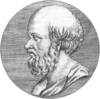
Max Tegmark on Eratosthenes
“Eratosthenes... knew that the Sun was straight overhead in... Syene at noon on the summer solstice, but that it was 7.2 degrees south of straight overhead in Alexandria, located 794 kilometers farther north. He concluded... 794 kilometers corresponded to 7.2 degrees out of the 360 degrees... around Earth's circumference, so that the circumference must be 794 km x 360°/7.2°≈39,700 km... remarkably close to the modern value of 40,000 km. Amusingly Christopher Columbus totally bungled this... confusing Arabic miles with Italian miles...”
Max Tegmark on Christopher Columbus
“Eratosthenes... knew that the Sun was straight overhead in... Syene at noon on the summer solstice, but that it was 7.2 degrees south of straight overhead in Alexandria, located 794 kilometers farther north. He concluded... 794 kilometers corresponded to 7.2 degrees out of the 360 degrees... around Earth's circumference, so that the circumference must be 794 km x 360°/7.2°≈39,700 km... remarkably close to the modern value of 40,000 km. Amusingly Christopher Columbus totally bungled this... confusing Arabic miles with Italian miles, concluding that he needed to sail only 3,700 km... when the true value was 19,600 km.”

Max Tegmark on Julian Barbour
“[T]ime is not an illusion, but the flow of time is. So is change. In spacetime, the future exists and the past doesn't disappear. When we combine Einstein's classical spacetime with quantum mechanics, we get quantum parallel universes... This means there are many pasts and futures that are all real—but this in no way diminishes the unchanging mathematical nature of the full physical reality. ...[A]lthough this idea of an unchanging reality is venerable and dates back to Einstein, it remains controversial... with scientists I greatly respect expressing a spectrum of views. ...Julian Barbour argues in his book The End of Time not only that change is illusory, but that one can even describe physical reality without introducing the time concept at all.”
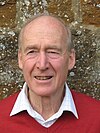
Max Tegmark on Isaac Newton
“By analyzing the measurements of Tycho Brahe, Johannes Kepler established that planetary motions weren't circles but ellipses... Through his telescopes, Galileo saw that the Sun had its perfection tarnished by ugly black spots. And the Moon wasn't a perfect sphere but looked like a place, complete with mountains and giant craters. So why didn't it fall down? Isaac Newton finally answered... by exploring... [a radical] idea... that heavenly objects obey the same laws as objects here on Earth. ...Newton ...realized that ...the fate of a horizontally fired cannon ball depends on its speed: it crashes to the ground only if its speed is below some magic value. ...[W]ith ever higher speeds, they'll travel farther ...before landing ...until ...they keep their height over the ground ...constant and never land, merely orbiting ...just like the Moon! Since he knew the strength of gravity near the Earth's surface... he was able to calculate the magic speed... 7.9 kilometers per second. Assuming the Moon... was obeying the same laws... he could similarly predict what speed it needed... Moreover, since the Moon took one month to travel around a circle whose circumference Aristarchos had figured out, Newton already knew its speed... Now he made a remarkable discovery: if he assumed that the force of gravity weakened like the inverse square... then this magical speed that would give the Moon a circular orbit exactly matched its measured speed! He had discovered the law of gravity... applying not merely here on Earth, but in the heavens as well. ...People boldly extrapolated not only to the macrocosmos... but also to the microcosmos, finding that many properties... could be explained by applying Newton's laws of motion to... atoms... The scientific revolution had begun.”

Quotes About Max Tegmark
Gain deeper perspective through quotes about Max Tegmark from others.
Peter Woit on Max Tegmark
“Tegmark’s career is a rather unusual story, mixing reputable science with an increasingly strong taste for grandiose nonsense. In this book he indulges his inner crank, describing in detail an utterly empty vision of the "ultimate nature of reality." What's perhaps most remarkable about the book is the respectful reception it seems to be getting... Before publishing his first paper, he changed his name from Shapiro to Tegmark (his mother’s name), figuring that there were too many Shapiros in physics for him to get attention... A very odd aspect of this whole story is that while Tegmark's big claim is that Math=Physics, he seems to have little actual interest in mathematics and what it really is as an intellectual subject. ...[W]hile "mathematical structures" are invoked in the book as the basis of everything, there's little to no discussion of the mathematical structures that modern mathematicians find interesting (although the idea of "symmetries" gets a mention). ...Perhaps the explanation of all this is somehow Freudian, since Tegmark’s father is the mathematician Harold Shapiro.”
About Max Tegmark
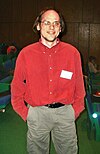
Max Tegmark (born May 5, 1967) is a Swedish-American physicist, cosmologist and machine learning researcher. He is a professor at the Massachusetts Institute of Technology and the scientific director of the Foundational Questions Institute. He is also a co-founder of the Future of Life Institute and a supporter of the effective altruism movement, and has received research grants from Elon Musk to investigate existential risk from advanced artificial intelligence.