Link Copied!
Mary McLeod Bethune Quotes (1875-1955)
President, Activist, Leader
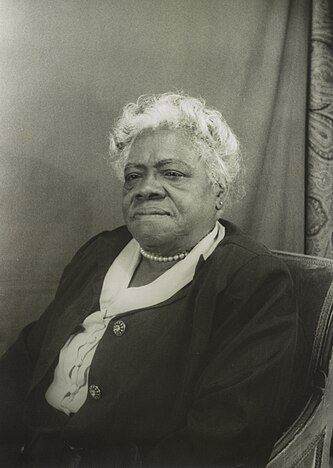
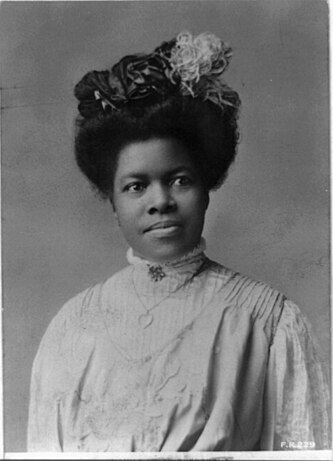


About Mary McLeod Bethune
Mary McLeod Bethune (née McLeod; July 10, 1875 – May 18, 1955) was an educator, philanthropist, humanitarian, womanist, and civil rights activist who lived in the USA. Bethune founded the National Council of Negro Women in 1935, established the organization's flagship journal Aframerican Women's Journal, and presided as president or leader for a myriad of African American women's organizations including the National Association for Colored Women and the National Youth Administration's Negro Division
Best Mary McLeod Bethune Quotes
Shortest
Earliest
Explore our curated collection of the most famous and impactful Mary McLeod Bethune quotes.
“She exerts a unifying influence that is the miracle of the century.”
“To Frederick Douglass is credited the plea that, "the Negro be not judged by the heights to which he is risen, but by the depths from which he has climbed." Judged on that basis, the Negro woman embodies one of the modern miracles of the New World.”
“In time of war as in time of peace, the Negro woman has ever been ready to serve for her people's and the nation's good. During the recent World War she pleaded to go in the uniform of the Red Cross nurse and was denied the opportunity only on the basis of racial distinction.”

“Negro women have made outstanding contributions in the arts. Meta V. W. Fuller and May Howard Jackson are significant figures in Fine Arts development. Angelina Grimke, Georgia Douglass Johnson and Alice Dunbar Nelson are poets of note. Jessie Fausett has become famous as a novelist. In the field of Music Anita Patti Brown, Lillian Evanti, Elizabeth Greenfield, Florence Cole-Talbert, Marion Anderson and Marie Selika stand out pre-eminently.”
“When the ballot was made available to the Womanhood of America, the sister of darker hue was not slow to seize the advantage. In sections where the Negro could gain access to the voting booth, the intelligent, forward-looking element of the Race's women have taken hold of political issues with an enthusiasm and mental acumen that might well set worthy examples for other groups. Oftimes she has led the struggle toward moral improvement and political record, and has compelled her reluctant brother to follow her determined lead.”
“Has the Negro girl proved herself worthy of the intellectual advantages which have been given her? What is your answer when I tell you that Negro women stand at the helm of outstanding enterprises; such are: Nannie Borroughs — Charlotte Hawkins Brown; they are proprietors of business — we recall Madam Walker and Annie Malone; they are doing excellent work in the field of Medicine, Literary Art, Painting and Music. Of that large group let us mention Mary Church Terrell and Jessie Fauset; Hazel Harrison, Caterina Jarbors and Marian Anderson as beacon lights. One very outstanding woman is a banner. Others are leaders in Politics.”

“In no field of modern social relationship has the hand of service and the influence of the Negro woman been felt more distinctly than in the Negro orthodox church. It may be safely said that the chief sustaining force in support of the pulpit and the various phases of missionary enterprise has been the feminine element of the membership. The development of the Negro church since the Civil War has been another of the modern miracles. Throughout its growth the untiring effort, the unflagging enthusiasm, the sacrificial contribution of time, effort and cash earnings of the black woman have been the most significant factors, without which the modern Negro church would have no history worth the writing.”

“A great deal of this new freedom rests upon the type of education which the Negro woman will receive. Early emancipation did not concern itself with giving advantages to Negro girls. The domestic realm was her field and no one sought to remove her. Even here, she was not given special training for her tasks. Only those with extraordinary talents were able to break the shackles of bondage. Phyllis Wheatley is to be remembered as an outstanding example of this ability — for through her talents one was able to free herself from house hold cares that devolved upon Negro women and make a contribution in literary art which is never to be forgotten. The years still re-echo her words. “Remember, Christians, Negroes, black as Cain/May be refined, and join the Angelic train””
“Today she stands side by side with the finest manhood the race has been able to produce. Whatever the achievements of the Negro man in letters, business, art, pulpit, civic progress and moral reform, he cannot but share them with his sister of darker hue. Whatever glory belongs to the race for a development unprecedented in history for the given length of time, a full share belongs to the womanhood of the race. By the very force of circumstances, the part she has played in the progress of the race has been of necessity, to a certain extent, subtle and indirect. She has not always been permitted a place in the front ranks where she could show her face and make her voice heard with effect. But she has been quick to seize every opportunity which presented itself to come more and more into the open and strive directly for the uplift of the race and nation. In that direction, her achievements have been amazing.”
“As the years have gone on the Negro woman has touched the most vital fields in the civilization of today. Wherever she has contributed she has left the mark of a strong character. The educational institutions she has established and directed have met the needs of her young people; her cultural development has concentrated itself into artistic presentation accepted and acclaimed by meritorious critics; she is successful as a poet and a novelist; she is shrewd in business and capable in politics, she recognizes the importance of uplifting her people through social, civic and religious activities, starting at the time when as a "mammy" she nursed the infants of the other race and taught him her meagre store of truth, she has been a contributing factor of note to interracial relations. Finally, through the past century she has made and kept her home intact-humble though it may have been in many instances. She has made and is making history.”

What Mary McLeod Bethune Said About Others
Discover personal opinions Mary McLeod Bethune shared regarding contemporaries.
Mary McLeod Bethune on Nannie Helen Burroughs
“Has the Negro girl proved herself worthy of the intellectual advantages which have been given her? What is your answer when I tell you that Negro women stand at the helm of outstanding enterprises; such are: Nannie Borroughs — Charlotte Hawkins Brown; they are proprietors of business — we recall Madam Walker and Annie Malone; they are doing excellent work in the field of Medicine, Literary Art, Painting and Music. Of that large group let us mention Mary Church Terrell and Jessie Fauset; Hazel Harrison, Caterina Jarbors and Marian Anderson as beacon lights. One very outstanding woman is a banner. Others are leaders in Politics.”
Mary McLeod Bethune on Mary Church Terrell
“Has the Negro girl proved herself worthy of the intellectual advantages which have been given her? What is your answer when I tell you that Negro women stand at the helm of outstanding enterprises; such are: Nannie Borroughs — Charlotte Hawkins Brown; they are proprietors of business — we recall Madam Walker and Annie Malone; they are doing excellent work in the field of Medicine, Literary Art, Painting and Music. Of that large group let us mention Mary Church Terrell and Jessie Fauset; Hazel Harrison, Caterina Jarbors and Marian Anderson as beacon lights. One very outstanding woman is a banner. Others are leaders in Politics.”
Mary McLeod Bethune on Phillis Wheatley
“A great deal of this new freedom rests upon the type of education which the Negro woman will receive. Early emancipation did not concern itself with giving advantages to Negro girls. The domestic realm was her field and no one sought to remove her. Even here, she was not given special training for her tasks. Only those with extraordinary talents were able to break the shackles of bondage. Phyllis Wheatley is to be remembered as an outstanding example of this ability — for through her talents one was able to free herself from house hold cares that devolved upon Negro women and make a contribution in literary art which is never to be forgotten. The years still re-echo her words. “Remember, Christians, Negroes, black as Cain/May be refined, and join the Angelic train””

Quotes About Mary McLeod Bethune
Gain deeper perspective through quotes about Mary McLeod Bethune from others.
April on Mary McLeod Bethune
June Jordan on Mary McLeod Bethune
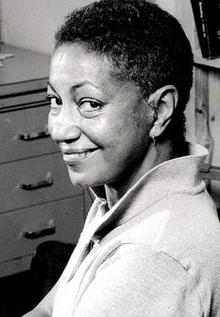
“most of the women of the world-Black and First World and white who work because we must-most of the women of the world persist far from the heart of the usual Women's Studies syllabus. Similarly, the typical Black History course will slide by the majority experience it pretends to represent. For example, Mary McLeod Bethune will scarcely receive as much attention as Nat Turner, even though Black women who bravely and efficiently provided for the education of Black people hugely outnumber those few Black men who led successful or doomed rebellions against slavery. In fact, Mary McLeod Bethune may not receive even honorable mention because Black History too often apes those ridiculous white history courses which produce such dangerous gibberish as The Sheraton British Colonial "history" of the Bahamas. Both Black and white history courses exclude from their central consideration those people who neither killed nor conquered anyone as the means to new identity, those people who took care of every one of the people who wanted to become "a person," those people who still take care of the life at issue: the ones who wash and who feed and who teach and who diligently decorate straw hats and bags with all of their historically unrequired gentle love: the women.”
Daisy Elizabeth Adams Lampkin on Mary McLeod Bethune
“This is what may appear on the tombstone of America's beloved Mary McLeod Bethune—but the story of the life of this great American will be on the hearts and in the memories of countless millions. She came, she saw, she dedicated, she served. She selected to dedicate her early life to the children in the turpentine sections of Florida. How often have we listened to her tell the story of the beginning of the little school with one dollar and a half—and faith: the little school, which today stands as a million-dollar monument to her dream, her faith, her sacrifice, her devotion, her untiring effort...Mary McLeod Bethune walked in high places, hand in hand with the great in her own land and in other lands. She was a proud woman, with no apology for the color of her skin, nor the poverty of her childhood. She lived with lifted head, squared shoulders—as she looked at the world in passing...One thing is sure: we can aspire and strive to follow in her footsteps. She left us a rich heritage—one to which we can point with pride. Today, if she were here, she would stand where I am standing, would say: "My women, carry on with the strength that God has given you ... with the wisdom with which He has endowed you. Carry the torch, and hand it on, lighted and clean, to those who follow after."”
Gerda Lerner on Mary McLeod Bethune 2 quotes
“As a result of the democratic hopes raised by World War I and the shocking polarization at the end of the war, which found expression in race riots and lynchings, women of both races felt impelled to make stronger efforts than ever before to bridge the gap between the races. Eva Bowles, Mrs. Lugenia Hope, Charlotte Hawkins Brown, and Mary McLeod Bethune led black women in this effort. White church women were the first to respond.”
Debra L. Schultz on Mary McLeod Bethune
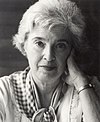
“Later conflicts between some members of the Black and Jewish communities should not obscure stories that remain to be told of Black and Jewish women's activist collaborations for civil rights. For example, there is a history of collaboration between the National Council of Negro Women (NCNW) and the National Council of Jewish Women (NCJW) that dates back at least to the 1940s. Mary McLeod Bethune (1875-1955), founder and president of the National Council of Negro Women from 1935 to 1949, sent the organization's executive director to the National Council of Jewish Women for consultations when the NCNW was planning its governance structure.”
About Mary McLeod Bethune
Mary McLeod Bethune (née McLeod; July 10, 1875 – May 18, 1955) was an educator, philanthropist, humanitarian, womanist, and civil rights activist who lived in the USA. Bethune founded the National Council of Negro Women in 1935, established the organization's flagship journal Aframerican Women's Journal, and presided as president or leader for a myriad of African American women's organizations including the National Association for Colored Women and the National Youth Administration's Negro Division