Link Copied!
Marge Piercy Quotes (1936-)
Poet, Activist, Novelist
About Marge Piercy
Marge Piercy (born March 31, 1936) is a Jewish American poet, novelist, and social activist.
Best Marge Piercy Quotes
Shortest
Earliest
Explore our curated collection of the most famous and impactful Marge Piercy quotes.
“Repression brings hardening.”







“Life is the first gift, love is the second, and understanding the third. (p666)”
“If the rewards are concentrated at the top, the shitwork is concentrated at the bottom.”
“Reconstructionism, which is my branch of Judaism, is strongly concerned with the environment”
“"They perceive whatever they don't control as hostile." (Avram, twenty-five: WHERE THE ELITE MEET)”
“Live as if you liked yourself, and it may happen:
reach out, keep reaching out, keep bringing in.”
reach out, keep reaching out, keep bringing in.”
“At that time, a pregnant woman could not get an abortion in Massachusetts -- but a cat could. (p221)”


“The importance of male solidarity to enforce discrimination and contempt for women cannot be overemphasized.”

“He fought her with full energy and intelligence, as she had wanted to be loved. (one: IN THE CORPORATE FORTRESS)”

“Most of life was bizarre when she stopped to examine it. (twenty-eight: HOW CAN WE TELL THE DANCER FROM THE DANCE?)”
“I've been amazed at the number of unions that tell me how helpful "To be of use" is to them in their organizing work.”
Marge Piercy Quotes by Topic
Find exactly what you are looking for by browsing this categorized list of Marge Piercy quotes by topic.
Marge Piercy on Poetry 2 quotes
“Poems told me there were other people who felt the way I felt. That was validation for the person I was. Poems can mean survival.”

Marge Piercy on Science fiction 2 quotes
“the most fruitful ways to approach the future for me are speculative fiction or utopian fiction. Isaac Asimov once said that all science fiction falls into three categories: What if, If only, and If this continues.”

Marge Piercy on Cuba 2 quotes
“One of the things that really is true about visiting Cuba is discovering how proud people can be of their work-work they would be ashamed to do here. Because work is admired, and makes sense in a society that makes sense, it is social in the full meaning.”

Marge Piercy on Utopia
Marge Piercy on Imagination

Marge Piercy on New York City
“I lived in NYC twice, the last time for seven years. What I saw was not delightful: the increasing ownership of the city by the ruling class, the poor and finally also the middle class being pushed out, terrifying police work (believe me, the Red Squad were no philanthropists), real estate prices from hell. Pollution.”

Marge Piercy on Detroit
“(What does the current state of Detroit mean to you?) That the money and whites fled. That those who made their money out of the labor of hard workers did not give a damn what happened to them. That great music and writing and all kinds of art can still come from a place that is dear to me. That it is possible for Detroit to survive with new ideas but it will be difficult, Growing up in Detroit prepared me to be a lefty and a feminist.”

Marge Piercy on Future
“It is by imagining what we truly desire that we begin to go there. That is the kind of thinking about the future that seems to me most fruitful, most rewarding. I want a future in which women are not punished for having women's bodies, are not punished for desire or the lack of it, are viewed as independent protagonists in their own adventures-spiritual, intellectual, romantic, sexual, and creative adventures. That's one reason I read and write speculative fiction.”

What Marge Piercy Said About Others
Discover personal opinions Marge Piercy shared regarding contemporaries.
Marge Piercy on Joanna Russ 2 quotes
“Joanna Russ has written in "Recent Feminist Utopias": "I believe that utopias are not embodiments of universal human values, but are reactive; that is, they supply in fiction what their authors believe society lacks in the here and now. The positive values stressed in the stories can reveal to us what, in the authors' eyes, is wrong with our society. Thus if the stories are familial, communal in feelings, we may safely guess that the authors see our society as isolating people from each other, especially (to judge from the number of all-female utopias in the group) women from women. If the utopias stress a feeling of harmony and connection with the natural world, the authors may be telling us that in reality they feel a lack of such connection."”

Marge Piercy on Mother Jones

Marge Piercy on Edna St. Vincent Millay

Marge Piercy on Gary Snyder
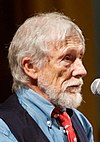
“I admire Gary Snyder and his ecological commitment very much.”
Marge Piercy on Primo Levi
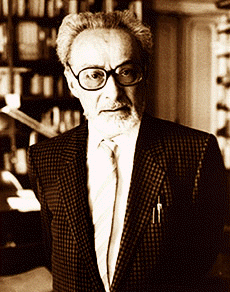
Marge Piercy on Women

Marge Piercy on E. E. Cummings
“I admire E.E. Cummings's musicality, less for his visual-only poems, not at all for his occasional anti-Semitism.”
Marge Piercy on Toni Cade Bambara
“I read writers like Toni Cade Bambera and Toni Morrison because they write fiction that is not boring or alienating to me but moving”

Marge Piercy on John Brunner
“John Brunner, who writes one extraordinary book to ten into-one-end-of-the-typewriter-and-out-the-other, adventure by the yard commodities”

Marge Piercy on Isaac Asimov
“the most fruitful ways to approach the future for me are speculative fiction or utopian fiction. Isaac Asimov once said that all science fiction falls into three categories: What if, If only, and If this continues.”

Marge Piercy on D. H. Lawrence

Marge Piercy on Sappho
“Poetry changes with every generation, but it does not improve or progress. It just changes its styles, trappings and some of its obsessions, but we can still enjoy Sappho and Homer; they are today's news as much as when they were written or recited.”

Quotes About Marge Piercy
Gain deeper perspective through quotes about Marge Piercy from others.
Source on Marge Piercy 16 quotes
“Poems start from a phrase, an image, an idea, a rhythm insistent in the back of the brain...Some poems are a journey of discovery and exploration for the writer as well as the reader. I find out where I am going when I finally arrive, which may take years.”
Joyce Antler on Marge Piercy
“Jewish women in second-wave feminism helped to provide the theoretical underpinnings and models for radical action that were seized on and imitated throughout the United States and abroad. Their articles and books became classics of the movement and led the way into new arenas of cultural and political understanding in academe, politics, and grassroots organizing. Even a partial honor roll of Jewish women's liberation pioneers must include such figures as Shulamith Firestone, Ellen Willis, Robin Morgan, Alix Kates Shulman, Naomi Weisstein, Heather Booth, Susan Brownmiller, Marilyn Webb, Meredith Tax, Andrea Dworkin, Linda Gordon, Ellen DuBois, Ann Snitow, Marge Piercy, Letty Cottin Pogrebin, and Vivian Gornick. Despite historians' acknowledgment of the salience of Jewish women in earlier social movements, their prominence within radical feminism failed to attract much attention.”
Bettina Aptheker on Marge Piercy
“Remember to weave real connections, wrote Marge Piercy: “create real nodes, build real houses/Live a life you can endure; make love that is loving/Connections are made slowly, sometimes they grow underground/You cannot tell always by looking what is happening/More than half a tree is spread out in the soil under your feet.””

Margaret Atwood on Marge Piercy
“Her work has always had the courage both of her convictions and of its own (the difference between the two has occasionally been one of her problems), and the present books are no exception. She is a serious writer who deserves the sort of considered attention which, too often, she does not get... out of all the surge and flux, the sometimes dutiful rhetoric, Piercy can build moments and sometimes whole poems that she would not have achieved with careful elegance. “People of the Shell,” for instance, is superb, and it is not alone. Lines and aphorisms surface, flash and sink, poems transform themselves, words swirl. The literary ancestor here is not Dickinson but Whitman, and the vision is finally, despite the small ironies, a romantic one. Like Whitman, Piercy must be read in chunks, not sips, and appreciated for her courage, gut energy and verbal fecundity, not for laconic polish. Dancing is hard and you may fall down, her poetry implies, but she is going to dance anyway. She rams on, and the reader can only applaud.”

Marilyn French blurb for on Marge Piercy
“Marge Piercy is shameless; that is, she is that rarity, a free person. Her freedom enables her to write about her brilliant, fascinating life with honesty and gusto. She is magnificent on the subject of cats.”
Alice Hoffman blurb for on Marge Piercy
“Marge Piercy is a literary icon-novelist, poet, social activist.”
Elizabeth Marshall Thomas blurb for on Marge Piercy
Aurora Levins Morales on Marge Piercy
“In the women's consciousness-raising groups I belonged to in the early 1970s, we shared personal and very emotional stories of what it had really been like for us to live as women, examining our experiences with men and with other women in our families, sexual relationships, workplaces and schools, in the health care system and in surviving the general societal contempt and violence toward women. As we told our stories we found validation that our experiences and our reactions to them were common to many women, that our perceptions, thoughts, and feelings made sense to other women. We then used that shared experience as a source of authority. Where our lives did not match official knowledge, we trusted our lives and used the collective and mutually validated body of stories to critique those official versions of reality. This was theory born of an activist need, and the feminist literature we read, from articles like "The Politics of Housework" and "The Myth of the Vaginal Orgasm" to the poetry of Susan Griffin, Marge Piercy, Alta, Judy Grahn, and others, rose out of the same mass phenomenon of truth-telling from personal knowledge.”
Bill Moyers on Marge Piercy
“Some critics may wince at her politics, but no one can doubt whose voice is speaking, or that the language comes from a fully engaged life. Not that politics is her only subject. She writes about planting tomatoes, making love, remodeling the kitchen, and dying. Her avid followers know that she can be just as tough about herself and as humorous-as about the world's absurdities. At heart, Marge Piercy is a utopian, possessing what Margaret Atwood describes as "a view of human possibility-harmony between the sexes, among races, and between humankind and nature-that makes the present state of affairs clearly unacceptable by comparison."”

Robert Olen Butler blurb for on Marge Piercy
Adrienne Rich used as blurb for My Life on Marge Piercy
“Piercy writes with high intelligence, love for the world, ethical passion and innate feminism.”
About Marge Piercy
Marge Piercy (born March 31, 1936) is a Jewish American poet, novelist, and social activist.