Link Copied!
Lewis Gompertz Quotes (1783-1861)
Philosopher, Writer, Inventor
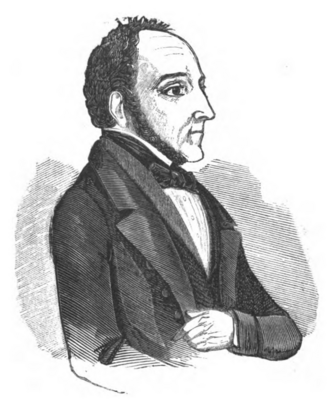


About Lewis Gompertz
Lewis Gompertz (1783/4 – 2 December 1861) was an English philosopher, writer, inventor, and social reformer. He was best known for his pioneering advocacy of the moral consideration of animals, early veganism, and opposition to animal exploitation. A founding member of the Society for the Prevention of Cruelty to Animals (later the RSPCA), he later established the Animals' Friend Society to promote a more comprehensive ethical stance toward animals. His 1824 treatise, Moral Inquiries on the Situation of Man and of Brutes, offered one of the first systematic critiques of animal use, combining philosophical argument with proposals for social reform. He also supported causes including women's rights, anti-slavery, and the welfare of the poor. In addition to his activism, Gompertz was an accomplished mechanical inventor who sought to develop alternatives to animal labour.
Best Lewis Gompertz Quotes
Shortest
Earliest
Explore our curated collection of the most famous and impactful Lewis Gompertz quotes.
“[E]very animal has more right to the use of its own body than others have to use it.”
“Axiom 8. That the importance of any action is measured by the degree of pleasure or pain that it causes or prevents.”

“Does it follow that a person is to withhold the performance of the good which may be within his power, because he does not attempt that which may seem beyond it?”

“[W]e should never admit of the propriety of the will or volition of one animal being the agent of another, unless we should perceive its own good to result from it, or that justice should require it.”
“Axiom 5. That we should never admit of the propriety of the will or volition of one animal being the agent of another, unless we should perceive its own good to result from it, or that justice should require it.”
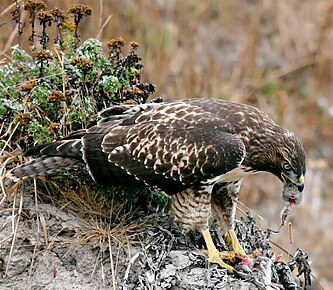
“Much as animals suffer in a natural state, much more do they seem to suffer when under the dominion of the generality of men. What suffering in the former can be supposed to equal the constant torture of a hackney-coach horse?”
“Such animals as be wants, he will nourish on the dregs and refuse of his own food, and give this as a gift; while those which are useless to him are left in a state of starvation, and deprived of the shelter of the forests, cut down by man.”

“[T]his seems to be still the age of infancy, and baby-like do we cry. This is all made for me! The land and the ocean abound with myriads of animated beings of admirable construction only for me to play with, to torment, and to destroy. This is what we are taught.”
“It is an axiom that the more pleasure and the less pain there is in the Universe, the better it is. If, then, a person suffer pain instead of pleasure, whether he be criminal or not, the pain will be increased and the pleasure decreased; and, as this disagrees with the axiom just cited, it is wrong.”

“First, how do you prove that mankind is invested with the right of killing them, and that brutes have been created for the purpose you assert them to be? Secondly, it is to be observed that the flesh of man himself possesses the same nourishing and palatable qualities? And are we then to become cannibals for that reason?”
“Therefore, as a person cannot be in duplicates, it is plain, that the soul cannot be the product of mechanism. And every person knows that his self is only his self, and the same self at all times, without division, augmentation, or change of any kind, he knows it has an identity, and there* fore is not the effect of matter.”

“[H]owever the state of man may be above that of other animals, if the superiority be owing to his being differently situated, we must not dazzle ourselves by gazing on the brilliancy of the situation, but learn how to estimate their true qualities only; though the situation gives the one the powers to act, and denies it to the other.”
“It seems that most animals produce many more offspring than can find food, but that their numbers are kept small by other animals who prey upon them, otherwise they would perish by famine: which of the two evils would be the greatest we do not pretend to determine, but as the former is the plan most adopted we must believe it to be the best.”
“[C]ruelty is cruelty under whatever colouring it may appear; and whether exercised on a man or on a fly, cruelty is still cruelty. It matters not whether the victim be furnished with two legs or with four, with wings, with fins, or with arms; where there is sensation, there is subject for cruelty, and in proportion to the degree of sensation will its action operate.”

“Y: Do you bear in mind, that in breeding the silkworms, we cause more to come into existence than would otherwise be the case?
Z: Though I think we are unauthorized to destroy or prevent life, life does not appear so desirable that we should perform any action for the sole purpose of producing it. Man does not possess sufficient knowledge, to do either act with design.”
Z: Though I think we are unauthorized to destroy or prevent life, life does not appear so desirable that we should perform any action for the sole purpose of producing it. Man does not possess sufficient knowledge, to do either act with design.”

“Y: As you think it wrong for man to kill other animals for food, do you also think it wrong that animals should devour each other? As this is the general law of nature.
Z: It appears wrong, according to the rules by which we govern our own actions to each other; and should I witness the attempt in any animal of destroying another, I would endeavour to frustrate it; though this might probably be wrong.”
Z: It appears wrong, according to the rules by which we govern our own actions to each other; and should I witness the attempt in any animal of destroying another, I would endeavour to frustrate it; though this might probably be wrong.”
“The number of animals which can be brought into existence probably being limited, or the number destined to inhabit our globe probably being so; it appearing reasonable to think that no new animals are created by being born, nor destroyed by being killed, but that being born is merely becoming conscious, and death or sleep being only a loss or suspension of consciousness, [...] the identity never being destroyed.”
“It is strange that philosophers first show how one animal supports itself by destroying another, and then enter into discussions on the apparent admirable order of things in their present state. But though this may be a necessary contrivance, and the only way in which life can be supported, it can never be a beautiful one, in our short sights, notwithstanding that something worse might be, were this not the case.”
“Therefore it is plain that no particular thing can be made by a machine at all; neither an atom, or matter, which is the only identity of matter; nor the soul, which is the only identity of a person (and this applies also to every other animal or vegetable, as every thing, if it feels, must, it appears, have an identical self or soul, similar to that of any other being). No feeling can, it appears, be without reference to some self or soul)”

“The force of custom or habits even proverbial; and accordingly we take advantage of the magnified representation in which we have been pleased to paint its effects, to veil our eyes from the sufferings of others, of mankind as well as of brutes; and whatever be their lots, if they suffer from over exertion, from being flogged, from exposure in danger, from want, from cold, from heat, etc., we lull our imagination with the idea that they do not feel those evils: custom we say is second nature.”
“Are [animals] not furnished with most feelings similar to our own? They indisputably evince in an eminent degree most of the same passions. Things which affect us, generally seem to affect them in the same way; and at least the following sensations and passions are common to both, viz. hunger, desire, emulation, love of liberty, playfulness, fear, shame, anger, and many other affections though they are destitute of the power of laughter. But little occasion have they to exercise such a faculty!”

“The conclusions, then, from these remarks are, that the soul never dies, and that it is sometimes active; that friends do not know each other’s souls, but this does not preclude their meeting again. How far immortality may be desirable, depends greatly on whether future life may be on this earth or some other; if on this, all the happiness that can be expected is the average happiness of the beings now living, of which class we shall still form one ; or whether we shall inhabit some other sphere ; if so, we have only to hope for the best.”

“Can a reflecting mind turn for a moment to any quarter without shrinking at the scenes of carnage and suffering which constitute not only the minor streams, but the grand tide of life: though mingled with many pleasures we admit; but the goods falling mostly on man, and the evils mostly on animals. Those men, however, who are above others, and still more above dumb animals in happiness, are readily led to believe that the sweets of life greatly predominate in the whole classes of animated beings, yet an impartial view seems to tell a very different tale.”
“Y: But the whole species of the carnivorous kind would then become extinct. Were they created to be annihilated?
Z: I do not see why the whole species of one animal is more important than an equal number of another, although that number might not comprise the whole species of the latter: and, besides, it is not proved that the whole species would perish; as some might feed on the bodies of those animals which they might find that were in a fit state; and also upon vegetables, which they will eat occasionally. It is known that wolves will live in the two ways mentioned, when deprived of other means.”
Z: I do not see why the whole species of one animal is more important than an equal number of another, although that number might not comprise the whole species of the latter: and, besides, it is not proved that the whole species would perish; as some might feed on the bodies of those animals which they might find that were in a fit state; and also upon vegetables, which they will eat occasionally. It is known that wolves will live in the two ways mentioned, when deprived of other means.”
Lewis Gompertz Quotes by Topic
Find exactly what you are looking for by browsing this categorized list of Lewis Gompertz quotes by topic.
Lewis Gompertz on Wild animal suffering 10 quotes
“Much as animals suffer in a natural state, much more do they seem to suffer when under the dominion of the generality of men. What suffering in the former can be supposed to equal the constant torture of a hackney-coach horse?”
Lewis Gompertz on Vegetarianism
“First, how do you prove that mankind is invested with the right of killing them, and that brutes have been created for the purpose you assert them to be? Secondly, it is to be observed that the flesh of man himself possesses the same nourishing and palatable qualities? And are we then to become cannibals for that reason?”

Lewis Gompertz on Insect suffering
“Y: What are your opinions concerning the propriety of using silk? Z: I disapprove of the act of depriving the living grubs of their silk. I however understand, that numbers of them generally die naturally while enclosed in their silk; also that the silk of these is the most esteemed; and this of course may be used. Though I am averse to the act of depriving the living ones of their natural clothing, and substituting bran in its stead; but I severely censure the usual mode of baking them to death in an oven.”
About Lewis Gompertz
Lewis Gompertz (1783/4 – 2 December 1861) was an English philosopher, writer, inventor, and social reformer. He was best known for his pioneering advocacy of the moral consideration of animals, early veganism, and opposition to animal exploitation. A founding member of the Society for the Prevention of Cruelty to Animals (later the RSPCA), he later established the Animals' Friend Society to promote a more comprehensive ethical stance toward animals. His 1824 treatise, Moral Inquiries on the Situation of Man and of Brutes, offered one of the first systematic critiques of animal use, combining philosophical argument with proposals for social reform. He also supported causes including women's rights, anti-slavery, and the welfare of the poor. In addition to his activism, Gompertz was an accomplished mechanical inventor who sought to develop alternatives to animal labour.