Kurt Vonnegut Quotes (1922-2007)







-100px.jpg)

























About Kurt Vonnegut
Best Kurt Vonnegut Quotes
Explore our curated collection of the most famous and impactful Kurt Vonnegut quotes.
















So please don't throw cigarettes in our urinals.”












And ready for plucking
You're sixteen
And ready for high school.”

“The insane, on occasion, are not without their charms,” said Beatrice.”






the eyes
and ears
and conscience
of the Creator of the Universe,
you fool.”





A soldier’s knowledge wasn’t supposed to be round.”








• Unsourced paraphrase or variant: We are human only to the extent that our ideas remain humane.”




Should the nation's wealth be redistributed? It has been and continues to be redistributed to a few people in a manner strikingly unhelpful.”


All was forgiven.
All living things were brothers, and all dead things were even more so.”
The answer is: He eats dates from the calendar and drinks water from the springs of the bed.”


Sally in the garden,
Siftin' cinders,
Lifted up her leg,
And farted like a man,
The bursting of her bloomers broke sixteen winders,
The cheeks of her ass went (blam, blam, blam)
”
“Only an Earthling year ago,” said Constant. “It took us that long to realize that a purpose of human life, no matter who is controlling it, is to love whoever is around to be loved.”


The waitress brought me another drink. She wanted to light my hurricane lamp again. I wouldn't let her. "Can you see anything in the dark, with your sunglasses on?" she asked me.
"The big show is inside my head," I said”
Freed from his body’s noisome nuisance.
His body, empty, prowls the earth,
Earning what a body’s worth.
If his body and his essence remain apart,
Burn his body, but spare this, his heart.”


So there goes the Junior Prom, but that’s not the half of it.”

“I’m proud to say,” said the girl, “that he’s one of the few men on earth with a little self-respect left.””

“You’re a member of it, you know,” said Rumfoord.
“Then I’d like to put in for a transfer to the chimpanzees!” said Beatrice. “No chimpanzee husband would stand by while his wife lost all her coconuts.””

Bergeron's epitaph for the planet, I remember, which he said should be carved in big letters in a wall of the Grand Canyon for the flying-saucer people to find, was this:
WE COULD HAVE SAVED IT
BUT WE WERE TOO DOGGONE CHEAP
Only he didn't say 'doggone.'"
”



“Sick of my job.”
“Because what you were doing was morally bad?” suggested the voice.
“Because it wasn’t getting anybody anywhere. Because it was getting everybody nowhere.”
“Because it was evil?” insisted the voice.
“Because it was pointless.””

Redwine raised his eyebrows quizzically. “Why?” he said.
“Pardon me?” said Unk.
“Why thank God?” said Redwine. “He doesn’t care what happens to you. He didn’t go to any trouble to get you here safe and sound, any more than He would go to the trouble to kill you.””

"The wreckers against the builders!" said Elmer. "There's the whole story of life!"
"And I've got more news for you."
"Yes?" piped Ivy.
"I am not going to help the wreckers," said Elmer. "My son and I are builders."”

I have caught life. I have come down with life. I was a wisp of undifferentiated nothingness, and then a little peephole opened quite suddenly. Light and sound poured in. Voices began to describe me and my surroundings. Nothing they said could be appealed.”

"You and your what?" he said.
"My soul and my meat," I said.
"They're separate?" he said.
"I sure hope they are," I said. I laughed. "I would hate to be responsible for what my meat does."”

"Yale," he said.
I told him what Helen Dole said about Yale, that it ought to be called "Plantation Owners' Tech."
"I don't get it," he said.
"I had to ask her to explain it myself," I said. "She said Yale was where plantation owners learned how to get the natives to kill each other instead of them."”



“Every failure of Earthling leadership has been traceable to a lack on the part of the leader,” says Rumfoord, “of at least one of these three things.””
Outwardness lost, at last, its imagined attractions.
Only inwardness remained to be explored.
Only the human soul remained terra incognita.
This was the beginning of goodness and wisdom.”



Martin Luther King was shot a month ago. He died, too. So it goes.
And everyday my government gives me a count of corpses created by the military service in Vietnam. So it goes.
My father died many years ago now — of natural causes. So it goes. He was a sweet man. He was a gun nut, too. He left me his guns. They rust.”
“The flag of that church will be blue and gold,” said Rumfoord. “These words will be written on that flag in gold letters on a blue field: Take Care of the People, and God Almighty Will Take Care of Himself.
“The two chief teachings of this religion are these,” said Rumfoord: “Puny man can do nothing at all to help or please God Almighty, and Luck is not the hand of God.””
Scientific truth was going to make us so happy and comfortable. What actually happened when I was twenty-one was that we dropped scientific truth on Hiroshima.”


"That would be as silly as loving it," I said. "It's impossible for me to get emotional about it, because real estate doesn't interest me. It's no doubt a great flaw in my personality, but I can't think in terms of boundaries. Those imaginary lines are as unreal to me as elves and pixies. I can't believe that they mark the end or the beginning of anything of real concern to the human soul. Virtues and vices, pleasures and pains cross boundaries at will."”

Requiem:
The crucified planet Earth,
should it find a voice
and a sense of irony,
might now well say
of our abuse of it,
"Forgive them, Father,
They know not what they do."
The irony would be
that we know what
we are doing.
When the last living thing
has died on account of us,
how poetical it would be
if Earth could say,
in a voice floating up
perhaps
from the floor
of the Grand Canyon,
"It is done."
People did not like it here.
"You're still in touch. I guess that's the test."
"Barely — barely."
"A psychiatrist could help. There's a good man in Albany."
Finnerty shook his head. "He'd pull me back into the center, and I want to stay as close to the edge as I can without going over. Out on the edge you see all kinds of things you can't see from the center." He nodded, "Big, undreamed-of things — the people on the edge see them first."”

And then, as though in trances, the people would really do it — have slaves fight each other to death in the Colosseum, or burn people alive in the public square for holding opinions which were locally unpopular, or build factories whose only purpose was to kill people in industrial quantities, or to blow up whole cities, and on and on.”
“Of course it can afford sex,” said Billy. “All it can't afford anymore is reproduction.”
“Then why the laws?”
“They’re bad laws,” said Billy. “If you go back through history, you'll find that the people who have been most eager to rule, to make the laws, to enforce the laws and to tell everybody exactly how God Almighty wants things here on earth—those people have forgiven themselves and their friends for anything and everything. But they have been absolutely disgusted and terrified by the natural sexuality of common men and women.””
Bad guys turned informer. Good guys didn't — no matter when, no matter what.”

If you can believe that, and make others believe it, then there might be hope for us. Human beings might stop treating each other like garbage, might begin to treasure and protect each other instead. Then it might be all right to have babies again.”

"Blessed are the merciful" in a courtroom? "Blessed are the peacemakers" in the Pentagon? Give me a break!”
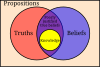
Even crazier than golf, though, is modern American politics, where, thanks to TV and for the convenience of TV, you can only be one of two kinds of human beings, either a liberal or a conservative.”
THE ONLY PROOF HE NEEDED
FOR THE EXISTENCE OF GOD
WAS MUSIC.
Now, during our catastrophically idiotic war in Vietnam, the music kept getting better and better and better. We lost that war, by the way. Order couldn’t be restored in Indochina until the people kicked us out. That war only made billionaires out of millionaires. Today’s war is making trillionaires out of billionaires. Now I call that progress.”
And the hidden plea in the book is one which first appeared in my eyes when I was fourteen, say, and which has not vanished entirely to this day. It is part of the mystery of me. The plea is addressed by old-fashioned males forever full of jism to any pretty human female, on the street, in a magazine, in a movie — anywhere. The plea is this: "Please, pretty lady, don't make me play with my private parts again."”
“I don’t see why not,” said Beatrice.
“Because you’d still have to take the roller-coaster ride,” said Rumfoord. “I didn’t design the roller coaster, I don’t own it, and I don’t say who rides and who doesn’t. I just know what it’s shaped like.”
In some places people would actually try to eat mud or such on gravel while babies were being born just a few feet away.
And so on.
Dwayne Hoover’s and Kilgore Trout’s country, where there was still plenty of everything, was opposed to Communism. It didn’t think that Earthlings who had a lot should share it with others unless they really wanted to, and most of them didn’t want to.
So they didn’t have to.”

The chief weapon of the sea pirates, however, was their capacity to astonish. Nobody else could believe, until it was much too late, how heartless and greedy they were.”
To go through the Pearly Gates, no matter how tempting the interviewee on the other side, as I myself discovered the hard way, is to run the risk that crotchety Saint Peter, depending on his mood, may never let you out again. Think of how heartbroken your friends and relatives would be if, by going through the Pearly Gates to talk to Napoleon, say, you in effect committed suicide.”
Ask me a question, any question. How old is the Universe? It is one half-second old, but the half-second has lasted one quintillion years so far. Who created it? Nobody created it. It has always been here.
What is time? It is a serpent which eats its tail, like this:
This is the snake which uncoiled itself long enough to offer Eve the apple, which looked like this:
What was the apple which Eve and Adam ate? It was the Creator of the Universe.
And so on.
Symbols can be so beautiful, sometimes.”

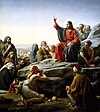
I am a humanist, which means, in part, that I have tried to behave decently without any expectation of rewards or punishments after I'm dead. My German-American ancestors, the earliest of whom settled in our Middle West about the time of our Civil War, called themselves "Freethinkers," which is the same sort of thing. My great grandfather Clemens Vonnegut wrote, for example, "If what Jesus said was good, what can it matter whether he was God or not?"
I myself have written, "If it weren't for the message of mercy and pity in Jesus' Sermon on the Mount, I wouldn't want to be a human being. I would just as soon be a rattlesnake."”
The answer I gave him was not original. Nothing about me has ever been original. I repeated what my one-time hero, Kenneth Whistler, had said in reply to the same general sort of question long, long ago. Whistler had been a witness at a trial of strikers accused of violence. The judge had become curious about him, had asked him why such a well-educated man from such a good family would so immerse himself in the working class.
My stolen answer to Nixon was this: "Why? The Sermon on the Mount, sir." ”
I made that joke, of course, before my first near-death experience — the accidental one.
So when my own time comes to join the choir invisible or whatever, God forbid, I hope someone will say, "He's up in Heaven now." Who really knows? I could have dreamed all this.
My epitaph in any case? "Everything was beautiful. Nothing hurt." I will have gotten off so light, whatever the heck it is that was going on.”


“I paid my dues with everyone else,” he said.
It is his hope that a modest monument, possibly a stone cross, since he was a Christian, will be erected somewhere in his memory, possibly on the grounds of the United Nations Headquarters in New York. It should be incised, he said, with his name and dates 1889-1945. Underneath should be a two-word sentence in German: “Entschuldigen Sie.”
Roughly translated into English, this comes out, “I beg your pardon,” or “Excuse Me.””
When Father finished the portrait, made sure every square inch of masonite had its share of paint, Uncle Alex had disappeared entirely. We had a drunk and lustful Queen Victoria instead. This was terrible.”
When a Tralfamadorian sees a corpse, all he thinks is that the dead person is in bad condition in the particular moment, but that the same person is just fine in plenty of other moments. Now, when I myself hear that somebody is dead, I simply shrug and say what the Tralfamadorians say about dead people, which is "So it goes."”

It isn’t enough for Newton that during his eighty-five years on Earth he invented calculus, codified and quantified the laws of gravity, motion and optics, and designed the first reflecting telescope. He can’t forgive himself for having left it to Darwin to come up with the theory of evolution, to Pasteur to come up with the germ theory, and to Albert Einstein to come up with relativity. “I must have been deaf, dumb, and blind not to have come up with those myself,” he said to me. “What could have been more obvious?””

So the America I loved still exists, if not in the White House or the Supreme Court or the Senate or the House of Representatives or the media. The America I love still exists at the front desks of our public libraries.”

Hitler dreamed of killing Jews, Gypsies, Slavs, homosexuals, Communists, Jehovah's Witnesses, mental defectives, believers in democracy, and so on, in industrial quantities. It would have remained only a dream if it hadn't been for chemists as well educated as my brother, who supplied Hitler's executioners with the cyanide gas known as Zyklon B. It would have remained only a dream if architects and engineers as capable as my father and grandfather hadn't designed extermination camps — the fences, the towers, the barracks, the railroad sidings, and the gas chambers and crematoria — for maximum ease of operation and efficiency.”
We said it was possible that the framers of the Constitution were blind to the beauty of persons who were without great wealth or powerful friends or public office, but who were nonetheless genuinely strong.
We thought it was more likely, though, that their framers had not noticed that it was natural, and therefore almost inevitable, that human beings in extraordinary and enduring situations should think of themselves of composing new families. Eliza and I pointed out that this happened no less in democracies than in tyrannies, since human beings were the same the wide world over, and civilized only yesterday.
Elected representatives, hence, could be expected to become members of the famous and powerful family of elected representatives — which would, perfectly naturally, make them wary and squeamish and stingy with respect to all the other sorts of families which, again, perfectly naturally, subdivided mankind.
Eliza and I … proposed that the Constitution be amended so as to guarantee that every citizen, no matter how humble, or crazy or incompetent or deformed, somehow be given membership in some family as covertly xenophobic and crafty as the one their public servants formed.”
As I approached my fiftieth birthday, I had become more and more enraged and mystified by the idiot decisions made by my countrymen. And then I had come suddenly to pity them, for I understood how innocent and natural it was for them to behave so abominably, and with such abominable results: They were doing their best to live like people invented in story books. This was the reason Americans shot each other so often: It was a convenient literary device for ending short stories and books.
Why were so many Americans treated by their government as though their lives were as disposable as paper facial tissues? Because that was the way authors customarily treated bit-part players in their madeup tales.
And so on.
Once I understood what was making America such a dangerous, unhappy nation of people who had nothing to do with real life, I resolved to shun storytelling. I would write about life. Every person would be exactly as important as any other. All facts would also be given equal weightiness. Nothing would be left out. Let others bring order to chaos. I would bring chaos to order, instead, which I think I have done.
If all writers would do that, then perhaps citizens not in the literary trades will understand that there is no order in the world around us, that we must adapt ourselves to the requirements of chaos instead.
It is hard to adapt to chaos, but it can be done. I am living proof of that: It can be done.”

I am programmed at fifty to perform childishly — to insult “The Star-Spangled Banner,” to scrawl pictures of a Nazi flag and an asshole and a lot of other things with a felt-tipped pen. To give an idea of the maturity of my illustrations for this book, here is my picture of an asshole:
I think I am trying to clear my head of all the junk in there — the assholes, the flags, the underpants. Yes — there is a picture in this book of underpants. I’m throwing out characters from my other books, too. I’m not going to put on any more puppet shows.
I think I am trying to make my head as empty as it was when I was born onto this damaged planet fifty years ago.
I suspect that this is something most white Americans, and nonwhite Americans who imitate white Americans, should do. The things other people have put into my head, at any rate, do not fit together nicely, are often useless and ugly, are out of proportion with one another, are out of proportion with life as it really is outside my head.
I have no culture, no humane harmony in my brains. I can’t live without a culture anymore.
So this book is a sidewalk strewn with junk, trash which I throw over my shoulders as I travel in time back to November eleventh, nineteen hundred and twenty-two.
I will come to a time in my backwards trip when November eleventh, accidentally my birthday, was a sacred day called Armistice Day. When I was a boy, and when Dwayne Hoover was a boy, all the people of all the nations which had fought in the First World War were silent during the eleventh minute of the eleventh hour of Armistice Day, which was the eleventh day of the eleventh month.
It was during that minute in nineteen hundred and eighteen, that millions upon millions of human beings stopped butchering one another. I have talked to old men who were on battlefields during that minute. They have told me in one way or another that the sudden silence was the Voice of God. So we still have among us some men who can remember when God spoke clearly to mankind.
Armistice Day has become Veterans' Day. Armistice Day was sacred. Veterans' Day is not.
So I will throw Veterans' Day over my shoulder. Armistice Day I will keep. I don't want to throw away any sacred things.
What else is sacred? Oh, Romeo and Juliet, for instance.
And all music is.”
Kurt Vonnegut Quotes by Topic
Find exactly what you are looking for by browsing this categorized list of Kurt Vonnegut quotes by topic.
Kurt Vonnegut on Love 6 quotes
View all 6 quotes on Love →Kurt Vonnegut on Time 3 quotes
View all 3 quotes on Time →Kurt Vonnegut on Now 3 quotes

Kurt Vonnegut on Television 3 quotes
Kurt Vonnegut on Relationship between religion and science 2 quotes
View all 2 quotes on Relationship between religion and science →What Kurt Vonnegut Said About Others
Discover personal opinions Kurt Vonnegut shared regarding contemporaries.
Kurt Vonnegut on Ernest Hemingway

Kurt Vonnegut on Women

Kurt Vonnegut on Lot's wife
Kurt Vonnegut on Isaac Asimov

Quotes About Kurt Vonnegut
Gain deeper perspective through quotes about Kurt Vonnegut from others.
Anthony Gregory on Kurt Vonnegut
Doris Lessing on Kurt Vonnegut
Dinitia Smith on Kurt Vonnegut
Jon Stewart on Kurt Vonnegut

Howard Zinn on Kurt Vonnegut

Misattributed Quotes
Quotes mistakenly credited to Kurt Vonnegut