Link Copied!
Kurien Kunnumpuram Quotes (1931-2018)
Theologian
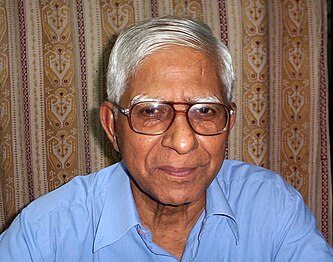
About Kurien Kunnumpuram
Kurien Kunnumpuram (8 July 1931 - 23 October 2018 ) was a Roman Catholic theologian and Jesuit priest of India. He was the editor of AUC: Asian Journal for Religious Studies, contributed substantially towards the formation of an Indian Church, wrote numerous books and taught for more than fifty years.
Best Kurien Kunnumpuram Quotes
Shortest
Earliest
Explore our curated collection of the most famous and impactful Kurien Kunnumpuram quotes.


“The one mission of the Church receives its specification from the actual context in which it is exercised in the concrete situations in which it is fulfilled.”
“Transcendence is the way God is immanent. God is present in every created reality, without being identified with it. This is the meaning of God’s transcendence.”


“Christian hope asks us to regard every stage in the growth of a person and every phase in the development of the Church as merely provisional. It has to be transcended. We are still on our way to the final Kingdom.”

“Peace is the gift of God who through the death and resurrection of Christ, reconciled humans with himself and with one another. However, peace is also a human achievement since it is to be ushered in through the practice of love and justice.”



“I wish to adopt a holistic approach to the mission of the Church. To my mind the mission of the Church is to collaborate with God in God’s work for the wholeness of the human person, the human community and the cosmos according to the pattern revealed in Jesus Christ (Kunnumpuram 2011)”

“God did not create the world in order to get anything for himself. In fact, there is no need of God’s that we can supply, no luxury of His that we can provide. Actually, God created the world in order to bestow his blessings on his creatures and to give them a share in his own goodness.”

“The Church in India has to join hands with all subaltern groups – the Dalits, the tribal people and women – in their struggle for liberation and justice. For centuries, the Dalits have been victims of oppression. In recent years violence against them has grown. The tribal people, too, are subjected to various forms of injustice.”
“To work for peace and reconciliation is central to the mission of the Church. For the Church exists in order to carry on the saving work of Jesus under the guidance of the Spirit. And his saving work is interpreted in the New Testament as reconciliation and peace-making. According to Paul, God was in Christ Jesus reconciling the world to himself.”
“Any genuine experience of God will send us out to serve those whom God loves. And working with people will make us aware of how much we are in need of God, of God’s help and guidance. This will gradually usher in a rhythm of prayer and work – prayer leading to work and work leading to prayer. So the integration of prayer and work takes place existentially.”
“To follow Christ is also to identify ourselves with the poor and powerless as he did. The Incarnation is the symbol of this identification. Through his incarnation he inserted himself into the human family and became one with us. As Soares-Prabhu observes, “Jesus ‘declasses’ himself and adopts the life of an itinerant preacher without a home or means of subsistence.””
“Normally we think that it was Jesus’ mission to reveal the mystery of God to us. This he certainly did. But he also revealed to us the mystery of the human person. As the Council declares: “The truth is that only in the mystery of the incarnate Word does the mystery of the human being take on light” (GS 22). First of all, Jesus pointed out the God-dimension of human person.”

“That is why individuals and peoples need a “healing of memories”. This does not mean that they have to forget past events. Rather, they have to learn to look at them in a new way. Instead of remaining prisoners of the past, they have to recover their freedom to forgive. As the pope says: “The deadly cycle of revenge must be replaced by the new-found liberty of forgiveness.””

“Pope John Paul II is a tireless champion of peace who has dealt with the theme of peace often and at some length. Like his predecessors, John Paul II sees a close connection between justice and peace. John Paul II believes that justice is rooted in love and “finds its most significant expression in mercy”. Hence, justice, “if separated from merciful love, becomes cold and cutting.””

“All this calls for an attitudinal change in the Church. An inward looking Church gives undue importance to rite and rubrics, orthodoxy and discipline. But God-ward looking Church is concerned with the great human problem of living together in freedom and equality, love, justice and peace as well as in tune with the rhythm of nature. For the world, not the Church, is the primary object of God’s love.”
“The biblical understanding of the human person is holistic. It makes no distinction between body and soul. The human person is not a soul living in a body, but an animated body, so perfectly integrated that the person in his totality can express himself/herself and be apprehended in any part. “It is the body rooted in the cosmos and related to other human beings, which gives the person his or her identity.””

About Kurien Kunnumpuram
Kurien Kunnumpuram (8 July 1931 - 23 October 2018 ) was a Roman Catholic theologian and Jesuit priest of India. He was the editor of AUC: Asian Journal for Religious Studies, contributed substantially towards the formation of an Indian Church, wrote numerous books and taught for more than fifty years.