Koenraad Elst Quotes (1959–)

Archival Source:
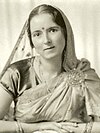
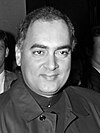
Restored Public Domain / Archival Original Portrait
Indologist, Author, Journalist
Koenraad Elst
Jump to Topic or Contemporary 94 Categories
Secularism in India
Secularism in India
Sita Ram Goel
Sita Ram Goel
Hinduism and other religions
Savitri Devi
Savitri Devi
Constitution of India
Ram Swarup
Ram Swarup
Education in India
Education in India
Richard M. Eaton
Richard M. Eaton
Historiography of India
Kabir
Kabir
Ram Janmabhoomi
Ram Janmabhoomi
Harsha of Kashmir
Harsha of Kashmir

About Koenraad Elst

Koenraad Elst (born 7 August 1959) is a Flemish author, known primarily for his support of the Out of India theory and the Hindutva movement.

Best Koenraad Elst Quotes

Explore our curated collection of the most famous and impactful Koenraad Elst quotes.

■ Fast Theme Jump-Grid & Sort Order Explore Koenraad Elst Citations
Top Quotes ↓ Open in Studio ↗
“Not Muslims but Islam is the problem.”
— Koenraad Elst, 2000s, The Problem with Secularism
Koenraad Elst
“Hindus are damned if they do, damned if they don't. (p. 97)”
— Koenraad Elst, 2000s, Decolonizing the Hindu Mind
“The Aryan invasion of India has somehow gone missing from the archaeological record.”
— Koenraad Elst, 1990s, Update on the Aryan Invasion Debate,
“Since quoting the Quran may get this book banned, I will merely give the verse numbers...”
— Koenraad Elst, 1990s, Ayodhya and After
“To whom it may concern: the present writer, at any rate, is neither a Hindu nor a nationalist.”
— Koenraad Elst, 2000s, Asterisk in bharopiyasthan
Koenraad Elst
“[The statement] is merely a typical exercise in the mendacious secularspeak of the Nehruvian elite...”
— Koenraad Elst, 1990s, The Ayodhya Demolition
“If I am to believe newspaper reports (in reporting on the communal conflict, that is always a big "if").”
— Koenraad Elst, 1990s, The Ayodhya Demolition
Original / Translation (Sanskrit (IAST))
“ch 28. Why Itihāsa Means “History” Why “Itihasa” means “history””
English: “Of Egypt and Mesopotamia, no history could have been reconstructed without recourse to their king-lists, yet in the case of India, many scholars pooh-pooh these as another case of chaotic Hindu fantasizing.”
“Of Egypt and Mesopotamia, no history could have been reconstructed without recourse to their king-lists, yet in the case of India, many scholars pooh-pooh these as another case of chaotic Hindu fantasizing.”
— Koenraad Elst, 2020s, Forever Ayodhya

Koenraad Elst Quotes by Topic

Find exactly what you are looking for by browsing this categorized list of Koenraad Elst quotes by topic.

Koenraad Elst on Secularism in India 7 quotes

“Even Muslim activists whose counterparts in Turkey or Egypt denounce secularism as a demonic betrayal of Islam, call themselves “secularists”.”
— Koenraad Elst, E)
Koenraad Elst
“The fundamental mistake of Indian secularism is that Hinduism is put in the same category as Islam and Christianity. Islam and Christianity's intrinsic irrationality and hostility to independent critical thought warranted secularism as a kind of containment policy. By contrast, Hinduism recognizes freedom of thought and does not need to be contained by secularism.”
— Koenraad Elst, E)
Koenraad Elst
View all 7 quotes on Secularism in India →

Koenraad Elst on Hinduism and other religions 7 quotes

“Still, the deliberate effort to lure people away from their ancestral religion is perhaps nowhere as serious in magnitude as in India, partly because the country puts no substantial hurdles in the way of internal and foreign missionaries, as opposed to most of its neighbours.”
— Koenraad Elst
Koenraad Elst
“The essence of Hindu Dharma is not ‘tolerance’ or ‘equal respect for all religious’ but satya, truth. The problem with Christianity and Islam is superficially their intolerance and fanaticism. But this intolerance is a consequence of these religions’ untruthfulness. If your belief system is based on delusions, you have to pre-empt rational enquiry into it and shield it from contact with more sustainable thought systems. The fundamental problem with monotheistic religions is not that they are intolerant but that they are untrue (Asatya or Anrita).”
— Koenraad Elst
Koenraad Elst
“To offset this failure, critics of the BJP tried to make the most of a supposed wave of minor incidents between Hindu tribals and Christians in 1998-2000. There were only a handful of mortal victims, far fewer than the dozens of Christians killed in Pakistan after September 11, 2001, but with the media as amplifiers, an impression of terrible oppression of a poor hapless minority was created. Unfortunately (or rather, fortunately), the key allegations made initially under the international spotlights turned out to be untrue... Indeed, this turned out to be a pattern: all inter-Christian incidents in this period... were suddenly blamed on the evil hand of the Hindus.”
— Koenraad Elst
Koenraad Elst
View all 7 quotes on Hinduism and other religions →

Koenraad Elst on Constitution of India 6 quotes

“The Indian constitution and legislation are a major cause of religious tension precisely because they contain serious discriminations on the basis of religion.”
— Koenraad Elst
Koenraad Elst
“The Indian State does observe and enforce discrimination on the basis of religion... It is a gross communal inequality and makes a mockery of India's claim to being a secular state.”
— Koenraad Elst
Koenraad Elst
“Article 30 gives minorities the right to set up and administer their own government-aided educational institutions, whereas Hindus can only have secular schools... This blatant discrimination exists not only in the cold print of the Constitution, but is also an undeniable fact of life. Hindu organizations like the Arya Samaj and the Ramakrishna Mission have had to go to court to ask recognition as religious minorities in order to gain rights denied to them as Hindu bodies.”
— Koenraad Elst
Koenraad Elst
View all 6 quotes on Constitution of India →

Koenraad Elst on Education in India 4 quotes

“But the negationists are not satisfied with seeing their own version of the facts being repeated in more and more books and papers. They also want to prevent other versions from reaching the public. Therefore, in 1982 the National Council of Educational Research and Training issued a directive for the rewriting of schoolbooks. Among other things, it stipulated that: "Characterization of the medieval period as a time of conflict between Hindus and Muslims is forbidden." Under Marxist pressure, negationism has become India's official policy. (...)”
— Koenraad Elst, E)
Koenraad Elst
“Macaulay's policy was implemented and became a resounding success. The pre-Macaulayan vernacular system of education was destroyed, even though British surveys had found it more effective and more democratic than the then-existing education system in Britain. The rivalling educationist party, the so-called Orientalists, had proposed a Sanskrit-based system of education, in which Indian graduates would not have been as estranged from their mother civilization as they became through English education, and in which they could have selectively adopted the useful elements of Western modernity, more or less the way Japan modernized itself.”
— Koenraad Elst, E)
Koenraad Elst
“Even on the educational front, the impact of British reforms was not altogether beneficial. Early British reports on native education, prepared in anticipation of the Macaulayite policy, showed that it had been far more accessible for low-caste pupils than is generally thought. In fact, they served to a larger proportion of India's lower classes than the percentage of the British proletariat reached by British schools at the time. And of course, they taught many more low-caste children than the elitist and expensive English schools would ever do. For all we know, low-caste participation in education actually declined when the native education system was phased out.”
— Koenraad Elst, E)
Koenraad Elst
View all 4 quotes on Education in India →

Koenraad Elst on Historiography of India 4 quotes

“For those unfamiliar with modern Indian history: the Marxists, already pushy for acquiring as much power in the institutions as they could grab, were handed a near-monopoly on institutional power in India's academic and educational sector by Indira Gandhi ca. 1970. Involved in an intra-Congress power struggle, she needed the help of the Left. Her confidants P.N. Haksar and Nurul Hasan packed the institutions with Marxists, card-carrying or otherwise. When, during the Emergency dictatorship (1975-77), her Communist Party allies threatened to become too powerful, she and her son Sanjay removed them from key political positions but, in a typical instance of politicians' short-sightedness, they left the Marxists? hold on the cultural sector intact. In the good old Soviet tradition, they at once set out to falsify history and propagate their own version through the official textbooks. After coming to power in 1998, the BJP-dominated government has made a half-hearted and not always very competent attempt to effect glasnost (openness, transparency) at least in the history textbooks. This led the Marxists to start a furious hate campaign against the so-called 'saffronization' of history.”
— Koenraad Elst
Koenraad Elst
“But the negationists are not satisfied with seeing their own version of the facts being repeated in more and more books and papers. They also want to prevent other versions from reaching the public. Therefore, in 1982 the National Council of Educational Research and Training issued a directive for the rewriting of schoolbooks. Among other things, it stipulated that: "Characterization of the medieval period as a time of conflict between Hindus and Muslims is forbidden." Under Marxist pressure, negationism has become India's official policy. (...) India has its own full-fledged brand of negationism: a movement to deny the large-scale and long-term crimes against humanity committed by Islam. This movement is led by Islamic apologists and Marxist academics, and followed by all the politicians, journalists and intellectuals who call themselves secularists. In contrast to the European negationism regarding the Nazi acts of genocide, but similar to the Turkish negationism regarding the Armenian genocide, the Indian negationism regarding the terrible record of Islam is fully supported by the establishment. It has nearly full control of the media and dictates all state and government parlance concerning the communal problem (more properly to be called the Islam problem).”
— Koenraad Elst
Koenraad Elst
“What the BJP government claims to offer, what all scholarly historians want, and what is loathed by the Marxists who have dominated the cultural and educational establishment since decades, is glasnost: openness, an end to the dead hand of Marxist dogma in Indian history-writing. However, it is quite wrong to say that the Sangh Parivar takes this job "very seriously". It took three years before relieving leading Marxists of their influential positions (Prasar Bharati, NCERT, IHC). Most of its new nominees were not up to the job, some because of ill-health (e.g. K.S. Lal and B.R. Grover, both now deceased), some because they had never functioned in an academic setting. It should not be forgotten that for decades, at least since ca. 1970 when the Marxists led by P.N. Haksar and Nurul Hasan were given a lot of effective power in this sector in return for their support to Indira Gandhi, distinctly non-Marxist young historians found their access to an academic career blocked by the Marxist hegemons. Of the new textbooks, some are impeccable and are welcomed as undeniable improvements, e.g. Meenakshi Jain's presentation of the Muslim period, arguably the most sensitive and controversial part of the series. Some of the others, by contrast, have been criticized or ridiculed even by fair-minded observers.”
— Koenraad Elst
Koenraad Elst
View all 4 quotes on Historiography of India →

What Koenraad Elst Said About Others

Discover personal opinions Koenraad Elst shared regarding contemporaries.

Koenraad Elst on Sita Ram Goel 5 quotes

“Once I had seen through the secularists, it was only logical that I would go and make my acquaintance with the people whom they always denounced with such holy indignation. Would those ugly Hindu monsters really be all that ugly? After reading the book History of Hindu-Christian Encounters, I sought out its author, and that's how I met Sita Ram Goel. Come to mention him, I found that in moral stature and depth of scholarship, he completely dwarfed the Stalinist "eminent historians" and other icons of "secularism". Which is why I cannot help frowning when I see Meera Nanda forget her limitations and berate a towering personality like Goel.”
— Koenraad Elst
Koenraad Elst
“She associates Sita Ram Goel repeatedly with “Hindutva”. But to my knowledge, Goelji never ever applied the term "Hindutva" to his own thinking. Though a freedom fighter (i.e., in India, an activist in the anti-colonial freedom movement) in his youth, he often explicitly rejected the nationalist paradigm, especially in contexts where the Sangh Parivar was using it as a ploy to skirt around the difficult ideological issues... In our first conversation, in 1989, he derided the RSS-BJP as "the biggest collection of duffers that ever came together in world history". And in our last, in 2003 (in the presence of Prof. Saradindu Mukherji and Dr. David Frawley), he gloomily said: "Hinduism will not survive unless this RSS-BJP movement perishes." And in between, he said things like: "The RSS is leading Hindu society into a trap." [...] By contrast, Ram Swarup and Sita Ram Goel had the real scientist’s mind. They questioned. In particular, they questioned the beliefs which are so obtrusively propagated, those of Christianity and Islam.”
— Koenraad Elst
Koenraad Elst
“In 1986, a book was published containing the court documents, with a scholarly introduction by Sita Ram Goel. The introduction says that of course no ban on the Quran was ever intended (since Scriptures and Classics are kept out of the purview of censorship legislation, there was no chance of obtaining such a ban), but that attention had to be drawn on the fact that, while some allegedly provocative books are being banned, a book is widely circulated and studied intensively in thousands of state-subsidized institutions, which makes far more explicit calls to communal strife than any banned book so far has done. They solution is not to ban the Quran, but on the contrary to honestly read it and judge it for yourself in the light of reason. For this book, the Calcutta police arrested Mr. Chandmal Chopra on August 31, 1987, accusing him of entering into a criminal conspiracy with Mr. Sita Ram Goel for publishing the book with the deliberate intention of provoking communal strife in Calcutta and West Bengal. His bail application was opposed vehemently by the public prosecutor. He was kept in police custody till September 8, so that the conspiracy could be "investigated without his coming in the way". Mr. Goel, "a co-accused still at large", applied for anticipatory bail. This was first postponed and then rejected. Mr. Goel had to abscond for a while to avoid being dragged to the Calcutta jail.... At any rate, Mr. Chopra and Mr. Goel got caught in a long-drawn-out legal battle, though the book itself was not banned.”
— Koenraad Elst
Koenraad Elst
View all 5 quotes on Sita Ram Goel →

Koenraad Elst on Savitri Devi 3 quotes

“The Aryan Invasion Theory, along with the concomitant racialist understanding of the caste system as a kind of Apartheid system to preserve the Aryan's racial purity, was the alpha and omega of Savitri Devi's own worldview.”
— Koenraad Elst
Koenraad Elst
“[Perhaps] she developed her crassly racist views of inter-caste relations only later, projecting them back onto her Hindu activist period when she wrote her autobiography thirty-five years after the fact. My impression is that in the 1930s, she was much more moderate in this respect.”
— Koenraad Elst
Koenraad Elst
“Savitri Devi's paganism was a very modern philosophy of submersion in the purely physical, a biological materialism exalted to the status of a religion. Obviously, genuine Pagan philosophers with their own views of the transcendent dimension would hardly have recognized their own worldview in this reductionist quasi-Darwinism.”
— Koenraad Elst
Koenraad Elst
View all 3 quotes on Savitri Devi →

Koenraad Elst on Ram Swarup 2 quotes

“In the long run, Ram Swarup will probably prove to have been the most influential Hindu thinker in the second half of the 20th century. He has, at any rate, been a crucial influence on most other Hindu Revivalist authors of the last two decades.”
— Koenraad Elst
Koenraad Elst
“Perhaps the most revealing story of a book banning concerns Ram Swarup's Understanding Islam through Hadis.... A crowd of people gathered around the binders' shop. They demanded the entire stock of the objectionable book to be handed over for burning, otherwise they would set the place itself on fire. The police was called. They made no attempt to disperse the crowd. Instead they summoned and arrested the printer and the publisher, and they made sure that everyone got an eyeful of the arrest show.... the Delhi administration has had two meetings in 1988-89, to consider whether the book was objectionable. Twice it was cleared. But the pressure for banning it was kept up. ... The Jama'at as well as other Muslim groups, and personalities close to the Janata Dal (either faction), have sought a ban on Ram Swarup's book. In September 1990, a court ruled that the book was unobjectionable. But the pressure continued. And come December 1990, a third meeting of Delhi administration officials revoked the two earlier decisions, and issued a ban on the book.”
— Koenraad Elst
Koenraad Elst

Koenraad Elst on Richard M. Eaton 2 quotes

“According to the cover text on his book, Eaton is professor of History at the University of Arizona and “a leading historian of Islam”. Had he defended the thesis that iconoclasm is rooted in Islam itself, he would have done justice to the evidence from Islamic sources, yet he would have found it very hard to get published by Oxford University Press or reach the status of leading Islam scholar that he now enjoys. One can easily become an acclaimed scholar of Hinduism by lambasting and vilifying that religion, but Islam is somehow more demanding of respect.”
— Koenraad Elst
Koenraad Elst
“One Western author who has become very popular among India's history-rewriters is the American scholar Prof. Richard M. Eaton. Unlike his colleagues, he has done some original research pertinent to the issue of Islamic iconoclasm, though not of the Ayodhya case specifically. A selective reading of his work. focusing on his explanations but keeping most of his facts out of view, is made to serve the negationist position regarding temple destruction in the name of Islam. Yet, the numerically most important body of data presented by him concurs neatly with the classic (now dubbed “Hindutva”) account.”
— Koenraad Elst
Koenraad Elst

Koenraad Elst on Kabir 2 quotes

“I have it on good authority that Kabir's thought is Hindu through and through. The fable that Kabir brought a synthesis between Islam and Hinduism, does not survive a comparison between his works and the Quran. That Kabir was a simple weaver who produced lofty poetry just like that, is another fable for children of socialists : Kabir was well-read and knew his classics. There are hardly any Muslims in the Kabirpanth, and it is only the Hindus who venerate him. The simplest proof that his contribution to Indian culture was un-Islamic, is that he was persecuted for his Kafir ideas by the Muslim ruler Sikandar Lodi.”
— Koenraad Elst
Koenraad Elst
“It is often said that the 15th-century poet Kabir was neither a Hindu nor a Muslim because he criticized and mocked both Hinduism and Islam, or rather, both Hindus and Muslims... Thus, Kabir’s rejection of Islamic animal sacrifice... does pit him against Islam as such. But Hinduism has far more fluid boundaries: most things Hindu have been rejected at one time or other by authoritative thinkers whose inclusion in the Hindu category is not in doubt... Kabir’s relative originality lies in his combination of devotion with the conception of the object of devotion as faceless (nirguna, “without quality”) rather than iconographically distinct, but that doesn’t place him outside the Hindu continuum... Scholars who place Kabir (or Sikhism founder Guru Nanak) as much outside Hinduism as outside Islam, may be suspected of projecting non-Hindu, mainly Christian categories of box-type religious divisions onto a civilization in which they don’t apply.”
— Koenraad Elst
Koenraad Elst

Quotes About Koenraad Elst

Gain deeper perspective through quotes about Koenraad Elst from others.

David Frawley on Koenraad Elst

“Elst had much better command of political and social issues in India than I ever gained, unmatched by any western writer and researched in great detail. Elst is a thorough scholar and supremely rational in all that he does. His work on the Ayodhya movement was definitive.”
— David Frawley
David Frawley

Sita Ram Goel on Koenraad Elst

“On the eve of his departure, Koenraad Elst asked me if I would publish a book on Ayodhya which he planned to write on his return to Belgium, I did not take him seriously. I did not know at that time that the thirty one years old Belgian we had met was a prodigy, and that he felt so deeply about Hindus having a good case but presenting it very badly. The script of his Ram Janmabhoomi Vs. Babri Masjid: A Case Study in Hindu Muslim Conflict, was dropped on my table by the postman exactly after a month. I could not stop after I started reading it. I took it to Ram Swarup the same evening. He read it during the night and rang me up next morning. Koenraad Elst's book, he said, should be published immediately.”
— Sita Ram Goel
Sita Ram Goel

Sarvepalli Gopal on Koenraad Elst

“It is difficult to take seriously an author who draw his historical evidence from newspaper reports and speak of the centuries when there were Muslim rulers in India as "a blood-soaked catastrophe".”
— Sarvepalli Gopal

Thomas Blom Hansen on Koenraad Elst

Cultural Terrorism - Conflicts on Koenraad Elst

“Scholar Koenraad Elst was removed from RISA (Religions in South Asia) list by Vijay Prashad and Biju Mathew, seconded by Michael Witzel and Robert Zydenbos, and Wendy Doniger who controlled RISA did not come out in his support. He observed that people who clamour loudly for “freedom of expression” are very selective in their love of freedom. (Koenraad Elst, December 2, 2014,Banning Wendy Doniger’s “The Hindus”) RISA is a unit within the American Academy of Religion which was formed in 1909 as Association of Biblical Instructors for scholars of Biblical studies to stimulate scholarship and teaching in Christianity. In 1933, this was changed to National Association of Biblical Instructors, which in 1963 became American Academy of Religion.”
— Cultural Terrorism - Conflicts
Academic Citation & Verified Backlink Embed Cite Koenraad Elst Quotes (1959–) Quotes (MLA 9 · APA 7 · Chicago 17 · HTML Backlink)
<blockquote cite="https://quotescosmos.com/people/koenraad-elst.html">
  <p>“&quot;Decolonizing the Hindu mind means reclaiming the right to study Indian civilization through its own primary sources rather than colonial or ideological filters.&quot; — Koenraad Elst (Decolonizing the Hindu Mind: Ideological Development of Hindu Revivalism (Rupa &amp; Co., 2001)). Explore verified Koenraad Elst quotes by theme, work, and chronological order.”</p>
  <footer>— <strong>Koenraad Elst Quotes (1959–)</strong>, <cite>Koenraad Elst Quotes (1959–) (Primary Source Archive)</cite> (Primary source verified via <a href="https://quotescosmos.com/people/koenraad-elst.html">QuotesCosmos</a>)</footer>
</blockquote>
Includes semantic <blockquote cite="..."> attribution & verified archival permalink.

Join the Cosmos

Get early access to exclusive tools, save your favorite quotes, and personalize your experience.