Link Copied!
Karl Popper Quotes (1902-1994)
Philosopher





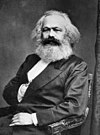
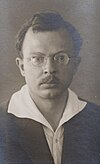




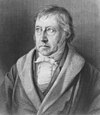





About Karl Popper
Sir Karl Raimund Popper (28 July 1902 – 17 September 1994) was an Austrian-British philosopher, academic and social commentator. One of the 20th century's most influential philosophers of science, Popper is known for his rejection of the classical inductivist views on the scientific method in favour of empirical falsification. According to Popper, a theory in the empirical sciences can never be proven, but it can be falsified, meaning that it can (and should) be scrutinised with decisive experiments. Popper was opposed to the classical justificationist account of knowledge, which he replaced with critical rationalism, namely "the first non-justificational philosophy of criticism in the history of philosophy".
Best Karl Popper Quotes
Shortest
Earliest
Explore our curated collection of the most famous and impactful Karl Popper quotes.
“Never aim at more precision than... required by the problem...”

Unsourced — Primary work/page citation not yet verified in the QuotesCosmos archive. Per our Unnamed Sources & Verification Policy, quotes without confirmed primary editions are explicitly marked Unsourced while under editorial review.
“All things living are in search of a better world.”

Unsourced — Primary work/page citation not yet verified in the QuotesCosmos archive. Per our Unnamed Sources & Verification Policy, quotes without confirmed primary editions are explicitly marked Unsourced while under editorial review.
“Those who promise us paradise on earth never produced anything but a hell.”
Unsourced — Primary work/page citation not yet verified in the QuotesCosmos archive. Per our Unnamed Sources & Verification Policy, quotes without confirmed primary editions are explicitly marked Unsourced while under editorial review.
“[E]ven serious students are misled by the myth of the subject.”

Unsourced — Primary work/page citation not yet verified in the QuotesCosmos archive. Per our Unnamed Sources & Verification Policy, quotes without confirmed primary editions are explicitly marked Unsourced while under editorial review.
“Science must begin with myths, and with the criticism of myths.”

Unsourced — Primary work/page citation not yet verified in the QuotesCosmos archive. Per our Unnamed Sources & Verification Policy, quotes without confirmed primary editions are explicitly marked Unsourced while under editorial review.
“Good tests kill flawed theories; we remain alive to guess again.”
Unsourced — Primary work/page citation not yet verified in the QuotesCosmos archive. Per our Unnamed Sources & Verification Policy, quotes without confirmed primary editions are explicitly marked Unsourced while under editorial review.
“Scientific Method... [is] even less existent than some other non-existent subjects.”
Unsourced — Primary work/page citation not yet verified in the QuotesCosmos archive. Per our Unnamed Sources & Verification Policy, quotes without confirmed primary editions are explicitly marked Unsourced while under editorial review.
“...non-reproducible single occurrences are of no significance to science.”

Unsourced — Primary work/page citation not yet verified in the QuotesCosmos archive. Per our Unnamed Sources & Verification Policy, quotes without confirmed primary editions are explicitly marked Unsourced while under editorial review.
“By 'arguing...' I mean... criticizing... inviting... criticism; and trying to learn from it.”
Unsourced — Primary work/page citation not yet verified in the QuotesCosmos archive. Per our Unnamed Sources & Verification Policy, quotes without confirmed primary editions are explicitly marked Unsourced while under editorial review.
“What can be said can and should always be said more and more simply and clearly.”
Unsourced — Primary work/page citation not yet verified in the QuotesCosmos archive. Per our Unnamed Sources & Verification Policy, quotes without confirmed primary editions are explicitly marked Unsourced while under editorial review.
“We may become the makers of our fate when we have ceased to pose as its prophets.”
Unsourced — Primary work/page citation not yet verified in the QuotesCosmos archive. Per our Unnamed Sources & Verification Policy, quotes without confirmed primary editions are explicitly marked Unsourced while under editorial review.
“[A]rgument is a... form of the art of fighting—with words... inspired by... getting nearer to... truth...”
Unsourced — Primary work/page citation not yet verified in the QuotesCosmos archive. Per our Unnamed Sources & Verification Policy, quotes without confirmed primary editions are explicitly marked Unsourced while under editorial review.
“Besides, we should never attempt to balance anybody's misery against somebody else's happiness.”

Unsourced — Primary work/page citation not yet verified in the QuotesCosmos archive. Per our Unnamed Sources & Verification Policy, quotes without confirmed primary editions are explicitly marked Unsourced while under editorial review.
“It seems to me certain that more people are killed out of righteous stupidity than out of wickedness.”
Unsourced — Primary work/page citation not yet verified in the QuotesCosmos archive. Per our Unnamed Sources & Verification Policy, quotes without confirmed primary editions are explicitly marked Unsourced while under editorial review.
“No rational argument will have a rational effect on a man who does not want to adopt a rational attitude.”
Unsourced — Primary work/page citation not yet verified in the QuotesCosmos archive. Per our Unnamed Sources & Verification Policy, quotes without confirmed primary editions are explicitly marked Unsourced while under editorial review.
“I... believe in the rationalist tradition of a commonwealth of learning, and in the urgent need to preserve this tradition.”
Unsourced — Primary work/page citation not yet verified in the QuotesCosmos archive. Per our Unnamed Sources & Verification Policy, quotes without confirmed primary editions are explicitly marked Unsourced while under editorial review.
“Do not allow your dreams of a beautiful world to lure you away from the claims of men who suffer here and now.”
Unsourced — Primary work/page citation not yet verified in the QuotesCosmos archive. Per our Unnamed Sources & Verification Policy, quotes without confirmed primary editions are explicitly marked Unsourced while under editorial review.
“We must plan for freedom, and not only for security, if for no other reason than that only freedom can make security secure.”

Unsourced — Primary work/page citation not yet verified in the QuotesCosmos archive. Per our Unnamed Sources & Verification Policy, quotes without confirmed primary editions are explicitly marked Unsourced while under editorial review.
“Science may be described as the art of systematic over-simplification — the art of discerning what we may with advantage omit.”

Unsourced — Primary work/page citation not yet verified in the QuotesCosmos archive. Per our Unnamed Sources & Verification Policy, quotes without confirmed primary editions are explicitly marked Unsourced while under editorial review.
“...no matter how many instances of white swans we may have observed, this does not justify the conclusion that all swans are white.”

Unsourced — Primary work/page citation not yet verified in the QuotesCosmos archive. Per our Unnamed Sources & Verification Policy, quotes without confirmed primary editions are explicitly marked Unsourced while under editorial review.
“In brief, it is my thesis that human misery is the most urgent problem of a rational public policy and that happiness is not such a problem.”
Unsourced — Primary work/page citation not yet verified in the QuotesCosmos archive. Per our Unnamed Sources & Verification Policy, quotes without confirmed primary editions are explicitly marked Unsourced while under editorial review.
“Always remember that it is impossible to speak in such a way that you cannot be misunderstood: there will always be some who misunderstand you.”
Unsourced — Primary work/page citation not yet verified in the QuotesCosmos archive. Per our Unnamed Sources & Verification Policy, quotes without confirmed primary editions are explicitly marked Unsourced while under editorial review.
“Scientists try to eliminate their false theories, they try to let them die in their stead. The believer—whether animal or man—perishes with his false beliefs.”
Unsourced — Primary work/page citation not yet verified in the QuotesCosmos archive. Per our Unnamed Sources & Verification Policy, quotes without confirmed primary editions are explicitly marked Unsourced while under editorial review.
“The open society is one in which men have learned to be to some extent critical of taboos, and to base decisions on the authority of their own intelligence.”

Unsourced — Primary work/page citation not yet verified in the QuotesCosmos archive. Per our Unnamed Sources & Verification Policy, quotes without confirmed primary editions are explicitly marked Unsourced while under editorial review.
“Whenever a theory appears to you as the only possible one, take this as a sign that you have neither understood the theory nor the problem which it was intended to solve.”

Unsourced — Primary work/page citation not yet verified in the QuotesCosmos archive. Per our Unnamed Sources & Verification Policy, quotes without confirmed primary editions are explicitly marked Unsourced while under editorial review.
“I am a rationalist. ...I mean ...[I] wish... to understand the world, and to learn by arguing with others. (...I do not say a rationalist holds the mistaken theory that men are... rational.)”
Unsourced — Primary work/page citation not yet verified in the QuotesCosmos archive. Per our Unnamed Sources & Verification Policy, quotes without confirmed primary editions are explicitly marked Unsourced while under editorial review.
“For it was my master who taught me not only how very little I knew but also that any wisdom to which I might ever aspire could consist only in realizing more fully the infinity of my ignorance.”
Unsourced — Primary work/page citation not yet verified in the QuotesCosmos archive. Per our Unnamed Sources & Verification Policy, quotes without confirmed primary editions are explicitly marked Unsourced while under editorial review.
“If the many, the specialists, gain the day, it will be the end of science as we know it - of great science. It will be a spiritual catastrophe comparable in its consequences to nuclear armament.”

Unsourced — Primary work/page citation not yet verified in the QuotesCosmos archive. Per our Unnamed Sources & Verification Policy, quotes without confirmed primary editions are explicitly marked Unsourced while under editorial review.
“From Plato to Karl Marx and beyond, the fundamental problem has always been: who should rule the state? (One of my main points will be that this problem must be replaced by a totally different one.)”
Unsourced — Primary work/page citation not yet verified in the QuotesCosmos archive. Per our Unnamed Sources & Verification Policy, quotes without confirmed primary editions are explicitly marked Unsourced while under editorial review.
“I disbelieve in specialization and... experts. ...[P]aying too much respect to the specialist ...[is] destroying the commonwealth of learning, the rationalist tradition, and science ...”

Unsourced — Primary work/page citation not yet verified in the QuotesCosmos archive. Per our Unnamed Sources & Verification Policy, quotes without confirmed primary editions are explicitly marked Unsourced while under editorial review.
“You can choose whatever name you like for the two types of government. I personally call the type of government which can be removed without violence "democracy", and the other "tyranny".”

Unsourced — Primary work/page citation not yet verified in the QuotesCosmos archive. Per our Unnamed Sources & Verification Policy, quotes without confirmed primary editions are explicitly marked Unsourced while under editorial review.
“I have no faith in precision: ...simplicity and clarity are values in themselves, but not... [of] precision or exactness...”

Unsourced — Primary work/page citation not yet verified in the QuotesCosmos archive. Per our Unnamed Sources & Verification Policy, quotes without confirmed primary editions are explicitly marked Unsourced while under editorial review.
“Piecemeal social engineering resembles physical engineering in regarding the ends as beyond the province of technology. (All that technology may say about ends is whether they are compatible with each other or realizable.)”

Unsourced — Primary work/page citation not yet verified in the QuotesCosmos archive. Per our Unnamed Sources & Verification Policy, quotes without confirmed primary editions are explicitly marked Unsourced while under editorial review.
“The game of science is, in principle, without end. He who decides one day that scientific statements do not call for any further test, and that they can be regarded as finally verified, retires from the game.”

Unsourced — Primary work/page citation not yet verified in the QuotesCosmos archive. Per our Unnamed Sources & Verification Policy, quotes without confirmed primary editions are explicitly marked Unsourced while under editorial review.
“I believe that the advance of science depends upon the free competition of thought, and thus upon freedom, and that it must come to an end if freedom is destroyed (though it may well continue for some time in some fields, especially in technology).”

Unsourced — Primary work/page citation not yet verified in the QuotesCosmos archive. Per our Unnamed Sources & Verification Policy, quotes without confirmed primary editions are explicitly marked Unsourced while under editorial review.
“The belief in a political Utopia is especially dangerous. This is possibly connected with the fact that the search for a better world, like the investigation of our environment, is (if I am correct) one of the oldest and most important of all the instincts.”
Unsourced — Primary work/page citation not yet verified in the QuotesCosmos archive. Per our Unnamed Sources & Verification Policy, quotes without confirmed primary editions are explicitly marked Unsourced while under editorial review.
“The doctrine that there is as much science in a subject as... mathematics in it, or as much... measurement or 'precision' in it, rests upon... misunderstanding.”
Unsourced — Primary work/page citation not yet verified in the QuotesCosmos archive. Per our Unnamed Sources & Verification Policy, quotes without confirmed primary editions are explicitly marked Unsourced while under editorial review.
“Scientific theories are distinguished from myths... in being criticizable, and... open to modifications... They can be neither verified nor probabilified.”
Unsourced — Primary work/page citation not yet verified in the QuotesCosmos archive. Per our Unnamed Sources & Verification Policy, quotes without confirmed primary editions are explicitly marked Unsourced while under editorial review.
“[S]ubject matters in general do not exist. There are no subject matters; no branches of learning—or, rather, of inquiry: there are only problems, and the urge to solve them.”
Unsourced — Primary work/page citation not yet verified in the QuotesCosmos archive. Per our Unnamed Sources & Verification Policy, quotes without confirmed primary editions are explicitly marked Unsourced while under editorial review.
“[T]he history of mankind could... be described as a history of outbreaks of fashionable philosophical and religious maladies. These... have... one serious function... evoking criticism.”

Unsourced — Primary work/page citation not yet verified in the QuotesCosmos archive. Per our Unnamed Sources & Verification Policy, quotes without confirmed primary editions are explicitly marked Unsourced while under editorial review.
“There are all kinds of sources of our knowledge; but none has authority ... The fundamental mistake made by the philosophical theory of the ultimate sources of our knowledge is that it does not distinguish clearly enough between questions of origin and questions of validity.”

Unsourced — Primary work/page citation not yet verified in the QuotesCosmos archive. Per our Unnamed Sources & Verification Policy, quotes without confirmed primary editions are explicitly marked Unsourced while under editorial review.
“Do not allow your dreams of a beautiful world to lure you away from the claims of men who suffer here and now. Our fellow men have a claim to our help; no generation must be sacrificed for the sake of future generations, for the sake of an ideal of happiness that may never be realised.”
Unsourced — Primary work/page citation not yet verified in the QuotesCosmos archive. Per our Unnamed Sources & Verification Policy, quotes without confirmed primary editions are explicitly marked Unsourced while under editorial review.
“Diversity makes critical argument fruitful. ...[P]artners in an argument must share ...the wish to know, and the readiness to learn from the other ...by severely criticizing his views... and hearing... [the] reply. ...the so-called method of science consists in this kind of criticism.”
Unsourced — Primary work/page citation not yet verified in the QuotesCosmos archive. Per our Unnamed Sources & Verification Policy, quotes without confirmed primary editions are explicitly marked Unsourced while under editorial review.
“Our aim as scientists is objective truth; more truth, more interesting truth, more intelligible truth. We cannot reasonably aim at certainty. Once we realize that human knowledge is fallible, we realize also that we can never be completely certain that we have not made a mistake.”

Unsourced — Primary work/page citation not yet verified in the QuotesCosmos archive. Per our Unnamed Sources & Verification Policy, quotes without confirmed primary editions are explicitly marked Unsourced while under editorial review.
“As a rule, begin my lectures on Scientific Method by telling my students that scientific method does not exist. ...having been ...the one and only professor of this non-existent subject within the British Commonwealth.”
Unsourced — Primary work/page citation not yet verified in the QuotesCosmos archive. Per our Unnamed Sources & Verification Policy, quotes without confirmed primary editions are explicitly marked Unsourced while under editorial review.
“... the fight against suffering must be considered a duty, while the right to care for the happiness of others must be considered a privilege confined to the close circle of their friends. ... Pain, suffering, injustice, and their prevention, these are the eternal problems of public morals, the 'agenda' of public policy ...”

Unsourced — Primary work/page citation not yet verified in the QuotesCosmos archive. Per our Unnamed Sources & Verification Policy, quotes without confirmed primary editions are explicitly marked Unsourced while under editorial review.
“Darwinism is not a testable scientific theory, but a metaphysical research program.
• Unsourced variant: Evolution is not a fact. Evolution doesn't even qualify as a theory or as a hypothesis. It is a metaphysical research program, and it is not really testable science.
Popper later retracted his criticisms:”
• Unsourced variant: Evolution is not a fact. Evolution doesn't even qualify as a theory or as a hypothesis. It is a metaphysical research program, and it is not really testable science.
Popper later retracted his criticisms:”
Unsourced — Primary work/page citation not yet verified in the QuotesCosmos archive. Per our Unnamed Sources & Verification Policy, quotes without confirmed primary editions are explicitly marked Unsourced while under editorial review.
“I think so badly of philosophy that I don't like to talk about it. ... I do not want to say anything bad about my dear colleagues, but the profession of teacher of philosophy is a ridiculous one. We don't need a thousand of trained, and badly trained, philosophers — it is very silly. Actually most of them have nothing to say.”
Unsourced — Primary work/page citation not yet verified in the QuotesCosmos archive. Per our Unnamed Sources & Verification Policy, quotes without confirmed primary editions are explicitly marked Unsourced while under editorial review.
“Bold ideas, unjustified anticipations, and speculative thought, are our only means for interpreting nature: our only organon, our only instrument, for grasping her. And we must hazard them to win our prize. Those among us who are unwilling to expose their ideas to the hazard of refutation do not take part in the scientific game.”

Unsourced — Primary work/page citation not yet verified in the QuotesCosmos archive. Per our Unnamed Sources & Verification Policy, quotes without confirmed primary editions are explicitly marked Unsourced while under editorial review.
“There is an almost universal tendency, perhaps an inborn tendency, to suspect the good faith of a man who holds opinions that differ from our own opinions. ... It obviously endangers the freedom and the objectivity of our discussion if we attack a person instead of attacking an opinion or, more precisely, a theory.”

Unsourced — Primary work/page citation not yet verified in the QuotesCosmos archive. Per our Unnamed Sources & Verification Policy, quotes without confirmed primary editions are explicitly marked Unsourced while under editorial review.
“Science is not a system of certain, or well established, statements; nor is it a statement which steadily advances towards state of finality. Our science is not knowledge (epistēmē): it can newer claim to have attained truth, or even substitute for it, such as probability. . . . We do not know; we can only guess.”
Unsourced — Primary work/page citation not yet verified in the QuotesCosmos archive. Per our Unnamed Sources & Verification Policy, quotes without confirmed primary editions are explicitly marked Unsourced while under editorial review.
“I appeal to the philosophers of all countries to unite and never again mention Heidegger or talk to another philosopher who defends Heidegger. This man was a devil. I mean, he behaved like a devil to his beloved teacher, and he has a devilish influence on Germany. ... One has to read Heidegger in the original to see what a swindler he was.”

Unsourced — Primary work/page citation not yet verified in the QuotesCosmos archive. Per our Unnamed Sources & Verification Policy, quotes without confirmed primary editions are explicitly marked Unsourced while under editorial review.
“It seems to me that I may be living too long. Indeed: my nearest relations have all died, and so have some of my best friends, and even some of my best pupils. However, I do not have a reason to complain. I am grateful and happy to be alive, and still be able to continue with my work, if only just. My work seems to me more important than ever.”
Unsourced — Primary work/page citation not yet verified in the QuotesCosmos archive. Per our Unnamed Sources & Verification Policy, quotes without confirmed primary editions are explicitly marked Unsourced while under editorial review.
“There are many difficulties impeding the rapid spread of reasonableness. One of the main difficulties is that it always takes two to make a discussion reasonable. Each of the parties must be ready to learn from the other. You cannot have a rational discussion with a man who prefers shooting you to being convinced by you.”
Unsourced — Primary work/page citation not yet verified in the QuotesCosmos archive. Per our Unnamed Sources & Verification Policy, quotes without confirmed primary editions are explicitly marked Unsourced while under editorial review.
“A rationalist, as I use the word, is a man who attempts to reach decisions by argument and perhaps, in certain cases, by compromise, rather than by violence. He is a man who would rather be unsuccessful in convincing another man by argument than successful in crushing him by force, by intimidation and threats, or even by persuasive propaganda.”

Unsourced — Primary work/page citation not yet verified in the QuotesCosmos archive. Per our Unnamed Sources & Verification Policy, quotes without confirmed primary editions are explicitly marked Unsourced while under editorial review.
“There are uncertain truths — even true statements that we may take to be false — but there are no uncertain certainties.
Since we can never know anything for sure, it is simply not worth searching for certainty; but it is well worth searching for truth; and we do this chiefly by searching for mistakes, so that we have to correct them.”
Since we can never know anything for sure, it is simply not worth searching for certainty; but it is well worth searching for truth; and we do this chiefly by searching for mistakes, so that we have to correct them.”
Unsourced — Primary work/page citation not yet verified in the QuotesCosmos archive. Per our Unnamed Sources & Verification Policy, quotes without confirmed primary editions are explicitly marked Unsourced while under editorial review.
“If we are uncritical we shall always find what we want: we shall look for, and find, confirmations, and we shall look away from, and not see, whatever might be dangerous to our pet theories. In this way it is only too easy to obtain what appears to be overwhelming evidence in favor of a theory which, if approached critically, would have been refuted.”
Unsourced — Primary work/page citation not yet verified in the QuotesCosmos archive. Per our Unnamed Sources & Verification Policy, quotes without confirmed primary editions are explicitly marked Unsourced while under editorial review.
“If I were to give a simple formula or recipe for distinguishing between what I consider to be admissible plans for social reform and inadmissible Utopian blueprints, I might say: Work for the elimination of concrete evils rather than for the realization of abstract goods. Do not aim at establishing happiness by political means. Rather aim at the elimination of concrete miseries.”
Unsourced — Primary work/page citation not yet verified in the QuotesCosmos archive. Per our Unnamed Sources & Verification Policy, quotes without confirmed primary editions are explicitly marked Unsourced while under editorial review.
“I do not overlook the fact that there are irrationalists who love mankind, and that not all forms of irrationalism engender criminality. But I hold that he who teaches that not reason but love should rule opens up the way for those who rule by hate. (Socrates, I believe, saw something of this when he suggested that mistrust or hatred of argument is related to mistrust or hatred of man).”
Unsourced — Primary work/page citation not yet verified in the QuotesCosmos archive. Per our Unnamed Sources & Verification Policy, quotes without confirmed primary editions are explicitly marked Unsourced while under editorial review.
“I assert
(1) There is no method of discovering a scientific theory.
(2) There is no method of ascertaining the truth [i.e., verification] of a scientific hypothesis...
(3) '''There is no method of ascertaining whether a hypothesis is 'probable'''', in the sense of the probability calculus.”
(1) There is no method of discovering a scientific theory.
(2) There is no method of ascertaining the truth [i.e., verification] of a scientific hypothesis...
(3) '''There is no method of ascertaining whether a hypothesis is 'probable'''', in the sense of the probability calculus.”
Unsourced — Primary work/page citation not yet verified in the QuotesCosmos archive. Per our Unnamed Sources & Verification Policy, quotes without confirmed primary editions are explicitly marked Unsourced while under editorial review.
“Plato, Aristotle, Bacon and Descartes, as well... successors... [e.g.,] John Stuart Mill, believed that there existed a method of finding scientific truth. ...[L]ater ...slightly more sceptical ...methodologists ...believed that there existed a method, if not of finding a true theory, then ...of ascertaining whether ...some ...hypothesis was true; or (even more sceptical) whether some ... hypothesis was ...'probable' ...”
Unsourced — Primary work/page citation not yet verified in the QuotesCosmos archive. Per our Unnamed Sources & Verification Policy, quotes without confirmed primary editions are explicitly marked Unsourced while under editorial review.
“I do not believe in what is often called... 'exact terminology'... [or] in definitions... [they] do not... add to exactness... I especially dislike pretentious terminology and... pseudo-exactness concerned with it.”
Unsourced — Primary work/page citation not yet verified in the QuotesCosmos archive. Per our Unnamed Sources & Verification Policy, quotes without confirmed primary editions are explicitly marked Unsourced while under editorial review.
“We all remember how many religious wars were fought for a religion of love and gentleness; how many bodies were burned alive with the genuinely kind intention of saving souls from the eternal fire of hell. Only if we give up our authoritarian attitude in the realm of opinion, only if we establish the attitude of give and take, of readiness to learn from other people, can we hope to control acts of violence inspired by piety and duty.”
Unsourced — Primary work/page citation not yet verified in the QuotesCosmos archive. Per our Unnamed Sources & Verification Policy, quotes without confirmed primary editions are explicitly marked Unsourced while under editorial review.
“Philosophers should consider the fact that the greatest happiness principle can easily be made an excuse for a benevolent dictatorship. We should replace it by a more modest and more realistic principle — the principle that the fight against avoidable misery should be a recognized aim of public policy, while the increase of happiness should be left, in the main, to private initiative.”
Unsourced — Primary work/page citation not yet verified in the QuotesCosmos archive. Per our Unnamed Sources & Verification Policy, quotes without confirmed primary editions are explicitly marked Unsourced while under editorial review.
“It is often asserted that discussion is only possible between people who have a common language and accept common basic assumptions. I think that this is a mistake. All that is needed is a readiness to learn from one's partner in the discussion, which includes a genuine wish to understand what he intends to say. If this readiness is there, the discussion will be the more fruitful the more the partner's backgrounds differ.”
Unsourced — Primary work/page citation not yet verified in the QuotesCosmos archive. Per our Unnamed Sources & Verification Policy, quotes without confirmed primary editions are explicitly marked Unsourced while under editorial review.
“The history of science, like the history of all human ideas, is a history of irresponsible dreams, of obstinacy, and of error. But science is one of the very few human activities — perhaps the only one — in which errors are systematically criticized and fairly often, in time, corrected. This is why we can say that, in science, we often learn from our mistakes, and why we can speak clearly and sensibly about making progress there.”
Unsourced — Primary work/page citation not yet verified in the QuotesCosmos archive. Per our Unnamed Sources & Verification Policy, quotes without confirmed primary editions are explicitly marked Unsourced while under editorial review.
“Appealing to his [ Einstein's] way of expressing himself in theological terms, I said: If God had wanted to put everything into the universe from the beginning, He would have created a universe without change, without organisms and evolution, and without man and man's experience of change. But he seems to have thought that a live universe with events unexpected even by Himself would be more interesting than a dead one.”

Unsourced — Primary work/page citation not yet verified in the QuotesCosmos archive. Per our Unnamed Sources & Verification Policy, quotes without confirmed primary editions are explicitly marked Unsourced while under editorial review.
“[T]here is only one way to science—or to philosophy... to meet a problem, to see its beauty and fall in love with it; to get married to it, and to live with it happily, till death do ye part—unless you should meet another... more fascinating problem, or... obtain a solution. But even if you do... you may... discover, to your delight, the... a whole family of enchanting... perhaps difficult problem children for whose welfare you may work, with a purpose, to the end of your days.”
Unsourced — Primary work/page citation not yet verified in the QuotesCosmos archive. Per our Unnamed Sources & Verification Policy, quotes without confirmed primary editions are explicitly marked Unsourced while under editorial review.
“As for Adler, I was much impressed by a personal experience. Once, in 1919, I reported to him a case which to me did not seem particularly Adlerian, but which he found no difficulty in analyzing in terms of his theory of inferiority feelings, although he had not even seen the child. Slightly shocked, I asked him how he could be so sure. "Because of my thousandfold experience," he replied; whereupon I could not help saying: "And with this new case, I suppose, your experience has become thousand-and-one-fold."”

Unsourced — Primary work/page citation not yet verified in the QuotesCosmos archive. Per our Unnamed Sources & Verification Policy, quotes without confirmed primary editions are explicitly marked Unsourced while under editorial review.
“One of the ideas I had discussed in The Poverty of Historicism was the influence of a prediction upon the event predicted. I had called this the "Oedipus effect", because the oracle played a most important role in the sequence of events which led to the fulfilment of its prophecy. ... For a time I thought that the existence of the Oedipus effect distinguished the social from the natural sciences. But in biology, too—even in molecular biology—expectations often play a role in bringing about what has been expected.”
Unsourced — Primary work/page citation not yet verified in the QuotesCosmos archive. Per our Unnamed Sources & Verification Policy, quotes without confirmed primary editions are explicitly marked Unsourced while under editorial review.
“The true Enlightenment thinker, the true rationalist, never wants to talk anyone into anything. No, he does not even want to convince; all the time he is aware that he may be wrong. Above all, he values the intellectual independence of others too highly to want to convince them in important matters. He would much rather invite contradiction, preferably in the form of rational and disciplined criticism. He seeks not to convince but to arouse — to challenge others to form free opinions.”
Unsourced — Primary work/page citation not yet verified in the QuotesCosmos archive. Per our Unnamed Sources & Verification Policy, quotes without confirmed primary editions are explicitly marked Unsourced while under editorial review.
“Why do I think that we, the intellectuals, are able to help? Simply because we, the intellectuals, have done the most terrible harm for thousands of years. Mass murder in the name of an idea, a doctrine, a theory, a religion — that is all our doing, our invention: the invention of the intellectuals. If only we would stop setting man against man — often with the best intentions — much would be gained. Nobody can say that it is impossible for us to stop doing this.”

Unsourced — Primary work/page citation not yet verified in the QuotesCosmos archive. Per our Unnamed Sources & Verification Policy, quotes without confirmed primary editions are explicitly marked Unsourced while under editorial review.
“... the attempt to make heaven on earth invariably produces hell. It leads to intolerance. It leads to religious wars, and to the saving of souls through the inquisition. And it is, I believe, based on a complete misunderstanding of our moral duties. It is our duty to help those who need help; but it cannot be our duty to make others happy, since this does not depend on us, and since it would only too often mean intruding on the privacy of those towards whom we have such amiable intentions.”
Unsourced — Primary work/page citation not yet verified in the QuotesCosmos archive. Per our Unnamed Sources & Verification Policy, quotes without confirmed primary editions are explicitly marked Unsourced while under editorial review.
“Science does not rest upon solid bedrock. The bold structure of its theories arises, as it were, above a swamp. It is like a building erected on piles. The piles are driven down from above into the swamp, but not down to any natural or 'given' base; and if we stop driving the piles deeper, it is not because we have reached firm ground. We simply stop when we are satisfied that the piles are firm enough to carry the structure, at least for the time being.”
Unsourced — Primary work/page citation not yet verified in the QuotesCosmos archive. Per our Unnamed Sources & Verification Policy, quotes without confirmed primary editions are explicitly marked Unsourced while under editorial review.
“What a monument of human smallness is this idea of the philosopher king. What a contrast between it and the simplicity of humaneness of Socrates, who warned the statesmen against the danger of being dazzled by his own power, excellence, and wisdom, and who tried to teach him what matters most — that we are all frail human beings. What a decline from this world of irony and reason and truthfulness down to Plato's kingdom of the sage whose magical powers raise him high above ordinary men; although not quite high enough to forgo the use of lies, or to neglect the sorry trade of every shaman — the selling of spells, of breeding spells, in exchange for power over his fellow-men.”

Unsourced — Primary work/page citation not yet verified in the QuotesCosmos archive. Per our Unnamed Sources & Verification Policy, quotes without confirmed primary editions are explicitly marked Unsourced while under editorial review.
“Although I consider our political world to be the best of which we have any historical knowledge, we should beware of attributing this fact to democracy or to freedom. Freedom is not a supplier who delivers goods to our door. Democracy does not ensure that anything is accomplished — certainly not an economic miracle. It is wrong and dangerous to extol freedom by telling people that they will certainly be all right once they are free. How someone fares in life is largely a matter of luck or grace, and to a comparatively small degree perhaps also of competence, diligence, and other virtues. The most we can say of democracy or freedom is that they give our personal abilities a little more influence on our well-being.”
Unsourced — Primary work/page citation not yet verified in the QuotesCosmos archive. Per our Unnamed Sources & Verification Policy, quotes without confirmed primary editions are explicitly marked Unsourced while under editorial review.
“The more we learn about the world, and the deeper our learning, the more conscious, specific, and articulate will be our knowledge of what we do not know, our knowledge of our ignorance. For this, indeed, is the main source of our ignorance — the fact that our knowledge can be only finite, while our ignorance must necessarily be infinite.
• Variant translation: The more we learn about the world, and the deeper our learning, the more conscious, clear, and well-defined will be our knowledge of what we do not know, our knowledge of our ignorance. The main source of our ignorance lies in the fact that our knowledge can only be finite, while our ignorance must necessarily be infinite.”
• Variant translation: The more we learn about the world, and the deeper our learning, the more conscious, clear, and well-defined will be our knowledge of what we do not know, our knowledge of our ignorance. The main source of our ignorance lies in the fact that our knowledge can only be finite, while our ignorance must necessarily be infinite.”
Unsourced — Primary work/page citation not yet verified in the QuotesCosmos archive. Per our Unnamed Sources & Verification Policy, quotes without confirmed primary editions are explicitly marked Unsourced while under editorial review.
“Put in a nut-shell, my thesis amounts to this. The repeated attempts made by Rudolf Carnap to show that the demarcation between science and metaphysics coincides with that between sense and nonsense have failed. The reason is that the positivistic concept of 'meaning' or 'sense' (or of verifiability, or of inductive confirmability, etc.) is inappropriate for achieving this demarcation — simply because metaphysics need not be meaningless even though it is not science. In all its variations demarcation by meaninglessness has tended to be at the same time too narrow and too wide: as against all intentions and all claims, it has tended to exclude scientific theories as meaningless, while failing to exclude even that part of metaphysics which is known as 'rational theology'.”

Unsourced — Primary work/page citation not yet verified in the QuotesCosmos archive. Per our Unnamed Sources & Verification Policy, quotes without confirmed primary editions are explicitly marked Unsourced while under editorial review.
“Before we as individuals are even conscious of our existence we have been profoundly influenced for a considerable time (since before birth) by our relationship to other individuals who have complicated histories, and are members of a society which has an infinitely more complicated and longer history than they do (and are members of it at a particular time and place in that history); and by the time we are able to make conscious choices we are already making use of categories in a language which has reached a particular degree of development through the lives of countless generations of human beings before us. . . . We are social creatures to the inmost centre of our being. The notion that one can begin anything at all from scratch, free from the past, or unindebted to others, could not conceivably be more wrong.”
Unsourced — Primary work/page citation not yet verified in the QuotesCosmos archive. Per our Unnamed Sources & Verification Policy, quotes without confirmed primary editions are explicitly marked Unsourced while under editorial review.
“In speaking of sociological laws or natural laws of social life I have in mind such laws as are formulated by modern economic theories, for instance, the theory of international trade, or the theory of the trade cycle. These and other important sociological laws are connected with the functioning of social institutions. These laws play a role in our social life corresponding to the role played in mechanical engineering by, say, the principle of the lever. For institutions, like levers, are needed if we want to achieve anything which goes beyond the power of our muscles. Like machines, institutions multiply our power for good or evil. Like machines, they need intelligent supervision by someone who understands their way of functioning and, most of all, their purpose, since we cannot build them so that they work entirely automatically.”
Unsourced — Primary work/page citation not yet verified in the QuotesCosmos archive. Per our Unnamed Sources & Verification Policy, quotes without confirmed primary editions are explicitly marked Unsourced while under editorial review.
“If in this book harsh words are spoken about some of the greatest among the intellectual leaders of mankind, my motive is not, I hope, the wish to belittle them. It springs rather from my conviction that, if our civilization is to survive, we must break with the habit of deference to great men. Great men may make great mistakes; and as the book tries to show, some of the greatest leaders of the past supported the perennial attack on freedom and reason. Their influence, too rarely challenged, continues to mislead those on whose defence civilization depends, and to divide them. The responsibility of this tragic and possibly fatal division becomes ours if we hesitate to be outspoken in our criticism of what admittedly is a part of our intellectual heritage. By reluctance to criticize some of it, we may help to destroy it all.”

Unsourced — Primary work/page citation not yet verified in the QuotesCosmos archive. Per our Unnamed Sources & Verification Policy, quotes without confirmed primary editions are explicitly marked Unsourced while under editorial review.
“'[S]cientific knowledge' always remained sheer guesswork... controlled by criticism and experiment. ...[T]his assumption is sufficient for solving the problem of induction—called by Kant 'the problem of Hume'— without sacrificing empiricism...[i.e.,] without adopting a principle of induction and ascribing to it a priori validity. For guesses are not 'induced from observations' (although they may ...be suggested ...by observations). This ... allows us to accept ...(...without Russell's limits of empiricism) Hume's logical criticism of induction and to give up ...an inductive logic, for certainty, and even for probability, while continuing ...scientific search for truth.”
Unsourced — Primary work/page citation not yet verified in the QuotesCosmos archive. Per our Unnamed Sources & Verification Policy, quotes without confirmed primary editions are explicitly marked Unsourced while under editorial review.
“It is wrong to think that belief in freedom always leads to victory; we must always be prepared for it to lead to defeat. If we choose freedom, then we must be prepared to perish along with it. Poland fought for freedom as no other country did. The Czech nation was prepared to fight for its freedom in 1938; it was not lack of courage that sealed its fate. The Hungarian Revolution of 1956 — the work of young people with nothing to lose but their chains — triumphed and then ended in failure. ... Democracy and freedom do not guarantee the millennium. No, we do not choose political freedom because it promises us this or that. We choose it because it makes possible the only dignified form of human coexistence, the only form in which we can be fully responsible for ourselves. Whether we realize its possibilities depends on all kinds of things — and above all on ourselves.”
Unsourced — Primary work/page citation not yet verified in the QuotesCosmos archive. Per our Unnamed Sources & Verification Policy, quotes without confirmed primary editions are explicitly marked Unsourced while under editorial review.
“This book raises issues that might not be apparent from the table of contents.
It sketches some of the difficulties faced by our civilization — a civilization which might be perhaps described as aiming at humanness and reasonableness, at equality and freedom; a civilization which is still in its infancy, as it were, and which continues to grow in spite of the fact that it has been so often betrayed by so many of the intellectual leaders of mankind. It attempts to show that this civilization has not yet fully recovered from the shock of its birth — the transition from the tribal or "enclosed society," with its submission to magical forces, to the 'open society' which sets free the critical powers of man. It attempts to show that the shock of this transition is one of the factors that have made possible the rise of those reactionary movements which have tried, and still try, to overthrow civilization and to return to tribalism.”
It sketches some of the difficulties faced by our civilization — a civilization which might be perhaps described as aiming at humanness and reasonableness, at equality and freedom; a civilization which is still in its infancy, as it were, and which continues to grow in spite of the fact that it has been so often betrayed by so many of the intellectual leaders of mankind. It attempts to show that this civilization has not yet fully recovered from the shock of its birth — the transition from the tribal or "enclosed society," with its submission to magical forces, to the 'open society' which sets free the critical powers of man. It attempts to show that the shock of this transition is one of the factors that have made possible the rise of those reactionary movements which have tried, and still try, to overthrow civilization and to return to tribalism.”

Unsourced — Primary work/page citation not yet verified in the QuotesCosmos archive. Per our Unnamed Sources & Verification Policy, quotes without confirmed primary editions are explicitly marked Unsourced while under editorial review.
“There is no history of mankind, there is only an indefinite number of histories of all kinds of aspects of human life. And one of these is the history of political power. This is elevated into the history of the world. But this, I hold, is an offence against every decent conception of mankind. It is hardly better than to treat the history of embezzlement or of robbery or of poisoning as the history of mankind. For the history of power politics is nothing but the history of international crime and mass murder (including it is true, some of the attempts to suppress them). This history is taught in schools, and some of the greatest criminals are extolled as heroes.
• Vol 2, Ch. 25 "Has History any Meaning?" Variant: There is no history of mankind, there are only many histories of all kinds of aspects of human life. And one of these is the history of political power. This is elevated into the history of the world.”
• Vol 2, Ch. 25 "Has History any Meaning?" Variant: There is no history of mankind, there are only many histories of all kinds of aspects of human life. And one of these is the history of political power. This is elevated into the history of the world.”
Unsourced — Primary work/page citation not yet verified in the QuotesCosmos archive. Per our Unnamed Sources & Verification Policy, quotes without confirmed primary editions are explicitly marked Unsourced while under editorial review.
“I see now more clearly than ever before that even our greatest troubles spring from something that is as admirable and sound as it is dangerous — from our impatience to better the lot of our fellows. For these troubles are the by-products of what is perhaps the greatest of all moral and spiritual revolutions of history, a movement which began three centuries ago. It is the longing of uncounted unknown men to free themselves and their minds from the tutelage of authority and prejudice. It is their attempt to build up an open society which rejects the absolute authority to preserve, to develop, and to establish traditions, old or new, that measure up to their standards of freedom, of humaneness, and of rational criticism. It is their unwillingness to sit back and leave the entire responsibility for ruling the world to human or superhuman authority,and their readiness to share the burden of responsibility for avoidable suffering, and to work for its avoidance. This revolution has created powers of appalling destructiveness; but they may yet be conquered.”
Unsourced — Primary work/page citation not yet verified in the QuotesCosmos archive. Per our Unnamed Sources & Verification Policy, quotes without confirmed primary editions are explicitly marked Unsourced while under editorial review.
“I may illustrate this by two very different examples of human behaviour: that of a man who pushes a child into the water with the intention of drowning it; and that of a man who sacrifices his life in an attempt to save the child. Each of these two cases can be explained with equal ease in Freudian and in Adlerian terms. According to Freud the first man suffered from repression (say, of some component of his Oedipus complex), while the second man had achieved sublimation. According to Adler the first man suffered from feelings of inferiority (producing perhaps the need to prove to himself that he dared to commit some crime), and so did the second man (whose need was to prove to himself that he dared to rescue the child). I could not think of any human behaviour which could not be interpreted in terms of either theory. It was precisely this fact — that they always fitted, that they were always confirmed — which in the eyes of their admirers constituted the strongest argument in favour of these theories. It began to dawn on me that this apparent strength was in fact their weakness.”
Unsourced — Primary work/page citation not yet verified in the QuotesCosmos archive. Per our Unnamed Sources & Verification Policy, quotes without confirmed primary editions are explicitly marked Unsourced while under editorial review.
“When I speak of reason or rationalism, all I mean is the conviction that we can learn through criticism of our mistakes and errors, especially through criticism by others, and eventually also through self-criticism. A rationalist is simply someone for whom it is more important to learn than to be proved right; someone who is willing to learn from others — not by simply taking over another's opinions, but by gladly allowing others to criticize his ideas and by gladly criticizing the ideas of others. The emphasis here is on the idea of criticism or, to be more precise, critical discussion. The genuine rationalist does not think that he or anyone else is in possession of the truth; nor does he think that mere criticism as such helps us achieve new ideas. But he does think that, in the sphere of ideas, only critical discussion can help us sort the wheat from the chaff. He is well aware that acceptance or rejection of an idea is never a purely rational matter; but he thinks that only critical discussion can give us the maturity to see an idea from more and more sides and to make a correct judgement of it.”
Unsourced — Primary work/page citation not yet verified in the QuotesCosmos archive. Per our Unnamed Sources & Verification Policy, quotes without confirmed primary editions are explicitly marked Unsourced while under editorial review.
“The answer to this problem is: as implied by Hume, we certainly are not justified in reasoning from an instance to the truth of the corresponding law. But to this negative result a second result, equally negative, may be added: we are justified in reasoning from a counterinstance to the falsity of the corresponding universal law (that is, of any law of which it is a counterinstance). Or in other words, from a purely logical point of view, the acceptance of one counterinstance to 'All swans are white' implies the falsity of the law 'All swans are white' - that law, that is, whose counterinstance we accepted. Induction is logically invalid; but refutation or falsification is a logically valid way of arguing from a single counterinstance to - or, rather, against - the corresponding law.This shows that I continue to agree with Hume's negative logical result; but I extend it.This logical situation is completely independent of any question of whether we would, in practice, accept a single counterinstance - for example, a solitary black swan - in refutation of a so far highly successful law. I do not suggest that we would necessarily be so easily satisfied; we might well suspect that the black specimen before us was not a swan."”

Unsourced — Primary work/page citation not yet verified in the QuotesCosmos archive. Per our Unnamed Sources & Verification Policy, quotes without confirmed primary editions are explicitly marked Unsourced while under editorial review.
“Not only do I hate violence, but I firmly believe that the fight against it is not hopeless. I realize that the task is difficult. I realize that, only too often in the course of history, it has happened that what appeared at first to be a great success in the fight against violence was followed by a defeat. I do not overlook the fact that the new age of violence which was opened by the two World wars is by no means at an end. Nazism and Fascism are thoroughly beaten, but I must admit that their defeat does not mean that barbarism and brutality have been defeated. On the contrary, it is no use closing our eyes to the fact that these hateful ideas achieved something like a victory in defeat. I have to admit that Hitler succeeded in degrading the moral standards of our Western world, and that in the world of today there is more violence and brutal force than would have been tolerated even in the decade after the first World war. And we must face the possibility that our civilization may ultimately be destroyed by those new weapons which Hitlerism wished upon us, perhaps even within the first decade after the second World war; for no doubt the spirit of Hitlerism won its greatest victory over us when, after its defeat, we used the weapons which the threat of Nazism had induced us to develop.”

Unsourced — Primary work/page citation not yet verified in the QuotesCosmos archive. Per our Unnamed Sources & Verification Policy, quotes without confirmed primary editions are explicitly marked Unsourced while under editorial review.
“I believe that there is, from the ethical point of view, no symmetry between suffering and happiness, or between pain and pleasure. Both the greatest happiness principle of the Utilitarians and Kant's principle 'Promote other people's happiness ..' seem to me (at least in their formulations) wrong on this point which, however, is not completely decidable by rational argument. (For the irrational aspect of ethical beliefs, see note 11 to the present chapter, and for the rational aspect, sections II and especially III of chapter 24). In my opinion (cp. note 6 (2) to chapter 5) human suffering makes a direct moral appeal, namely, the appeal for help, while there is no similar call to increase the happiness of a man who is doing well anyway. (A further criticism of the Utilitarian formula 'Maximize pleasure' is that it assumes, in principle, a continuous pleasure-pain scale which allows us to treat degrees of pain as negative degrees of pleasure. But, from the moral point of view, pain cannot be outweighed by pleasure, and especially not one man's pain by another man's pleasure. Instead of the greatest happiness for the greatest number, one should demand, more modestly, the least amount of avoidable suffering for all; and further, that unavoidable suffering—such as hunger in times of an unavoidable shortage of food—should be distributed as equally as possible.)”
Unsourced — Primary work/page citation not yet verified in the QuotesCosmos archive. Per our Unnamed Sources & Verification Policy, quotes without confirmed primary editions are explicitly marked Unsourced while under editorial review.
“Although my own position is, I believe, clearly enough implied in the text, I may perhaps briefly formulate what seems to me the most important principles of humanitarian and equalitarian ethics. (1) Tolerance towards all who are not intolerant and who do not propagate intolerance. ... This implies, especially, that the moral decisions of others should be treated with respect, as long as such decisions do not conflict with the principle of tolerance. (2) The recognition that all moral urgency has its basis in the urgency of suffering or pain. I suggest, for this reason, to replace the utilitarian formula 'Aim at the greatest amount of happiness for the greatest number', or briefly, 'Maximize happiness' by the formula 'The least amount of avoidable suffering for all', or briefly, 'Minimize suffering'. Such a simple formula can, I believe, be made one of the fundamental principles (admittedly not the only one) of public policy. (The principle 'Maximize happiness', in contrast, seems to be apt to produce a benevolent dictatorship.) We should realize that from the moral point of view suffering and happiness must not be treated as symmetrical; that is to say, the promotion of happiness is in any case much less urgent than the rendering of help to those who suffer, and the attempt to prevent suffering. (The latter task has little to do with 'matters of taste', the former much.)”
Unsourced — Primary work/page citation not yet verified in the QuotesCosmos archive. Per our Unnamed Sources & Verification Policy, quotes without confirmed primary editions are explicitly marked Unsourced while under editorial review.
“A principle of induction would be a statement with the help of which we could put inductive inferences into a logically acceptable form. In the eyes of the upholders of inductive logic, a principle of induction is of supreme importance for scientific method: "... this principle", says Reichenbach, "determines the truth of scientific theories. To eliminate it from science would mean nothing less than to deprive science of the power to decide the truth or falsity of its theories. Without it, clearly, science would no longer have the right to distinguish its theories from the fanciful and arbitrary creations of the poet's mind."
Now this principle of induction cannot be a purely logical truth like a tautology or an analytic statement. Indeed, if there were such a thing as a purely logical principle of induction, there would be no problem of induction; for in this case, all inductive inferences would have to be regarded as purely logical or tautological transformations, just like inferences in inductive logic. Thus the principle of induction must be a synthetic statement; that is, a statement whose negation is not self-contradictory but logically possible. So the question arises why such a principle should be accepted at all, and how we can justify its acceptance on rational grounds.”
Now this principle of induction cannot be a purely logical truth like a tautology or an analytic statement. Indeed, if there were such a thing as a purely logical principle of induction, there would be no problem of induction; for in this case, all inductive inferences would have to be regarded as purely logical or tautological transformations, just like inferences in inductive logic. Thus the principle of induction must be a synthetic statement; that is, a statement whose negation is not self-contradictory but logically possible. So the question arises why such a principle should be accepted at all, and how we can justify its acceptance on rational grounds.”
Unsourced — Primary work/page citation not yet verified in the QuotesCosmos archive. Per our Unnamed Sources & Verification Policy, quotes without confirmed primary editions are explicitly marked Unsourced while under editorial review.
“The so-called paradox of freedom is the argument that freedom in the sense of absence of any constraining control must lead to very great restraint, since it makes the bully free to enslave the meek. The idea is, in a slightly different form, and with very different tendency, clearly expressed in Plato.
Less well known is the paradox of tolerance: Unlimited tolerance must lead to the disappearance of tolerance. If we extend unlimited tolerance even to those who are intolerant, if we are not prepared to defend a tolerant society against the onslaught of the intolerant, then the tolerant will be destroyed, and tolerance with them. — In this formulation, I do not imply, for instance, that we should always suppress the utterance of intolerant philosophies; as long as we can counter them by rational argument and keep them in check by public opinion, suppression would certainly be unwise. But we should claim the right to suppress them if necessary even by force; for it may easily turn out that they are not prepared to meet us on the level of rational argument, but begin by denouncing all argument; they may forbid their followers to listen to rational argument, because it is deceptive, and teach them to answer arguments by the use of their fists or pistols. We should therefore claim, in the name of tolerance, the right not to tolerate the intolerant. We should claim that any movement preaching intolerance places itself outside the law, and we should consider incitement to intolerance and persecution as criminal, in the same way as we should consider incitement to murder, or to kidnapping, or to the revival of the slave trade, as criminal.”
Less well known is the paradox of tolerance: Unlimited tolerance must lead to the disappearance of tolerance. If we extend unlimited tolerance even to those who are intolerant, if we are not prepared to defend a tolerant society against the onslaught of the intolerant, then the tolerant will be destroyed, and tolerance with them. — In this formulation, I do not imply, for instance, that we should always suppress the utterance of intolerant philosophies; as long as we can counter them by rational argument and keep them in check by public opinion, suppression would certainly be unwise. But we should claim the right to suppress them if necessary even by force; for it may easily turn out that they are not prepared to meet us on the level of rational argument, but begin by denouncing all argument; they may forbid their followers to listen to rational argument, because it is deceptive, and teach them to answer arguments by the use of their fists or pistols. We should therefore claim, in the name of tolerance, the right not to tolerate the intolerant. We should claim that any movement preaching intolerance places itself outside the law, and we should consider incitement to intolerance and persecution as criminal, in the same way as we should consider incitement to murder, or to kidnapping, or to the revival of the slave trade, as criminal.”
Unsourced — Primary work/page citation not yet verified in the QuotesCosmos archive. Per our Unnamed Sources & Verification Policy, quotes without confirmed primary editions are explicitly marked Unsourced while under editorial review.
“ What we should do, I suggest, is to give up the idea of ultimate sources of knowledge, and admit that all knowledge is human; that it is mixed with our errors, our prejudices, our dreams, and our hopes; that all we can do is to grope for truth even though it be beyond our reach. We may admit that our groping is often inspired, but we must be on our guard against the belief, however deeply felt, that our inspiration carries any authority, divine or otherwise. If we thus admit that there is no authority beyond the reach of criticism to be found within the whole province of our knowledge, however far it may have penetrated into the unknown, then we can retain, without danger, the idea that truth is beyond human authority. And we must retain it. For without this idea there can be no objective standards of inquiry; no criticism of our conjectures; no groping for the unknown; no quest for knowledge.
• Introduction "On The Sources of Knowledge and of Ignorance" Section XVII, p. 30 Variant translation: I believe it is worthwhile trying to discover more about the world, even if this only teaches us how little we know. It might do us good to remember from time to time that, while differing widely in the various little bits we know, in our infinite ignorance we are all equal.
If we thus admit that there is no authority beyond the reach of criticism to be found within the whole province of our knowledge, however far we may have penetrated into the unknown, then we can retain, without risk of dogmatism, the idea that truth itself is beyond all human authority. Indeed, we are not only able to retain this idea, we must retain it. For without it there can be no objective standards of scientific inquiry, no criticism of our conjectured solutions, no groping for the unknown, and no quest for knowledge.”
Unsourced — Primary work/page citation not yet verified in the QuotesCosmos archive. Per our Unnamed Sources & Verification Policy, quotes without confirmed primary editions are explicitly marked Unsourced while under editorial review.
Karl Popper Quotes by Topic
Find exactly what you are looking for by browsing this categorized list of Karl Popper quotes by topic.
Karl Popper on Suffering-focused ethics 4 quotes
“We should realize that from the moral point of view suffering and happiness must not be treated as symmetrical; that is to say, the promotion of happiness is in any case much less urgent than the rendering of help to those who suffer, and the attempt to prevent suffering.”

Unsourced — Primary work/page citation not yet verified in the QuotesCosmos archive. Per our Unnamed Sources & Verification Policy, quotes without confirmed primary editions are explicitly marked Unsourced while under editorial review.
Karl Popper on Freedom 3 quotes
“We must plan for freedom, and not only for security, if for no other reason than only freedom can make security more secure.”
Unsourced — Primary work/page citation not yet verified in the QuotesCosmos archive. Per our Unnamed Sources & Verification Policy, quotes without confirmed primary editions are explicitly marked Unsourced while under editorial review.
Karl Popper on Intellectual 3 quotes
“Why do I think that we, the intellectuals, are able to help? Simply because we, the intellectuals, have done the most terrible harm for thousands of years. Mass murder in the name of an idea, a doctrine, a theory, a religion — that is all our doing, our invention: the invention of the intellectuals. If only we would stop setting man against man — often with the best intentions — much would be gained. Nobody can say that it is impossible for us to stop doing this.”
Unsourced — Primary work/page citation not yet verified in the QuotesCosmos archive. Per our Unnamed Sources & Verification Policy, quotes without confirmed primary editions are explicitly marked Unsourced while under editorial review.
Karl Popper on Deference 2 quotes
“If your civilization is to survive, we must break with the habit of deference to great men. Great men make mistakes.”

Unsourced — Primary work/page citation not yet verified in the QuotesCosmos archive. Per our Unnamed Sources & Verification Policy, quotes without confirmed primary editions are explicitly marked Unsourced while under editorial review.
Karl Popper on Creationism 2 quotes
“The theory of natural selection may be so formulated that it is far from tautological. In this case it is not only testable, but it turns out to be not strictly universally true.”
Unsourced — Primary work/page citation not yet verified in the QuotesCosmos archive. Per our Unnamed Sources & Verification Policy, quotes without confirmed primary editions are explicitly marked Unsourced while under editorial review.
What Karl Popper Said About Others
Discover personal opinions Karl Popper shared regarding contemporaries.
Karl Popper on Friedrich Hayek 5 quotes
“I think that I have learned more from you than from any other living thinker, except perhaps Alfred Tarski … but not even excepting Russell.”

Unsourced — Primary work/page citation not yet verified in the QuotesCosmos archive. Per our Unnamed Sources & Verification Policy, quotes without confirmed primary editions are explicitly marked Unsourced while under editorial review.
Karl Popper on Plato 2 quotes
“Socrates had refused to compromise his personal integrity. Plato, with all his uncompromising canvas-cleaning, was led along a path on which he compromised his integrity with every step he took. He was forced to combat free thought and the pursuit of truth. He was led to defend lying, political miracles, tabooistic superstition, the suppression of truth, and ultimately, brutal violence. …The lesson which we thus should learn from Plato is the exact opposite of what he tries to teach us. It is a lesson which must not be forgotten. Excellent as Plato's sociological diagnosis was, his own development proves that the therapy he recommended is worse than the evil he tried to combat.”

Unsourced — Primary work/page citation not yet verified in the QuotesCosmos archive. Per our Unnamed Sources & Verification Policy, quotes without confirmed primary editions are explicitly marked Unsourced while under editorial review.
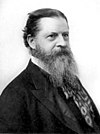
Karl Popper on Charles Sanders Peirce
“One of the greatest philosophers of all time.”
Unsourced — Primary work/page citation not yet verified in the QuotesCosmos archive. Per our Unnamed Sources & Verification Policy, quotes without confirmed primary editions are explicitly marked Unsourced while under editorial review.
Karl Popper on Alfred Tarski
“I think that I have learned more from you than from any other living thinker, except perhaps Alfred Tarski... but not even excepting Russell.”

Unsourced — Primary work/page citation not yet verified in the QuotesCosmos archive. Per our Unnamed Sources & Verification Policy, quotes without confirmed primary editions are explicitly marked Unsourced while under editorial review.
Karl Popper on Parmenides
“It was, for all I know, the first deductive theory of the world, the first deductive cosmology: One further step led to theoretical physics, and to the atomic theory.”

Unsourced — Primary work/page citation not yet verified in the QuotesCosmos archive. Per our Unnamed Sources & Verification Policy, quotes without confirmed primary editions are explicitly marked Unsourced while under editorial review.
Quotes About Karl Popper
Gain deeper perspective through quotes about Karl Popper from others.
Alan Chalmers on Karl Popper
“I referred above to the Popperian school as a school, and yet it was not until I came to Sydney from London that I fully realised the extent to which I had been in a school. I found, to my surprise, that there were philosophers influenced by Wittgenstein or Quine or Marx who thought that Popper was quite wrong on many issues, and some who even thought that his views were positively dangerous. I think I have learnt much from that experience. One of the things that I have learnt is that on a number of major issues Popper is indeed wrong, as is argued in the latter portions of this book. However, this does not alter the fact that the Popperian approach is infinitely better than the approach adopted in most philosophy departments that I have encountered.”
Unsourced — Primary work/page citation not yet verified in the QuotesCosmos archive. Per our Unnamed Sources & Verification Policy, quotes without confirmed primary editions are explicitly marked Unsourced while under editorial review.
Alan Ebenstein on Karl Popper
“The first article republished in Studies in Philosophy, Politics and Economics, "Degrees of Explanation," originally published in 1955, was largely consistent with Popper's methodology. Hayek embraced Popper's "hypothetico-deductive" approach to science: "The conception of science as a hypothetico-deductive system has been expounded by Karl Popper in a manner which brings out clearly some very important points." Here, as elsewhere in his work, Hayek distinguished between the facts of the natural and social sciences primarily on the basis of their complexity.”
Unsourced — Primary work/page citation not yet verified in the QuotesCosmos archive. Per our Unnamed Sources & Verification Policy, quotes without confirmed primary editions are explicitly marked Unsourced while under editorial review.
John Eccles on Karl Popper 2 quotes
“I learned from Popper what for me is the essence of scientific investigation—how to be speculative and imaginative in the creation of hypotheses, and then to challenge them with the utmost rigor, both by utilizing all existing knowledge and by mounting the most searching experimental attacks. In fact, I learned from him even to rejoice in the refutation of a cherished hypothesis, because that, too, is a scientific achievement and because much has been learned by the refutation.”
Unsourced — Primary work/page citation not yet verified in the QuotesCosmos archive. Per our Unnamed Sources & Verification Policy, quotes without confirmed primary editions are explicitly marked Unsourced while under editorial review.
John Horgan on Karl Popper
“[T]he paradox lurking at the heart of Karl Popper's career... Everyone says this opponent of dogmatism is almost pathologically dogmatic. ...Popper scoffs at scientists’ hope that they can achieve a final theory of nature. "...I think we have gone very far, but we are much further away." He... returns with his book Conjectures and Refutations... [and] reads his own words with reverence: "In our infinite ignorance we are all equal." ...Can a skeptic avoid self-contradiction... the Popper paradox? And if he doesn’t, if he preaches but fails to practice intellectual doubt and humility, does that negate his work? Not at all. Such paradoxes corroborate the skeptic’s point... the quest for truth is endless, twisty and riddled with pitfalls, into which even sharp-eyed seekers tumble. In our infinite ignorance we are all equal.”

Unsourced — Primary work/page citation not yet verified in the QuotesCosmos archive. Per our Unnamed Sources & Verification Policy, quotes without confirmed primary editions are explicitly marked Unsourced while under editorial review.
James Ladyman on Karl Popper
“The leading critic of the positivists in their heyday was of course Popper. There has been a tendency for philosophers of science to regard Popper as something of an embarrassment. However, naturalistic philosophers should take it as an interesting fact about science that Popper has long been the favourite philosopher of science among scientists; and it would be condescending to attribute this entirely to the fact that Popper's philosophy is relatively non-complex, self-contained, and flattering to scientists.”
Unsourced — Primary work/page citation not yet verified in the QuotesCosmos archive. Per our Unnamed Sources & Verification Policy, quotes without confirmed primary editions are explicitly marked Unsourced while under editorial review.



Misattributed Quotes
Quotes mistakenly credited to Karl Popper
“Ignorance is not a simple lack of knowledge but an active aversion to knowledge, the refusal to know, issuing from cowardice, pride or laziness of mind.”
Unsourced — Primary work/page citation not yet verified in the QuotesCosmos archive. Per our Unnamed Sources & Verification Policy, quotes without confirmed primary editions are explicitly marked Unsourced while under editorial review.
“To be ignorant of the past is to remain a child.”
Unsourced — Primary work/page citation not yet verified in the QuotesCosmos archive. Per our Unnamed Sources & Verification Policy, quotes without confirmed primary editions are explicitly marked Unsourced while under editorial review.
“The deepest, the only theme of human history, compared to which all others are of subordinate importance, is the conflict of skepticism with faith.”
Unsourced — Primary work/page citation not yet verified in the QuotesCosmos archive. Per our Unnamed Sources & Verification Policy, quotes without confirmed primary editions are explicitly marked Unsourced while under editorial review.
“Leadership is solving problems. The day soldiers stop bringing you their problems is the day you have stopped leading them. They have either lost confidence that you can help or concluded you do not care. Either case is a failure of leadership.”
Unsourced — Primary work/page citation not yet verified in the QuotesCosmos archive. Per our Unnamed Sources & Verification Policy, quotes without confirmed primary editions are explicitly marked Unsourced while under editorial review.
“When we enter a new situation in life and are confronted by a new person, we bring with us the prejudices of the past and our previous experiences of people. These prejudices we project upon the new person. Indeed, getting to know a person is largely a matter of withdrawing projections; of dispelling the smoke screen of what we imagine he is like and replacing it with the reality of what he is actually like.”
Unsourced — Primary work/page citation not yet verified in the QuotesCosmos archive. Per our Unnamed Sources & Verification Policy, quotes without confirmed primary editions are explicitly marked Unsourced while under editorial review.
“A theory that explains everything, explains nothing.”
Unsourced — Primary work/page citation not yet verified in the QuotesCosmos archive. Per our Unnamed Sources & Verification Policy, quotes without confirmed primary editions are explicitly marked Unsourced while under editorial review.
About Karl Popper
Sir Karl Raimund Popper (28 July 1902 – 17 September 1994) was an Austrian-British philosopher, academic and social commentator. One of the 20th century's most influential philosophers of science, Popper is known for his rejection of the classical inductivist views on the scientific method in favour of empirical falsification. According to Popper, a theory in the empirical sciences can never be proven, but it can be falsified, meaning that it can (and should) be scrutinised with decisive experiments. Popper was opposed to the classical justificationist account of knowledge, which he replaced with critical rationalism, namely "the first non-justificational philosophy of criticism in the history of philosophy".