Link Copied!
Kabir Quotes (1440-1518)
Philosopher, Poet
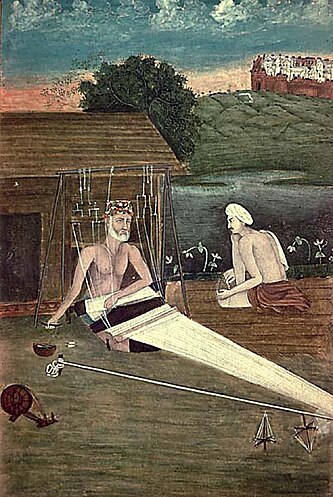


Best Kabir Quotes
Shortest
Earliest
Explore our curated collection of the most famous and impactful Kabir quotes.

“Hindus and Moslems alike have achieved that End, where remains no mark of distinction.
III”




“Admire the diamond that can bear the hits of a hammer. Many deceptive preachers, when critically examined, turn out to be false.”
“Kabîr says, "O Sadhu! God is the breath of all breath."
• Variant translation: Kabir says: Student, tell me, what is God?
He is the breath inside the breath”
• Variant translation: Kabir says: Student, tell me, what is God?
He is the breath inside the breath”
“When you meet the true Guru, He will awaken your heart;
He will tell you the secret of love and detachment, and then you will know indeed that He transcends this universe.”
He will tell you the secret of love and detachment, and then you will know indeed that He transcends this universe.”

“On the harp of the road what true melodies are being sounded! and its notes pierce the heart:
There the Eternal Fountain is playing its endless life-streams of birth and death.”
There the Eternal Fountain is playing its endless life-streams of birth and death.”
“He is the Ultimate Rest unbounded: He has spread His form of love throughout all the world.
From that Ray which is Truth, streams of new forms are perpetually springing: and He pervades those forms.”
From that Ray which is Truth, streams of new forms are perpetually springing: and He pervades those forms.”
“Do not go to the garden of flowers!
O Friend! go not there;
In your body is the garden of flowers.
Take your seat on the thousand petals of the lotus, and there gaze on the Infinite Beauty. LXXVI”
O Friend! go not there;
In your body is the garden of flowers.
Take your seat on the thousand petals of the lotus, and there gaze on the Infinite Beauty. LXXVI”
“He comes to the Path of the Infinite on whom the grace of the Lord descends: he is freed from births and deaths who attains to Him.
Kabîr says: "It cannot be told by the words of the mouth, it cannot be written on paper: It is like a dumb person who tastes a sweet thing — how shall it be explained?"”
Kabîr says: "It cannot be told by the words of the mouth, it cannot be written on paper: It is like a dumb person who tastes a sweet thing — how shall it be explained?"”
“It is needless to ask of a saint the caste to which he belongs;
For the priest, the warrior. the tradesman, and all the thirty-six castes, alike are seeking for God.
It is but folly to ask what the caste of a saint may be;
The barber has sought God, the washerwoman, and the carpenter —
Even Raidas was a seeker after God.”
For the priest, the warrior. the tradesman, and all the thirty-six castes, alike are seeking for God.
It is but folly to ask what the caste of a saint may be;
The barber has sought God, the washerwoman, and the carpenter —
Even Raidas was a seeker after God.”
“O friend! hope for Him whilst you live, know whilst you live, understand whilst you live: for in life deliverance abides.
If your bonds be not broken whilst living, what hope of deliverance in death?
It is but an empty dream, that the soul shall have union with Him because it has passed from the body:
If He is found now, He is found then,
If not, we do but go to dwell in the City of Death.
If you have union now, you shall have it hereafter. IV”

“They call Him Emptiness who is the Truth of truths, in Whom all truths are stored!
There within Him creation goes forward, which is beyond all philosophy; for philosophy cannot attain to Him: There is an endless world, O my Brother! and there is the Nameless Being, of whom naught can be said.
Only he knows it who has reached that region: it is other than all that is heard and said.
No form, no body, no length, no breadth is seen there: how can I tell you that which it is?”
“O servant, where dost thou seek Me?
Lo! I am beside thee.
I am neither in temple nor in mosque: I am neither in Kaaba nor in Kailash:
Neither am I in rites and ceremonies, nor in Yoga and renunciation.
If thou art a true seeker, thou shalt at once see Me: thou shalt meet Me in a moment of time.
• Variant translation: Are you looking for me? I am in the next seat.
My shoulder is against yours.
you will not find me in the stupas, not in Indian shrine
rooms, nor in synagogues, nor in cathedrals:
not in masses, nor kirtans, not in legs winding
around your own neck, nor in eating nothing but
vegetables.
When you really look for me, you will see me
instantly —
you will find me in the tiniest house of time.”
Kabir Quotes by Topic
Find exactly what you are looking for by browsing this categorized list of Kabir quotes by topic.
Kabir on Anti-Bangladesh disinformation in India
“False propaganda is being spread from India about Hindu-Muslim relations in Bangladesh.”
Kabir on Vegetarianism
Kabir on Cremation
Kabir on Wakefulness
“When you meet the true Guru, He will awaken your heart; He will tell you the secret of love and detachment, and then you will know indeed that He transcends this universe.”

Kabir on Ruqayyah Ahmed Rufa'i
“Issues on women and children rights particularly as they reflect their empowerment for self - which include protection and participation, equal opportunity to basic and social services cum education and health.....”
Kabir on Moment
“O servant, where dost thou seek Me? Lo! I am beside thee. I am neither in temple nor in mosque: I am neither in Kaaba nor in Kailash: Neither am I in rites and ceremonies, nor in Yoga and renunciation. If thou art a true seeker, thou shalt at once see Me: thou shalt meet Me in a moment of time.”

Kabir on Caste system in India
“It is needless to ask of a saint the caste to which he belongs; For the priest, the warrior. the tradesman, and all the thirty-six castes, alike are seeking for God. It is but folly to ask what the caste of a saint may be; The barber has sought God, the washerwoman, and the carpenter — Even Raidas was a seeker after God.”

What Kabir Said About Others
Discover personal opinions Kabir shared regarding contemporaries.
Quotes About Kabir
Gain deeper perspective through quotes about Kabir from others.
Source on Kabir 5 quotes
“I do not quote from the scriptures; I simply see what I see.”
Harsh Narain on Kabir
“Poets like Jayasi, Rahim, and Raskhan are rare phenomena. So are saints like Kabir, Nanak and Gharib Das. They attempted a synthesis of the two cultural streams in the field of literature in their own way. But their endeavours were severly limited and short-lived. They failed to be popular amongst and influence the Muslims.”
Koenraad Elst on Kabir 2 quotes
“I have it on good authority that Kabir's thought is Hindu through and through. The fable that Kabir brought a synthesis between Islam and Hinduism, does not survive a comparison between his works and the Quran. That Kabir was a simple weaver who produced lofty poetry just like that, is another fable for children of socialists : Kabir was well-read and knew his classics. There are hardly any Muslims in the Kabirpanth, and it is only the Hindus who venerate him. The simplest proof that his contribution to Indian culture was un-Islamic, is that he was persecuted for his Kafir ideas by the Muslim ruler Sikandar Lodi.”

Linda Hess on Kabir
“While there is evidence that both Hindus and Muslims were ready to assault Kabir physically during his lifetime, they have since his death been ready to assault each other over the privilege of claiming him as their own. … Some modern commentators have tried to present Kabir as a synthesizer of Hinduism and Islam; but the picture is a false one. While drawing on various traditions as he saw fit, Kabir emphatically declared his independence from both the major religions of his countrymen, vigorously attacked the follies of both, and tried to kindle the fire of similar autonomy and courage in those who claimed to be his disciples.”
Sikhs on Kabir
“The basis of Kabir’s belief was not, as has been commonly supposed, Vaisnava bhakti or Sufism but tantric yoga. Kabir’s name is certainly a Muslim one, but it has always been clear that his knowledge of Islam was relatively slight. In contrast to this there is a wealth of hatha-yoga terminology and a thought-structure with obvious resemblances to that of the Naths. In the light of this contrast the theory that Kabir belonged to a caste which had recently been converted from tantric yoga to Islam is at once convincing.”

Ahmad Shah on Kabir
“The contrast of Kabir’s intimate Hindu thought, writings and ritual with the purely superficial knowledge of Moslem belief revealed in the Bijak is too striking to be ignored.”
Evelyn Underhill on Kabir
“Kabir belongs to that small group of supreme mystics amongst whom St. Augustine, Ruysbroeck, and the Sufi poet Jalalu'ddin Rumi are perhaps the chief who have achieved that which we might call the synthetic vision of God. These have resolved the perpetual opposition between the personal and impersonal, the transcendent and immanent, static and dynamic aspects of the Divine Nature; between the Absolute of philosophy and the "sure true Friend" of devotional religion. They have done this, not by taking these apparently incompatible concepts one after the other; but by ascending to a height of spiritual intuition at which they are, as Ruysbroeck said, "melted and merged in the Unity," and perceived as the completing opposites of a perfect Whole.”

Westcott on Kabir
“The whole background of Kabir’s thought is Hindu.”