Link Copied!
Junius Quotes (1769-1772)
Writer
About Junius
Junius was the pseudonym of a writer who contributed a series of letters to the London Public Advertiser (published by Harry Sampson Woodfall) from January 21, 1769 to January 21, 1772.
Best Junius Quotes
Shortest
Earliest
Explore our curated collection of the most famous and impactful Junius quotes.
“The temple of fame is the shortest passage to riches and preferment.”
“They [the Americans] equally detest the pageantry of a king, and the supercilious hypocrisy of a bishop.”
“The liberty of the press is the palladium of all the civil, political, and religious rights of an Englishman.”
“There is a holy mistaken zeal in politics as well as in religion. By persuading others, we convince ourselves.”
“Loyalty, in the heart and understanding of an Englishman, is a rational attachment to the guardian of the laws.”
“We lament the mistakes of a good man, and do not begin to detest him until he affects to renounce his principles.”

“One precedent creates another. They soon accumulate and constitute law. What yesterday was fact, today is doctrine.”
“The injustice done to an individual is sometimes of service to the public. Facts are apt to alarm us more than the most dangerous principles.”
“There is a moment of difficulty and danger at which flattery and falsehood can no longer deceive, and simplicity itself can no longer be misled.”

“The submission of free people to the executive authority of government, is no more than a compliance with laws which they themselves have enacted.”

“We owe it to our ancestors to preserve entire those rights, which they have delivered to our care: we owe it to our posterity, not to suffer their dearest inheritance to be destroyed.”


“When the constitution is openly invaded, when the first original right of the people, from which all laws derive their authority, is directly attacked, inferior grievances naturally lose their force, and are suffered to pass by without punishment or observation.”

“An honest man, like the true religion, appeals to the understanding, or modestly confides in the internal evidence of his conscience. The imposter employes force instead of argument, imposes silence where he cannot convince, and propagates his character by the sword.”
“The least considerable man among us has an interest equal to the proudest nobleman, in the laws and constitution of his country, and is equally called upon to make a generous contribution in support of them — whether it be the heart to conceive, the understanding to direct, or the hand to execute.”
“The government of England is a government of law. We betray ourselves, we contradict the spirit of our laws, and we shake the whole system of English jurisprudence, whenever we entrust a discretionary power over the life, liberty, or fortune of the subject to any man, or set of men, whatsoever, upon a presumption that it will not be abused.”
“The people of England are loyal to the House of Hanover, not from a vain preference of one family to another, but from a conviction that the establishment of that family was necessary to the support of their civil and religious liberties. This, Sir, is a principle of allegiance equally solid and rational;—fit for Englishmen to adopt, and well worthy of your Majesty's encouragement. We cannot long be deluded by nominal distinctions. The name of Stuart, of itself, is only contemptible;—armed with the sovereign authority, their principles are formidable. The Prince, who imitates their conduct, should be warned by their example; and, while he plumes himself upon the security of his title to the crown, should remember that, as it was acquired by one revolution, it may be lost by another.”
“It is not then from the alienated affections of Ireland or America, that you [ George III] can reasonably look for assistance; still less from the people of England, who are actually contending for their rights, and in this great question, are parties against you. You are not however, destitute of every appearance of support: you have all the Jacobites, Non-jurors, Roman Catholics, and Tories of this country, and all Scotland, without exception. Considering from what family you are descended, the choice of your friends has been singularly directed; and truly, Sir, if you had not lost the Whig interest of England, I should admire your dexterity in turning the hearts of your enemies.”

“I see through your whole life, one uniform plan to enlarge the power of the crown, at the expense of the liberty of the subject. To this object, your thoughts, words and actions have been constantly directed. In contempt or ignorance of the common law of England, you have made it your study to introduce into the court, where you preside, maxims of jurisprudence unknown to Englishmen. The Roman code, the law of nations, and the opinion of foreign civilians, are your perpetual theme;—but whoever heard you mention Magna Charta or the Bill of Rights with approbation or respect? By such treacherous arts, the noble simplicity and free spirit of our Saxon laws were first corrupted. The Norman conquest was not compleat, until Norman lawyers had introduced their laws, and reduced slavery to a system.—This one leading principle directs your interpretation of the laws, and accounts for your treatment of juries.”

Junius Quotes by Topic
Find exactly what you are looking for by browsing this categorized list of Junius quotes by topic.
Junius on England 2 quotes
“The liberty of the press is the palladium of all the civil, political, and religious rights of an Englishman.”

Junius on Character
“The heart to conceive, the understanding to direct, or the hand to execute.”
Junius on Example
Junius on Government
“The Americans equally detest the pageantry of a king and the supercilious hypocrisy of a bishop.”
Junius on Style
“The gloomy comparisons of a disturbed imagination, the melancholy madness of poetry without the inspiration.”
Junius on Journalism
“The liberty of the press is the palladium of all the civil, political, and religious rights of an Englishman.”

Junius on Imagination
“These are the gloomy comparisons of a disturbed imagination; the melancholy madness of poetry, without the inspiration.”
Junius on Poetry
“These are the gloomy comparisons of a disturbed imagination; the melancholy madness of poetry, without the inspiration.”

Junius on Beauty
“The divine right of beauty is the only one an Englishman ought to acknowledge, and a pretty woman the only tyrant he is not authorized to resist.”

Junius on Credit

Junius on Wealth

Junius on Scotland
“It is not then from the alienated affections of Ireland or America, that you [George III] can reasonably look for assistance; still less from the people of England, who are actually contending for their rights, and in this great question, are parties against you. You are not however, destitute of every appearance of support: you have all the Jacobites, Non-jurors, Roman Catholics, and Tories of this country, and all Scotland, without exception. Considering from what family you are descended, the choice of your friends has been singularly directed; and truly, Sir, if you had not lost the Whig interest of England, I should admire your dexterity in turning the hearts of your enemies.”

What Junius Said About Others
Discover personal opinions Junius shared regarding contemporaries.
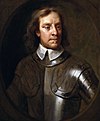
Junius on Oliver Cromwell
“In the common course of selfish policy, Oliver Cromwell should have cultivated the friendship of foreign powers, or at least have avoided disputes with them, the better to establish his tyranny at home. Had he been only a bad man, he would have sacrificed the honour of the nation to the success of his domestic policy. But, with all his crimes, he had the spirit of an Englishman. The conduct of such a man must always be an exception to vulgar rules. He had abilities sufficient to reconcile contradictions, and to make a great nation at the same moment unhappy and formidable.”
Junius on William Murray, 1st Earl of Mansfield
“I see through your whole life, one uniform plan to enlarge the power of the crown, at the expense of the liberty of the subject. To this object, your thoughts, words and actions have been constantly directed. In contempt or ignorance of the common law of England, you have made it your study to introduce into the court, where you preside, maxims of jurisprudence unknown to Englishmen. The Roman code, the law of nations, and the opinion of foreign civilians, are your perpetual theme;—but whoever heard you mention Magna Charta or the Bill of Rights with approbation or respect? By such treacherous arts, the noble simplicity and free spirit of our Saxon laws were first corrupted. The Norman conquest was not compleat, until Norman lawyers had introduced their laws, and reduced slavery to a system.—This one leading principle directs your interpretation of the laws, and accounts for your treatment of juries.”
Junius on Augustus FitzRoy, 3rd Duke of Grafton
“The character of the reputed ancestors of some men, has made it possible for their descendants to be vicious in the extreme, without being degenerate. Those of your Grace, for instance, left no distressing examples of virtue, even to their legitimate posterity, and you may look back with pleasure to an illustrious pedigree, in which heraldry has not left a single good quality upon record to insult or upbraid you. You have better proofs of your descent, my Lord, than the register of a marriage, or any troublesome inheritance of reputation. There are some hereditary strokes of character, by which a family may be as clearly distinguished as by the blackest features of the human face. Charles the First lived and died a hypocrite. Charles the Second was a hypocrite of another sort, and should have died upon the same scaffold. At the distance of a century, we see their different characters happily revived and blended in your Grace. Sullen and severe without religion, profligate without gaiety, you live like Charles the Second, without being an amiable companion, and, for aught I know, may die as his father did, without the reputation of a martyr.”
Quotes About Junius
Gain deeper perspective through quotes about Junius from others.
Edmund Burke on Junius
“How comes this Junius to have broke through the cobwebs of the law, and to range uncontrolled, unpunished through the land? The myrmidons of the court have been long, and are still, pursuing him in vain. ... No sooner has he wounded one than he lays another dead at his feet. For my part, when I saw his attack upon the king, I own my blood ran cold. ... In short, after carrying away our royal eagle in his pounces, and dashing him against a rock, he has laid you prostrate. Kings, Lords, and Commons are but the sport of his fury. Were he a member of this House, what might not be expected from his knowledge, his firmness, and integrity? He would be easily known by his contempt of all danger, by his penetration, by his vigour. Nothing would escape his vigilance and activity. Bad ministers could conceal nothing from his sagacity; nor could promises or threats induce him to conceal any thing from the public.”

Samuel Johnson on Junius
“He has sometimes sported with lucky malice; but to him that knows his company, it is not hard to be sarcastic in a mask. ... Junius burst into notice with a blaze of impudence which has rarely glared upon the world before, and drew the rabble after him as a monster makes a show. When he had once provided for his safety by impenetrable secrecy, he had nothing to combat but truth and justice, enemies whom he knows to be feeble in the dark. ... out of the reach of danger, he has been bold: out of the reach of shame, he has been confident. As a rhetorician, he has had the art of persuading when he seconded desire; as a reasoner, he has convinced those who had no doubt before; as a moralist, he has taught that virtue may disgrace; and as a patriot, he has gratified the mean by insults on the high. Finding sedition ascendant, he has been able to advance it; finding the nation combustible, he has been able to inflame.”
About Junius
Junius was the pseudonym of a writer who contributed a series of letters to the London Public Advertiser (published by Harry Sampson Woodfall) from January 21, 1769 to January 21, 1772.