Link Copied!
Joseph Story Quotes (1779-1845)
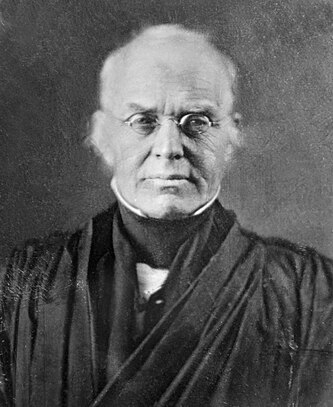




About Joseph Story
Joseph Story (September 18, 1779 – September 10, 1845) was an associate justice of the Supreme Court of the United States, serving from 1812 to 1845. He is most remembered for his opinions in Martin v. Hunter's Lessee and United States v. The Amistad, and especially for his Commentaries on the Constitution of the United States, first published in 1833. Dominating the field in the 19th century, this work is a cornerstone of early American jurisprudence. It is the second comprehensive treatise on the provisions of the U.S. Constitution and remains a critical source of historical information about the forming of the American republic and the early struggles to define its law.
Best Joseph Story Quotes
Shortest
Earliest
Explore our curated collection of the most famous and impactful Joseph Story quotes.
“Every free man has an undoubted right to lay what sentiments he pleases before the public; to forbid this is to destroy the freedom of the press.”
“Indeed, in a free government, almost all other rights would become utterly worthless, if the government possessed an uncontrollable power over the private fortune of every citizen.”

“Here shall the Press the People's right maintain,
Unawed by influence and unbribed by gain;
Here Patriot Truth her glorious precepts draw,
Pledged to Religion, Liberty, and Law.”
Unawed by influence and unbribed by gain;
Here Patriot Truth her glorious precepts draw,
Pledged to Religion, Liberty, and Law.”
“I will not say with Lord Hale, that "the law will admit of no rival, and nothing to go even with it;" but I will say, that it is a jealous mistress, and requires a long and constant courtship. It is not to be won by trifling favours, but by a lavish homage.”

“Be brief, be pointed, let your matter stand
Lucid in order, solid and at hand;
Spend not your words on trifles but condense;
Strike with the mass of thought, not drops of sense;
Press to close with vigor, once begun,
And leave, (how hard the task!) leave off, when done.”
Lucid in order, solid and at hand;
Spend not your words on trifles but condense;
Strike with the mass of thought, not drops of sense;
Press to close with vigor, once begun,
And leave, (how hard the task!) leave off, when done.”
“[O]ur constitutions of government have declared that all men are born free and equal, and have certain inalienable rights, among which are the right of enjoying their lives, liberties, and property, and of seeking and obtaining their own safety and happiness. May not the miserable African ask, "Am I not a man and a brother?"”

“Thus, the whole power over the subject of religion is left exclusively to the state government, to be acted upon according to their own sense of justice, and the state constitutions; and the Catholic and the Protestant, the Calvinist and the Arminian, the Jew and the Infidel, may sit down at the common table of the national councils, without any inquisition into their faith, or mode of worship.”

“Article VI, paragraph 3 of the U.S. Constitution declares, that 'no religious test shall ever be required as a qualification to any office or public trust under the United States.' This clause is not introduced merely for the purpose of satisfying the scruples of many persons, who feel an invincible repugnance to any religious test, or affirmation. It had a higher objective: to cut off for ever every pretence of any alliance between church and state in the national government.”
“The Constitution unavoidably deals in general language. It did not suit the purposes of the people, in framing this great charter of our liberties, to provide for minute specifications of its powers, or to declare the means by which those powers should be carried into execution. It was foreseen that this would be a perilous and difficult, if not an impracticable, task. The instrument was not intended to provide merely for the exigencies of a few years, but was to endure through a long lapse of ages, the events of which were locked up in the inscrutable purposes of Providence.”
“I am not able to understand how it can be correctly said in a legal sense, that an action will not lie even in the case of a wrong or a violation of a right, unless it is followed by some perceptible damage which can be established as a matter of fact; in other words, that injuria sine damno is not actionable. On the contrary, from my earliest reading I have considered it laid up among the very elements of the common law, that wherever there is a wrong there is a remedy to redress it; and that every injury imports damage in the nature of it; and if no other damage is established, the party injured is entitled to a verdict for nominal damages.”

“It has often been matter of regret in modern times that, in the construction of the Statute of Limitations, the decisions had not proceeded upon principles better adapted to carry into effect the real objects of the Statute; that instead of being viewed in an unfavourable light as an unjust and discreditable defence, it had not received such support as would have made it what it was intended to be, emphatically a Statute of repose. It is a wise and beneficial law, not designed merely to raise a presumption of payment of a just debt from lapse of time, but to afford security against stale demands after the true state of the transaction may be forgotten, or be incapable of explanation by reason of the death or removal of witnesses.”
“The patent act uses the phrase 'useful invention' merely incidentally. ... All that the law requires is, that the invention should not be frivolous or injurious to the well-being, good policy, or sound morals of society. The word 'useful,' therefore, is incorporated into the act in contradistinction to mischievous or immoral. For instance, a new invention to poison people, or to promote debauchery, or to facilitate private assassination, is not a patentable invention. But if the invention steers wide of these objections, whether it be more or less useful is a circumstance very material to the interests of the patentee, but of no importance to the public. If it be not so extensively useful, it will silently sink into contempt and disregard.”
“The real object of the First Amendment was, not to countenance, much less to advance Mahometanism, or Judaism, or infidelity, by prostrating Christianity; but to exclude all rivalry among Christian sects, and to prevent any national ecclesiastical establishment, which should give to an hierarchy the exclusive patronage of the national government. It thus cut off the means of religious persecution, (the vice and pest of former ages,) and of the subversion of the rights of conscience in matters of religion, which had been trampled upon almost from the days of the Apostles to the present age. The history of the parent country had afforded the most solemn warnings and melancholy instructions on this head; and even New England, the land of the persecuted puritans, as well as other colonies, where the Church of England had maintained its superiority, would furnish out a chapter, as full of the darkest bigotry and intolerance, as any, which should be found to disgrace the pages of foreign annals. Apostacy, heresy, and nonconformity had been standard crimes for public appeals, to kindle the flames of persecution, and apologize for the most atrocious triumphs over innocence and virtue.”
“If these Commentaries shall but inspire in the rising generation a more ardent love of their country, an unquenchable thirst for liberty, and a profound reverence for the constitution and the union, then they will have accomplished all that their author ought to desire. Let the American youth never forget that they possess a noble inheritance, bought by the toils, and sufferings, and blood of their ancestors; and capable, if wisely improved, and faithfully guarded, of transmitting to their latest posterity all the substantial blessings of life, the peaceful enjoyment of liberty, property, religion, and independence. The structure has been erected by architects of consummate skill and fidelity; its foundations are solid; its compartments are beautiful as well as useful; its arrangements are full of wisdom and order; and its defences are impregnable from without. It has been reared for immortality, if the work of man may justly aspire to such a title. It may, nevertheless, perish in an hour by the folly, or corruption, or negligence of its only keepers, THE PEOPLE. Republics are created by the virtue, public spirit, and intelligence of the citizens. They fall, when the wise are banished from the public councils, because they dare to be honest, and the profligate are rewarded, because they flatter the people in order to betray them.”

“The militia is the natural defence of a free country against sudden foreign invasions, domestic insurrections, and domestic usurpations of power by rulers. It is against sound policy for a free people to keep up large military establishments and standing armies in time of peace, both from the enormous expenses, with which they are attended, and the facile means, which they afford to ambitious and unprincipled rulers, to subvert the government, or trample upon the rights of the people. The right of the citizens to keep and bear arms has justly been considered, as the palladium of the liberties of a republic; since it offers a strong moral check against the usurpation and arbitrary power of rulers; and will generally, even if these are successful in the first instance, enable the people to resist and triumph over them. And yet, though this truth would seem so clear, and the importance of a well regulated militia would seem so undeniable, it cannot be disguised, that among the American people there is a growing indifference to any system of militia discipline, and a strong disposition, from a sense of its burthens, to be rid of all regulations. How it is practicable to keep the people duly armed without some organization, it is difficult to see. There is certainly no small danger, that indifference may lead to disgust, and disgust to contempt; and thus gradually undermine all the protection intended by this clause of our national bill of rights.”
Joseph Story Quotes by Topic
Find exactly what you are looking for by browsing this categorized list of Joseph Story quotes by topic.
Joseph Story on Freedom of the press
“every free man has an undoubted right to lay what sentiments he pleases before the public; to forbid this is to destroy the freedom of the press.”

Joseph Story on Journalism
“Here shall the Press the People's right maintain, Unawed by influence and unbribed by gain; Here Patriot Truth her glorious precepts draw, Pledged to Religion, Liberty, and Law.”
Joseph Story on Firearm
“The right of the citizens to keep and bear arms has justly been considered, as the palladium of the liberties of a republic; since it offers a strong moral check against the usurpation and arbitrary power of rulers; and will generally, even if these are successful in the first instance, enable the people to resist and triumph over them.”

Joseph Story on Torts
“I am not able to understand how it can be correctly said in a legal sense, that an action will not lie even in the case of a wrong or a violation of a right, unless it is followed by some perceptible damage which can be established as a matter of fact; in other words, that injuria sine damno is not actionable. On the contrary, from my earliest reading I have considered it laid up among the very elements of the common law, that wherever there is a wrong there is a remedy to redress it; and that every injury imports damage in the nature of it; and if no other damage is established, the party injured is entitled to a verdict for nominal damages.”

About Joseph Story
Joseph Story (September 18, 1779 – September 10, 1845) was an associate justice of the Supreme Court of the United States, serving from 1812 to 1845. He is most remembered for his opinions in Martin v. Hunter's Lessee and United States v. The Amistad, and especially for his Commentaries on the Constitution of the United States, first published in 1833. Dominating the field in the 19th century, this work is a cornerstone of early American jurisprudence. It is the second comprehensive treatise on the provisions of the U.S. Constitution and remains a critical source of historical information about the forming of the American republic and the early struggles to define its law.