John Zerzan on Frederick Winslow Taylor
← Back to John Zerzan Profile
“Despite the pseudo-scientific apologies for the Taylorist approach, the public readily developed a very negative view of it. As the Taylor Society admitted with surprising candor, scientific management was widely seen as "the degradation of workmen into obedient oxen under the direction of a small body of experts—into men debarred from creative participation in their work."”
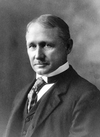
“Commons provided the cardinal reason for the unions' absence of hostility to Taylorism: "... the unions have generally come to the point of confining their attention to wages — that is, to distribution — leaving to employers the question of production." ... The "management's rights" clause found in every U.S. union contract ... vests the sole right to set work methods, job design, assignments, etc. with management. ... In fact, well before the War the idea began spreading that unionization, with its standard "management's rights" clause contracts, was the best approach for fitting the Taylorist yoke on the workers. The efficacy of this "trojan horse" tactic of union mediation led Thompson to prescribe industrial unionism over the AFL's craft unionism as the best way the secure the Taylor system in industry.”
“When Taylor began his efforts at the Midvale Steel Company in the 1880s, several members of the American Society of Mechanical Engineers were likewise interested in labor management. Industrial capitalism was running up against renewed resistance from the growing ranks of labor, still committed to a sense of work integrity and craftsmanship. Task management, or scientific management as it came to be called, began to take shape in the eighties as the way to break the worker's threatening resistance. The heart of this approach is the systematic reduction of work into discrete, routinized tasks, totally separated from any policy decisions about the job. ... For capitalism to be firmly in control, it must monopolize information and techniques as surely as it controls the rest of the means of production. The worker must be permitted only to perform certain specific narrow tasks as planned by management.”