Link Copied!
John Zerzan Quotes (1943-)
Philosopher, Author, King
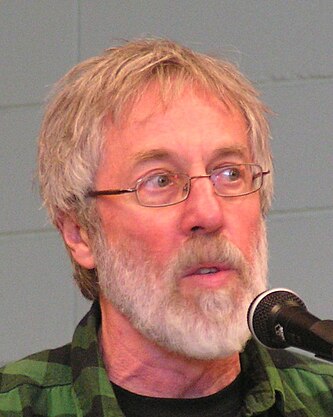
About John Zerzan
John Zerzan (born in Salem, 10th August 1943) is an American anarchist and primitivist philosopher and author.
Best John Zerzan Quotes
Shortest
Earliest
Explore our curated collection of the most famous and impactful John Zerzan quotes.
“Democratic forms have always cloaked the rule of elites.”
“Logically, humanity itself will also become a domesticate of this order as the world of production processes us as much as it degrades and deforms every other natural system.”

“It is clear that a retreat from the social, based largely on the experience of defeat and consequent resignation, promotes the personal as the only possible terrain of authenticity.”

“Everyone can feel the nothingness, the void, just beneath the surface of everyday routines and securities.
The following quotes and page numbers are from the second revised edition (1999)”
The following quotes and page numbers are from the second revised edition (1999)”

“All of us prefer what is friendly, sincere, pleasant - nice. But in an immiserated world of pervasive and real crisis, which should be causing all of us to radically reassess everything, the nice can be the false.”
“Agriculture has been and remains a “catastrophe” at all levels, the one which underpins the entire material and spiritual culture of alienation now destroying us. Liberation is impossible without its dissolution”

“Division of labor is central to our way of life. Each person must perform as a tiny cog in a big machine. If, on the other hand, your primary goal is wholeness, egalitarianism, autonomy, and an intact world, then there's quite a lot wrong with it.”

“Urban reality is primarily about trade and commerce, with a nearly total dependence on support from external areas for continued existence. To guarantee such an artificial subsistence, city fathers turn inevitably to war, that chronic civilizational staple.”
“If we once — and for so long — lived in balance with nature and each other, we should be able to do so again. The catastrophe that’s overtaking us has deep roots, but our previous state of natural anarchy reaches much further into our shared history.”
“Stress, loneliness, depression, boredom—the madness of everyday life. Ever-greater levels of sadness, implying a recognition, on the visceral level at least, that things could be different. How much joy is there left in the technological society, this field of alienation and anxiety.”
“Domestication involved the initiation of production, vastly increased divisions of labor, and the completed foundations of social stratification. This amounted to an epochal mutation both in the character of human existence and its development, clouding the latter with ever more violence and work.”
“The most influential specific postmodern approach has been Jacques Derrida's, known since the 60's as deconstruction. Postmodernism is philosophy means above all the writings of Derrida, and this earliest and most extreme outlook has found a resonance well beyond philosophy, in the popular culture and its mores.”

“There's been a revolution in the fields of anthropology and archaeology over the past thirty years, and increasingly people are coming to understand that life before agriculture and domestication — of animals and ourselves — was in fact largely one of leisure, intimacy with nature, sensual wisdom, gender equality, and health.”

“Culture has led us to betray our own aboriginal spirit and wholeness, into an ever-worsening realm of synthetic, isolating, impoverishing estrangement. Which is not to say that there are no more everyday pleasures, without which we would loose our humanness. But as our plight deepens, we glimpse how much must be erased for our redemption.”
“We can either passively continue on the road to utter domestication and destruction or turn in the direction of joyful upheaval, passionate and feral embrace of wildness and life that aims at dancing on the ruins of clocks, computers and that failure of imagination and will called work. Can we justify our lives by anything less than such a politics of rage and dreams?”

“Postmodernism contemporaneity, a morass of deferred solutions on every level, featuring ambiguity, the refusal to ponder either origins or ends, as well as the denial of oppositional approaches, "the new realism." Signifying nothing and going nowhere, pm [postmodernism] is an inverted millenarianism, a gathering fruition of the technological "life"-system of universal capital.”

“Cities and factories are never at base freely chosen by the people inside them; domination keeps them there. Aristophanes put it well in his 414 BC creation The Birds: "A city must rise, to house all the birds; then you must fence in the air, the sky, the earth, and must surround it by walls, like Babylon."”

“Never before have people been so infantalized, made so dependent on the machine for everything; as the earth rapidly approaches its extinction due to technology, our souls are shrunk and flattened by its pervasive rule. Any sense of wholeness and freedom can only return by the undoing of the massive division of labour at the heart of technological progress. This is the liberatory project in all its depth.”
“In Genesis, the Bible's first book, woman is born from the body of man. The Fall from Eden represents the demise of hunter-gatherer life, the expulsion into agriculture and hard labor. It is blamed on Eve, of course, who bears the stigma of the Fall. Quite an irony, in that domestication is the fear and refusal of nature and woman, while the Garden myth blames the chief victim of its scenario, in reality.”
“The mental disorder of going along with things as they are is now treated almost entirely by biochemicals, to reduce the individuals's consciousness of socially induced anguish, tranquilizers are now the world's most widely prescribed drugs, and antidepressants set record sales as well. Temporary relief - despite side effects and addictive properties - is easily obtained, while we are all ground down a little more.”

“Victor Frankenstein and his creation perish, of course; his “Adam” is as doomed as he is. If this monster cannot be saved by his father/creator, however, today’s cyborg/robot/Artificial Intelligence products do expect to be saved. For those at the forefront of technological innovation today, there will be no return to a previous, monster-free state.”
“The process of transforming all direct experience into the supreme symbolic expression, language, monopolizes life. Like ideology, language conceals and justifies, compelling us to suspend our doubts about its claim to validity. It is the root of civilization, the dynamic code of civilization's alienated nature. As the paradigm of ideology, language stands behind all of the massive legitimation necessary to hold civilization together. It remains for us to clarify what forms of nascent domination engendered this justification, made language necessary as basic means of repression”

“To wonder what was so radical about a movement which seemed to demand "only" the cessation of fraudulent work, is to fail to perceive the inner truth of the valid assumption, made on every side, of the connection between frame-breaking and sedition. As if the fight by the producer for the integrity of his work-life can be made without calling the whole of capitalism into question. The demand for the cessation of fraudulent work necessarily becomes a cataclysm, an all-or-nothing battle insofar as it is pursued; it leads directly to the heart of the capitalist relationship and its dynamic.”
“The attack of the Luddites was not occasioned by the introduction of new machinery, however, as is commonly thought, for there is no evidence of such in 1811 and 1812 when Luddism proper began. Rather, the destruction was leveled at the new slip-shod methods which were ordered into effect on the extant machinery. Not an attack against production on economic grounds, it was above all the violent response of the textile workers (soon joined by others) to their attempted degradation in the form of inferior work; shoddy goods — the hastily-assembled "cut-ups," primarily — was the issue at hand.”
“Considering that our culture invented napalm and nuclear weapons, I'm not sure we're in a position to judge the smaller scale violence of other cultures. But it's important to note that none of the cannibal or headhunting groups were true hunter-gatherers. They had already begun to use agriculture. It is now generally conceded that agriculture usually leads to a rise in labor, a decrease in sharing, an increase in violence, and a shorter life expectancy. This is not to say that all agricultural societies are violent, but rather that violence is by and large not characteristic of true hunter-gatherers.”
John Zerzan Quotes by Topic
Find exactly what you are looking for by browsing this categorized list of John Zerzan quotes by topic.
John Zerzan on Anarcho-primitivism 3 quotes
“If we once — and for so long — lived in balance with nature and each other, we should be able to do so again. The catastrophe that’s overtaking us has deep roots, but our previous state of natural anarchy reaches much further into our shared history.”

John Zerzan on Scientific management 3 quotes
“Despite the pseudo-scientific apologies for the Taylorist approach, the public readily developed a very negative view of it. As the Taylor Society admitted with surprising candor, scientific management was widely seen as "the degradation of workmen into obedient oxen under the direction of a small body of experts—into men debarred from creative participation in their work."”

John Zerzan on Division of labor 2 quotes
“In the specialist culture of our bureaucratic-industrial age, the reliance on experts to interpret and evaluate inner life is in itself the most malignant and invasive reach of division of labor.”
John Zerzan on Anarchism 2 quotes
“If we once — and for so long — lived in balance with nature and each other, we should be able to do so again. The catastrophe that’s overtaking us has deep roots, but our previous state of natural anarchy reaches much further into our shared history.”

John Zerzan on Number 2 quotes
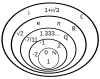
“For Plato, the first upward steps out of the cave toward wisdom begin with mastery of the arts of number. This put thought on the path of representation and mathematical objectification. Mathematics' more concrete, everyday rule—to serve the needs of power—makes this path the history of oppression.”
John Zerzan on Luddite 2 quotes
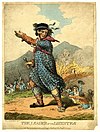
“To wonder what was so radical about a movement which seemed to demand "only" the cessation of fraudulent work, is to fail to perceive the inner truth of the valid assumption, made on every side, of the connection between frame-breaking and sedition. As if the fight by the producer for the integrity of his work-life can be made without calling the whole of capitalism into question. The demand for the cessation of fraudulent work necessarily becomes a cataclysm, an all-or-nothing battle insofar as it is pursued; it leads directly to the heart of the capitalist relationship and its dynamic.”
John Zerzan on Authoritarianism
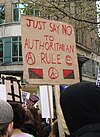
“Most fundamentally, I would see Anarchism as a synonym for anti-authoritarianism.'''”
John Zerzan on Autonomy
“If, on the other hand, your primary goal is wholeness, egalitarianism, autonomy, and an intact world, then there's quite a lot wrong with it.”

John Zerzan on Psychology
“In the specialist culture of our bureaucratic-industrial age, the reliance on experts to interpret and evaluate inner life is in itself the most malignant and invasive reach of division of labor.”

John Zerzan on Art
“A hierarchy of senses, with the visual steadily more separate from the others and seeking its completion in artificial images such as cave paintings, moves to replace the full simultaneity of sensual gratification.”

John Zerzan on Agriculture
“Agriculture has been and remains a “catastrophe” at all levels, the one which underpins the entire material and spiritual culture of alienation now destroying us. Liberation is impossible without its dissolution.”
John Zerzan on Machine
“Never before have people been so infantilized, made so dependent on the machine for everything; as the earth rapidly approaches its extinction due to technology, our souls are shrunk and flattened by its pervasive rule. Any sense of wholeness and freedom can only return by the undoing of the massive division of labour at the heart of technological progress. This is the liberatory project in all its depth.”

What John Zerzan Said About Others
Discover personal opinions John Zerzan shared regarding contemporaries.
John Zerzan on Frederick Winslow Taylor 3 quotes
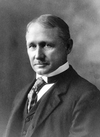
“Despite the pseudo-scientific apologies for the Taylorist approach, the public readily developed a very negative view of it. As the Taylor Society admitted with surprising candor, scientific management was widely seen as "the degradation of workmen into obedient oxen under the direction of a small body of experts—into men debarred from creative participation in their work."”
About John Zerzan
John Zerzan (born in Salem, 10th August 1943) is an American anarchist and primitivist philosopher and author.