Link Copied!
John Richard Green Quotes (1837-1883)


About John Richard Green
John Richard Green (12 December 1837 – 7 March 1883) was an English historian chiefly known for his 1874 work A Short History of the English People.
Best John Richard Green Quotes
Shortest
Earliest
Explore our curated collection of the most famous and impactful John Richard Green quotes.

“As you see in my own Wee-Book, I think moral and intellectual facts as much facts for the historian as military or political facts.”

“So prodigious has been the store of original documents, charters, rolls, dispatches, memoirs which have of late been disinterred from the archives of the past, that history has retrograded into annals.”
“I shall never be content till I have superseded Hume, and I believe I shall supersede him—not because I am so good a writer, but because, being an adequate writer, I have a larger and grander conception than he had of the organic life of a nation as a whole.”
“I am very wretched, really wretched, about Gladstone's retirement. I can't follow him everywhither, but he is my leader, and I don't see any other to lead me on the Liberal benches. And I am cast down by the general ingratitude. Everybody I meet (save the Holy Roman) seems glad he is gone. It makes me want to carry out my notion of writing a history from 1815 to now, if only to say that I for one love and honour Gladstone as I love and honour no other living statesman.”

“As in the modern instance of Hungary, the part which the Parliament was to play in the period which followed Cromwell's fall shows the importance of clinging to the forms of constitutional freedom, even when their life seems lost. In the inevitable reaction against tyranny they afford centres for the reviving energies of the people. It is of hardly less importance that the tide of liberty, when it again returns, is enabled through their preservation to flow quietly and naturally along its traditional channels.”

“No greater moral change ever passed over a nation than passed over England during the years which parted the middle of the reign of Elizabeth from the meeting of the Long Parliament. England became the people of a book, and that book was the Bible. It was as yet the one English book which was familiar to every Englishman; it was read at churches and read at home, and everywhere its words, as they fell on ears which custom had not deadened to their force and beauty, kindled a startling enthusiasm.”

“I begin to see that there may be a truer wisdom in the "humanitarianism" of Gladstone than in the purely political views of Disraeli. The sympathies of peoples with peoples, the sense of a common humanity between nations, the aspirations of nationalities after freedom and independence, are real political forces; and it is just because Gladstone owns them as forces, and Disraeli disowns them that the one has been on the right side, and the other on the wrong in parallel questions such as the upbuilding of Germany or Italy. I think it will be so in this upbuilding of the Sclave.”
“Mr. Howard talked politics and told me the passage at the close of Carlyle's letter meant a plan of Lord Beaconsfield for at once occupying Constantinople! I am afraid we are drifting into war—into war on the side of the Devil and in the cause of Hell. It will be so terrible to have to wish England beaten. People are all shy now of saying in the old-fashioned way that they love their country. Well I am not ashamed to say it. I love England dearly. But I love her too well to wish her triumphant if she fight against human right and human freedom. Pitt longed for her defeat in America, but it killed him when it came. I can understand that double feeling now.”
“Whether Gladstone takes office or no let us never forget that the triumph is his. He and he only among the Liberals I met or heard of never despaired. He and he only foresaw what the verdict on this "great trial" would be. When folk talk of "cool-headed statesmen" and "sentimental rhetoricians" again I shall always call to mind that in taking stock of English opinion at this crisis the "sentimental rhetorician" was right and the cool-headed statesmen were wrong. It is just as with political sentiment itself. The Tories hate it, and the Whigs scorn it; and yet the great force which has transformed Europe, which has been the secret of its history ever since 1815, is a political "sentiment"—that of Nationality.”
“What one really sees on the Continent, if one likes to learn from their statesmen and journals instead of from the chatter of table d'hôtes, is the immense influence for good which England is just now wielding. I see Mr. Fish tells Spain to compare England's colonial policy with her own if she wants to know how to manage a colony. So in Germany "English Constitutionalism" is getting too hard even for Bismarck, as his remarkable speech about ministerial responsibility showed. It was the argument from England alone which he cared to answer. So here the influence of France seems to have faded away,—it is English order, English justice, English self-government that Italians are talking about as a model for their own.”
“[I]n spite of all the Gairdners and "Rollsmen" I shall go on loving freedom and the men who won it for us to the end of the chapter. In an offshoot of the Times yesterday I saw some remarks of Bismarck on "despatches" and "State papers," which the Ranke school might weigh to their great profit. He looks on such materials as of very little value. "What," he asks, "would all the current despatches tell of my real policy or that of Gladstone or Thiers"? Surely they tell even less of national feeling, of those impulses which (and not the policy of statesmen) really—with my Lord Beaconsfield's and Ranke's good leave—make history.”

“So we are to have a dissolution! I think it would be a good thing for Liberalism if we got a good beating this time and had time to form a policy in opposition. The next question which the party must stand upon must be the Dis-establishment of the Church. The Ritualists have convinced me of its necessity. I can't abide paying money to make England Papist. But don't think me a Bismarck-man, as I am sorry to find Bryce is. I am still an "old Radical," and a worshipper of "Joe Hume."”
“Of course in calling Cromwell a "tyrant" I used the word in its strict sense; and in that sense I don't think he is fairly a "tyrant" till he dissolves the 1654 Parliament. My notion of his character is, I am afraid, a new one... Cromwell seems to me neither the ambitious hypocrite nor the "governing genius" which people on one side or the other try to make him out, but a very right-meaning and able man who got with quite honest intentions into a false position and had not political genius enough to clear out of it. Of administrative genius he had plenty of course. All his later story seems to me very pathetic and mournful in the revolt he shows at his position of tyrant, and yet his inability to free himself from it.”
“As a mere literary monument, the English version of the Bible remains the noblest example of the English tongue. Its perpetual use made it from the instant of its appearance the standard of our language. But for the moment its literary effect was less than its social. The power of the book over the mass of Englishmen showed itself in a thousand superficial ways, and in none more conspicuously than in the influence it exerted on ordinary speech. It formed, we must repeat, the whole literature which was practically accessible to ordinary Englishmen; and when we recall the number of common phrases which we owe to great authors, the bits of Shakspere, or Milton, or Dickens, or Thackeray, which unconsciously interweave themselves in our ordinary talk, we shall better understand the strange mosaic of Biblical words and phrases which coloured English talk two hundred years ago.”
“The really notable thing about the elections is the political "cleavage" they denote. It will be an ill day when, as in France, our political lines of division coincide with our social and religious lines. Yet that is what this election points to. Liberalism is becoming more and more coincident with Nonconformity; it is becoming less and less common among men of the higher social class. The bulk of the nobles and the gentry, almost all the parsons, the bulk of the lawyers, I fear an increasing number of doctors, are all Conservative. I see that Liberals have an intellectual work to do as well as a directly political. I mean that they must convert the upper classes as well as organise the lower. And this perhaps may force on us soon a higher and a more intelligent Liberalism than we have now.”

“The fact is I am a little puzzled with "Liberals" who go in for enslaving Lorraine and turning Elsass, as Bismarck puts it, into a "German Venetia." It is not a question of loving France or loving Germany. It is a question of falling back on the platform of the Treaty of Vienna and dealing with peoples as if they were cyphers. Your indifference to the will of the people themselves is of the old Tory and Metternich order. I never yet met a French provincial to whom France was not more than his own province. In Normandy, for instance, you never could get a Norman to see things in your way. Alsatians I meet now every day at Sydenham; they speak German, but they are French to the core. There can be no question about the Lorrainers. The truth is you care a good deal for freedom in the past,—but in the present you hate France more than you love liberty.”

“The whole moral effect which is produced now-a-days by the religious newspaper, the tract, the essay, the lecture, the missionary report, the sermon, was then produced by the Bible alone. And its effect in this way, however dispassionately we examine it, was simply amazing. The whole temper of the nation was changed. A new conception of life and of man superseded the old. A new moral and religious impulse spread through every class. Literature reflected the general tendency of the time; and the dumpy little quartos of controversy and piety, which still crowd our older libraries, drove before them the classical translations and Italian novelettes of the age of Elizabeth. "Theology rules there," said Grotius of England, only ten years after the Queen's death; and when Casaubon, the last of the great scholars of the sixteenth century, was invited to England by King James, he found both King and people indifferent to letters. "There is a great abundance of theologians in England," he says to a friend; "all point their studies in that direction."”
“Last night I met Gladstone—it will always be a memorable night to me; Stubbs was there, and Goldwin Smith and Humphrey Sandwith and Mackenzie Wallace whose great book on Russia is making such a stir, besides a few other nice people; but one forgets everything in Gladstone himself, in his perfect naturalness and grace of manner, his charming abandon of conversation, his unaffected modesty, his warm ardour for all that is noble and good. I felt so proud of my leader—the chief I have always clung to through good report and ill report—because, wise or unwise as he might seem in this or that, he was always noble of soul. He was very pleasant to me, and talked of the new historic school he hoped we were building up as enlisting his warmest sympathy. I wish you could have seen with what a glow he spoke of the Montenegrins and their struggle for freedom; how he called on us who wrote history to write what we could of that long fight for liberty! And all through the evening not a word to recall his greatness amongst us, simple, natural, an equal among his equals, listening to every one, drawing out every one, with a force and a modesty that touched us more than all his power.”

John Richard Green Quotes by Topic
Find exactly what you are looking for by browsing this categorized list of John Richard Green quotes by topic.
John Richard Green on English Civil War 2 quotes
“In the wreck of the royal cause we may pause for a moment which brings out in relief the best temper of both sides. Cromwell, who was sweeping over the Southern counties to trample out the last trace of resistance, "spent much time with God in prayer before the storm" of Basing House, where the Marquis of Winchester had held stoutly out through the war for the king. The storm ended its resistance, and the brave old Royalist was brought in a prisoner with his house flaming around him. He "broke out," reports a Puritan bystander, and said, 'that if the King had no more ground in England but Basing House, he would adveture it as he did, and so maintain it to the uttermost,' comforting himself in this matter 'that Basing House was called Loyalty.'" Of such loyalty as this Charles was utterly unworthy. The seizure of his papers at Naseby had hardly disclosed his earlier intrigues with the Irish Catholics when the Parliament was able to reveal to England a fresh treaty with them, which purchased o longer their neutrality, but their aid, by the simple concession of every demand they had made. The shame was without profit, for whatever aid Ireland might have given came too late to be of service. The spring of 1646 saw the few troops who still clung to Charles surrounded and routed at Stow. "You have done your work now," their leader, Sir Jacob Astley, said bitterly to his conquerors, "and may go to play, unless you fall out among yourselves."”

John Richard Green on Puritanism
“The absolute devotion of the Puritan to a Supreme Will tended more and more to rob him of all sense of measure and proportion in common matters. Little things became great things in the glare of religious zeal; and the godly man learnt to shrink from a surplice, or a mince-pie at Christmas, as he shrank from impurity or a lie. Life became hard, rigid, colourless, as it became intense. The play, the geniality, the delight of the Elizabethan age were exchanged for a measured sobriety, seriousness, and self-restraint. But it was a self-restraint and sobriety which limited itself wholly to the outer life. In the inner soul of the Puritan, sense, reason, judgment were overborne by the terrible reality of "invisible things."”

What John Richard Green Said About Others
Discover personal opinions John Richard Green shared regarding contemporaries.
John Richard Green on Charles I of England 3 quotes
“The news of the King's death was received throughout Europe with a thrill of horror. The Czar of Russia chased the English envoy from his court. The ambassador of France was withdrawn on the proclamation of the Republic. The protestant powers of the Continent seemed more anxious than any to disavow all connexion with a Protestant people who had brought their King to the block. Holland took the lead in acts of open hostility to the new power as soon as the news of the execution reached the Hague. The States-General waited solemnly on the Prince of Wales, who took the title of Charles the Second, and recognized him as "Majesty," while they refused an audience to the English envoys. Their Stadtholder, his brother-in-law, the Prince of Orange, was supported by popular sympathy in the aid and encouragement he afforded to Charles; and eleven ships of the English fleet, which had found a refuge at the Hague ever since their revolt from the Parliament, were suffered to sail under Rupert's command, and to render the seas unsafe for English traders. The danger however was far greater nearer home.”

John Richard Green on John, King of England 2 quotes
“The awful lesson of his life rests on the fact that it was no weak and indolent voluptuary, but the ablest and most ruthless of the Angevins who lost Normandy, became the vassal of the Pope, and perished in a struggle of despair against English freedom.”
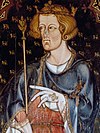
John Richard Green on Edward I of England 2 quotes
“A strange tenderness and sensitiveness to affection lay in fact beneath the stern imperiousness of his outer bearing... He is the first English king since the Conquest who loves his people with a personal love, and craves for their love back again. To his trust in them we owe our Parliament, to his care for them the great statutes which stand in the forefront of our laws.”
John Richard Green on William Ewart Gladstone 2 quotes
“I begin to see that there may be a truer wisdom in the "humanitarianism" of Gladstone than in the purely political views of Disraeli. The sympathies of peoples with peoples, the sense of a common humanity between nations, the aspirations of nationalities after freedom and independence, are real political forces; and it is just because Gladstone owns them as forces, and Disraeli disowns them that the one has been on the right side, and the other on the wrong in parallel questions such as the upbuilding of Germany or Italy. I think it will be so in this upbuilding of the Sclave.”

John Richard Green on Thomas Carlyle
John Richard Green on Edward the Confessor
“A halo of tenderness spread in after-time round this last King of the old English stock; legends told of his pious simplicity, his blitheness and gentleness of mood, the holiness that gained him his name of "Confessor" and enshrined him as a saint in his abbey-church at Westminster. Gleemen sang in manlier tones of the long peace and glories of his reign, how warriors and wise councillors stood round his throne, and Welsh and Scot and Briton obeyed him. His was the one figure that stood out bright against the darkness when England lay trodden under foot by Norman conquerors; and so dear became his memory that liberty and independence itself seemed incarnate in his name. Instead of freedom, the subject of William or Henry called for the "good laws of Eadward the Confessor."”
John Richard Green on George Washington
“No nobler figure ever stood in the forefront of a nation's life. Washington was grave and courteous in address; his manners were simple and unpretending; his silence and the serene calmness of his temper spoke of a perfect self-mastery; but little there was in his outer bearing to reveal the grandeur of soul which lifts his figure with all the simple majesty of an ancient statue, out of the smaller passions, the meaner impulses of the world around him. It was only as the weary fight went on that the colonists learned, little by little, the greatness of their leader — his clear judgment, his calmness in the hour of danger or defeat; the patience with which he waited, the quickness and hardness with which he struck, the lofty and serene sense of duty that never swerved from its task through resentment or jealousy, that never, through war or peace, felt the touch of a meaner ambition; that knew no aim save that of guarding the freedom of his fellow-countrymen; and no personal longing save that of returning to his own fireside when their freedom was secured. It was almost unconsciously that men learned to cling to Washington with a trust and faith such as few other men have won, and to regard him with reverence which still hushes us in presence of his memory.”

Quotes About John Richard Green
Gain deeper perspective through quotes about John Richard Green from others.
J. W. Burrow on John Richard Green
“The attraction of the earlier [Anglo-Saxon] period lay, as Green saw, not in its dynastic or political affairs but in its essentially colonial character. The central protagonist was the English people engaged in settling their land. It was in fact a multiple protagonist: the controlling theme was the gradual expansion, convergence and coalescence of the small coastal pockets of settlement; the initial obstacle to a comprehensive settlement, and the achievement of a national political life as "England", was not so much the conquered Britons, though they fought hard, as the untamed land itself. It is not at all hard to appreciate the appeal of this... [F]or Green...the attraction of the earliest period of English history lay in the vicarious experience it offered of the free self-reliance and co-operation, the awe-inspiring isolation, and the heroic confrontation of man and virgin nature, of a colonial, frontier society... [I]t was Green who above all gave colour and imagnative depth and intensity to the English experience as, initially, a colonising one.”
David C. Douglas on John Richard Green
“The prime cause of Green's popularity and influence was his originality and it is the measure of his achievement that we are now in danger of forgetting this. He reconstructed in a single volume the development of a nation, taking cognizance not only of the political but also of the social, the cultural and the religious aspects of its life. His whole method was startlingly novel when he wrote; and it may be remarked that no one has since accomplished on the same scale the same task for this or, indeed, for any other nation. When Green found it necessary to remark: "As you see in my own Wee Book, I think moral and intellectual facts as much facts for the historian as military facts," he uttered what has now become a truism. The doctrine was of course not new, but Green was the first resolutely to apply it to the general history of a great nation.”
Entry for Green on John Richard Green
“A brilliant essay, pays particular attention to social conditions. Contains notable character sketches of Tudor monarchs and statesmen.”
About John Richard Green
John Richard Green (12 December 1837 – 7 March 1883) was an English historian chiefly known for his 1874 work A Short History of the English People.