Link Copied!
John Rawls Quotes (1921-2002)
Philosopher
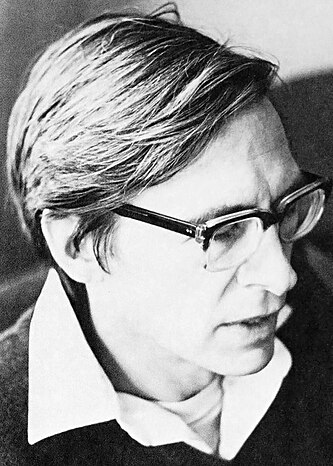

About John Rawls
John Bordley Rawls (21 February 1921 – 24 November 2002) was an American philosopher, and a leading figure in moral and political philosophy. He held the James Bryant Conant University Professorship at Harvard University and the Fulbright Fellowship at Christ Church, Oxford. His magnum opus, A Theory of Justice (1971), was hailed at the time of its publication as "the most important work in moral philosophy since the end of World War II, and is now regarded as one of the primary texts in political philosophy.
Best John Rawls Quotes
Shortest
Earliest
Explore our curated collection of the most famous and impactful John Rawls quotes.
“This is a long book, not only in pages.”

“Ideal legislators do not vote their interests.”

“Intuitionism is not constructive, perfectionism is unacceptable.”
“The suppression of liberty is always likely to be irrational.”

“If A were not allowed his better position, B would be even worse off than he is.”
“The principles of justice are chosen behind a veil of ignorance.”

“We may suppose that everyone has in himself the whole form of a moral conception.”
“I have assumed throughout that the persons in the original position are rational.”
“Ideally a just constitution would be a just procedure arranged to insure a just outcome.”
“The fundamental criterion for judging any procedure is the justice of its likely results.”
“Clearly when the liberties are left unrestricted they collide with one another.”
“No one deserves his greater natural capacity nor merits a more favorable starting place in society.”
“To each according to his threat advantage does not count as a principle of justice.”
“Being happy involves both a certain achievement in action and a rational assurance about the outcome.”

“The fault of the utilitarian doctrine is that it mistakes impersonality for impartiality.”

“The hazards of the generalized prisoner's dilemma are removed by the match between the right and the good.”
“In justice as fairness society is interpreted as a cooperative venture for mutual advantage.”

“The extreme nature of dominant-end views is often concealed by the vagueness and ambiguity of the end proposed.”
“There are infinitely many variations of the initial situation and therefore no doubt indefinitely many theorems of moral geometry.”
John Rawls Quotes by Topic
Find exactly what you are looking for by browsing this categorized list of John Rawls quotes by topic.
John Rawls on Tolerance 2 quotes
“An intolerant sect has no right to complain when it is denied an equal liberty. … A person’s right to complain is limited to principles he acknowledges himself.”
John Rawls on Justice 2 quotes
“Social and economic inequalities, for example inequalities of wealth and authority, are just only if they result in compensating benefits for everyone, and in particular for the least advantaged members of society.”
John Rawls on Consent
“Unjust social arrangements are themselves a kind of extortion, even violence, and consent to them does not bind.”

John Rawls on Social inequality
“Social and economic inequalities, for example inequalities of wealth and authority, are just only if they result in compensating benefits for everyone, and in particular for the least advantaged members of society.”

John Rawls on Price theory
John Rawls on Equal opportunity
“In all sectors of society there should be roughly equal prospects of culture and achievement for everyone similarly motivated and endowed. The expectations of those with the same abilities and aspirations should not be affected by their social class.”

John Rawls on Social class
“In all sectors of society there should be roughly equal prospects of culture and achievement for everyone similarly motivated and endowed. The expectations of those with the same abilities and aspirations should not be affected by their social class.”

John Rawls on Liberalism
“Social and economic inequalities are to satisfy two conditions: first, they are to be attached to positions and offices open to all under conditions of fair equality of opportunity; and second, they are to be to the greatest benefit to the least-advantaged members of society.”

John Rawls on Minimax
“Social and economic inequalities are to satisfy two conditions: first, they are to be attached to positions and offices open to all under conditions of fair equality of opportunity; and second, they are to be to the greatest benefit to the least- advantaged members of society.”
John Rawls on Happiness
“First of all, happiness has two aspects: one is the successful execution of a rational plan (the schedule of activities and aims) which a person strives to realize, the other is his state of mind, his sure confidence supported by good reasons that his success will endure. Being happy involves both a certain achievement in action and a rational assurance about the outcome.”

John Rawls on Social justice
“The natural distribution is neither just nor unjust; nor is it unjust that persons are born into society at some particular position. These are simply natural facts. What is just and unjust is the way that institutions deal with these facts. Aristocratic and caste societies are unjust because they make these contingencies the ascriptive basis for belonging to more or less enclosed and privileged social classes. The basic structure of these societies incorporates the arbitrariness found in nature. But there is no necessity for men to resign themselves to these contingencies. The social system is not an unchangeable order beyond human control but a pattern of human action.”

John Rawls on Arbitrariness
“The natural distribution is neither just nor unjust; nor is it unjust that persons are born into society at some particular position. These are simply natural facts. What is just and unjust is the way that institutions deal with these facts. Aristocratic and caste societies are unjust because they make these contingencies the ascriptive basis for belonging to more or less enclosed and privileged social classes. The basic structure of these societies incorporates the arbitrariness found in nature. But there is no necessity for men to resign themselves to these contingencies. The social system is not an unchangeable order beyond human control but a pattern of human action.”

John Rawls on Social system
“The natural distribution is neither just nor unjust; nor is it unjust that persons are born into society at some particular position. These are simply natural facts. What is just and unjust is the way that institutions deal with these facts. Aristocratic and caste societies are unjust because they make these contingencies the ascriptive basis for belonging to more or less enclosed and privileged social classes. The basic structure of these societies incorporates the arbitrariness found in nature. But there is no necessity for men to resign themselves to these contingencies. The social system is not an unchangeable order beyond human control but a pattern of human action.”

What John Rawls Said About Others
Discover personal opinions John Rawls shared regarding contemporaries.
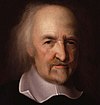
John Rawls on Thomas Hobbes
“Hobbes's Leviathan is the greatest single work of political thought in the English language.”
Quotes About John Rawls
Gain deeper perspective through quotes about John Rawls from others.
Julian Baggini on John Rawls
“Why then in Britain has secularism become seen to be hostile to religion? Because neutrality is too often assumed to require the bleaching out of all traces of faith, excluding religious belief and discourse from public life. But it doesn't, and we can see why by appeal to the notion of public reason, articulated most clearly by the late political philosopher John Rawls. Rawls was quite clear that the religious have no obligation at all to keep their faith entirely to themselves. "Reasonable comprehensive doctrines, religious or non-religious, may be introduced in public political discussion at any time," he wrote, "provided that in due course proper political reasons – and not reasons given solely by comprehensive doctrines – are presented that are sufficient to support whatever the comprehensive doctrines are said to support."”

Daniel Dennett on John Rawls
“The key innovation in Rawl's scenario, designed to ensure that undue selfishness among the participants in this exercise in reflection cancels itself out, is what he calls the "veil of ignorance". Everyone gets to vote on a favored design of society, but when you decide which society you would be happy to live in and give your allegiance to, you vote without knowing your particular role or niche in it will be. You may be a senator or a surgeon or a street sweeper or a soldier; you don't get to find out until after you have voted. Choosing from behind the veil of ignorance ensures that people will give due consideration to the likely effects, the costs and benefits, for all the citizenry, including those worse off.”

Raymond Geuss on John Rawls 2 quotes
“If the basic assumption of the theory of ideology is at all tenable, namely, that the general power relations embodied in our social structures can exert a distorting influence on the formation of our beliefs and preferences without our being aware of it, then we are definitely not going to put that kind of influence out of action by asking the agents in the society to imagine that they didn’t know their position. To think otherwise is to believe in magic: imagine you are “impartial” and you will be. In fact, doing that will be more likely to reinforce the power of these entrenched prejudices because it will explicitly present them as universal, warranted by reason, etc.”
Moshe Halbertal on John Rawls
“The ultimate merit of Rawls’s work did not lie only in his own theory, but in the extraordinarily broad discussion that it generated. Rawls’s work provided a framework for a flurry of counter-theories, such as G.A. Cohen’s in Rescuing Justice and Equality, which challenged Rawls from the left and advocated a stricter egalitarianism; and Robert Nozick’s sophisticated libertarian response in Anarchy, State, and Utopia; and Michael Walzer’s development, in Spheres of Justice, of a communitarian approach to the problem.”
Will Hutton on John Rawls 2 quotes
“Rawls challenged the view that utilitarianism, or some variant of social liberalism, was the only way to construct a social order. In A Theory of Justice, published in 1971, he laid out his alternative. Imagine, he postulated, that you have to make a choice about what social order you would want to be born into behind 'a veil of ignorance', in which you don't know beforehand your sex, skin colour, skills or the class of your parents. Your overriding concern would be to ensure that it was fair, because if you drew a short straw you would want to know that, as far as possible, society had structures that would redress the balance.”
Massimo Introvigne on John Rawls
“Rawls’ main interest was certainly not religion. It was social justice. He formulated two principles: first, that a just society should guarantee the basic liberties to all, including freedom of conscience; second, that social and economic inequalities are justified only if they work to the greatest benefit of the least advantaged members of society. For him, the first principle prevailed over the second: it was not admissible to deny the basic liberties to promote social justice. The second principle embodied his criticism of both unregulated capitalism and Marxism. Economic inequalities, he believed, are natural and unavoidable, but they are not against social justice only if they are part of a system where they are made to work to also benefit those at the lower level of the social scale. Actually, the poor may and do benefit from the presence of the rich, who support social welfare with their taxes, create workplaces, and may spend their money to create institutions, including cultural and educational, that benefit everybody. The rich would not do so spontaneously only, Rawls believed, and may need some compulsion by the state. This is why he was after all a philosopher of the left, although calling him a socialist may be an exaggeration. …I was not myself a follower of Rawls and my own political and philosophical ideas were closer to the American conservatives he opposed. Yet, I found it interesting that even in the Democrat and liberal camp the most elegant theorist acknowledged the religious roots of the very idea of social justice and agreed that the American experiment, in all its possible versions, should affirm freedom of religion as fundamental.”

Tony Judt on John Rawls
“In the Rawlsian paradigm, such a person is likely to be a northwest European or North American with a certain way of asking and answering questions of this sort, even if deprived of self-knowledge of the more circumstantial kind. The liberalism that predictably results from such a mental experiment has always been vulnerable to the charge that it lacks purchase upon real-world challenges: it neither derives from present circumstances nor responds to past experience. Perhaps this would not matter if the Rawlsian approach to grounding liberal thought were primarily addressed to persons of a liberal predisposition. But that would be pointless. The test of such a theorem is how effective it is at convincing persons not already so disposed. And even then, the question remains of exactly how such liberals should act when dealing with persons and societies that do not correspond to their preferences. On this Rawls is by no means silent, but he is forced to introduce external considerations that cannot be derived from the model itself.”

John Kekes on John Rawls
“To make concrete what [Rawls's] theory regards as justice, compare two of our society's worst-off. The first, a mugger who has never held a job, is vicious when he can get away with it and spends his ill-gotten gains on drugs. The second, a mother of three, has been abandoned by her husband; she earns the minimum wage at a menial job and is trying hard to raise her children well. According to what Rawls calls justice, these two are entitled to the same resources from society simply because they are among the worst-off. The mugger's viciousness and lack of effort and the mother's decency and struggle create no morally relevant difference between them. [¶] Now change the scenario a bit. The mugger continues as before, but the mother's efforts have borne fruit. She has found a better job and is doing well at it. Her family now is moderately secure and comfortable but hardly affluent. On Rawls's view, justice requires taking some of the mother's resources in order to give them to the mugger. [¶] in deeming this blatant injustice just, Rawls repudiates the conception—accepted from the Old Testament to recent times—that justice consists in giving people what they deserve: reward for good conduct and punishment for bad. [...] Rawls is explicit about his repudiation...”
Tibor R. Machen on John Rawls
“One main problem in Rawl’s defense of “justice as fairness” is that Rawls believes that no one can deserve his or her advantages or assets in life—it’s all a matter of luck. As he puts it, “No one deserves his greater natural capacity nor merits a more favorable starting point in society.” The reason? Because even a person’s character (i.e., the virtues he or she practices that may provide him with ways of getting ahead of others) “depends in large part upon fortunate family and social circumstances for which he can claim no credit”…”
Eric Mack on John Rawls
“Rawls' notion of liberty, however, is the impoverished notion of contemporary liberals, for whom liberty consists in the expressive or lifestyle freedom to say what one wants and have sexual relations with the species of one's choice. So, for example, being subject to a 75 percent tax on one's income or being subject to the seizure of 90 percent of one's peacefully acquired property does not count at all as an abridgment of liberty. Indeed, it is not really clear that chaining the talented and energetic to their desks should, for Rawls, count as an infringement of their liberty as long as these individuals are still permitted to express their views, cast their votes, meet with their chosen sexual partners, and, perhaps, are paroled on weekends to travel to their preferred cultural events. In any case, Rawls does not view anything the modern welfare state does in the name of income redistribution as an abridgment of liberty.”
Martha Nussbaum on John Rawls
“When we make that basic criticism, however, we are not only following Rawls's methodological suggestion - that we search for reflective equilibrium by holding up theoretical alternatives to our own considered judgments, in Socratic fashion. We are also bringing one deep part of Rawls's own conception to bear against another, saying that the contract doctrine may not do full justice to the idea that each person has an inviolability based upon justice. Even in moving away from Rawls, we are fully engaged with him. Surely that is a sign of his work's depth and enduring significance.”

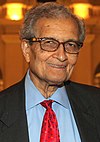
Amartya Sen on John Rawls
“Rawls’s analysis of fairness, justice, institutions and behaviour has illuminated our understanding of justice very profoundly and has played – and is still playing – a hugely constructive part in the development of the theory of justice. But we cannot make the Rawlsian mode of thinking on justice into an intellectual ‘stand-still’. We have to benefit from the richness of the ideas we have got from Rawls – and then move on, rather than taking a ‘vacation’. We do need ‘justitia’, not ‘justitium’.”
Steven M. Smith on John Rawls
“Rawls's work, for better or worse, is not inspired by this kind of epic ambition. His very modesty and lack of speculative curiosity are what exclude him from the ranks of the great philosophers. Rawls is not an Isaiah Berlin with his anguished sense of the conflict of goods which besets human life; nor is he a Leo Strauss with his vivid awareness of the forces of persecution with which philosophy has always to contend; nor is he a Michael Oakeshott with his diagnosis of the dangers posed by excessive rationalism to the goals of a free society. Rawls is a philosopher for our time. His desire is to render both theoretically and practically legitimate the redistributivist policies of the prosperous North Atlantic welfare states. There is already more than a whiff of nostalgia about this project. This is by no means a contemptible goal, but it is well to remember that this project of rationalization is one — but only one — way in which philosophy can be practiced.”
About John Rawls
John Bordley Rawls (21 February 1921 – 24 November 2002) was an American philosopher, and a leading figure in moral and political philosophy. He held the James Bryant Conant University Professorship at Harvard University and the Fulbright Fellowship at Christ Church, Oxford. His magnum opus, A Theory of Justice (1971), was hailed at the time of its publication as "the most important work in moral philosophy since the end of World War II, and is now regarded as one of the primary texts in political philosophy.