Link Copied!
John Mearsheimer Quotes (1947-)
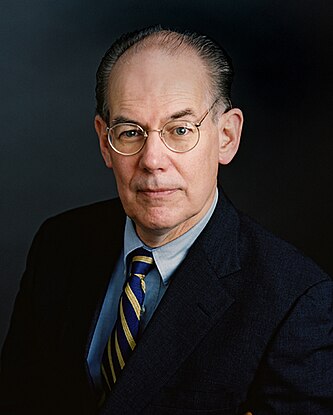


About John Mearsheimer
John J. Mearsheimer (born December 14, 1947) is an American professor of Political Science at the University of Chicago. He is an international relations theorist. He is the leading proponent of a branch of realist theory called offensive realism, a structural theory which, unlike the classical realism of Hans Morgenthau, blames security competition among great powers on the anarchy of the international system, not on human nature.
Best John Mearsheimer Quotes
Shortest
Earliest
Explore our curated collection of the most famous and impactful John Mearsheimer quotes.
“Decapitation is a fanciful strategy.”


“Preserving power, rather than increasing it, is the main goal of states.”
“Simply put, the most powerful state is the one that prevails in a dispute.”
“In an ideal world, where there are only good states, power would be largely irrelevant.”

“A state's potential power is based on the size of its population and the level of its wealth.”
“States care about relative wealth, because economic might is the foundation of military might.”
“The most dangerous states in the international system are continental powers with large armies.”

“I believe that the existing power structures in Europe and Northeast Asia are not sustainable through 2020.”
“Great powers must be forever vigilant and never subordinate survival to any other goal, including prosperity.”
“In short, unbalanced bipolar systems are so unstable that they cannot last for any appreciable period of time.”

“When an aggressor comes on the scene, at least one other state will eventually take direct responsibility for checking it.”
“...If China continues to rise, you better be very careful, because that will drive the United States stark raving crazy....”
“Specifically, the presence of oceans on much of the earth's surface makes it impossible for any state to achieve global hegemony.”
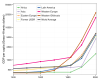
“The ideal situation for any state is to experience sharp economic growth while its rivals' economies grow slowly or hardly at all.”

“For Putin, the illegal overthrow of Ukraine's democratically elected and pro-Russian president —which he rightly labeled a "coup"— was the final straw.”
“If Ukraine becomes a pro-American liberal democracy, and a member of NATO, and a member of the E.U., the Russians will consider that categorically unacceptable.”
John Mearsheimer Quotes by Topic
Find exactly what you are looking for by browsing this categorized list of John Mearsheimer quotes by topic.
John Mearsheimer on International relations 6 quotes
View all 6 quotes on International relations →
John Mearsheimer on Economic growth
“The ideal situation for any state is to experience sharp economic growth while its rivals' economies grow slowly or hardly at all.”

Quotes About John Mearsheimer
Gain deeper perspective through quotes about John Mearsheimer from others.
John Gray on John Mearsheimer
“The Great Delusion is a provocative and timely work. But Mearsheimer’s account of the political theories that underpin liberal hegemony is confused and in some respects plainly wrong, while the prospect of American policymakers converging on a consistently realist approach to foreign relations seems remote. One difficulty is that Mearsheimer bases his argument for realism on a misconceived dichotomy. For him, liberalism comes in two versions: progressive liberalism, which favours active government intervention in order to promote positive rights to welfare alongside negative freedoms from censorship and the like, and modus vivendi liberalism, which focuses on the protection of these negative freedoms above all else. Progressive liberals to have come to prominence over the past fifty years ‘include Ronald Dworkin, Francis Fukuyama, Steven Pinker, and John Rawls’. Modus vivendi liberals of recent times, Mearsheimer tells us, include myself and the American political theorist Stephen Holmes. In a longer time frame, ‘John Locke is a quintessential modus vivendi liberal, as are Adam Smith and Friedrich Hayek.’ It is flattering to be included in such distinguished company, but Mearsheimer’s analysis reflects a fundamental misunderstanding. No political theorist of whom I am aware would represent Locke, still less Hayek, as a theorist of modus vivendi liberalism. Both were classical liberals who prioritised negative freedom from coercion by the state over other freedoms and values. The progressive liberals Mearsheimer cites hold to a more positive conception of freedom that includes endowing people with the capacities needed for effective action. Such liberals recognise important rights to equality and welfare. Modus vivendi liberals do not fit into this dichotomy since they are ready to promote both positive and negative liberties if they can be shown to help individuals and communities with different beliefs and values to coexist productively in society. The canonical thinker of modus vivendi liberalism is not Locke but Hobbes, for whom all rights, other than the right to avoid a violent death, are subject to the overriding imperative of peace. Such a misunderstanding might not seem too damaging to Mearsheimer’s argument for realism, but it is not without consequences. Mearsheimer suggests that modus vivendi liberalism might offer a template for the kind of realist foreign policy he favours. Yet Lockean liberalism, which he invokes in support of his argument, sits uneasily with realism because Lockean rights are universal. For classical liberals as for progressive liberals, only one kind of regime can be fully legitimate: one that respects human rights, however defined. All other regimes are at best approximations of this ideal. Because its principles are supposed to be universally authoritative, Lockean theory has a built-in bias in favour of liberal hegemony. It is easy to move from the belief that liberal regimes are everywhere the best to the belief that existing liberal regimes have a duty to promote similar regimes throughout the world. (Modus vivendi liberals, by contrast, reject the idea that any regime could be the best for everyone.) Classical liberals have an inherent tendency to support what is now called liberal interventionism.”
Richard Rosecrance on John Mearsheimer
““Other political scientists work on capillaries. John goes for the jugular””
Tulsi Gabbard, Rand Paul Placed on List of Russian Propagandists by Ukraine, on John Mearsheimer
“Kentucky Senator Rand Paul and former Hawaii Representative Tulsi Gabbard have been listed by Ukraine among a number of American politicians, academics and activists Kyiv claims have promoted "Russian propaganda."... The list—which also includes retired U.S. Army Colonel Douglas Macgregor, military strategist Edward Luttwak, political scientist John Mearsheimer and journalist Glenn Greenwald—does not explain what the consequences are for those who Ukraine clearly considers responsible for promoting the Kremlin's line.... Mearsheimer is on Ukraine's blacklist for having said NATO provoked Vladimir Putin into war... Mearsheimer... [said] he was disappointed with being listed as a Russian propagandist, while he defended his claim that the war was provoked by the U.S. wanting to accept Ukraine into NATO.”
About John Mearsheimer
John J. Mearsheimer (born December 14, 1947) is an American professor of Political Science at the University of Chicago. He is an international relations theorist. He is the leading proponent of a branch of realist theory called offensive realism, a structural theory which, unlike the classical realism of Hans Morgenthau, blames security competition among great powers on the anarchy of the international system, not on human nature.