Link Copied!
John Marshall Quotes (1755-1835)
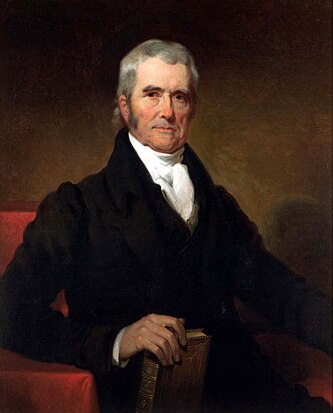

About John Marshall
John Marshall (September 24, 1755 – July 6, 1835) was an American statesman and jurist who greatly influenced American constitutional law. Marshall was the fourth Chief Justice of the United States, serving from February 4, 1801 until his death. He had previously served as a member of the United States House of Representatives and as Secretary of State, to John Adams.
Best John Marshall Quotes
Shortest
Earliest
Explore our curated collection of the most famous and impactful John Marshall quotes.
“We must never forget that it is a constitution we are expounding.”
“The acme of judicial distinction means the ability to look a lawyer straight in the eyes for two hours and not hear a damned word he says.”

“The people made the Constitution, and the people can unmake it. It is the creature of their own will, and lives only by their will.”
“The law does not expect a man to be prepared to defend every act of his life which may be suddenly and without notice alleged against him.”
“We have no more right to decline the exercise of jurisdiction which is given, than to usurp that which is not given. The one or the other would be treason to the constitution.”

“Seldom has a battle, in which greater numbers were not engaged, been so important in its consequences as that of Cowpens..”
“It is the peculiar province of the legislature to prescribe general rules for the government of society; the application of those rules to individuals in society would seem to be the duty of other departments.”

“The government of the Union, then, … is, emphatically, and truly, a government of the people. In form and in substance it emanates from them. Its powers are granted by them, and are to be exercised directly on them, and for their benefit.”

“Certainly all those who have framed written constitutions contemplate them as forming the fundamental and paramount law of the nation, and consequently the theory of every such government must be, that an act of the legislature, repugnant to the constitution, is void.”

“As men, whose intentions require no concealment, generally employ the words which most directly and aptly express the ideas they intend to convey, the enlightened patriots who framed our constitution, and the people who adopted it, must be understood to have employed words in their natural sense, and to have intended what they have said.”

“Courts are the mere instruments of the law, and can will nothing. When they are said to exercise a discretion, it is a mere legal discretion, a discretion to be exercised in discerning the course prescribed by law; and, when that is discerned, it is the duty of the Court to follow it. Judicial power is never exericised for the purpose of giving effect to the will of the Judge; always for the purpose of giving effect to the will of the Legislature; or, in other words, to the will of the law.”
“Whether a law be void for its repugnancy to the Constitution, is, at all times, a question of much delicacy, which out seldom, if ever, to be decided in the affirmative, in doubtful case. … But it is not on slight implication and vague conjecture that the legislature is to be pronounced to have transcended its powers, and its acts to be considered as void. The opposition between the Constitution and the law should be such that the judge feels a clear and strong conviction of their incompatibility with each other.”

“This government is acknowledged by all to be one of enumerated powers. The principle, that it can exercise only the powers granted to it, would seem too apparent to have required to be enforced by all those arguments which it enlightened friends, while it was depending before the people, found it necessary to urge. That principle is now universally admitted. But the question respecting the extent of the powers actually granted, is perpetually arising, and will probably continue to arise, as long as our system shall exist.”
“It is also not entirely unworthy of observation, that in declaring what shall be the supreme law of the land, the constitution itself is first mentioned; and not the laws of the United States generally, but those only which shall be made in pursuance of the constitution, have that rank. Thus, the particular phraseology of the constitution of the United States confirms and strengthens the principle, supposed to be essential to all written constitutions, that a law repugnant to the constitution is void; and that courts, as well as other departments, are bound by that instrument.”
“The Court has bestowed on this subject its most deliberate consideration. The result is a conviction that the States have no power, by taxation or otherwise, to retard, impede, burden, or in any manner control the operations of the constitutional laws enacted by Congress to carry into execution the powers vested in the General Government. This is, we think, the unavoidable consequence of that supremacy which the Constitution has declared. We are unanimously of opinion that the law passed by the Legislature of Maryland, imposing a tax on the Bank of the United States is unconstitutional and void.”
“The subject is the execution of those great powers on which the welfare of a Nation essentially depends. It must have been the intention of those who gave these powers, to insure, as far as human prudence could insure, their beneficial execution. This could not be done by confiding the choice of means to such narrow limits as not to leave it in the power of Congress to adopt any which might be appropriate, and which were conducive to the end. This provision is made in a constitution intended to endure for ages to come, and, consequently, to be adapted to the various crises of human affairs.”
“An unlimited power to tax involves, necessarily, a power to destroy; because there is a limit beyond which no institution and no property can bear taxation. A question of constitutional power can hardly be made to depend on a question of more or less. If the states may tax, they have no limit but their discretion; and the bank, therefore, must depend on the discretion of the state governments for its existence. This consequence is inevitable. The object in laying this tax, may have been revenue to the state. In the next case, the object may be to expel the bank from the state; but how is this object to be ascertained, or who is to judge of the motives of legislative acts?”

“We admit, as all must admit, that the powers of the Government are limited, and that its limits are not to be transcended. But we think the sound construction of the Constitution must allow to the national legislature that discretion with respect to the means by which the powers it confers are to be carried into execution which will enable that body to perform the high duties assigned to it in the manner most beneficial to the people. Let the end be legitimate, let it be within the scope of the constitution, and all means which are appropriate, which are plainly adapted to that end, which are not prohibited, but consist with the letter and spirit of the constitution, are constitutional.”
“A Constitution, to contain an accurate detail of all the subdivisions of which its great powers will admit, and of all the means by which they may be carried into execution, would partake of the prolixity of a legal code, and could scarcely be embraced by the human mind. It would probably never be understood by the public. Its nature, therefore, requires, that only its great outlines should be marked, its important objects designated, and the minor ingredients which compose those objects be deduced from the nature of the objects themselves. That this idea was entertained by the framers of the American constitution, is not only to be inferred from the nature of the instrument, but from the language.”

“The powers of the legislature are defined, and limited; and that those limits may not be mistaken, or forgotten, the constitution is written. To what purpose are powers limited, and to what purpose is that limitation committed to writing, if these limits may, at any time, be passed by those intended to be restrained? The distinction, between a government with limited and unlimited powers, is abolished, if those limits do not confine the persons on whom they are imposed, and if acts prohibited and acts allowed, are of equal obligation. It is a proposition too plain to be contested, that the constitution controls any legislative act repugnant to it; or, that the legislature may alter the constitution by an ordinary act. ”
“Should Congress, in the execution of its powers, adopt measures which are prohibited by the constitution; or should Congress, under the pretext of executing its powers, pass laws for the accomplishment of objects not entrusted to the government; it would become the painful duty of this tribunal, should a case requiring such a decision come before it, to say that such an act was not the law of the land. But where the law is not prohibited, and is really calculated to effect any of the objects entrusted to the government, to undertake here to inquire into the degree of its necessity, would be to pass the line which circumscribes the judicial department, and to tread on legislative ground. This court disclaims all pretensions to such a power.”
“This great principle is that the Constitution and the laws made in pursuance thereof are supreme; that they control the Constitution and laws of the respective States, and cannot be controlled by them. From this, which may be almost termed an axiom, other propositions are deduced as corollaries, on the truth or error of which, and on their application to this case, the cause has been supposed to depend. These are, 1st. That a power to create implies a power to preserve; 2d. That a power to destroy, if wielded by a different hand, is hostile to, and incompatible with these powers to create and to preserve; 3d. That, where this repugnancy exists, that authority which is supreme must control, not yield to that over which it is supreme.”
“The sword and the purse, all the external relations, and no inconsiderable portion of the industry of the nation, are entrusted to its government. It can never be pretended that these vast powers draw after them others of inferior importance, merely because they are inferior. Such an idea can never be advanced. But it may with great reason be contended, that a government, entrusted with such ample powers, on the due execution of which the happiness and prosperity of the nation so vitally depends, must also be entrusted with ample means for their execution. The power being given, it is the interest of the nation to facilitate its execution. It can never be their interest, and cannot be presumed to have been their intention, to clog and embarrass its execution by withholding the most appropriate means.”
“It is admitted that the power of taxing the people and their property is essential to the very existence of Government, and may be legitimately exercised on the objects to which it is applicable, to the utmost extent to which the Government may choose to carry it. The only security against the abuse of this power is found in the structure of the Government itself. In imposing a tax, the legislature acts upon its constituents. This is, in general, a sufficient security against erroneous and oppressive taxation. The people of a State, therefore, give to their Government a right of taxing themselves and their property, and as the exigencies of Government cannot be limited, they prescribe no limits to the exercise of this right, resting confidently on the interest of the legislator and on the influence of the constituent over their representative to guard them against its abuse.”
John Marshall Quotes by Topic
Find exactly what you are looking for by browsing this categorized list of John Marshall quotes by topic.
John Marshall on United States Constitution 4 quotes
“We must never forget that it is a constitution we are expounding.”

John Marshall on Soldiers
“A dead soldier ties down no personnel behind the lines. A maimed soldier requires on average 40 personnel in the medevac chain.”

John Marshall on Religion of the Indus Valley Civilization
John Marshall on Law
John Marshall on States' rights
“No political dreamer was ever wild enough to think of breaking down the lines which separate the States, and of compounding the American people into one common mass.”
John Marshall on Homicide
“Had Thomas Nash been an impressed American, the homicide on board the Hermoine, would, most certainly, not have been murder. The act of impressing an American is an act of lawless violence. The confinement on board a vessel is a continuation of that violence, and in additional outrage. Death committed within the United States, in resisting such violence, would not have been murder.”
John Marshall on Due process
“Without this guarantee that one may not be deprived of his rights, neither liberty nor property, without due process of law, the State's monopoly over techniques for binding conflict resolution could hardly be said to be acceptable under our scheme of things. Only by providing that the social enforcement mechanism must function strictly within these bounds can we hope to maintain an ordered society that is also just."”

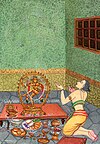
John Marshall on Mohenjo-daro
“We have found at Mohenjodaro evidence of practically every one that is capable of formative expression, viz of the cults of Shiva and the Mother goddess, of the Nagas and tree deities , of animal tree and stone worship, of phallism and of the practice of Yoga. We have seen, moreover, that although there are no visible traces Of Saktism at Mohenjodaro, there are strong reasons for believing that it existed on the Indian soil from a very early period..”

John Marshall on Freedom of speech
“The dissemination of the individual's opinions on matters of public interest is for us, in the historic words of the Declaration of Independence, an 'unalienable right' that 'governments are instituted among men to secure.' History shows us that the Founders were not always convinced that unlimited discussion of public issues would be 'for the benefit of all of us' but that they firmly adhered to the proposition that the 'true liberty of the press' permitted 'every man to publish his opinion'.”

John Marshall on Shaivism
“But, taken as a whole, their religion is so characteristically Indian as hardly to be distinguishable from still living Hinduism or at least from that aspect of it which is bound up with animism and the cults of Siva and the Mother Goddess — still the two most potent forces in popular worship. Among the many revelations that Mohenjo-daro and Harappa have had in Store for us, none perhaps is more remarkable than this discovery that Saivism has a history going back to the Chalcolithic Age or perhaps even further still, and that it thus takes its place as the most ancient living faith in the world.”
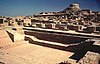
John Marshall on Sanitation of the Indus Valley Civilisation
“All this made the British archaeologist John Marshall, who took charge of the excavations at Mohenjo-daro, remark in wonder: There is nothing that we know of in pre-historic Egypt or Mesopotamia or anywhere else in Western Asia to compare with the well-built baths and commodious houses of the citizens of Mohenjo-daro. In those countries, much money and thought were lavished on the building of magnificent temples for the gods and on the palaces and tombs of kings, but the rest of the people seemingly had to content themselves with insignificant dwellings of mud. In the Indus Valley, the picture is reversed and the finest structures are those erected for the convenience of the citizen’s.”
John Marshall on First Amendment to the United States Constitution
“The danger is perhaps not great if the people of one State, through their legislature, decide that Lady Chatterley's Lover goes so far beyond the acceptable standards of candor that it will be deemed offensive and non-sellable, for the State next door is still free to make its own choice. At least we do not have one uniform standard. But the dangers to free thought and expression are truly great if the Federal Government imposes a blanket ban over the Nation on such a book. [...] The fact that the people of one State cannot read some of the works of D. H. Lawrence seems to me, if not wise or desirable, at least acceptable. But that no person in the United States should be allowed to do so seems to me to be intolerable, and violative of both the letter and spirit of the First Amendment.”

John Marshall on Light
“In fact, when the eye perceives bright light one of four reactions may take place. These are, in order of increasing brightness: dazzle, after image formation, flash blindness, and irreversible damage. Most individuals will have experienced dazzle as a result of oncoming car headlights and persistent after images from accidentally staring at the filament of an incandescent bulb. Both dazzle and after images will distort vision for some seconds to minutes. Flash blindness occurs when an extremely bright flash is discharged, usually at night, and again vision is temporarily lost. All three reactions would be useful in temporarily disabling a pilot and causing him to abort close approach to a target. If even higher irradiances reach the retina then irreversible damage may occur. In practice, a laser system that will dazzle at one mile may permanently blind at closer range.”

John Marshall on American Civil War
“A Chinaman can ride in the same passenger coach with white citizens of the United States, while citizens of the black race in Louisiana, many of whom, perhaps, risked their lives for the preservation of the Union, who are entitled, by law, to participate in the political control of the State and nation, who are not excluded, by law or by reason of their race, from public stations of any kind, and who have all the legal rights that belong to white citizens, are yet declared to be criminals, liable to imprisonment, if they ride in a public coach occupied by citizens of the white race. He does not object, nor, perhaps, would he object to separate coaches for his race if his rights under the law were recognized. But he objecting, and ought never to cease objecting, to the proposition that citizens of the white and black race can be adjudged criminals because they sit, or claim the right to sit, in the same public coach on a public highway.”

John Marshall on United States
“In view of the constitution, in the eye of the law, there is in this country no superior, dominant, ruling class of citizens. There is no caste here. Our constitution is color-blind, and neither knows nor tolerates classes among citizens. In respect of civil rights, all citizens are equal before the law. The humblest is the peer of the most powerful. The law regards man as man, and takes no account of his surroundings or of his color when his civil rights as guaranteed by the supreme law of the land are involved. It is difficult to reconcile that boast with a state of the law which, practically, puts the brand of servitude and degradation upon a large class of our fellow-citizens, our equals before the law... We boast of the freedom enjoyed by our people above all other peoples. But it is difficult to reconcile that boast with a state of the law which, practically, puts the brand of servitude and degradation upon a large class of our fellow citizens, our equals before the law. The thin disguise of 'equal' accommodations for passengers in railroad coaches will not mislead anyone, nor atone for the wrong this day done... I cannot see but that, according to the principles this day announced, such state legislation, although conceived in hostility to, and enacted for the purpose of humiliating, citizens of the United States of a particular race, would be held to be consistent with the constitution.”

What John Marshall Said About Others
Discover personal opinions John Marshall shared regarding contemporaries.
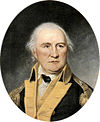
John Marshall on Daniel Morgan
“Seldom has a battle, in which greater numbers were not engaged, been so important in its consequences as that of Cowpens.”
Quotes About John Marshall
Gain deeper perspective through quotes about John Marshall from others.
John Randolph on John Marshall
“No one admires more than I do the extraordinary powers of Marshall's mind; no one respects more his amiable deportment in private life. He is the most unpretending and unassuming of men. His abilities and his virtues render him an ornament not only to Virginia, but to our nature.”
John Adams on John Marshall

Apocryphal remark attributed on John Marshall
“John Marshall has made his decision: now let him enforce it!”
Thomas Jefferson on John Marshall
“This practice of Judge Marshall, of travelling out of his case to prescribe what the law would be in a most case not before the court, is very irregular and very censurable.”

About John Marshall
John Marshall (September 24, 1755 – July 6, 1835) was an American statesman and jurist who greatly influenced American constitutional law. Marshall was the fourth Chief Justice of the United States, serving from February 4, 1801 until his death. He had previously served as a member of the United States House of Representatives and as Secretary of State, to John Adams.