Link Copied!
John Lewis Gaddis Quotes (1941-)



























About John Lewis Gaddis
John Lewis Gaddis (born 1941) is an American historian and the Robert A. Lovett Professor of Military and Naval History at Yale University.
Best John Lewis Gaddis Quotes
Shortest
Earliest
Explore our curated collection of the most famous and impactful John Lewis Gaddis quotes.


“Both the United States and the Soviet Union had been born in revolution. Both embraced ideologies with global aspirations: what worked at home, their leaders assumed, would also do so for the rest of the world.”
“The Cold War could have produced a hot war that might have ended human life on the planet. But because the fear of such a war turned out to be greater than all of the differences that separated the United States, the Soviet Union, and their respective allies, there was now reason for hope that it would never take place.”

“No one can be certain where or when the next great earthquake will occur. It is helpful to know, though, that such upheavals take place more frequently in California than in Kansas: that people who live along the San Andreas Fault should configure their houses against seismic shocks, not funnel clouds. Nobody would prudently bet, just yet, on who will play in the 2001 World Series. It seems safe enough to assume, though, that proficiency will determine which teams get there: achieving it, too, is a kind of configuring against contingencies. Not even the most capable war planner can predict where the next war will occur, or what its outcome will be. But is it equally clear that war planning should therefore cease? The point, in all of these instances, is not so much to predict the future as to prepare for it.”
John Lewis Gaddis Quotes by Topic
Find exactly what you are looking for by browsing this categorized list of John Lewis Gaddis quotes by topic.
John Lewis Gaddis on Cuban Missile Crisis 3 quotes
“What kept war from breaking out, in the fall of 1962, was the irrationality, on both sides, of sheer terror. That is what Churchill had foreseen when he saw hope in an "equality of annihilation." It is what Eisenhower had understood when he ruled out fighting limited nuclear wars: his strategy left no option than an assurance of total destruction, on the assumption that this, rather than trying to orchestrate levels of destruction while a war was going on, would best prevent any war at all from breaking out.”
John Lewis Gaddis on Watergate scandal 3 quotes
“The Watergate crisis surprised Nixon, as well as the Soviet ambassador and the Kremlin leadership. How could the most powerful man in the world be brought down by what his own press spokesman described as a "third-rate burglary," detected only because the bungling thieves had taped a door lock horizontally instead of vertically, so that the end of the tape was visible to a graveyard shift security guard? The discovery of a break-in at the Democratic National Committee headquarters in the Watergate building in Washington shortly after 1:00 am on June 17, 1972, set in motion a series of events that would force the first resignation of an American president. The disproportion between the offense and its consequences left Nixon incredulous: "[A] 11 the terrible battering we have taken," he commiserated with himself shortly before leaving office, "is really pygmy-sized when compared to what we have done, and what we can do in the future not only for peace in the world but, indirectly, to effect the well-being of people everywhere." Perhaps so, but what Watergate also revealed was that Americans placed the rule of law above the wielding of power, however praiseworthy the purposes for which power was being used. Ends did not always justify means. Might alone did not make right.”

John Lewis Gaddis on Perestroika 3 quotes
“For the first time since the Cold War began the U.S.S.R. had a ruler who did not seem sinister, boorish, unresponsive, senile—or dangerous. Gorbachev was "intelligent, well-educated, dynamic, honest, with ideas and imagination," one of his closest advisers, Anatoly Chernyaev, noted in his private diary. "Myths and taboos (including ideological ones) are nothing for him. He could flatten any of them." When a Soviet citizen congratulated him early in 1987 for having replaced a regime of "stonefaced sphinxes," Gorbachev proudly published the letter. What would replace the myths, taboos, and sphinxes, however, was less clear. Gorbachev knew that the Soviet Union could not continue on its existing path, but unlike John Paul II, Deng, Thatcher, Reagan, and Wałęsa, he did not know what the new path should be. He was at once vigorous, decisive, and adrift: he poured enormous energy into shattering the status quo without specifying how to reassemble the pieces. As a consequence, he allowed circumstances—and often the firmer views of more far-sighted contemporaries—to determine his own priorities. He resembled, in this sense, the eponymous hero of Woody Allen's movie Zelig, who managed to be present at all the great events of his time, but only by taking on the character, even the appearance, of the stronger personalities who surrounded him.”

John Lewis Gaddis on Cold War 2 quotes
“The Cold War could have produced a hot war that might have ended human life on the planet. But because the fear of such a war turned out to be greater than all of the differences that separated the United States, the Soviet Union, and their respective allies, there was now reason for hope that it would never take place.”

John Lewis Gaddis on Chinese economic reform 2 quotes
“But democracies also took root because they generally outperformed autocracies in raising living standards. Markets do not always require democracy in order to function: South Korea, Taiwan, Singapore, and China all developed successful economies under less than democratic conditions. The Cold War experience showed, though, that it is not easy to keep markets open and ideas constrained at the same time. And since markets proved more efficient than command economies in allocating resources and enhancing productivity, the resulting improvement in people s lives, in turn, strengthened democracies.”

John Lewis Gaddis on Vietnam War 2 quotes
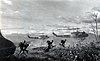
“The most important departure from determinism during the Cold War had to do, obviously, with hot wars. Prior to 1945, great powers fought great wars so frequently that they seemed to be permanent features of the international landscape: Lenin even relied on them to provide the mechanism by which capitalism would self-destruct. After 1945, however, wars were limited to those between superpowers and smaller powers, as in Korea, Vietnam, and Afghanistan, or to wars among smaller powers like the four Israel and its Arab neighbors fought between 1948 and 1973, or the three India-Pakistan wars of 1947-48, 1965, and 1971, or the long, bloody, and indecisive struggle that consumed Iran and Iraq throughout the 1980s.”
John Lewis Gaddis on Korean War 2 quotes
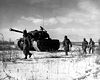
“The most important departure from determinism during the Cold War had to do, obviously, with hot wars. Prior to 1945, great powers fought great wars so frequently that they seemed to be permanent features of the international landscape: Lenin even relied on them to provide the mechanism by which capitalism would self-destruct. After 1945, however, wars were limited to those between superpowers and smaller powers, as in Korea, Vietnam, and Afghanistan, or to wars among smaller powers like the four Israel and its Arab neighbors fought between 1948 and 1973, or the three India-Pakistan wars of 1947-48, 1965, and 1971, or the long, bloody, and indecisive struggle that consumed Iran and Iraq throughout the 1980s.”
John Lewis Gaddis on 1980s 2 quotes
“The pope had been an actor before he became a priest, and his triumphant return to Poland in 1979 revealed that he had lost none of his theatrical skills. Few leaders of his era could match him in his ability to use words, gestures, exhortations, rebukes—even jokes—to move the hearts and minds of the millions who saw and heard him. All at once a single individual, through a series of dramatic performances, was changing the course of history. That was in a way appropriate, because the Cold War itself was a kind of theater in which distinctions between illusions and reality were not always obvious. It presented great opportunities for great actors to play great roles. These opportunities did not become fully apparent, however, until the early 1980s, for it was only then that the material forms of power upon which the United States, the Soviet Union, and their allies had lavished so much attention for so long—the nuclear weapons and missiles, the conventional military forces, the intelligence establishments, the military-industrial complexes, the propaganda machines—began to lose their potency. Real power rested, during the final decade of the Cold War, with leaders like John Paul II, whose mastery of intangibles—of such qualities as courage, eloquence, imagination, determination, and faith—allowed them to expose disparities between what people believed and the systems under which the Cold War had obliged them to live. The gaps were most glaring in the Marxist-Leninist world: so much so that when fully revealed there was no way to close them other than to dismantle communism itself, and thereby end the Cold War.”

John Lewis Gaddis on Information age
“The information revolution reinforced the spread of democracy because it permitted people to inform themselves and react to what they learned more quickly than in the past. It became more difficult during the Cold War to withhold news about what was going on in the rest of the world, as well as to conceal what was happening within one's own country. This kind of "transparency" provided new kinds of leverage against authoritarian regimes, as the Helsinki process dramatically illustrated. It also brought assurance, where dictatorships had been overthrown, that they would not return.”

John Lewis Gaddis on Singapore
“But democracies also took root because they generally outperformed autocracies in raising living standards. Markets do not always require democracy in order to function: South Korea, Taiwan, Singapore, and China all developed successful economies under less than democratic conditions. The Cold War experience showed, though, that it is not easy to keep markets open and ideas constrained at the same time. And since markets proved more efficient than command economies in allocating resources and enhancing productivity, the resulting improvement in people s lives, in turn, strengthened democracies.”

John Lewis Gaddis on Military
“The Cold War may well be remembered, then, as the point at which military strength, a defining characteristic of "power" itself for the past five centuries, ceased to be that. The Soviet Union collapsed, after all, with its military forces, even its nuclear capabilities, fully intact. The advance of technology, together with a culture of caution that transcended ideology, caused the nature of power itself to shift between 1945 and 1991: by the time the Cold War ended, the capacity to fight wars no longer guaranteed the influence of states, or even their continued existence, within the international system.”

John Lewis Gaddis on Arab–Israeli conflict
“The most important departure from determinism during the Cold War had to do, obviously, with hot wars. Prior to 1945, great powers fought great wars so frequently that they seemed to be permanent features of the international landscape: Lenin even relied on them to provide the mechanism by which capitalism would self-destruct. After 1945, however, wars were limited to those between superpowers and smaller powers, as in Korea, Vietnam, and Afghanistan, or to wars among smaller powers like the four Israel and its Arab neighbors fought between 1948 and 1973, or the three India-Pakistan wars of 1947-48, 1965, and 1971, or the long, bloody, and indecisive struggle that consumed Iran and Iraq throughout the 1980s.”
John Lewis Gaddis on Indo-Pakistani War of 1965
“The most important departure from determinism during the Cold War had to do, obviously, with hot wars. Prior to 1945, great powers fought great wars so frequently that they seemed to be permanent features of the international landscape: Lenin even relied on them to provide the mechanism by which capitalism would self-destruct. After 1945, however, wars were limited to those between superpowers and smaller powers, as in Korea, Vietnam, and Afghanistan, or to wars among smaller powers like the four Israel and its Arab neighbors fought between 1948 and 1973, or the three India-Pakistan wars of 1947-48, 1965, and 1971, or the long, bloody, and indecisive struggle that consumed Iran and Iraq throughout the 1980s.”

John Lewis Gaddis on Iran-Iraq War
“The most important departure from determinism during the Cold War had to do, obviously, with hot wars. Prior to 1945, great powers fought great wars so frequently that they seemed to be permanent features of the international landscape: Lenin even relied on them to provide the mechanism by which capitalism would self-destruct. After 1945, however, wars were limited to those between superpowers and smaller powers, as in Korea, Vietnam, and Afghanistan, or to wars among smaller powers like the four Israel and its Arab neighbors fought between 1948 and 1973, or the three India-Pakistan wars of 1947-48, 1965, and 1971, or the long, bloody, and indecisive struggle that consumed Iran and Iraq throughout the 1980s.”

John Lewis Gaddis on Partition of India
“The most important departure from determinism during the Cold War had to do, obviously, with hot wars. Prior to 1945, great powers fought great wars so frequently that they seemed to be permanent features of the international landscape: Lenin even relied on them to provide the mechanism by which capitalism would self-destruct. After 1945, however, wars were limited to those between superpowers and smaller powers, as in Korea, Vietnam, and Afghanistan, or to wars among smaller powers like the four Israel and its Arab neighbors fought between 1948 and 1973, or the three India-Pakistan wars of 1947-48, 1965, and 1971, or the long, bloody, and indecisive struggle that consumed Iran and Iraq throughout the 1980s.”

John Lewis Gaddis on India–Pakistan relations
“The most important departure from determinism during the Cold War had to do, obviously, with hot wars. Prior to 1945, great powers fought great wars so frequently that they seemed to be permanent features of the international landscape: Lenin even relied on them to provide the mechanism by which capitalism would self-destruct. After 1945, however, wars were limited to those between superpowers and smaller powers, as in Korea, Vietnam, and Afghanistan, or to wars among smaller powers like the four Israel and its Arab neighbors fought between 1948 and 1973, or the three India-Pakistan wars of 1947-48, 1965, and 1971, or the long, bloody, and indecisive struggle that consumed Iran and Iraq throughout the 1980s.”

John Lewis Gaddis on Bangladesh Liberation War
“The most important departure from determinism during the Cold War had to do, obviously, with hot wars. Prior to 1945, great powers fought great wars so frequently that they seemed to be permanent features of the international landscape: Lenin even relied on them to provide the mechanism by which capitalism would self-destruct. After 1945, however, wars were limited to those between superpowers and smaller powers, as in Korea, Vietnam, and Afghanistan, or to wars among smaller powers like the four Israel and its Arab neighbors fought between 1948 and 1973, or the three India-Pakistan wars of 1947-48, 1965, and 1971, or the long, bloody, and indecisive struggle that consumed Iran and Iraq throughout the 1980s.”
John Lewis Gaddis on Indo-Pakistani war of 1947–1948
“The most important departure from determinism during the Cold War had to do, obviously, with hot wars. Prior to 1945, great powers fought great wars so frequently that they seemed to be permanent features of the international landscape: Lenin even relied on them to provide the mechanism by which capitalism would self-destruct. After 1945, however, wars were limited to those between superpowers and smaller powers, as in Korea, Vietnam, and Afghanistan, or to wars among smaller powers like the four Israel and its Arab neighbors fought between 1948 and 1973, or the three India-Pakistan wars of 1947-48, 1965, and 1971, or the long, bloody, and indecisive struggle that consumed Iran and Iraq throughout the 1980s.”

John Lewis Gaddis on South Korea
“South Korea in and of itself was of little importance to the global balance of power, but the fact that it had been invaded so blatantly—across the 38th parallel, a boundary sanctioned by the United Nations—appeared to challenge the entire structure of postwar collective security. It had been just this sort of thing that had led to the collapse of international order during the 1930s, and to the subsequent outbreak of World War II. Truman hardly needed to think aboout what to do: “We can’t let the UN down,” he reportedly told his advisors. It took the administration only hours to decide that the United States would come to the defense of South Korea, and it would do so not just on its own authority, but under that of the United Nations as well.”

John Lewis Gaddis on Marxism
“That is putting it rather narrowly, for Marxism and its successors, Leninism, Stalinism, and Maoism, cannot be judged on their economic performance alone. The human costs were far more horrendous. These ideologies, when put into practice, may well have brought about the premature deaths, during the 20th century, of almost 100 million people. The number who survived but whose lives were stunted bythese ideas and the repression they justified is beyond estimation. There can be few examples in history in which greater misery resulted from better intentions. The sign that went up on an East German factory wall just after the Berlin Wall came down was entirely appropriate—if long overdue: "To the workers of the world: I am sorry." There hardly needed to be a signature.”

John Lewis Gaddis on Espionage
“Satellite reconnaissance and other intelligence breakthroughs also contributed to the obsolescence of major wars by diminishing the possibility of surprise in starting them, and by eliminating opportunities for concealment in waging them. Surprises could still happen, like Iraq's invasion of Kuwait in August, 1990, but only because the interpretation of intelligence failed, not its collection. Once the liberation of that country began early in 1991, Saddam Hussein found his military deployments so visible, and therefore so exposed to attack, that he had no choice but to withdraw. Transparency—a by-product of the Cold War strategic arms race—created a wholly new environment that rewarded those who sought to prevent wars and discouraged those who tried to begin them.”

John Lewis Gaddis on Gulf War
“Satellite reconnaissance and other intelligence breakthroughs also contributed to the obsolescence of major wars by diminishing the possibility of surprise in starting them, and by eliminating opportunities for concealment in waging them. Surprises could still happen, like Iraq's invasion of Kuwait in August, 1990, but only because the interpretation of intelligence failed, not its collection. Once the liberation of that country began early in 1991, Saddam Hussein found his military deployments so visible, and therefore so exposed to attack, that he had no choice but to withdraw. Transparency—a by-product of the Cold War strategic arms race—created a wholly new environment that rewarded those who sought to prevent wars and discouraged those who tried to begin them.”

John Lewis Gaddis on Chernobyl disaster
“A nuclear disaster did, nevertheless, occur—not because of war but as the result of an explosion at the Chernobyl nuclear power plant on April 26, 1986. This event also changed Gorbachev. It revealed "the sicknesses of our system . . . the concealing or hushing up of accidents and other bad news, irresponsibility and carelessness, slipshod work, wholesale drunkenness." For decades, he admonished the Politburo, "scientists, specialists, and ministers have been telling us that everything was safe. . . . [Y]ou think that we will look on you as gods. But now we have ended up with a fiasco." Henceforth there would have to be glasnost' (publicity) and perestroika (restructuring) within the Soviet Union itself. "Chernobyl," Gorbachev acknowledged, "made me and my colleagues rethink a great many things."”

John Lewis Gaddis on Earthquake
“No one can be certain where or when the next great earthquake will occur. It is helpful to know, though, that such upheavals take place more frequently in California than in Kansas: that people who live along the San Andreas Fault should configure their houses against seismic shocks, not funnel clouds. Nobody would prudently bet, just yet, on who will play in the 2001 World Series. It seems safe enough to assume, though, that proficiency will determine which teams get there: achieving it, too, is a kind of configuring against contingencies. Not even the most capable war planner can predict where the next war will occur, or what its outcome will be. But is it equally clear that war planning should therefore cease? The point, in all of these instances, is not so much to predict the future as to prepare for it.”

John Lewis Gaddis on Apollo 11
“Columbus's reputation, in turn, would hardly have been what it was had it not been for the decision of the Hongxi emperor, in 1424, to suspend China's far more costly and ambitious program of maritime exploration, thus leaving the great discoveries to the Europeans. A strange decision, one might think, until one recalls the costly and ambitious American effort to outdo the Soviet Union by placing a man on the moon, completed triumphantly on July 20, 1969. It had been, President Nixon extravagantly boasted, "the greatest week in the history of the world since the Creation." But then, after only five more moon landings over the next three and a half years, Nixon suspended the manned exploration of space altogether, leaving future discoveries to be postponed indefinitely. Which emperor's behavior will seem stranger 500 years hence? It is difficult to say.”

What John Lewis Gaddis Said About Others
Discover personal opinions John Lewis Gaddis shared regarding contemporaries.
John Lewis Gaddis on George C. Marshall 2 quotes
“While Stalin was undertaking that risk, Marshall—following Truman’s lead—was constructing a Cold War grand strategy. Kennan’s “long telegram” had identified the problem: the Soviet Union’s internally driven hostility toward the outside world. It had, however, suggested no solution. Now Marshall told Kennan to come up with one: the only guideline was to “avoid trivia.” The instruction, it is fair to say, was met. The European Recovery Program, which Marshall announced in June, 1947, committed the United States to nothing less than the reconstruction of Europe. The Marshall Plan, as it instantly came to be known, did not at that point distinguish between those parts of the continent that were under Soviet control and those that were not—but the thinking that lay behind it certainly did.”

John Lewis Gaddis on Richard Nixon 2 quotes
“Where Nixon went wrong was not in his use of secrecy to conduct foreign policy—diplomacy had always required that—but in failing to distinguish between actions he could have justified if exposed and those he could never have justified. Americans excused the lies Eisenhower and Kennedy told because the operations they covered up turned out to be defensible when uncovered. So too did the methods by which Nixon brought about the China opening, the SALT agreement, and the Vietnam cease-fire: the results, in those instances, made reliance on secrecy, even deception, seem reasonable. But what about the secret bombing of a sovereign state? Or the attempted overthrow of a democratically elected government? Or the bugging of American citizens without legal authorization? Or burglaries carried out with presidential authorization? Or the organization of a conspiracy, inside the White House itself, to hide what had happened? Nixon allowed all of this during his first term; his reliance on secrecy became so compulsive that he employed that tactic in situations for which there could never be a plausible justification. So when plausible denial was no longer possible—in large part because Nixon, with his secret Oval Office taping system, had even bugged himself—a constitutional crisis became unavoidable.”

John Lewis Gaddis on Joseph Stalin
John Lewis Gaddis on Pope John Paul II
John Lewis Gaddis on Alexander Dubček
“With the wall breached, everything was possible. On November 10th, Todor Zhivkov, Bulgaria's ruler since 1954, announced that he was stepping down; soon the Bulgarian Communist Party was negotiating with the opposition and promising free elections. On November 17th, demonstrations broke out in Prague and quickly spread throughout Czechoslovakia. Within weeks, a coalition government had ousted the communists, and by the end of the year Alexander Dubcek, who had presided over the 1968 "Prague spring," was installed as chairman of the national assembly, reporting to the new president of Czechoslovakia—Václav Havel.”

John Lewis Gaddis on Mohammad Reza Pahlavi
“Meanwhile, the Shah of Iran, restored to power by the Americans in 1953, was consolidating an increasingly repressive regime which Washington found impossible to disavow. Once again, a tail wagged a dog, linking the United States to an authoritarian leader whose only virtues were that he maintained order, kept oil flowing, purchased American arms, and was reliably anti-communist. Iranians were sufficiently fed up by 1979 that they overthrew the Shah, denounced the United States for supporting him, and installed in power under the Ayatollah Ruhollah Khomeini the first radically Islamist government anywhere in the world.”

John Lewis Gaddis on Gamal Abdel Nasser
“What Nasser showed, then—along with Tito, Nehru, and Zhou Enlai—was that being a Cold War superpower did not always ensure that one got one's way. There were limits to how much either Moscow or Washington could order smaller powers around, because they could always defect to the other side, or at least threaten to do so. The very compulsiveness with which the Soviet Union and the United States sought to bring such states within their orbits wound up giving those states the means of escape. Autonomy, in what might have seemed to be inhospitable circumstances, was becoming attainable. Tails were beginning to wag dogs.”

John Lewis Gaddis on Nur Muhammad Taraki
“"Do you have support among the workers, city dwellers, [and] the petty bourgeoisie?" Soviet Premier Alexei Kosygin demanded of Afghan Prime Minister Nur Mohammed Taraki in a top-secret telephone conversation. "Is there still anyone on your side?" Taraki's response was chilling: "There is no active support on the part of the population. It is almost wholly under the influence of the Shiite slogans—follow not the infidels, but follow us." It was a meaningful moment in the history of Marxism-Leninism: an ideology that had claimed to know the path to a world proletarian revolution found itself confronting a regional religious revolution for which its analytical tools were wholly inadequate.”

John Lewis Gaddis on Konstantin Chernenko
“Andropov died the following month, to be succeeded by Konstantin Chernenko, an enfeebled geriatric so zombie-like as to be beyond assessing intelligence reports, alarming or not. Having failed to prevent the NATO missile deployments, Foreign Minister Gromyko soon grudgingly agreed to resume arms control negotiations. Meanwhile Reagan was running for re-election as both a hawk and a dove: in November he trounced his Democratic opponent, Walter Mondale. And when Chernenko died in March, 1985, at the age of seventy-four, it seemed an all-too-literal validation of Reagan's predictions about "last pages" and historical "ash-heaps." Seventy-four himself at the time, the president had another line ready: "How am I supposed to get anyplace with the Russians, if they keep dying on me?"”

John Lewis Gaddis on Robert McNamara
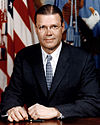
“McNamara, characteristically, transformed this reliance on irrationality into a new kind of rationality in the aftermath of the Cuban missile crisis. He now repudiated his earlier ideas of targeting only military facilities: instead each side should target the other’s cities, with a view of causing the maximum number of casualties possible. The new strategy became known as “Mutual Assured Destruction”—its acronym, with wicked appropriateness, was MAD. The assumption behind it was that if no one could be sure of surviving a nuclear war, there would not be one. That, however, was simply a restatement of what Eisenhower had long since concluded: that the advent of thermonuclear weapons meant that war could no longer be an instrument of statecraft—rather, the survival of states required that there be no war at all.”
John Lewis Gaddis on Winston Churchill
“Finally, a word about British objectives. They were, as Churchill defined them, much simpler: to survive at all costs, even if this meant relinquishing leadership of the Anglo-American coalition to Washington, even if it meant weakening the British empire, even if it also meant collaborating with the Soviet Union, a regime the younger Churchill had hoped, in the aftermath of the Bolshevik Revolution, to crush. The British would attempt to influence the Americans as much as possible—they aspired to the role of Greeks, tutoring the new Romans—but under no circumstances would they get at odds with the Americans. Stalin's expectation of an independent Britain, capable of resisting the United States and even going to war with it, would have seemed strange indeed to those who actually shaped British wartime and postwar grand strategy.”

John Lewis Gaddis on Pol Pot
“There was, to be sure, a great deal to regret about the Cold War: the running of risks with everyone's future; the resources expended for useless armaments; the environmental and health consequences of massive military-industrial complexes; the repression that blighted the lives of entire generations; the loss of life that all too often accompanied it. No tyrant anywhere had ever executed a fifth of his own people, and yet the Khmer Rouge leader Pol Pot did precisely this in the aftermath of the Vietnam War. The future will surely remember that atrocity when it has forgotten much else about the Cold War, and yet hardly anyone outside of Cambodia noticed at the time. There was no trial for crimes against humanity: Pol Pot died in a simple shack along the Thai border in 1998, and was unceremoniously cremated on a heap of junk and old tires. At least there was no mausoleum.”

Quotes About John Lewis Gaddis
Gain deeper perspective through quotes about John Lewis Gaddis from others.
Tony Judt on John Lewis Gaddis
“To judge from what he has to say about the past, he is unlikely to lose sleep over presidential abuses of power in the present or future. Indeed, Gaddis admonishes Americans for placing restrictions on their elected rulers. Describing what he clearly sees as the regrettable overreaction to Watergate and Vietnam in the 1970s, he writes: “The United States Congress was passing laws—always blunt instruments—to constrain the use of United States military and intelligence capabilities. It was as if the nation had become its own worst enemy.” Retrospectively frustrated by such constraints, Gaddis admires the boldness and vision of President George W. Bush. A keen supporter of the recent Iraq war, Gaddis in 2004 even published a guide for the use of American policymakers, showing how preemptive and preventive war making has an honorable place in American history and is to be encouraged—where appropriate—as part of an ongoing project of benevolent interventionism. Thus, while it may seem tempting to dismiss John Lewis Gaddis’s history of the cold war as a naively self-congratulatory account that leaves out much of what makes its subject interesting and of continuing relevance, that would be a mistake. Gaddis’s version is perfectly adapted for contemporary America: an anxious country curiously detached from its own past as well as from the rest of the world and hungry for “a fireside fairytale with a happy ending.” The Cold War: A New History is likely to be widely read in the U.S.: both as history and, in the admiring words of a blurb on the dust jacket, for the “lessons” it can teach us in how to “deal with new threats.” That is a depressing thought.”

About John Lewis Gaddis
John Lewis Gaddis (born 1941) is an American historian and the Robert A. Lovett Professor of Military and Naval History at Yale University.