John Lewis Gaddis on Vietnam War
← Back to John Lewis Gaddis Profile
“The most important departure from determinism during the Cold War had to do, obviously, with hot wars. Prior to 1945, great powers fought great wars so frequently that they seemed to be permanent features of the international landscape: Lenin even relied on them to provide the mechanism by which capitalism would self-destruct. After 1945, however, wars were limited to those between superpowers and smaller powers, as in Korea, Vietnam, and Afghanistan, or to wars among smaller powers like the four Israel and its Arab neighbors fought between 1948 and 1973, or the three India-Pakistan wars of 1947-48, 1965, and 1971, or the long, bloody, and indecisive struggle that consumed Iran and Iraq throughout the 1980s.”
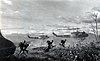
“The authors of NSC-68 had assumed that there could be separate standards of conduct in these two spheres: that American leaders could learn "not to be good" in waging the Cold War while remaining "good" within the framework of their own domestic democratic society. It had been hard enough to maintain that separation during the Eisenhower and Kennedy years: both presidents had been forced to admit that their "denials" in the U-2 and Bay of Pigs incidents had not been "plausible." With the Vietnam War, the line between what was allowed overseas and what was permitted at home disappeared altogether. The Johnson administration found it impossible to plan or prosecute the war without repeatedly concealing its intentions from the American people, and yet the decisions it made profoundly affected the American people. Far from measuring up to "its own best traditions" in fighting the Cold War, as Kennan had hoped it would, the United States in fighting the Vietnam War appeared to be sacrificing its own best traditions of constitutional and moral responsibility.”