Link Copied!
John Keegan Quotes (1934-2012)

About John Keegan
Sir John Desmond Patrick Keegan OBE FRSL (15 May 1934 – 2 August 2012) was an English military historian and journalist.
Best John Keegan Quotes
Shortest
Earliest
Explore our curated collection of the most famous and impactful John Keegan quotes.

“War’s rancours are quick to bite and slow to heal.”
“Little ground was gained, much life lost.”
“Lightning victories, experience tells, store up evil consequences, usually for the victors.”

“Plans made without allowance for the intentions of the enemy are liable to miscarry. So it was to prove in 1916.”
“The First World War inaugurated the manufacture of mass deaths that the Second brought to a pitiless consummation.”
“Time, in all crises, is usually the ingredient missing to make a solution. It is best supplied by an agreement on a pause.”

“The opening months of the First World War marked the termination of two hundred years of a style of infantry fighting which, with decreasing logic, taught that drill and discipline was the best defence against missile weapons, however much improved.”
“The system of communication itself denied any rapidity, let alone instantaneity, of communication when it was most needed, which was in the heat of action. The most important of the novelties of modern warfare in our own time has been the development of surveillance, targeting and inter-communication in real time, which is to say at the speed at which events unroll.”

“It was broadly true that all European royalty were cousins; even the Habsburgs of Austria, most imperious of sovereigns, occasionally mingled their blood with outsiders; and since every state in Europe, except France and Switzerland, was a monarchy, that made for a very dense network of interstate connections indeed.”

“The effect exerted by paper plans on the unfolding of events must never be exaggerated. Plans do not determine outcomes. The happenings set in motion by a particular scheme of action will rarely be those narrowly intended, are intrinsically unpredictable and will ramify far beyond the anticipation of the instigator. So it was to prove with the Schlieffen plan.”

“The basic and stark fact, nevertheless, was that the conditions of warfare between 1914 and 1918 predisposed towards slaughter and that only an entirely different technology, one not available until a generation later, could have averted such an outcome.
The first day of the battle of the Somme, 1 July 1916, was to be an awful demonstration of that truth.”
The first day of the battle of the Somme, 1 July 1916, was to be an awful demonstration of that truth.”
“Within fifteen years of the war’s end, totalitarianism, a new word for a system that rejected the liberalism and constitutionalism which had inspired European politics since the eclipse of monarchy in 1789, was almost everywhere on the rise. Totalitarianism was the political continuation of war by other means.”

“The accidents of military geography also began to work to the Germans’ disadvantage. The nearer they approached Amiens, the more deeply did they become entangled in the obstacles of the old Somme battlefield, a wilderness of abandoned trenches, broken roads and shell-crater fields left behind by the movement of the front a your earlier. The Somme may not have won the war for the British in 1916 but the obstacle zone it left helped to ensure that in 1918 they did not lose it.”
“All European armies in 1904 had long-laid military plans, notable in most cases for their inflexibility. None was integrated with what today would be called a ‘national security policy’, made in conclave between politicians, diplomats, intelligence directors and service chiefs, and designed to serve a country’s vital interests, for such a concept of national leadership did not then exist. Military plans were held to be military secrets in the strictest sense, secret to the planners alone, scarcely communicable in peacetime to civilian heads of government, often not from one service to another.”

“How easy it is, in retrospect, to see that that was so, how difficult at the time to except the fallibility of governments and general staffs. The fundamental truth underlying dissatisfaction with systems and with personalities in all countries was that the search for anything or anyone better was vain. The problem of command in the circumstances of the First World War was insoluble. Generals were like men without eyes, without ears and without voices, unable to watch the operations they set in progress, unable to hear reports of their development and unable to speak to those whom they had originally given orders once action was joined. The war had become bigger than those who fought it.”
“Principle perhaps was at stake; but the principle of the sanctity of international treaty, which brought Britain into the war, scarcely merited the price eventually paid for its protection. Defence of the national territory was at stake also, the principle for which France fought at almost unbearable damage to its national well-being. Defence of the principle of mutual security agreement, underlying the declarations of Germany and Russia, was pursued to a point where security lost all meaning in the dissolution of state structures. Simple state interest, Austria’s impulse and the oldest of all reasons for war-making, proved, as the pillars of imperialism collapsed about the Habsburgs, no interest at all.”

“The regulations of 1911 insisted that the riflemen of the infantry could ‘without the support of the other arms, even in inferior numbers, gain victory as long as [they] were tough and brave’. This was a view common to the continental armies, German, Austrian and Russian as well as French, the most ideological exponent of the ‘spirit of the offensive’, and was based not merely on affirmation but on an analysis of the nature of recent combat in, particularly, the Russo-Japanese War. It was accepted that high levels of firepower entailed high casualty rates; it was still believed that a determination to accept heavy casualties would bring victory.”

“What was the issue was not the combatativeness of the British soldier but the still colonial outlook of their commanders, who expected decisive results for a comparatively small outlay of force and shrank from casualties. French generals, from a different tradition, expected large casualties, which their soldiers still seemed ready to suffer with patriotic fatalism. The British soldier, regular, Territorial, wartime volunteer, was learning a similar abnegation, while their leaders were coming to accept that operations in the new conditions of trench warfare could succeed only with the most methodical preparation. The qualities of dashing improvisation that had brought victory in mountain and desert for a hundred years would not serve in France.”
“But then the First World War is a mystery. Its origins are mysterious. So is its course. Why did a prosperous continent, at the height of its success as a source and agent of global wealth and power and at one of the peaks of its intellectual and cultural achievement, choose to risk all it had won for itself and all it offered to the world in the lottery of a vicious and local internecine conflict? Why, when the hope of bringing the conflict to a quick and decisive conclusion was everywhere dashed to the ground within months of its outbreak, did the combatants decide nevertheless to persist in their military effort, to mobilise for total war and eventually to commit the totality of their young manhood to mutual and existentially pointless slaughter?”
“The 1914 battles in the Eastern Front therefore closely resemble those fought by Napoleon a hundred years earlier, as indeed did those of the Marne campaign, with the difference that infantry lay down rather than stood up to fire and that the fronts of engagement extended to widths a hundred times greater. The duration of battles extended also, from a day to a week or more. The outcomes, nevertheless, were gruesomely similar: huge casualties, both absolutely and as a proportion of numbers engaged, and dramatic results.”
“The First World War was a tragic and unnecessary conflict. Unnecessary because the train of events that led to its outbreak might have been broken at any point during the five weeks of crisis that preceded the first clash of arms, had prudence or common goodwill found a voice; tragic because the consequences of the first clash ended the lives of ten million human beings, tortured the emotional lives of millions more, destroyed the benevolent and optimistic culture of the European continent and left, when the guns at last fell silent four years later, a legacy of political rancour and racial hatred so intense that no explanation of the causes of the Second World War can stand without reference to those roots.”

“The tragedy of the diplomatic crisis that preceded the outbreak of the fighting in August 1914, which was to swell into the four-year tragedy of the Great War, is that events successively and progressively overwhelmed the capacity of statesmen and diplomats to control and contain them. Honourable and able men though they were, the servants of the chancelleries and foreign officers of the great powers in the July crisis were bound to the wheel of the written note, the encipherment routine, the telegraph schedule. The potentialities of the telephone, which might have cut across the barriers to communication, seem to have eluded their imaginative powers. The potentialities of radio, available but unused, evaded them altogether. In the event, the states of Europe proceeded, as if in a dead march and a dialogue of the deaf, to the destruction of their continent and its civilisation.”

John Keegan Quotes by Topic
Find exactly what you are looking for by browsing this categorized list of John Keegan quotes by topic.
John Keegan on World War I 2 quotes
“The First World War was a tragic and unnecessary conflict. Unnecessary because the train of events that led to its outbreak might have been broken at any point during the five weeks of crisis that preceded the first clash of arms, had prudence or common goodwill found a voice; tragic because the consequences of the first clash ended the lives of ten million human beings, tortured the emotional lives of millions more, destroyed the benevolent and optimistic culture of the European continent and left, when the guns at last fell silent four years later, a legacy of political rancour and racial hatred so intense that no explanation of the causes of the Second World War can stand without reference to those roots.”

John Keegan on Chinese Communist Party
“The warrior generations to which the remilitarisations gave birth in Algeria, China, Vietnam, and what was once Yugoslavia, are growing old today. The revolutions for which they and millions of unwilling participants paid such a terrible price in blood and anguish have withered at the roots… The Chinese greybeards of the Long March have preserved the authority of the party only by conceding economic freedoms wholly at variance with Marxist doctrine.”

John Keegan on Algeria
“The warrior generations to which the remilitarisations gave birth in Algeria, China, Vietnam, and what was once Yugoslavia, are growing old today. The revolutions for which they and millions of unwilling participants paid such a terrible price in blood and anguish have withered at the roots… In Algeria a sprawling population looks for a solution to economic hardship either in Islamic fundamentalism or in emigration to the richer world on the other side of the Mediterranean.”

John Keegan on Dissolution of the Soviet Union
“The warrior generations to which the remilitarisations gave birth in Algeria, China, Vietnam, and what was once Yugoslavia, are growing old today. The revolutions for which they and millions of unwilling participants paid such a terrible price in blood and anguish have withered at the roots…The peoples of former Yugoslavia whom Tito sought to unite by bloodying their lands in a common struggle against the Axis now bloody their hands against each other in a struggle reminiscent of nothing so much as the ‘territorial displacement’ anthropologists identify as the underlying logic of much ‘primitive’ warfare in tribal society. In the borderlands of the dissolved Soviet Union, from which the revolutionaries took their inspiration, a similar pattern discloses itself, as newly independent ‘minorities’ use their freedom from Russian control to revive ancient tribal hatreds and to re-fight wars, sometimes within rather than between tribes, which to outsiders appears to have no political point whatsoever.”

John Keegan on Yugoslavia
“This 'heroic' aspect of the Partisan struggle, deeply inspiring to scholars-turned-soldiers like Deakin, reads well on the page. But in practice of waging a politico-military campaign over the length and breadth of Yugoslavia brought untold suffering to its peoples. Their history was already one of bitter and violent rivalry, which the war had reawoken. In the north leaders of the Catholic Croats had taken advantage of Italian sponsorship to unleash a campaign of expulsion, forced conversion, and extermination against the Orthodox Serbs. Muslims in Bosnia-Herzegovina took a hand in the civil war also, while in the south the Serbs of Kosovo were attacked by their Albanian neighbors. The Chetniks, for their part, contested authority in the Serb lands with the Partisans, with whom they had failed to agree a join strategy, but did not open war with the German occupiers lest that provoke reprisals. Tito hardened his heart against reprisals; indeed, he saw Axis atrocities as a spur to recruitment. He deliberately drew the Germans after him in seven so-called 'offensives' that left the countryside through which his Partisans marched a wasteland. The villagers had either to follow the Partisans 'into the woods' (a traditional description of the whereabouts of resisters to the Turks) or stay and await reprisals. Kardelji, Tito's deputy, was emphatic about the desirability of confronting the uncommitted with such a dilemma: 'Some commanders are afraid of reprisals and that fear prevents the mobilisation of villages. I consider the reprisals will have the useful result of throwing Croatian villages on the side of Serb villages. In war we must not be frightened of the destruction of whole villages. Terror will bring about armed action.' Kardelji's analysis was correct.”

John Keegan on Eastern Orthodox Church
“This 'heroic' aspect of the Partisan struggle, deeply inspiring to scholars-turned-soldiers like Deakin, reads well on the page. But in practice of waging a politico-military campaign over the length and breadth of Yugoslavia brought untold suffering to its peoples. Their history was already one of bitter and violent rivalry, which the war had reawoken. In the north leaders of the Catholic Croats had taken advantage of Italian sponsorship to unleash a campaign of expulsion, forced conversion, and extermination against the Orthodox Serbs. Muslims in Bosnia-Herzegovina took a hand in the civil war also, while in the south the Serbs of Kosovo were attacked by their Albanian neighbors. The Chetniks, for their part, contested authority in the Serb lands with the Partisans, with whom they had failed to agree a join strategy, but did not open war with the German occupiers lest that provoke reprisals. Tito hardened his heart against reprisals; indeed, he saw Axis atrocities as a spur to recruitment. He deliberately drew the Germans after him in seven so-called 'offensives' that left the countryside through which his Partisans marched a wasteland. The villagers had either to follow the Partisans 'into the woods' (a traditional description of the whereabouts of resisters to the Turks) or stay and await reprisals. Kardelji, Tito's deputy, was emphatic about the desirability of confronting the uncommitted with such a dilemma: 'Some commanders are afraid of reprisals and that fear prevents the mobilisation of villages. I consider the reprisals will have the useful result of throwing Croatian villages on the side of Serb villages. In war we must not be frightened of the destruction of whole villages. Terror will bring about armed action.' Kardelji's analysis was correct.”

What John Keegan Said About Others
Discover personal opinions John Keegan shared regarding contemporaries.
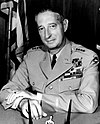
John Keegan on Mark W. Clark
“Clark had a tremendous flair for public relations and was a well-known figure but he was also a skilled and popular commander. His nickname was Eagle in Allied High Command parlance.”
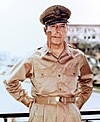
John Keegan on Douglas MacArthur
“MacArthur was a flamboyant character who made sure the people back home knew what he was doing to win the war. He was a great publicist but he made many enemies. Generals Marshall and Eisenhower disliked him and even President Roosevelt, resentful of his popularity, did not wish him to have the limelight. After the war he ruled Japan as an all-powerful potentate but he overstepped the mark in Korea which led to his downfall.”
John Keegan on A. J. P. Taylor
“His gritty, disrespectful, stay-at-home world contains nothing of the elements which made Britain the power whose passing he regretted – the derring-do of its soldiers and sailors, the colonial dynamism, the Kiplingesque ethos of its "imperial" working class. His is indeed a Little England, and one deformed by his insensitivity to anything aesthetic or spiritual in the way life is lived... [His influence conveyed contempt for] everything that the word "Establishment" stands for... a whole generation of schoolchildren was indirectly exposed to his wicked shafts of doubt and deflation.”

About John Keegan
Sir John Desmond Patrick Keegan OBE FRSL (15 May 1934 – 2 August 2012) was an English military historian and journalist.