Link Copied!
John Hicks Quotes (1904-1989)

About John Hicks
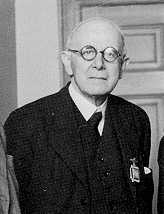
Sir John Richard Hicks (8 April 1904 – 20 May 1989) was a British economist, and economy professor at the University of Manchester and later the University of Oxford, who in 1972 received the Nobel Memorial Prize in Economic Sciences (jointly with Kenneth Arrow) for his pioneering contributions to general equilibrium theory and welfare theory.
Best John Hicks Quotes
Shortest
Earliest
Explore our curated collection of the most famous and impactful John Hicks quotes.

“I did not begin from Keynes: I began from Pareto, and Hayek.”
“Hayek was making us think of the productive process as a process in time, inputs coming before outputs.”
“Income No. 3 must be defined as the maximum amount of money which the individual can spend this week, and still be able to spend the same amount in real terms in each ensuing week.”

“There is much of economic theory which is pursued for no better reason than its intellectual attraction; it is a good game. We have no reason to be ashamed of that, since the same would hold for many branches of pure mathematics.”
“So long as we confine our attention to income from property, and leave out of account any increment or decrement in the value of prospects due to changes in people's own earning power (accumulation or decumulation of “Human Capital”), Income No. 1 ex post is not a subjective affair, like other kinds of income; it is almost completely objective.”
“It is not so well known that it [Keynes's and my own move from thinking in terms of price-levels and the rate of interest to thinking in terms of inputs and outputs] is matched by a movement from Hayek to Harrod. I once asked Harrod what had put him on to the construction of his so-call 'dynamic' theory; he said, to my surprise, that it was thinking about Hayek.”
“The purpose of income calculations in practical affairs is to give people an indication of the amount which they can consume without impoverishing themselves. Following out this idea, it would seem that we ought to define a man's income as the maximum value which he can consume during a week, and still expect to be as well off at the end of the week as he was at the beginning.”
“There were four years, 1931-1935, when I was myself a member of Hayek's seminar in London; it has left a deep mark on my thinking... At the end of the discussions in that seminar … we were, I believe, on the point of taking what now seems to me to be a decisive step. I was, at least, on the point of taking it myself. There is evidence for that in my "Value and Capital", much of the groundwork for which was done before I left London.”

“While economic theory in general may be defined as the theory of how an economic condition or an economic development is determined within an institutional framework, the welfare theory deals with how to judge whether one condition can be said to be better in some way than another and whether it is possible, by altering the institutional framework, to achieve a better condition than the present one.”

“I can date my own personal 'revolution' rather exactly to May or June 1933. It was like this. It began... with Hayek. His "Prices and Production" is one of the influences that can be detected in The Theory of Wages; it could not have been otherwise, for 1931 was a Prices and Production year at the London School of Economics... I did not in fact find it all easy to fit in with my own ideas. What started me off in 1933 was an earlier work of Hayek's, his paper on 'Intertemporal Equilibrium', an idea which I found easier to reduce to my preferred (Paretian or Wicksellian) pattern.”

“The 'new theory of money and the cycle' which is spoken of in the opening paragraph is of course Hayek's. It was from Hayek that I began - where I got to will be seen. Even at the end, I was minimising my differences from Hayek. I could do so because, as I have elsewhere explained (Economic Perspectives, p. 141n), I still thought, like Pigou and Robertson, and Hayek, but by that time unlike Keynes, that 'we were talking about fluctuations, which, since they did not result in complete collapse or complete explosion, could not have engendered an expectation of going on forever. Booms could then be considered as times of high prices, slumps as times of low prices - with regard to some norm, which throughout the which throughout the fluctuations would not be changed, or not much changed'.”
“We must give the system sufficient factors of stability to enable it to work; but we must not assume that these forces are so powerful as to prevent the system from being liable to fluctuations. There must be a tendency to rigidity of certain prices, particularly wage-rates; but there must also be a tendency to rigidity of certain price-expectations as well, in order to provide an explanation for the rigidity of these prices... Indeed we should do better to assume a good deal of variation in different people’s elasticities of expectations... Of course the way in which a population is divided with respect to this sort of sensitivity will vary very much in different circumstances... We have to be prepared to deal with a range of possible cases, varying from that of a settled community, which has been accustomed to steady conditions in the past (and which, for that reason, is not easily disturbed in the present), to that of a community which has been exposed to violent disturbances of prices (and which may have to be regarded, in consequence, as being economically neurotic.”

“I remember Robbins asking me if I could turn the Hayek model into mathematics... it began to dawn on me that... the model must be better specified. It was claimed that, if there were no monetary disturbance, the system would remain in 'equilibrium'. What could such an equilibrium mean? This, as it turned out, was a very deep question; I could do no more, in 1932, than make a start at answering it. I began by looking at what had been said by... Pareto and Wicksell. Their equilibrium was a static equilibrium, in which neither prices nor outputs were changing... That, clearly, would not do for Hayek. His 'equilibrium' must be progressive equilibrium, in which real wages, in particular, would be rising, so relative prices could not remain unchange … The next step in my thinking, was … equilibrium with perfect foresight. Investment of capital, to yield its fruit in the future, must be based on expectations, of opportunities in the future. When I put this to Hayek, he told me that this was indeed the direction in which he had been thinking. Hayek gave me a copy of a paper on 'intertemporal equilibrium', which he had written some years before his arrival in London; the conditions for a perfect foresight equilibrium were there set out in a very sophisticated manner.”
John Hicks Quotes by Topic
Find exactly what you are looking for by browsing this categorized list of John Hicks quotes by topic.
John Hicks on Prices and Production 7 quotes
“It was from Hayek that I began.”
John Hicks on Interest
“It is not so well known that it [Keynes's and my own move from thinking in terms of price-levels and the rate of interest to thinking in terms of inputs and outputs] is matched by a movement from Hayek to Harrod. I once asked Harrod what had put him on to the construction of his so-call 'dynamic' theory; he said, to my surprise, that it was thinking about Hayek.”
John Hicks on Investment
“Investment of capital, to yield its fruit in the future, must be based on expectations, of opportunities in the future. When I put this to Hayek, he told me that this was indeed the direction in which he had been thinking. Hayek gave me a copy of a paper on 'intertemporal equilibrium', which he had written some years before his arrival in London; the conditions for a perfect foresight equilibrium were there set out in a very sophisticated manner.”
John Hicks on Equilibrium
“I remember Robbins asking me if I could turn the Hayek model into mathematics... it began to dawn on me that... the model must be better specified. It was claimed that, if there were no monetary disturbance, the system would remain in 'equilibrium'. What could such an equilibrium mean? This, as it turned out, was a very deep question; I could do no more, in 1932, than make a start at answering it. I began by looking at what had been said by... Pareto and Wicksell. Their equilibrium was a static equilibrium, in which neither prices nor outputs were changing... That, clearly, would not do for Hayek. His 'equilibrium' must be progressive equilibrium, in which real wages, in particular, would be rising, so relative prices could not remain unchange … The next step in my thinking, was … equilibrium with perfect foresight. Investment of capital, to yield its fruit in the future, must be based on expectations, of opportunities in the future. When I put this to Hayek, he told me that this was indeed the direction in which he had been thinking. Hayek gave me a copy of a paper on 'intertemporal equilibrium', which he had written some years before his arrival in London; the conditions for a perfect foresight equilibrium were there set out in a very sophisticated manner.”
What John Hicks Said About Others
Discover personal opinions John Hicks shared regarding contemporaries.
John Hicks on Friedrich Hayek 3 quotes
“It was from Hayek that I began.”

John Hicks on Ralph George Hawtrey
“Hawtrey, I think one can see, came to favor the other way out. It is the fixed rate of exchange which imposes the international constraint; if that is abandoned, the Bank can recover its authority. A system in which the rate of exchange is free to move, while internal stability is maintained by a relentless application of the Bank Rate mechanism, is theoretically conceivable, and as a model is instructive. But it would seem to depend for its working upon the maintenance of confidence in some normal rate of exchange, from which the current rate would be supposed to diverge only more or less temporarily; and it is not easy to see how such confidence could be engendered.”
Quotes About John Hicks
Gain deeper perspective through quotes about John Hicks from others.
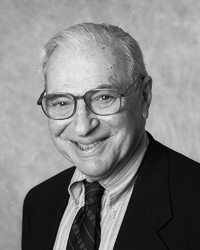
Kenneth Arrow on John Hicks
“Anyway, I enrolled in Economics and one of the things I read was a brand new book, Hick's Value and Capital. You know, after reading though the mish-mash like Marshall and things like that, suddenly there was this clear, well-organized view, you knew exactly what was happening. Just the sort of thing to appeal to me. There was a whole, messy, confused literature on capital theory; all those great debates between Knight and von Hayek and all that. And now here was just the idea of dated commodities and suddenly scales fell from your eyes. A simple idea like dated commodities made whole issues transparent. But as I read Hicks, I could see there were things left out. I turned to this again when I returned from the War, which was really pretty much of a hiatus in any work I was doing - I was gone and very busy for about three and a half years. I had done all my examinations before I had left. So now it was just a question of my thesis. I decided to take Value and Capital and redo it properly. I could see all kinds of specific points that were of concern. I wanted to combine it with Samuelson's stability theory, which he had developed in the meanwhile, the papers on dynamic stability in '41 and '42. Maybe I would add some stochastic elements to the story because as a student of probability and statistics theory I could see noise in the system. Well, it was a lifetime of work, really; it was a very unrealistic thesis.”
Roberto Scazzieri on John Hicks
“Sir John Hicks (1904–89) was a leading economic theorist of the twentieth century, and along with Kenneth Arrow was awarded the Nobel Prize in 1972. His work addressed central topics in economic theory, such as value, money, capital, and growth. An important unifying theme was the attention to economic rationality ‘in time’ and his acknowledgment that apparent rigidities and frictions might exert a positive role as a buffer against excessive fluctuations in output, prices, and employment. This emphasis on the virtue of imperfection significantly distances Hicksian economics from both the Keynesian and monetarist approaches.”
John R. Hicks on John Hicks
“The British economist John Hicks is known for four contributions. The first is his introduction of the idea of the elasticity of substitution... His second major contribution is his invention of what is called the IS-LM model, a graphical depiction of the argument John Maynard Keynes gave in his General Theory of Employment, Interest and Money (1936) about how an economy could be in equilibrium with less than full employment... Hicks’s third major contribution is his 1939 book Value and Capital, in which he showed that most of what economists then understood and believed about value theory (the theory about why goods have value) can be derived without having to assume that utility is measurable... Hicks’s fourth contribution is the idea of the compensation test.”
About John Hicks
Sir John Richard Hicks (8 April 1904 – 20 May 1989) was a British economist, and economy professor at the University of Manchester and later the University of Oxford, who in 1972 received the Nobel Memorial Prize in Economic Sciences (jointly with Kenneth Arrow) for his pioneering contributions to general equilibrium theory and welfare theory.