Link Copied!
John Denham Quotes (1614-1669)
Poet
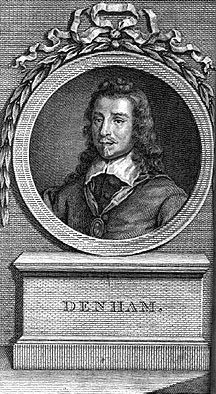


About John Denham
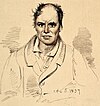
Sir John Denham (1614 or 1615 – 10 March 1669) was a Anglo-Irish poet and courtier. Son of the Chief Baron of Exchequer in Ireland, he was born in Dublin, and educated at Trinity College, Oxford and at Lincoln's Inn in London.
Best John Denham Quotes
Shortest
Earliest
Explore our curated collection of the most famous and impactful John Denham quotes.
“[U]ncertain ways unsafest are.”

“Actions o' th' last age are like almanacks o' th' last year.”
“Nor ought a genius less than his that writ
Attempt translation.”
Attempt translation.”



“Such is our pride, our folly, or our fate,
That few but such as cannot write, translate.”
That few but such as cannot write, translate.”


“Oh, could I flow like thee, and make thy stream
My great example, as it is my theme!
Though deep, yet clear; though gentle, yet not dull;
Strong without rage; without o'erflowing, full.”
My great example, as it is my theme!
Though deep, yet clear; though gentle, yet not dull;
Strong without rage; without o'erflowing, full.”
“That servile path thou nobly dost decline
Of tracing word by word, and line by line;
A new and nobler way thou dost pursue
To make translations, and translators too;
They but preserve the ashes, thou the flame,
True to his sense, but truer to his fame.”
Of tracing word by word, and line by line;
A new and nobler way thou dost pursue
To make translations, and translators too;
They but preserve the ashes, thou the flame,
True to his sense, but truer to his fame.”
“But whither am I strayed? I need not raise
Trophies to thee from other men's dispraise;
Nor is thy fame on lesser ruins built;
Nor needs thy juster title the foul guilt
Of Eastern kings, who, to secure their reign,
Must have their brothers, sons, and kindred slain.”
Trophies to thee from other men's dispraise;
Nor is thy fame on lesser ruins built;
Nor needs thy juster title the foul guilt
Of Eastern kings, who, to secure their reign,
Must have their brothers, sons, and kindred slain.”
“Search not to find how other men offend,
But by that glass thy own offences mend;
Still seek to learn, yet care not much from whom,
(So it be learning) or from whence it come.
Of thy own actions, others' judgments learn;
Often by small, great matters we discern:
Youth what man's age is like to be doth show;
We may our ends by our beginnings know.”
“I conceive it is a vulgar error in translating poets, to affect being fidus interpres... [for] poetry is of so subtile a spirit, that in the pouring out of one language into another, it will all evaporate; and if a new spirit be not added in the transfusion, there will remain nothing but a caput mortuum, there being certain graces and happinesses peculiar to every language, which give life and energy to the words... therefore if Virgil must needs speak English, it were fit he should speak not only as a man of this nation, but as man of this age.”

“Wisdom of what herself approves makes choice,
Nor is led captive by the common voice.
Clear-sighted Reason Wisdom's judgment leads,
And Sense, her vassal, in her footsteps treads.
That thou to Truth the perfect way may'st know,
To thee all her specific forms I'll show:
He that the way to honesty will learn,
First what's to be avoided must discern.
Thyself from flatt'ring self-conceit defend,
Nor what thou dost not know to know pretend.
Some secrets deep in abstruse darkness lie:
To search them thou wilt need a piercing eye.
Not rashly therefore to such things assent,
Which, undeceived, thou after may'st repent;
Study and time in these must thee instruct,
And others' old experience may conduct.
Wisdom herself her ear doth often lend
To counsel offer'd by a faithful friend.”

John Denham Quotes by Topic
Find exactly what you are looking for by browsing this categorized list of John Denham quotes by topic.
John Denham on Translation 3 quotes
“Nor ought a genius less than his that writ Attempt translation.”
John Denham on Ambition
John Denham on Vision
“The age, wherein he lived was dark; but he Could not want sight, who taught the world to see.”

John Denham on English poetry
“Old Chaucer, like the morning star, To us discovers day from far; His light those mists and clouds dissolved; Which our dark nation long involved: But he descending to the shades, Darkness again the age invades. Next, like Aurora, Spenser rose, Whose purple blush the day foreshows; The other three, with his own fires, Phoebus, the poets’ god, inspires; By Shakespeare’s, Jonson’s, Fletcher’s lines, Our stage’s lustre Rome’s outshines: These poets near our princes sleep, And in one grave their mansion keep.”
Quotes About John Denham
Gain deeper perspective through quotes about John Denham from others.
Anecdote recounted on John Denham
“In the time of the civill warres, George Withers, the poet, begged Sir John Denham's estate at Egham of the Parliament, in whose cause he was a captaine of horse. It happened that G. W. was taken prisoner, and was in danger of his life, having written severely against the king, &c. Sir John Denham went to the king, and desired his majestie not to hang him, for that whilest G. W. lived he should not be the worst poet in England.”
Misattributed Quotes
Quotes mistakenly credited to John Denham
About John Denham
Sir John Denham (1614 or 1615 – 10 March 1669) was a Anglo-Irish poet and courtier. Son of the Chief Baron of Exchequer in Ireland, he was born in Dublin, and educated at Trinity College, Oxford and at Lincoln's Inn in London.