Link Copied!
John Dalberg-Acton, 1st Baron Acton Quotes (1834-1902)
About John Dalberg-Acton, 1st Baron Acton
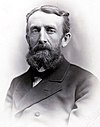
John Emerich Edward Dalberg Acton, 1st Baron Acton (10 January 1834 – 19 June 1902) was an English Catholic historian, commonly known as Lord Acton.
Best John Dalberg-Acton, 1st Baron Acton Quotes
Shortest
Earliest
Explore our curated collection of the most famous and impactful John Dalberg-Acton, 1st Baron Acton quotes.
“Praise is the shipwreck of historians.”


“The only resistance ever made to Louis XIV was from religion.”

“A government which cannot be reformed does not merit to be preserved.”


“We must not pursue science for ends independent of science. It must be pursued for its own sake, and must lead to its own results.”

“The early history of the world is the history of a few great men. Their Wirkungskreis is immense—vaster than that of God himself.”

“The lesson of modern history—that Religions enjoy (are endowed with) the prerogative of perpetual youth while philosophies seldom outlast a generation.”
“Every thing secret degenerates, even the administration of justice; nothing is safe that does not show how it can bear discussion and publicity.”
“Patriotism is in political life what faith is in religion, and it stands to the domestic feelings and to home-sickness as faith to fanaticism and to superstition.”

“According to the common opinion indirect elections are a safeguard of conservatism. But all the Assemblies of the French Revolution issued from indirect elections.”

“Religious liberty came not from the Reformation or from the sects as a whole but from particular sects...especially those which the Reformation sought to exterminate.”
“I was struck in reading Karl Marx's new work by the extent to which he fetches his materials from England. It is a remarkable book, as the Koran of the new socialists.”
“History is not a web woven with innocent hands. Among all the causes which degrade and demoralize men, power is the most constant and the most active.”
“Reformation. Scotland is the only kingdom in which the change was accomplished in spite of the crown. Ireland the only country where it was prevented in spite of the crown.”

“Liberty is the prevention of control by others. This requires self-control and, therefore, religious and spiritual influences; education, knowledge, well-being.”
“Almost all that has been done for the good of the people has been done since the right lost the monopoly of power, since the rights of property were discovered to be not unlimited.”

“The great question is, to discover not what governments prescribe, but what they ought to prescribe; for no prescription is valid against the conscience of mankind.”
“Liberalism is really opposed to liberty. ... Modern liberalism in England as well as abroad, in America as well as in Europe, has done more to destroy liberty than monarchy has done.”

“Property, not Conscience, is the basis of liberty. For the defence of Conscience need not arise. Property is always exposed to State interference. It is the constant object of policy.”
“By liberty I mean the assurance that every man shall be protected in doing what he believes his duty against the influence of authority and majorities, custom and opinion.”
“There is no example of liberty established by Protestants resisting Catholics. The French tried it and failed. The Dutch in like manner. The victory came out of the conflict of Protestants with Protestants.”
“The immediate purpose with which the Italians and Germans effected the great change in European constitution was unity, not liberty. They constructed, not securities, but forces. Machiavelli's hour had come.”
“What one hears in Ranke. The whisper of statecraft. Not the tramp of democracy's earthquake feet. Not the dull roar of surging opinion.”

“There are two things which cannot be attacked in front: ignorance and narrow-mindedness. They can only be shaken by the simple development of the contrary qualities. They will not bear discussion.”
“The English constitution was excellent until removed by foreign writers into the domain of theory, when in direct contradiction with its nature and origin it came to be admired as a common representative government.”
“To proclaim the Pope infallible was their compendious security against hostile States and Churches, against human liberty and authority, against disintegrating tolerance and rationalizing science, against error and sin.”
“In every age its [liberty's] progress has been beset by its natural enemies, by ignorance and superstition, by lust of conquest and by love of ease, by the strong man's craving for power, and the poor man's craving for food.”

“Democracy is government of the strongest, just as military despotism is. This is a bond of connection between the two. They are the brutal forms of government and as strength and authority go together, necessarily arbitrarily.”
“The history of institutions is often a history of deception and illusions; for their virtue depends on the ideas that produce and on the spirit that preserves them, and the form may remain unaltered when the substance has passed away.”
“The sentiment on which [papal] infallibility was founded could not be reached by argument, the weapon of human reason, but resided in conclusions transcending evidence, and was the inaccessible postulate rather than a demonstrable consequence of a system of religious faith.”
“At that time there was some truth in the old joke which describes the English dislike of speculation by saying that all our philosophy consists of a short catechism in two questions: “What is mind? No matter. — What is matter? Never mind.” The only accepted appeal was to tradition.”

“There is no error so monstrous that it fails to find defenders among the ablest men. Imagine a congress of eminent celebrities, such as More, Bacon, Grotius, Pascal, Cromwell, Bossuet, Montesquieu, Jefferson, Napoleon, Pitt, etc. The result would be an Encyclopedia of Error.”

“Although, therefore, the theory of nationality is more absurd and more criminal than the theory of socialism, it has an important mission in the world, and marks the final conflict, and therefore the end, of two forces which are the worst enemies of civil freedom, — the absolute monarchy and the revolution.”

“Socialism. Sanctioned by Religion, by philosophy, by the experience of great nations—Revelation. Catholic and Protestant authorities supported it. ... Idea not repugnant to Canon Law, of administering the wealth of the rich for the good of the poor. ... Socialism common wherever there is intense religious zeal.”

“Machiavelli's teaching would hardly have stood the test of parliamentary government, for public discussion demands at least the profession of good faith. But it gave an immense impulse to absolutism by silencing the consciences of very religious kings, and made the good and the bad very much alike.”
“A State which is incompetent to satisfy different races condemns itself; a State which labours to neutralise, to absorb, or to expel them, destroys its own vitality; a State which does not include them is destitute of the chief basis of self-government. The theory of nationality, therefore, is a retrograde step in history.”

“It is bad to be oppressed by a minority, but it is worse to be oppressed by a majority. For there is a reserve of latent power in the masses which, if it is called into play, the minority can seldom resist. But from the absolute will of an entire people there is no appeal, no redemption, no refuge but treason.”
“No obstacle has been so constant, or so difficult to overcome, as uncertainty and confusion touching the nature of true liberty. If hostile interests have wrought much injury, false ideas have wrought still more; and its advance is recorded in the increase of knowledge, as much as in the improvement of laws.”

“The State is competent to assign duties and draw the line between good and evil only in its immediate sphere. Beyond the limits of things necessary for its well-being, it can only give indirect help to fight the battle of life by promoting the influences which prevail against temptation, — religion, education, and the distribution of wealth.”
“Don't suspect me of denying the principle of nationality altogether. Only, if I were to say as much as you say, I should be afraid of being driven to admit the priority of National Independence before individual liberty,—of the figurative conscience before the real. We do not find that Nationalists are always Liberals, especially in Austria.”

“The worst criminals were not the men who did the deed. The crime of mobs and courtiers, infuriated by the lust of vengeance and of power, is not so strange a portent as the exultation of peaceful men, influenced by no present injury or momentary rage, but by the permanent and incurable perversion of moral sense wrought by a distorted piety.”
“I have shown you how Machiavelli supplied the immoral theory needful for the consummation of royal absolutism; the absolute oligarchy of Venice required the same assurance against the revolt of conscience. It was provided by a writer as able as Machiavelli, who analyzed the wants and resources of aristocracy, and made known that its best security is poison.”

“Nationality is the great carrier of custom, of unreflecting habit and transmitted ideas that quench individuality. Conscience gives men force to resist and discard all this. Nationality has to be dealt with discriminatingly. It is not always liberal or constructive. It may be as dangerous when its boundary is outside that of the State as salutary when inside.”

“Six hundred years before the birth of Christ absolutism held unbounded sway. Throughout the East it was propped by the unchanging influence of priests and armies. In the West, where there were no sacred books requiring trained interpreters, the priesthood acquired no preponderance, and when the kings were overthrown their powers passed to aristocracies of birth.”

“Property is not the sacred right. When a rich man becomes poor it is a misfortune, it is not a moral evil. When a poor man becomes destitute, it is a moral evil, teeming with consequences injurious to society and morality. Therefore, in last resort, the poor have a claim on the wealth of the rich, so far that they may be relieved from the immoral, demoralizing effects of poverty.”
“Liberty and good government do not exclude each other; and there are excellent reasons why they should go together. Liberty is not a means to a higher political end. It is itself the highest political end. It is not for the sake of a good public administration that it is required, but for security in the pursuit of the highest objects of civil society, and of private life.”

“It is they [men of science] who hold the secret of the mysterious property of the mind by which error ministers to truth, and truth slowly but irrevocably prevails. Theirs is the logic of discovery, the demonstration of the advance of knowledge and the development of ideas, which, as the earthly wants and the passions of men remain almost unchanged, are the charter of progress, and the vital spark of history.”

“The tide was running fast when the Reformation began at Wittenberg, and it was to be expected that Luther’s influence would stem the flood of absolutism. For he was confronted everywhere by the compact alliance of the Church with the State; and great part of his country was governed by hostile potentates who were prelates of the court of Rome. He had, indeed, more to fear from temporal than from spiritual foes.”
“It is more essential that an enthusiast of the papacy be made to contemplate its crimes, because its influence is nearer the Conscience; and the spiritual danger of perverted morals is greater than the evil of perverted politics. It is an agency constantly active, pervading life, penetrating the soul by many channels, in almost every sermon and in almost every prayer book. It is the fiend skulking behind the Crucifix.”
“At all times sincere friends of freedom have been rare, and its triumphs have been due to minorities, that have prevailed by associating themselves with auxiliaries whose objects often differed from their own; and this association, which is always dangerous, has been sometimes disastrous, by giving to opponents just grounds of opposition, and by kindling dispute over the spoils in the hour of success.”
“It would be easy to point out a paragraph in St. Augustine, or a sentence of Grotius that outweighs in influence the Acts of fifty Parliaments, and our cause owes more to Cicero and Seneca, to Vinet and Tocqueville, than to the laws of Lycurgus or the Five Codes of France.”
“In Italy, where the life of a heretic was cheap, their wholesale destruction was confessed a highly politic and ingenious act. Even the sage Venetians were constrained to celebrate it with a procession. The Grand Duke Cosmo had pointed out two years before that an insidious peace would afford excellent opportunities of extinguishing Protestantism; and he derived inexpressible consolation from the heroic enterprise.”

“Legally and to outward seeming the American President is the successor of Washington, and still enjoys powers devised and limited by the Convention of Philadelphia. In reality the new President differs from the Magistrate imagined by the Fathers of the Republic as widely as Monarchy from Democracy...”

“I have reached the end of my time, and have hardly come to the beginning of my task. In the ages of which I have spoken, the history of freedom was the history of the thing that was not. But since the Declaration of Independence, or, to speak more justly, since the Spaniards, deprived of their king, made a new government for themselves, the only known forms of Liberty, Republics and Constitutional Monarchy, have made their way over the world.”
“In ancient times the State absorbed authorities not its own, and intruded on the domain of personal freedom. In the Middle Ages it possessed too little authority, and suffered others to intrude. Modern States fall habitually into both excesses. The most certain test by which we judge whether a country is really free is the amount of security enjoyed by minorities. Liberty, by this definition, is the essential condition and guardian of religion...”
“Whenever a single definite object is made the supreme end of the State, be it the advantage of a class, the safety of the power of the country, the greatest happiness of the greatest number, or the support of any speculative idea, the State becomes for the time inevitably absolute. Liberty alone demands for its realisation the limitation of the public authority, for liberty is the only object which benefits all alike, and provokes no sincere opposition.”
“A century ago it was perfectly well known that whoever had one audience of a Master in Chancery was made to pay for three, but no man heeded the enormity until it suggested to a young lawyer that it might be well to question and examine with rigorous suspicion every part of a system in which such things were done. The day on which that gleam lighted up the clear hard mind of Jeremy Bentham is memorable in the political calendar beyond the entire administration of many statesmen.”
“By Universal History I understand that which is distinct from the combined history of all countries, which is not a rope of sand, but a continuous development, and is not a burden on the memory, but an illumination of the soul. It moves in a succession to which the nations are subsidiary. Their story will be told, not for their own sake, but in reference and subordination to a higher series, according to the time and the degree in which they contribute to the common fortunes of Mankind.”
“The way was paved for absolute monarchy to triumph over the spirit and institutions of a better age, not by isolated acts of wickedness, but by a studied philosophy of crime, and so thorough a perversion of the moral sense that the like of it had not been since the Stoics reformed the morality of paganism.
The clergy who had in so many ways served the cause of freedom during the prolonged strife against feudalism and slavery, were associated now with the interest of royalty.”
The clergy who had in so many ways served the cause of freedom during the prolonged strife against feudalism and slavery, were associated now with the interest of royalty.”
“The nation had no instinct and no productive power that emancipated it from the customs of its forefathers. Every appeal against oppression was to the hereditary rights; the only protection which the Englishman knew was in the traditional laws of his country. By means of this perpetual recurrence to old principles, and of the gradual contrivance of new forms in which to secure their action, the English people conquered their freedom. The intensity of their conservatism was an impulse as well as a guide of their progress.”

“I have fixed my eyes on the spaces that heaven’s light illuminates, that I may not lay too heavy a strain on the indulgence with which you have accompanied me over the dreary and heartbreaking course by which men have passed to freedom; and because the light that has guided us is still unquenched, and the causes that have carried us so far in the van of free nations have not spent their power; because the story of the future is written in the past, and that which hath been is the same thing that shall be.”

“S. B. is the greatest crime of modern times. It was committed on principles professed by Rome. It was approved, sanctioned, praised by the papacy. The Holy See went out of its way to signify to the world, by permanent and solemn acts, how entirely it admired a king who slaughtered his subjects treacherously, because they were Protestants. To proclaim forever that because a man is a Protestant it is a pious deed to cut his throat in the night.”
“John Knox thought that every Catholic in Scotland ought to be put to death; and no man ever had disciples of a sterner or more relentless temper. But his counsel was not followed.
All through the religious conflict, policy kept the upper hand. When the last of the Reformers died, religion, instead of emancipating the nations, had become an excuse for the criminal art of despots. Calvin preached, and Bellarmine lectured; but Machiavelli reigned.”
All through the religious conflict, policy kept the upper hand. When the last of the Reformers died, religion, instead of emancipating the nations, had become an excuse for the criminal art of despots. Calvin preached, and Bellarmine lectured; but Machiavelli reigned.”
“What followed, during many generations, was the cruel domination of class over class, the oppression of the poor by the rich, and of the ignorant by the wise. The spirit of that domination found passionate utterance in the verses of the aristocratic poet Theognis,... who longed to drink the blood of his political adversaries. From these oppressors the people of many cities sought deliverance in the less intolerable tyranny of revolutionary usurpers. The remedy gave new shape and energy to the evil. ...rights secured by equal laws and by sharing power existed nowhere.”

“The decisive struggle was in France. During the minority of Charles IX. persecution had given way to civil war, and the Regent, his mother, had vainly striven, by submitting to neither party, to uphold the authority of the Crown. She checked the victorious Catholics, by granting to the Huguenots terms which constituted them, in spite of continual disaster in the field, a vast and organised power in the State. To escape their influence it would have been necessary to invoke the help of Philip II., and to accept protection which would have made France subordinate to Spain.”

“The Stoics could only advise the wise man to hold aloof from politics, keeping the unwritten law in his heart. But when Christ said: '''''"Render unto Cæsar the things that are Cæsar's, and unto God the things that are God's,"'' those words, spoken on His last visit to the Temple, three days before His death, gave to the civil power, under the protection of conscience, a sacredness it had never enjoyed, and bounds it had never acknowledged; and they were the repudiation of absolutism and the inauguration of freedom.'''”

“Nations eagerly invested their rulers with every prerogative needed to preserve their faith, and all the care to keep Church and State asunder, and to prevent the confusion of their powers, which had been the work of ages, was renounced in the intensity of the crisis. Atrocious deeds were done, in which religious passion was often the instrument, but policy was the motive.
Fanaticism displays itself in the masses; but the masses were rarely fanaticised; and the crimes ascribed to it were commonly due to the calculations of dispassionate politicians.”
Fanaticism displays itself in the masses; but the masses were rarely fanaticised; and the crimes ascribed to it were commonly due to the calculations of dispassionate politicians.”
“Increase of freedom in the state may sometimes promote mediocrity, and give vitality to prejudice; it may even retard useful legislation, diminish the capacity for war, and restrict the boundaries of Empire...A generous spirit prefers that his country should be poor, and weak, and of no account, but free, rather than powerful, prosperous, and enslaved. It is better to be the citizen of a humble commonwealth in the Alps, without a prospect of influence beyond the narrow frontier, than a subject of a superb autocracy that overshadows half of Asia and of Europe.”

“Socialism the worst of all enemies of freedom because, if it could fulfil what it promises, it would render such a service to the world that the interests of freedom would pale, and mankind would carry over its allegiance to the benefactor who had a higher claim on its gratitude. ... This century has seen the growth of the worst enemy freedom has ever had to encounter—Socialism. Strong, because it solves a problem pol[itical] economy has, until now, failed to solve. How to provide that the increase of wealth shall not be at the expense of its distribution. ... Can only be realised by a tremendous despotism.”

“The great object, in trying to understand history, political, religious, literary or scientific, is to get behind men and to grasp ideas. Ideas have a radiation and development, an ancestry and posterity of their own, in which men play the part of godfathers and godmothers more than that of legitimate parents. We understand the work and place of Pascal, or Newton, or Montesquieu, or Adam Smith, when we have measured the gap between the state of astronomy, of political economy, &c., before they came and after they were gone. And the progress of the science is of more use to us than the idiosyncrasy of the man.”

“The inflexible integrity of the moral code is, to me, the secret of the authority, the dignity, the utility of History.
If we may debase the currency for the sake of genius, or success, or rank, or reputation, we may debase it for the sake of a man’s influence, of his religion, of his party, of the good cause which prospers by his credit and suffers by his disgrace. Then History ceases to be a science, an arbiter of controversy, a guide of the Wanderer, the upholder of that moral standard which the powers of earth and religion itself tend constantly to depress. It serves where it ought to reign; and it serves the worst cause better than the purest.”
If we may debase the currency for the sake of genius, or success, or rank, or reputation, we may debase it for the sake of a man’s influence, of his religion, of his party, of the good cause which prospers by his credit and suffers by his disgrace. Then History ceases to be a science, an arbiter of controversy, a guide of the Wanderer, the upholder of that moral standard which the powers of earth and religion itself tend constantly to depress. It serves where it ought to reign; and it serves the worst cause better than the purest.”
“We are forced, in equity, to share the government with the working class...If there is a free contract, in open market, between capital and labour, it cannot be right that one of the two contracting parties should have the making of the laws, the management of the conditions, the keeping of the peace, the administration of justice, the distribution of taxes, the control of expenditure, in its own hands exclusively. It is unjust that all these securities, all these advantages, should be on the same side...Before this argument the ancient dogma, that power attends on property, broke down. Justice required that property should-not abdicate, but-share its political supremacy.”

“I am not thinking of those shining precepts which are the registered property of every school; that is to say — learn as much by writing as by reading; be not content with the best book; seek sidelights from the others; have no favourites; keep men and things apart; guard against the prestige of great names; see that your judgments are your own; and do not shrink from disagreement; no trusting without testing; be more severe to ideas than to actions; do not overlook the strength of the bad cause of the weakness of the good; never be surprised by the crumbling of an idol or the disclosure of a skeleton; judge talent at its best and character at its worst; suspect power more than vice, and study problems in preference to periods.”
“Their [Athenians] history furnishes the classic example of the peril of Democracy under conditions singularly favourable. For the Athenians were not only brave and patriotic and capable of generous sacrifice, but they were the most religious of the Greeks. They venerated the constitution which had given them prosperity and equality and the pride of freedom...They tolerated considerable variety of opinion, and great license of speech...Thus they became the only people of antiquity that grew great by democratic institutions. But the possession of unlimited power, which corrodes the conscience, hardens the heart, and confounds the understanding of monarchs exercised its demoralizing influence on the illustrious Democracy of Athens.”

“[L]liberty is ancient, and it is despotism that is new. ...The heroic age of Greece confirms it, and it is still more conspicuously true of Teutonic Europe. ...They exhibit some sense of common interest in common concerns, little reverence for external authority, and an imperfect sense of the function and supremacy of the State. Where the division of property and labour is incomplete there is little division of classes and of power. Until societies are tried by the complex problems of civilisation they may escape despotism, as societies that are undisturbed by religious diversity avoid persecution.”
“That men should understand that governments do not exist by divine right, and that arbitrary government is the violation of divine right, was no doubt the medicine suited to the malady under which Europe languished. But although the knowledge of this truth might become an element of salutary destruction, it could give little aid to progress and reform. Resistance to tyranny implied no faculty of constructing a legal government in its place. Tyburn tree may be a useful thing; but it is better still that the offender should live for repentance and reformation. The principles which discriminate in politics between good and evil, and make states worthy to last, were not yet found.”
“The conflict between liberty under divine authority and the absolutism of human authorities ended disastrously. ...In the very year 586 [BCE], in which the flood of Asiatic despotism closed over the city which had been, and was destined again to be, the sanctuary of freedom in the East, a new home was prepared for it in the West, where, guarded by the sea and the mountains, and by valiant hearts, that stately plant was reared under whose shade we dwell, and which is extending its invincible arms so slowly and yet so surely over the civilised world.”
“The one pervading evil of democracy is the tyranny of the majority, or rather of that party, not always the majority, that succeeds, by force or fraud, in carrying elections. To break off that point is to avert the danger. The common system of representation perpetuates the danger. Unequal electorates afford no security to majorities. Equal electorates give none to minorities. Thirty-five years ago it was pointed out that the remedy is proportional representation. It is profoundly democratic, for it increases the influence of thousands who would otherwise have no voice in the government; and it brings men more near an equality by so contriving that no vote shall be wasted, and that every voter shall contribute to bring into Parliament a member of his own opinions.”
“In the height of their power the Romans became aware of a race of men that had not abdicated freedom in the hands of a monarch; and the ablest writer of the empire pointed to them with a vague and bitter feeling that, to the institutions of these barbarians, not yet crushed by despotism, the future of the world belonged. Their kings, when they had kings, did not preside [at] their councils; they were sometimes elective; they were sometimes deposed; and they were bound by oath to act in obedience to the general wish. They enjoyed real authority only in war. This primitive Republicanism, which admits monarchy as an occasional incident, but holds fast to the collective supremacy of all free men, of the constituent authority over all constituted authorities, is the remote germ of parliamentary government.”

“Most of this, I suppose, is undisputed, and calls for no enlargement. But the weight of opinion is against me when I exhort you never to debase the moral currency or to lower the standard of rectitude, but to try others by the final maxim that governs your own lives, and to suffer no man and no cause to escape the undying penalty which history has the power to inflict on wrong. The plea in extenuation of guilt and mitigation of punishment is perpetual. At every step we are met by arguments which go to excuse, to palliate, to confound right and wrong, and reduce the just man to the level of the reprobate. The men who plot to baffle and resist us are, first of all, those who made history what it has become. They set up the principle that only a foolish Conservative judges the present time with the ideas of the past; that only a foolish Liberal judges the past with the ideas of the present.”
“I cannot accept your canon that we are to judge Pope and King unlike other men, with a favorable presumption that they did no wrong. If there is any presumption it is the other way against holders of power, increasing as the power increases. Historic responsibility has to make up for the want of legal responsibility. Power tends to corrupt and absolute power corrupts absolutely. Great men are almost always bad men, even when they exercise influence and not authority: still more when you superadd the tendency or the certainty of corruption by authority. There is no worse heresy than that the office sanctifies the holder of it. That is the point at which the negation of Catholicism and the negation of Liberalism meet and keep high festival, and the end learns to justify the means.
• Paraphrased variant: All power tends to corrupt and absolute power corrupts absolutely.”
• Paraphrased variant: All power tends to corrupt and absolute power corrupts absolutely.”

“It was manifest that all persons who had learned that political science is an affair of conscience rather than of might or expediency, must regard their adversaries as men without principle, that the controversy between them would perpetually involve morality, and could not be governed by the plea of good intentions which softens down the asperities of religious strife. Nearly all the greatest men of the seventeenth century repudiated the innovation. In the eighteenth, the two ideas of Grotius, that there are certain political truths by which every state and every interest must stand or fall, and that society is knit together by a series of real and hypothetical contracts, became, in other hands, the lever that displaced the world. When, by what seemed the operation of an irresistible and constant law, royalty had prevailed over all enemies and all competitors, it became a religion. Its ancient rivals, the baron and the prelate, figured as supporters by its side.”
“ADVICE TO PERSONS ABOUT TO WRITE HISTORY — DON’T
In the Moral Sciences Prejudice is Dishonesty.
A Historian has to fight against temptations special to his mode of life, temptations from Country, Class, Church, College, Party, Authority of talents, solicitation of friends.
The most respectable of these influences are the most dangerous.
The historian who neglects to root them out is exactly like a juror who votes according to his personal likes or dislikes.
In judging men and things Ethics go before Dogma, Politics or Nationality. The Ethics of History cannot be denominational.
Judge not according to the orthodox standard of a system religious, philosophical, political, but according as things promote, or fail to promote the delicacy, integrity, and authority of Conscience.
Put conscience above both system and success.
History provides neither compensation for suffering nor penalties for wrong.”
“Without presuming to decide the purely legal question, on which it seems evident to me from Madison's and Hamilton's papers that the Fathers of the Constitution were not agreed, I saw in State Rights the only availing check upon the absolutism of the sovereign will, and secession filled me with hope, not as the destruction but as the redemption of Democracy. The institutions of your Republic have not exercised on the old world the salutary and liberating influence which ought to have belonged to them, by reason of those defects and abuses of principle which the Confederate Constitution was expressly and wisely calculated to remedy. I believed that the example of that great Reform would have blessed all the races of mankind by establishing true freedom purged of the native dangers and disorders of Republics. Therefore I deemed that you were fighting the battles of our liberty, our progress, and our civilization; and I mourn for the stake which was lost at Richmond more deeply than I rejoice over that which was saved at Waterloo.”
“Judged by its immediate result, the massacre of St. Bartholomew was a measure weakly planned and irresolutely executed, which deprived Protestantism of its political leaders, and left it for a time to the control of zealots. There is no evidence to make it probable that more than seven thousand victims perished. Judged by later events, it was the beginning of a vast change in the conflict of the churches. At first it was believed that a hundred thousand Huguenots had fallen. It was said that the survivors were abjuring by thousands, that the children of the slain were made Catholics, that those whom the priest had admitted to absolution and communion were nevertheless put to death. Men who were far beyond the reach of the French Government lost their faith in a religion which Providence had visited with so tremendous a judgment; and foreign princes took heart to employ severities which could excite no horror after the scenes in France.”
“The French philosopher Charron was one of the men least demoralised by party spirit, and least blinded by zeal for a cause. In a passage almost literally taken from St. Thomas, he describes our subordination under the law of nature, to which all legislation must conform; and he ascertains it not by the light of revealed religion, but by the voice of universal reason, through which God enlightens the consciences of men. Upon this foundation Grotius drew the lines of real political science. In gathering the materials of International law, he had to go beyond national treaties and denominational interests, for a principle embracing all mankind. The principles of law must stand, he said, even if we suppose that there is no God. By these inaccurate terms he meant that they must be found independently of Revelation. From that time it became possible to make politics a matter of principle and of conscience, so that men and nations differing in all other things could live in peace together, under the sanctions of a common law.”

“The idea that the ends of government justify the means employed, was worked into system by Machiavelli. He was an acute politician, sincerely anxious that the obstacles to the intelligent government of Italy should be swept away. It appeared to him that the most vexatious obstacle to intellect is conscience, and that the vigorous use of statecraft necessary for the success of difficult schemes would never be made if governments allowed themselves to be hampered by the precepts of the copy-book.
His audacious doctrine was avowed in the succeeding age, by men whose personal character otherwise stood high. They saw that in critical times good men have seldom strength for their goodness, and yield to those who have grasped the meaning of the maxim that you cannot make an omelette if you are afraid to break the eggs. They saw that public morality differs from private, because no government can turn the other cheek, or can admit that mercy is better than justice. And they could not define the difference, or draw the limits of exception; or tell what other standard for a nation’s acts there is than the judgment which heaven pronounces in this world by success.”
His audacious doctrine was avowed in the succeeding age, by men whose personal character otherwise stood high. They saw that in critical times good men have seldom strength for their goodness, and yield to those who have grasped the meaning of the maxim that you cannot make an omelette if you are afraid to break the eggs. They saw that public morality differs from private, because no government can turn the other cheek, or can admit that mercy is better than justice. And they could not define the difference, or draw the limits of exception; or tell what other standard for a nation’s acts there is than the judgment which heaven pronounces in this world by success.”
“From this universal degradation the world was rescued by the most gifted of the nations. Athens, which like other cities was distracted and oppressed by a privileged class, avoided violence and appointed Solon to revise its laws. ...Solon gave a share of power proportioned to the demands made on their resources. The poorest classes were exempt from direct taxes, but were excluded from office. Solon gave them a voice in electing magistrates from the classes above them, and the right of calling them to account. This concession... was the beginning of a mighty change. It introduced the idea that a man ought to have a voice in selecting those to whose rectitude and wisdom he is compelled to trust his fortune, his family, and his life. And this idea completely inverted the notion of human authority, for it inaugurated the reign of moral influence... Government by consent superseded government by compulsion, and the pyramid which had stood on a point was made to stand upon its base. By making every citizen the guardian of his own interest Solon admitted the element of Democracy into the State.”
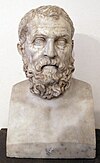
“[T]he Revolution of 1688...is the greatest thing done by the English nation. It established the State upon a contract, and set up the doctrine that a breach of contract forfeited the crown. ... Parliament gave the crown, and gave it under conditions. Parliament became supreme in administration as well as in legislation. The king became its servant on good behaviour, liable to dismissal for himself or his ministers. All this was not restitution, but inversion. Passive obedience had been the law of England. Conditional obedience and the right of resistance became the law. Authority was limited and regulated and controlled. The Whig theory of government was substituted for the Tory theory on the fundamental points of political science. The great achievement is that this was done without bloodshed, without vengeance, without exclusion of entire parties, with so little definiteness in point of doctrine that it could be accepted, and the consequences could be left to work themselves out.”

“Constantine declared his own will equivalent to a canon of the Church. According to Justinian, the Roman people had formally transferred to the emperors the entire plenitude of its authority, and, therefore, the emperor’s pleasure, expressed by edict or by letter, had force of law. Even in the fervent age of its conversion the empire employed its refined civilization, the accumulated wisdom of ancient sages, the reasonableness and subtlety of Roman law, and the entire inheritance of the Jewish, the pagan, and the Christian world, to make the Church serve as a gilded crutch of absolutism. Neither an enlightened philosophy, nor all the political wisdom of Rome, nor even the faith and virtue of the Christians availed against the incorrigible tradition of antiquity. Something was wanted, beyond all the gifts of reflection and experience — a faculty of self government and self control, developed like its language in the fibre of a nation, and growing with its growth. This vital element, which many centuries of warfare, of anarchy, of oppression, had extinguished in the countries that were still draped in the pomp of ancient civilization, was deposited on the soil of Christendom by the fertilising stream of migration that overthrew the empire of the West.”

“But it may be urged, on the other side, that Liberty is not the sum or substitute for of all things men ought to live for... to be real it must be circumscribed... advancing civilisation invests the state with increased rights and duties, and imposes increased burdens and constraints on the subject... a highly instructed and intelligent community may perceive the benefit of compulsory obligations which, at a lower stage, would be thought unbearable... liberal progress is not vague or indefinite, but aims at a point where the public is subject to no restrictions but those of which it feels the advantage... a free country may be less capable of doing much for the advancement of religion, the prevention of vice, or the relief of suffering, than one that does not shrink from confronting great emergencies by some sacrifice of individual rights, and some concentration of power... the supreme political object ought to be sometimes postponed to still higher moral objects. My argument involves no collision with these qualifying reflections. We are dealing, not with the effects of freedom, but with its causes. ...influences which brought arbitrary government under control, either by the diffusion of power, or to an appeal to an authority which transcends all government, and among these influences the greatest philosophers of Greece have no claim to be reckoned.”
“General principles were so little apparent in the system that excellent writers suppose that the Whigs were essentially English, Nonconformists, associated with limited monarchy, unfit for exportation over the world. They took long to outgrow the narrow limits of the society in which they arose. A hundred years passed before Whiggism assumed the universal and scientific character. In the American speeches of Chatham and Camden, in Burke's writings from 1778 to 1783, in the Wealth of Nations, and the tracts of Sir William Jones, there is an immense development. The national bounds are overcome. The principles are sacred, irrespective of interests. The charter of Rhode Island is worth more than the British Constitution, and Whig statesmen toast General Washington, rejoice that America has resisted, and insist on the acknowledgment of independence. The progress is entirely consistent; and Burke's address to the colonists is the logical outcome of the principles of liberty and the notion of a higher law above municipal codes and constitutions, with which Whiggism began.”

“The Protestants never occupied a more triumphant position, and their prospects were never brighter, than in the summer of 1572. For many years the progress of their religion had been incessant. The most valuable of the conquests it has retained were already made; and the period of its reverses had not begun. The great division which aided Catholicism afterwards to recover so much lost ground was not openly confessed; and the effectual unity of the Reformed Churches was not yet dissolved. In controversial theology the defence was weaker than the attack. The works to which the Reformation owed its popularity and system were in the hands of thousands, while the best authors of the Catholic restoration had not begun to write. The press continued to serve the new opinions better than the old; and in literature Protestantism was supreme. Persecuted in the South, and established by violence in the North, it had overcome the resistance of princes in Central Europe, and had won toleration without ceasing to be intolerant. In[Pg 103] France and Poland, in the dominions of the Emperor and under the German prelates, the attempt to arrest its advance by physical force had been abandoned. In Germany it covered twice the area that remained to it in the next generation, and, except in Bavaria, Catholicism was fast dying out. The Polish Government had not strength to persecute, and Poland became the refuge of the sects. When the bishops found that they could not prevent toleration, they resolved that they would not restrict it.”

“The government of the Israelites was a Federation, held together by no political authority, but by the unity of... faith and founded not on physical force but on a voluntary covenant. The principle of self-government was carried out not only in each tribe, but in every group of at least 120 families; and there was neither privilege of rank nor inequality before the law. Monarchy was so alien to the primitive spirit of the community that it was resisted by Samuel... The throne was erected on a compact; and the king was deprived of the right of legislation among a people that recognised no lawgiver but God, whose highest aim in politics was to... make its government conform to the ideal type that was hallowed by the sanctions of heaven. The inspired men who rose in unfailing succession to prophesy against the usurper and the tyrant, constantly proclaimed that the laws, which were divine, were paramount over sinful rulers, and appealed... to the healing forces that slept in the uncorrupted consciences of the masses. Thus the... Hebrew nation laid down the parallel lines on which all freedom has been won—the doctrine of national tradition and the doctrine of the higher law; the principle that a constitution grows from a root, by process of development... and the principle that all political authorities must be tested and reformed according to a code which was not made by man. The operation of these principles... occupies the whole of the space we are going over together.”
“A time came when the Catholics, having long relied on force, were compelled to appeal to opinion. That which had been defiantly acknowledged and defended required to be ingeniously explained away. The same motive which had justified the murder now prompted the lie. Men shrank from the conviction that the rulers and restorers of their Church had been murderers and abetters of murder, and that so much infamy had been coupled with so much zeal. They feared to say that the most monstrous of crimes had been solemnly approved at Rome, lest they should devote the Papacy to the execration of mankind. A swarm of facts were invented to meet the difficulty: The victims were insignificant in number; they were slain for no reason connected with religion; the Pope believed in the existence of the plot; the plot was a reality; the medal is fictitious; the massacre was a feint concerted with the Protestants themselves; the Pope rejoiced only when he heard that it was over. These things were repeated so often that they have been sometimes believed; and men have fallen into this way of speaking whose sincerity was unimpeachable, and who were not shaken in their religion by the errors or the vices of Popes. Möhler was pre-eminently such a man. In his lectures on the history of the Church, which were published only last year, he said that the Catholics, as such, took no part in the massacre; that no cardinal, bishop, or priest shared in the councils that prepared it; that Charles informed the Pope that a conspiracy had been discovered; and that Gregory made his thanksgiving only because the King's life was saved. Such things will cease to be written when men perceive that truth is the only merit that gives dignity and worth to history.”

“There is a wide divergence, an irreconcilable disagreement, between the political notions of the modern world and that which is essentially the system of the Catholic Church. It manifests itself particularly in their contradictory views of liberty, and of the functions of the civil power. The Catholic notion, defining liberty not as the power of doing what we like, but the right of being able to do what we ought, denies that general interests can supersede individual rights. It condemns, therefore, the theory of the ancient as well as of the modern state. It is founded on the divine origin and nature of authority. According to the prevailing doctrine, which derives power from the people, and deposits it ultimately in their hands, the state is omnipotent over the individual, whose only remnant of freedom is then the participation in the exercise of supreme power; while the general will is binding on him.† Christian liberty is lost where this system prevails: whether in the form of the utmost diffusion of power, as in America, or of the utmost concentration of power, as in France; whether, that is to say, it is exercised by the majority, or by the delegate of the majority,—it is always a delusive freedom, founded on a servitude more or less disguised. In one form and under one pretext or another, the state has been absolute on the Continent of Europe for the last 300 years. In the sixteenth century absolutism was founded on religious zeal, and was expressed in the formula cujus regio, illius religio. In the seventeenth century it assumed the garb of legitimacy and divine right, and the king was believed when he said, "L'état c'est moi." In the eighteenth century arbitrary government found a new and stronger basis in the theory of the public good, of the greatest happiness of the greatest number, and justified every act of tyranny by the maxim, the king is the first servant of the state. All these principles of despotism are incompatible with the Catholic ideas, and with the system by which the Pope, on pain of being in contradiction with himself, and with the spirit and practice of the Church, is compelled to govern. They are condemned by the traditions, and by the moral obligations, of the Court of Rome, whose system is one of charity and of liberty, and which knows no public consideration which is superior to the salvation of souls.”
“The manifest, the avowed difficulty is that democracy, no less than monarchy or aristocracy, sacrifices everything to maintain itself, and strives, with an energy and a plausibility that kings and nobles cannot attain, to override representation, to annul all the forces of resistance and deviation, and to secure, by Plebiscite, Referendum, or Caucus, free play for the will of the majority. The true democratic principle, that none shall have power over the people, is taken to mean that none shall be able to restrain or to elude its power. The true democratic principle, that the people shall not be made to do what it does not like, is taken to mean that it shall never be required to tolerate what it does not like. The true democratic principle, that every man‘s free will shall be as unfettered as possible, is taken to mean that the free will of the collective people shall be fettered in nothing. Religious toleration, judicial independence, dread of centralisation, jealousy of State interference, become obstacles to freedom instead of safeguards, when the centralised force of the State is wielded by the hands of the people. Democracy claims to be not only supreme, without authority above, but absolute, without independence below; to be its own master, not a trustee. The old sovereigns of the world are exchanged for a new one, who may be flattered and deceived, but whom it is impossible to corrupt or to resist, and to whom must be rendered the things that are Caesar's and also the things that are God’s. The enemy to be overcome is no longer the absolutism of the State, but the liberty of the subject. Nothing is more significant than the relish with which Ferrari, the most powerful democratic writer since Rousseau, enumerates the merits of tyrants, and prefers devils to saints in the interest of the community.
For the old notions of civil liberty and of social order did not benefit the masses of the people. Wealth increased, without relieving their wants. The progress of knowledge left them in abject ignorance. Religion flourished, but failed to reach them. Society, whose laws were made by the upper class alone, announced that the best thing for the poor is not to be born, and the next best to die in childhood, and suffered them to live in misery and crime and pain. As surely as the long reign of the rich has been employed in promoting the accumulation of wealth, the advent of the poor to power will be followed by schemes for diffusing it. Seeing how little was done by the wisdom of former times for education and public health, for insurance, association, and savings, for the protection of labour against the law of self-interest, and how much has been accomplished in this generation, there is reason in the fixed belief that a great change was needed, and that democracy has not striven in vain. Liberty, for the mass, is not happiness; and institutions are not an end but a means. The thing they seek is a force sufficient to sweep away scruples and the obstacle of rival interests, and, in some degree, to better their condition. They mean that the strong hand that heretofore has formed great States, protected religions, and defended the independence of nations, shall help them by preserving life, and endowing it for them with some, at least, of the things men live for. That is the notorious danger of modern democracy. That is also its purpose and its strength. And against this threatening power the weapons that struck down other despots do not avail. The greatest happiness principle positively confirms it. The principle of equality, besides being as easily applied to property as to power, opposes the existence of persons or groups of persons exempt from the common law, and independent of the common will; and the principle, that authority is a matter of contract, may hold good against kings, but not against the sovereign people, because a contract implies two parties.”
For the old notions of civil liberty and of social order did not benefit the masses of the people. Wealth increased, without relieving their wants. The progress of knowledge left them in abject ignorance. Religion flourished, but failed to reach them. Society, whose laws were made by the upper class alone, announced that the best thing for the poor is not to be born, and the next best to die in childhood, and suffered them to live in misery and crime and pain. As surely as the long reign of the rich has been employed in promoting the accumulation of wealth, the advent of the poor to power will be followed by schemes for diffusing it. Seeing how little was done by the wisdom of former times for education and public health, for insurance, association, and savings, for the protection of labour against the law of self-interest, and how much has been accomplished in this generation, there is reason in the fixed belief that a great change was needed, and that democracy has not striven in vain. Liberty, for the mass, is not happiness; and institutions are not an end but a means. The thing they seek is a force sufficient to sweep away scruples and the obstacle of rival interests, and, in some degree, to better their condition. They mean that the strong hand that heretofore has formed great States, protected religions, and defended the independence of nations, shall help them by preserving life, and endowing it for them with some, at least, of the things men live for. That is the notorious danger of modern democracy. That is also its purpose and its strength. And against this threatening power the weapons that struck down other despots do not avail. The greatest happiness principle positively confirms it. The principle of equality, besides being as easily applied to property as to power, opposes the existence of persons or groups of persons exempt from the common law, and independent of the common will; and the principle, that authority is a matter of contract, may hold good against kings, but not against the sovereign people, because a contract implies two parties.”
John Dalberg-Acton, 1st Baron Acton Quotes by Topic
Find exactly what you are looking for by browsing this categorized list of John Dalberg-Acton, 1st Baron Acton quotes by topic.
John Dalberg-Acton, 1st Baron Acton on Power 2 quotes
“There is no worse heresy than that the office sanctifies the holder of it.”
John Dalberg-Acton, 1st Baron Acton on Error
John Dalberg-Acton, 1st Baron Acton on Freedom
“The most certain test by which we judge whether a country is really free is the amount of security enjoyed by minorities.”
John Dalberg-Acton, 1st Baron Acton on Administration of justice
“Every thing secret degenerates, even the administration of justice; nothing is safe that does not show how it can bear discussion and publicity.”
John Dalberg-Acton, 1st Baron Acton on Publicity
“Every thing secret degenerates, even the administration of justice; nothing is safe that does not show how it can bear discussion and publicity.”





What John Dalberg-Acton, 1st Baron Acton Said About Others
Discover personal opinions John Dalberg-Acton, 1st Baron Acton shared regarding contemporaries.
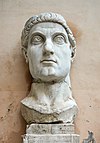
John Dalberg-Acton, 1st Baron Acton on Constantine the Great
“Constantine declared his own will equivalent to a canon of the Church. According to Justinian, the Roman people had formally transferred to the emperors the entire plenitude of its authority, and, therefore, the emperor’s pleasure, expressed by edict or by letter, had force of law. Even in the fervent age of its conversion the empire employed its refined civilization, the accumulated wisdom of ancient sages, the reasonableness and subtlety of Roman law, and the entire inheritance of the Jewish, the pagan, and the Christian world, to make the Church serve as a gilded crutch of absolutism.”
Quotes About John Dalberg-Acton, 1st Baron Acton
Gain deeper perspective through quotes about John Dalberg-Acton, 1st Baron Acton from others.
James Bryce on John Dalberg-Acton, 1st Baron Acton
“Twenty years ago, late at night, in his library at Cannes, he expounded to me his view of how such a history of Liberty might be written, and in what wise it might be made the central thread of all history. He spoke for six or seven minutes only; but he spoke like a man inspired, seeming as if, from some mountain summit high in air, he saw beneath him the far-winding path of human progress from dim Cimmerian shores of prehistoric shadow into the fuller yet broken and fitful light of the modern time. The eloquence was splendid, but greater than the eloquence was the penetrating vision which discerned through all events and in all ages the play of those moral forces, now creating, now destroying, always transmuting, which had moulded and remoulded institutions, and had given to the human spirit its ceaselessly-changing forms of energy. It was as if the whole landscape of history had been suddenly lit up by a burst of sunlight. I have never heard from any other lips any discourse like this, nor from his did I ever hear the like again.”
J. B. Bury on John Dalberg-Acton, 1st Baron Acton
“Men during the World War used to recall the prescience of Acton when he declared that the bayonets of Berlin constituted the most serious menace to our Empire.”

Herbert Butterfield on John Dalberg-Acton, 1st Baron Acton
“We can picture his mind as constantly knitting history together, then; and, though he failed to produce his magnum opus, he left behind him in his papers a tremendous intellectual system, which has stimulated many commentators and interpreters in our time... [B]ehind the multitude of Acton's reflective notes there is an intellectual system (and a record of the man's achievement) ampler and richer and more imposing than the published writings would suggest. The notes are an evidence of Acton's amazing intellectual integrity, his determination to confront the discrepant fact and not to shrink from the inconvenient anomaly.”

Mandell Creighton on John Dalberg-Acton, 1st Baron Acton 2 quotes
“To-morrow I am going to London to meet at dinner Lord Acton, whom I have long been pining to see. He is a Roman Catholic, and is the most learned Englishman now alive, but he never writes anything.”

Geoffrey Elton on John Dalberg-Acton, 1st Baron Acton
“Acton may have been a wise man, but he was an indifferent historian, often surprised by the discovery of intrigue or double-dealing behind an official façade into a somewhat amateurish reaction: astonishment at the commonplace, overemphasis on the insignificant, heavily moral attitudes.”




Misattributed Quotes
Quotes mistakenly credited to John Dalberg-Acton, 1st Baron Acton
About John Dalberg-Acton, 1st Baron Acton
John Emerich Edward Dalberg Acton, 1st Baron Acton (10 January 1834 – 19 June 1902) was an English Catholic historian, commonly known as Lord Acton.