Link Copied!
John Dalberg-Acton, 1st Baron Acton Quotes (1834-1902)
About John Dalberg-Acton, 1st Baron Acton
John Emerich Edward Dalberg Acton, 1st Baron Acton (10 January 1834 – 19 June 1902) was an English Catholic historian, commonly known as Lord Acton.
Best John Dalberg-Acton, 1st Baron Acton Quotes
Shortest
Earliest
Explore our curated collection of the most famous and impactful John Dalberg-Acton, 1st Baron Acton quotes.
“Praise is the shipwreck of historians.”

“The only resistance ever made to Louis XIV was from religion.”

“A government which cannot be reformed does not merit to be preserved.”


“We must not pursue science for ends independent of science. It must be pursued for its own sake, and must lead to its own results.”

“The early history of the world is the history of a few great men. Their Wirkungskreis is immense—vaster than that of God himself.”

“The lesson of modern history—that Religions enjoy (are endowed with) the prerogative of perpetual youth while philosophies seldom outlast a generation.”
“Every thing secret degenerates, even the administration of justice; nothing is safe that does not show how it can bear discussion and publicity.”
“Patriotism is in political life what faith is in religion, and it stands to the domestic feelings and to home-sickness as faith to fanaticism and to superstition.”

“According to the common opinion indirect elections are a safeguard of conservatism. But all the Assemblies of the French Revolution issued from indirect elections.”

“Religious liberty came not from the Reformation or from the sects as a whole but from particular sects...especially those which the Reformation sought to exterminate.”
“I was struck in reading Karl Marx's new work by the extent to which he fetches his materials from England. It is a remarkable book, as the Koran of the new socialists.”
“History is not a web woven with innocent hands. Among all the causes which degrade and demoralize men, power is the most constant and the most active.”
“Reformation. Scotland is the only kingdom in which the change was accomplished in spite of the crown. Ireland the only country where it was prevented in spite of the crown.”

“Liberty is the prevention of control by others. This requires self-control and, therefore, religious and spiritual influences; education, knowledge, well-being.”
“Almost all that has been done for the good of the people has been done since the right lost the monopoly of power, since the rights of property were discovered to be not unlimited.”

John Dalberg-Acton, 1st Baron Acton Quotes by Topic
Find exactly what you are looking for by browsing this categorized list of John Dalberg-Acton, 1st Baron Acton quotes by topic.
John Dalberg-Acton, 1st Baron Acton on Power 2 quotes
“There is no worse heresy than that the office sanctifies the holder of it.”

John Dalberg-Acton, 1st Baron Acton on Error
John Dalberg-Acton, 1st Baron Acton on Freedom
“The most certain test by which we judge whether a country is really free is the amount of security enjoyed by minorities.”

John Dalberg-Acton, 1st Baron Acton on Administration of justice
“Every thing secret degenerates, even the administration of justice; nothing is safe that does not show how it can bear discussion and publicity.”
John Dalberg-Acton, 1st Baron Acton on Publicity
“Every thing secret degenerates, even the administration of justice; nothing is safe that does not show how it can bear discussion and publicity.”

John Dalberg-Acton, 1st Baron Acton on Oppression

John Dalberg-Acton, 1st Baron Acton on Presumptions
“I cannot accept your canon that we are to judge Pope and King unlike other men, with a favorable presumption that they did not wrong. If there is any presumption it is the other way against holders of power, increasing as the power increases.”
John Dalberg-Acton, 1st Baron Acton on Public administration
“Liberty and good government do not exclude each other; and there are excellent reasons why they should go together. Liberty is not a means to a higher political end. It is itself the highest political end. It is not for the sake of a good public administration that it is required, but for security in the pursuit of the highest objects of civil society, and of private life.”

John Dalberg-Acton, 1st Baron Acton on Civil society
“Liberty and good government do not exclude each other; and there are excellent reasons why they should go together. Liberty is not a means to a higher political end. It is itself the highest political end. It is not for the sake of a good public administration that it is required, but for security in the pursuit of the highest objects of civil society, and of private life.”

John Dalberg-Acton, 1st Baron Acton on Indulgence
“I have fixed my eyes on the spaces that heaven’s light illuminates, that I may not lay too heavy a strain on the indulgence with which you have accompanied me over the dreary and heartbreaking course by which men have passed to freedom; and because the light that has guided us is still unquenched, and the causes that have carried us so far in the van of free nations have not spent their power; because the story of the future is written in the past, and that which hath been is the same thing that shall be.”
John Dalberg-Acton, 1st Baron Acton on Duty
“By liberty I mean the assurance that every man shall be protected in doing what he believes his duty against the influence of authority and majorities, custom and opinion. The State is competent to assign duties and draw the line between good and evil only in its immediate sphere. Beyond the limits of things necessary for its well-being, it can only give indirect help to fight the battle of life by promoting the influences which prevail against temptation, — religion, education, and the distribution of wealth.”
John Dalberg-Acton, 1st Baron Acton on Enlightenment (spiritual)
“Neither an enlightened philosophy, nor all the political wisdom of Rome, nor even the faith and virtue of the Christians availed against the incorrigible tradition of antiquity. Something was wanted, beyond all the gifts of reflection and experience — a faculty of self government and self control, developed like its language in the fibre of a nation, and growing with its growth. This vital element, which many centuries of warfare, of anarchy, of oppression, had extinguished in the countries that were still draped in the pomp of ancient civilization, was deposited on the soil of Christendom by the fertilising stream of migration that overthrew the empire of the West.”

John Dalberg-Acton, 1st Baron Acton on Liberty
“At all times sincere friends of freedom have been rare, and its triumphs have been due to minorities, that have prevailed by associating themselves with auxiliaries whose objects often differed from their own; and this association, which is always dangerous, has been sometimes disastrous, by giving to opponents just grounds of opposition, and by kindling dispute over the spoils in the hour of success. No obstacle has been so constant, or so difficult to overcome, as uncertainty and confusion touching the nature of true liberty. If hostile interests have wrought much injury, false ideas have wrought still more; and its advance is recorded in the increase of knowledge, as much as in the improvement of laws.”

What John Dalberg-Acton, 1st Baron Acton Said About Others
Discover personal opinions John Dalberg-Acton, 1st Baron Acton shared regarding contemporaries.
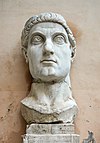
John Dalberg-Acton, 1st Baron Acton on Constantine the Great
“Constantine declared his own will equivalent to a canon of the Church. According to Justinian, the Roman people had formally transferred to the emperors the entire plenitude of its authority, and, therefore, the emperor’s pleasure, expressed by edict or by letter, had force of law. Even in the fervent age of its conversion the empire employed its refined civilization, the accumulated wisdom of ancient sages, the reasonableness and subtlety of Roman law, and the entire inheritance of the Jewish, the pagan, and the Christian world, to make the Church serve as a gilded crutch of absolutism.”
Quotes About John Dalberg-Acton, 1st Baron Acton
Gain deeper perspective through quotes about John Dalberg-Acton, 1st Baron Acton from others.
James Bryce on John Dalberg-Acton, 1st Baron Acton
“Twenty years ago, late at night, in his library at Cannes, he expounded to me his view of how such a history of Liberty might be written, and in what wise it might be made the central thread of all history. He spoke for six or seven minutes only; but he spoke like a man inspired, seeming as if, from some mountain summit high in air, he saw beneath him the far-winding path of human progress from dim Cimmerian shores of prehistoric shadow into the fuller yet broken and fitful light of the modern time. The eloquence was splendid, but greater than the eloquence was the penetrating vision which discerned through all events and in all ages the play of those moral forces, now creating, now destroying, always transmuting, which had moulded and remoulded institutions, and had given to the human spirit its ceaselessly-changing forms of energy. It was as if the whole landscape of history had been suddenly lit up by a burst of sunlight. I have never heard from any other lips any discourse like this, nor from his did I ever hear the like again.”
J. B. Bury on John Dalberg-Acton, 1st Baron Acton
“Men during the World War used to recall the prescience of Acton when he declared that the bayonets of Berlin constituted the most serious menace to our Empire.”

Herbert Butterfield on John Dalberg-Acton, 1st Baron Acton
“We can picture his mind as constantly knitting history together, then; and, though he failed to produce his magnum opus, he left behind him in his papers a tremendous intellectual system, which has stimulated many commentators and interpreters in our time... [B]ehind the multitude of Acton's reflective notes there is an intellectual system (and a record of the man's achievement) ampler and richer and more imposing than the published writings would suggest. The notes are an evidence of Acton's amazing intellectual integrity, his determination to confront the discrepant fact and not to shrink from the inconvenient anomaly.”

Mandell Creighton on John Dalberg-Acton, 1st Baron Acton 2 quotes
“To-morrow I am going to London to meet at dinner Lord Acton, whom I have long been pining to see. He is a Roman Catholic, and is the most learned Englishman now alive, but he never writes anything.”

Geoffrey Elton on John Dalberg-Acton, 1st Baron Acton
“Acton may have been a wise man, but he was an indifferent historian, often surprised by the discovery of intrigue or double-dealing behind an official façade into a somewhat amateurish reaction: astonishment at the commonplace, overemphasis on the insignificant, heavily moral attitudes.”
H. A. L. Fisher on John Dalberg-Acton, 1st Baron Acton
“[Acton knew] at least four foreign languages, and probably read and annotated more printed matter than anyone who has ever lived. And he was cosmopolitan in the intimate as well as in the superficial sense, for as a liberal Roman Catholic he was equally versed in the literature of authority and revolt, and knew, as no other Englishman, the great central tradition of post-Tridentine theology.”

Mary Gladstone on John Dalberg-Acton, 1st Baron Acton 2 quotes
“Fri. a long talk with Ld. Acton in the garden, an hour and ½, mostly about various people and rather amusing. He has a shrewd eye for character, and yet charitable.”
William Ewart Gladstone on John Dalberg-Acton, 1st Baron Acton 2 quotes
“[Lord Acton's character] is of the first order, and he is one of the most learned and accomplished, though one of the most modest and unassuming, men of the day.”

Lord Granville on John Dalberg-Acton, 1st Baron Acton
“Johnny Acton, who is extremely agreeable, left us two or three days ago to go to Germany, with the intention of coming back to study in the middle of October. His library is becoming immense. He has remodelled the old library. He has entirely filled the hall; he has furnished his own room with books, and he has bagged a bedroom for the same purpose. I can hardly open a book without finding notes or marks of his.”
Frederic William Maitland on John Dalberg-Acton, 1st Baron Acton
“[A] master of contemporary history...an impartial judge of modern England, so European, so supernational, so catholic, so liberal, so wise, so Olympian, so serene.”

Henry Edward Manning on John Dalberg-Acton, 1st Baron Acton
“In truth, the main characteristic of these men was vanity—intellectual and literary. They had the inflation of German professors, and the ruthless talk of undergraduates.”

Misattributed Quotes
Quotes mistakenly credited to John Dalberg-Acton, 1st Baron Acton
About John Dalberg-Acton, 1st Baron Acton
John Emerich Edward Dalberg Acton, 1st Baron Acton (10 January 1834 – 19 June 1902) was an English Catholic historian, commonly known as Lord Acton.