Link Copied!
Johan Norberg Quotes (1973-)
Writer



About Johan Norberg
Johan Norberg (born 1973) is a Swedish writer devoted to promoting globalisation and individual liberty.
Best Johan Norberg Quotes
Shortest
Earliest
Explore our curated collection of the most famous and impactful Johan Norberg quotes.
“Since 1965 [....] the richest fifth of the world's population increased its average income by 75 percent. For the poorest fifth of the world's population, the increase has been faster still, with average incomes more than doubling during the same period.”
“As a result of this continuous improvement of productivity through the division of labor and technical advancement, one hour's labor today is worth about 25 times more than it was in the mid-19th century [....] Growth and productivity alone are capable of raising real wages in the long run.”

“In the affluent world we have had capitalism in one form or another for a couple of centuries. That is how countries of the West became "the affluent world." Capitalism has given people both the liberty and the incentive to create, produce, and trade, thereby generating preosperity.”

“My aim is freedom and voluntary relations in all fields. The market economy is the result of this in the economic realm; in the cultural realm it means freedom of expression; in politics, democracy and the rule of law; in social life, the right to live according to one's own values and to choose one's company.”

“Now it happens to have been the Social Democrats who have regimented the important institutions in society, but it would have been dangerous whichever party it had been. Development and diversity depend on independent initiatives and competition. When everyone thinks alike not much gets thought.”
“Is the problem here lack of access to clean water? No. Is it starvation? No. Is it laziness? Definitely not. No, it's poverty due to lack of growth, due to lack of reform. Everything else is just a symptom of that. In fact, even the biggest horrors - famine and war - have political causes. No democracy has ever been afflicted by a famine, and no two democracies have ever made war on each other.
Africa has been subjected by socialism, gangster rule and protectionism. Africa has not been too globalized; it has been too marginalized.”
Africa has been subjected by socialism, gangster rule and protectionism. Africa has not been too globalized; it has been too marginalized.”

“Basically, what I believe in is neither capitalism nor globalization... I believe in man's capacity for achieving great things and in the combined force resulting from encounters and exchanges. I plead for greater liberty and a more open world... because it provides a setting which liberates individuals and their creativity as no other system can. It spurs the dynamism which has led to human, economic, scientific, and technical advances, and which will continue to do so. Believing in capitalism does not mean believing in growth, the economy, or efficiency. Desirable as these may be, these are only the results. Belief in capitalism is, fundamentally, belief in mankind.”
Johan Norberg Quotes by Topic
Find exactly what you are looking for by browsing this categorized list of Johan Norberg quotes by topic.
Johan Norberg on Capitalism 3 quotes
“Twenty years ago I wrote a book in defence of global capitalism. I never thought I would do that. Capitalism, I had thought, was all about greedy monopolists and mighty landlords. But then I began to study the world and realized that it was in the least market-based societies that such elites were protected from the free choice of citizens and therefore had the greatest power. Paradoxically, it was capitalism – in the form of free markets and voluntary agreements based on private ownership – that threatened the powerful. The argument for capitalism is not that capitalists always behave well – if that were the case, we could safely give them monopoly power – but that they often do not behave well unless they have to. And it is freedom of choice and competition that force their hands.”
Johan Norberg on African National Congress 2 quotes
“To witness the damage a single person can inflict on a country, one can head to South Africa. Following the liberation from apartheid, Nelson Mandela, as president from 1994, created a climate of reconciliation while democratizing the country and liberalizing the economy. Under Mandela and his successor, Thabo Mbeki, inflation was tamed, government debt was halved and the growth rate reached 5 per cent. The outside world thought South Africa could be the next economic miracle. But the leader of the ANC’s left wing, Jacob Zuma, agitated against this ‘neoliberal’ model and gained power in 2009–18 on a programme promising that state control of the economy would create fair distribution. He really did change things – for the worse.”

Johan Norberg on Botswana 2 quotes
“During the forty years after 1960, the Asian tigers and China grew annually between 5.2 and 5.8 per cent per capita. Botswana, on the other hand, grew by an incredible 6.4 per cent on average – more than ten times faster than the world average. Since 1985, extreme poverty has declined from 42 to 15 per cent, compared with 40 per cent in Africa as a whole. Some would object that this is only because Botswana has diamonds. But valuable natural resources are more the rule than the exception in Africa, and are often something that creates conflict and stagnation. What distinguishes Botswana in the region is not the resources but the fact that it did not nationalize them. Instead it privatized them, and after independence from Britain in 1966 it created a stable regulatory framework that attracted foreign investment.”

Johan Norberg on COVID-19 pandemic 2 quotes
“To counteract all this, we are told that big government must now return, to regain control, redistribute resources and, with enlightened industrial policy, steer resources to particular national industries and green technology. This is what the debate looked like even before the pandemic. When the new coronavirus ravaged the planet, suspicion of the outside world and free trade exploded. Governments began to close their borders and demand that supply chains be repatriated. ‘I don’t want to talk about a victory lap,’ Trump’s rather enthusiastic business secretary said about the ravages of the virus, but ‘I think it will help to accelerate the return of jobs to North America.’ Financial Times’ global business columnist Rana Foroohar declared that ‘Globalisation as we’ve known it for the last forty years, has failed.’ Governments, meanwhile, decided that the way to protect the economy was bailouts for everyone – first for the financial sector, then for everybody else. People got used to the idea that gains are to be privatized but a growing share of losses are to be covered by taxpayers or central banks. When they run out of money, they just print more and when this creates inflation, people need another round of bailouts to compensate for higher prices. And so on.”

Johan Norberg on Division of labor
“As a result of this continuous improvement of productivity through the division of labor and technical advancement, one hour's labor today is worth about 25 times more than it was in the mid-19th century. ... Growth and productivity alone are capable of raising real wages in the long run.”
Johan Norberg on Productivity
“As a result of this continuous improvement of productivity through the division of labor and technical advancement, one hour's labor today is worth about 25 times more than it was in the mid-19th century [....] Growth and productivity alone are capable of raising real wages in the long run.”
Johan Norberg on The Communist Manifesto
“In fact, Marx and Engels were right when they observed in that other manifesto, the communist one of 1848, that free markets had in a short time created greater prosperity and more technological innovation than all previous generations combined and, with infinitely improved communications and accessible goods, free markets had torn down feudal structures and national narrow-mindedness. Marx and Engels realized much better than socialists today that the free market is a formidable progressive force. (Unfortunately, they were not sufficiently dialectically minded to understand that communism was a reactionary counterforce that would bring societies back to a kind of electrified feudalism.)”

Johan Norberg on Republican Party (United States)
“The pandemic, explained the Swedish Prime Minister Magdalena Andersson, was the definitive ‘end of the neoliberal era inaugurated by Thatcher and Reagan’. We don’t just hear that from Social Democrats these days. Now right-wing populists, journalists and economists also claim that ‘the Reagan/Thatcher era is over’. These two leaders are often used as symbols of the era of economic liberalization in the early 1980s, and I agree that it feels an awful lot like that era has come to an end. Donald Trump’s advisor Stephen Moore declared that the Republicans are no longer Reagan’s party but Trump’s, and that’s exactly how the party comes across in their recent agitation against free trade, immigration and tech companies, not to mention lies about election fraud. (Reagan once called the peaceful transfer of power the ‘magic’ of the free world.)”

Johan Norberg on Indonesia
“One of the biggest threats to biodiversity is the continued loss of virgin forests. Every year, an area of forest corresponding to the size of Hungary disappears. However, the rate of deforestation has fallen by 40 per cent since the 1990s, according to the FAO. Deforestation has ceased in rich countries. In the United States and Europe forested areas are increasing. In China and India, too, forests are now growing, suggesting that rising populations and economies do not have to cause overexploitation. Were it not for deforestation in seven countries – Brazil, Paraguay, Angola, Congo, Tanzania, Indonesia and Myanmar – the world’s forests would have grown in the 2010s. That is not much of a comfort, given the unique natural values lost with those forests. But it shows that the notion that we are experiencing a relentless global deforestation does not hold.”

Johan Norberg on Tanzania
“One of the biggest threats to biodiversity is the continued loss of virgin forests. Every year, an area of forest corresponding to the size of Hungary disappears. However, the rate of deforestation has fallen by 40 per cent since the 1990s, according to the FAO. Deforestation has ceased in rich countries. In the United States and Europe forested areas are increasing. In China and India, too, forests are now growing, suggesting that rising populations and economies do not have to cause overexploitation. Were it not for deforestation in seven countries – Brazil, Paraguay, Angola, Congo, Tanzania, Indonesia and Myanmar – the world’s forests would have grown in the 2010s. That is not much of a comfort, given the unique natural values lost with those forests. But it shows that the notion that we are experiencing a relentless global deforestation does not hold.”

Johan Norberg on Forests
“One of the biggest threats to biodiversity is the continued loss of virgin forests. Every year, an area of forest corresponding to the size of Hungary disappears. However, the rate of deforestation has fallen by 40 per cent since the 1990s, according to the FAO. Deforestation has ceased in rich countries. In the United States and Europe forested areas are increasing. In China and India, too, forests are now growing, suggesting that rising populations and economies do not have to cause overexploitation. Were it not for deforestation in seven countries – Brazil, Paraguay, Angola, Congo, Tanzania, Indonesia and Myanmar – the world’s forests would have grown in the 2010s. That is not much of a comfort, given the unique natural values lost with those forests. But it shows that the notion that we are experiencing a relentless global deforestation does not hold.”

Johan Norberg on Democratic Republic of the Congo
“One of the biggest threats to biodiversity is the continued loss of virgin forests. Every year, an area of forest corresponding to the size of Hungary disappears. However, the rate of deforestation has fallen by 40 per cent since the 1990s, according to the FAO. Deforestation has ceased in rich countries. In the United States and Europe forested areas are increasing. In China and India, too, forests are now growing, suggesting that rising populations and economies do not have to cause overexploitation. Were it not for deforestation in seven countries – Brazil, Paraguay, Angola, Congo, Tanzania, Indonesia and Myanmar – the world’s forests would have grown in the 2010s. That is not much of a comfort, given the unique natural values lost with those forests. But it shows that the notion that we are experiencing a relentless global deforestation does not hold.”

Johan Norberg on Nicaragua
“One study showed that anti-capitalist populists in Latin American countries such as Venezuela, Nicaragua and Bolivia on average make their countries 20 per cent poorer than comparable countries. A more comprehensive database of fifty populist leaders on both the right and the left (sometimes democratically elected), between 1900 and 2018, reveals that in the long run it is almost impossible to find someone who creates the thriving economy they all promise. With populists in power, the economy fares worse both in relation to the country’s previous trend and the global average. Fifteen years after they take control, their economies are, on average, more than a tenth smaller than comparable economies. The database shows that the economy does just as badly under right-wing and left-wing populists; the difference is that right-wing populists also tend to increase income inequality.”

Johan Norberg on Cross-Strait relations
“The British colony of Hong Kong and the city-state of Singapore did the opposite of all other countries, and opened their economies wide, without trade barriers. The experts claimed that free trade would knock out the small manufacturing sectors they had, but, on the contrary, they industrialized at a record pace and shocked the outside world by becoming even richer than the old colonial master, Britain. Taiwan and South Korea learned from this and began to liberalize their economies with amazing results. Their rapid growth took them from being some of the poorest countries in the world to some of the richest in a few generations. It was a global wake-up call because it was so easy to compare what the Chinese in Taiwan achieved compared to the Chinese in Mao’s China, and what the Koreans in the capitalist south created compared to the Koreans in the communist north. In the mid-1950s, Taiwan was only marginally richer than China. In 1980, it was four times richer. In 1955, North Korea was richer than South Korea. (The north was, after all, where mineral resources and power generation were located when the country was partitioned.) Today, South Korea is twenty times richer than North Korea.”

Johan Norberg on Economy of India
“India held back a little longer, but an Indian economist, Parth Shah, tells me that the country started looking at what was happening around them, in Taiwan, South Korea and now also China: ‘We saw that they actually changed their model and they did succeed in what they had done, and it was time for India to learn the lesson.’ That was decisive in 1991, when a debt-financed boom crashed and the foreign exchange reserve had shrunk to such a level that India was three weeks from running out of money. The crisis prompted the Minister of Finance Manmohan Singh to quote the nineteenth-century romantic Victor Hugo in parliament: ‘No power on earth can resist an idea whose time has come.’ The idea was to dismantle trade barriers and stifling regulations that held India back and kept half the population in extreme poverty. In the past, economists spoke condescendingly of the ‘Hindu growth rate’ as if there was some kind of complacency built into the country’s tradition that stopped the economy from growing faster than the population. After the reforms of 1991 and those that followed, this culture changed as if by magic and growth took off. Today, average income is three times greater than before reform and extreme poverty is only one-fifth of previous levels.”

Johan Norberg on Singapore
“We got used to dividing the world into industrialized countries and developing countries – rich and poor. However, four East Asian tigers would soon disrupt our worldview. The British colony of Hong Kong and the city-state of Singapore did the opposite of all other countries, and opened their economies wide, without trade barriers. The experts claimed that free trade would knock out the small manufacturing sectors they had, but, on the contrary, they industrialized at a record pace and shocked the outside world by becoming even richer than the old colonial master, Britain. Taiwan and South Korea learned from this and began to liberalize their economies with amazing results. Their rapid growth took them from being some of the poorest countries in the world to some of the richest in a few generations. It was a global wake-up call because it was so easy to compare what the Chinese in Taiwan achieved compared to the Chinese in Mao’s China, and what the Koreans in the capitalist south created compared to the Koreans in the communist north. In the mid-1950s, Taiwan was only marginally richer than China. In 1980, it was four times richer. In 1955, North Korea was richer than South Korea. (The north was, after all, where mineral resources and power generation were located when the country was partitioned.) Today, South Korea is twenty times richer than North Korea.”

Johan Norberg on South Korea
“We got used to dividing the world into industrialized countries and developing countries – rich and poor. However, four East Asian tigers would soon disrupt our worldview. The British colony of Hong Kong and the city-state of Singapore did the opposite of all other countries, and opened their economies wide, without trade barriers. The experts claimed that free trade would knock out the small manufacturing sectors they had, but, on the contrary, they industrialized at a record pace and shocked the outside world by becoming even richer than the old colonial master, Britain. Taiwan and South Korea learned from this and began to liberalize their economies with amazing results. Their rapid growth took them from being some of the poorest countries in the world to some of the richest in a few generations. It was a global wake-up call because it was so easy to compare what the Chinese in Taiwan achieved compared to the Chinese in Mao’s China, and what the Koreans in the capitalist south created compared to the Koreans in the communist north. In the mid-1950s, Taiwan was only marginally richer than China. In 1980, it was four times richer. In 1955, North Korea was richer than South Korea. (The north was, after all, where mineral resources and power generation were located when the country was partitioned.) Today, South Korea is twenty times richer than North Korea.”

Johan Norberg on Koreans
“We got used to dividing the world into industrialized countries and developing countries – rich and poor. However, four East Asian tigers would soon disrupt our worldview. The British colony of Hong Kong and the city-state of Singapore did the opposite of all other countries, and opened their economies wide, without trade barriers. The experts claimed that free trade would knock out the small manufacturing sectors they had, but, on the contrary, they industrialized at a record pace and shocked the outside world by becoming even richer than the old colonial master, Britain. Taiwan and South Korea learned from this and began to liberalize their economies with amazing results. Their rapid growth took them from being some of the poorest countries in the world to some of the richest in a few generations. It was a global wake-up call because it was so easy to compare what the Chinese in Taiwan achieved compared to the Chinese in Mao’s China, and what the Koreans in the capitalist south created compared to the Koreans in the communist north. In the mid-1950s, Taiwan was only marginally richer than China. In 1980, it was four times richer. In 1955, North Korea was richer than South Korea. (The north was, after all, where mineral resources and power generation were located when the country was partitioned.) Today, South Korea is twenty times richer than North Korea.”

Johan Norberg on British Hong Kong
“We got used to dividing the world into industrialized countries and developing countries – rich and poor. However, four East Asian tigers would soon disrupt our worldview. The British colony of Hong Kong and the city-state of Singapore did the opposite of all other countries, and opened their economies wide, without trade barriers. The experts claimed that free trade would knock out the small manufacturing sectors they had, but, on the contrary, they industrialized at a record pace and shocked the outside world by becoming even richer than the old colonial master, Britain. Taiwan and South Korea learned from this and began to liberalize their economies with amazing results. Their rapid growth took them from being some of the poorest countries in the world to some of the richest in a few generations. It was a global wake-up call because it was so easy to compare what the Chinese in Taiwan achieved compared to the Chinese in Mao’s China, and what the Koreans in the capitalist south created compared to the Koreans in the communist north. In the mid-1950s, Taiwan was only marginally richer than China. In 1980, it was four times richer. In 1955, North Korea was richer than South Korea. (The north was, after all, where mineral resources and power generation were located when the country was partitioned.) Today, South Korea is twenty times richer than North Korea.”

Johan Norberg on Democratic socialism
“It was not libertarian ideologues that carried out the great liberalizations of the 1970s, 80s and 90s. Socialist parties began to de-socialize India, Australia and New Zealand. Protectionist parties opened the economies of Brazil and Mexico. In China, Vietnam and Chile, economic liberalization was carried out by dictators, whose hearts did not in any way beat for liberal values. In most cases, these were parties and leaders who would have loved to be able to continue to control their people and the economy. But the idea of big government had an annoying problem that they could not escape – a problem that the Swedish Social Democratic Minister of Finance Kjell-Olof Feldt once summed up when speaking of the dreams of democratic socialism in his country: ‘To put it simply, it just turned out to be impossible.’ And that’s the point. It may sound irresistibly appealing. It is always popular when someone promises us the world, bailouts and free stuff. But it just does not work. Still doesn’t. There are no free lunches, and wealth has to be created before it can be distributed. Sooner or later you always run out of other people’s money, as Thatcher put it, and if you print more then sooner or later you’ll ruin its value. And, as Liz Truss learned, sooner or later you’ll run out of Thatcher quotes to defend everything-to-everyone budgets that just don’t add up. Debts pile up and inflation rises, and you are going to have to start thinking instead about how wealth is created.”

Johan Norberg on East/Central Europe
“Around the same time, communism in Central and Eastern Europe finally fell, but its economic rivalry with capitalism had, of course, long since been decided. It’s easy to think that these countries were never close to the market economies, but in 1950 countries such as the Soviet Union, Poland, Czechoslovakia and Hungary had a GDP per capita about a quarter higher than poor Western countries such as Spain, Portugal and Greece. In 1989, the eastern states were nowhere close. The eastern part of Germany was richer than West Germany before World War II. When the Berlin Wall fell on 9 November 1989, East Germany’s GDP per capita was not even half that of West Germany’s. Of these countries, those that liberalized the most have on average developed the fastest and established the strongest democracies. An analysis of twenty-six post-communist countries showed that a 10 per cent increase in economic freedom was associated with a 2.7 per cent faster annual growth. Political and economic institutions have improved the most in the Central and Eastern European countries that are now members of the EU, not least the Baltic countries, Estonia, Latvia and Lithuania. Today, they are some of the freest countries in the world and have more than tripled average incomes since independence. But one can also observe a recent reformer like Georgia. It was seen as an economic basket case, but after the Rose Revolution in 2003 it increased per capita incomes almost threefold and cut extreme poverty rates by almost two-thirds.”
Johan Norberg on Lithuania
“Around the same time, communism in Central and Eastern Europe finally fell, but its economic rivalry with capitalism had, of course, long since been decided. It’s easy to think that these countries were never close to the market economies, but in 1950 countries such as the Soviet Union, Poland, Czechoslovakia and Hungary had a GDP per capita about a quarter higher than poor Western countries such as Spain, Portugal and Greece. In 1989, the eastern states were nowhere close. The eastern part of Germany was richer than West Germany before World War II. When the Berlin Wall fell on 9 November 1989, East Germany’s GDP per capita was not even half that of West Germany’s. Of these countries, those that liberalized the most have on average developed the fastest and established the strongest democracies. An analysis of twenty-six post-communist countries showed that a 10 per cent increase in economic freedom was associated with a 2.7 per cent faster annual growth. Political and economic institutions have improved the most in the Central and Eastern European countries that are now members of the EU, not least the Baltic countries, Estonia, Latvia and Lithuania. Today, they are some of the freest countries in the world and have more than tripled average incomes since independence. But one can also observe a recent reformer like Georgia. It was seen as an economic basket case, but after the Rose Revolution in 2003 it increased per capita incomes almost threefold and cut extreme poverty rates by almost two-thirds.”

Johan Norberg on Latvia
“Around the same time, communism in Central and Eastern Europe finally fell, but its economic rivalry with capitalism had, of course, long since been decided. It’s easy to think that these countries were never close to the market economies, but in 1950 countries such as the Soviet Union, Poland, Czechoslovakia and Hungary had a GDP per capita about a quarter higher than poor Western countries such as Spain, Portugal and Greece. In 1989, the eastern states were nowhere close. The eastern part of Germany was richer than West Germany before World War II. When the Berlin Wall fell on 9 November 1989, East Germany’s GDP per capita was not even half that of West Germany’s. Of these countries, those that liberalized the most have on average developed the fastest and established the strongest democracies. An analysis of twenty-six post-communist countries showed that a 10 per cent increase in economic freedom was associated with a 2.7 per cent faster annual growth. Political and economic institutions have improved the most in the Central and Eastern European countries that are now members of the EU, not least the Baltic countries, Estonia, Latvia and Lithuania. Today, they are some of the freest countries in the world and have more than tripled average incomes since independence. But one can also observe a recent reformer like Georgia. It was seen as an economic basket case, but after the Rose Revolution in 2003 it increased per capita incomes almost threefold and cut extreme poverty rates by almost two-thirds.”

Johan Norberg on Estonia
“Around the same time, communism in Central and Eastern Europe finally fell, but its economic rivalry with capitalism had, of course, long since been decided. It’s easy to think that these countries were never close to the market economies, but in 1950 countries such as the Soviet Union, Poland, Czechoslovakia and Hungary had a GDP per capita about a quarter higher than poor Western countries such as Spain, Portugal and Greece. In 1989, the eastern states were nowhere close. The eastern part of Germany was richer than West Germany before World War II. When the Berlin Wall fell on 9 November 1989, East Germany’s GDP per capita was not even half that of West Germany’s. Of these countries, those that liberalized the most have on average developed the fastest and established the strongest democracies. An analysis of twenty-six post-communist countries showed that a 10 per cent increase in economic freedom was associated with a 2.7 per cent faster annual growth. Political and economic institutions have improved the most in the Central and Eastern European countries that are now members of the EU, not least the Baltic countries, Estonia, Latvia and Lithuania. Today, they are some of the freest countries in the world and have more than tripled average incomes since independence. But one can also observe a recent reformer like Georgia. It was seen as an economic basket case, but after the Rose Revolution in 2003 it increased per capita incomes almost threefold and cut extreme poverty rates by almost two-thirds.”

Johan Norberg on Georgia (country)
“Around the same time, communism in Central and Eastern Europe finally fell, but its economic rivalry with capitalism had, of course, long since been decided. It’s easy to think that these countries were never close to the market economies, but in 1950 countries such as the Soviet Union, Poland, Czechoslovakia and Hungary had a GDP per capita about a quarter higher than poor Western countries such as Spain, Portugal and Greece. In 1989, the eastern states were nowhere close. The eastern part of Germany was richer than West Germany before World War II. When the Berlin Wall fell on 9 November 1989, East Germany’s GDP per capita was not even half that of West Germany’s. Of these countries, those that liberalized the most have on average developed the fastest and established the strongest democracies. An analysis of twenty-six post-communist countries showed that a 10 per cent increase in economic freedom was associated with a 2.7 per cent faster annual growth. Political and economic institutions have improved the most in the Central and Eastern European countries that are now members of the EU, not least the Baltic countries, Estonia, Latvia and Lithuania. Today, they are some of the freest countries in the world and have more than tripled average incomes since independence. But one can also observe a recent reformer like Georgia. It was seen as an economic basket case, but after the Rose Revolution in 2003 it increased per capita incomes almost threefold and cut extreme poverty rates by almost two-thirds.”

What Johan Norberg Said About Others
Discover personal opinions Johan Norberg shared regarding contemporaries.
Johan Norberg on Jacob Zuma 2 quotes
“To witness the damage a single person can inflict on a country, one can head to South Africa. Following the liberation from apartheid, Nelson Mandela, as president from 1994, created a climate of reconciliation while democratizing the country and liberalizing the economy. Under Mandela and his successor, Thabo Mbeki, inflation was tamed, government debt was halved and the growth rate reached 5 per cent. The outside world thought South Africa could be the next economic miracle. But the leader of the ANC’s left wing, Jacob Zuma, agitated against this ‘neoliberal’ model and gained power in 2009–18 on a programme promising that state control of the economy would create fair distribution. He really did change things – for the worse.”

Johan Norberg on Ron Paul
“Racism, homophobia and conspiracy theories about AIDS, Israel, the Bilderberg Group and the Trilateral Commission. Just another day in the work of Aryan Nation, USA? It sure sounds like it. But no, they are some of the ingredients in the pre-1999, pre-Internet newsletter of Ron Paul, the Republican presidential candidate who now tries to portray himself as a libertarian. [...] Ron Paul claims that the newsletter was published in his name, but written by others and he didn´t pay close attention to what was written since he was working full time. Fascinating defence. So he trusted those writers to write in his name to such a degree that he didn´t even check what they wrote?”

Johan Norberg on James Callaghan
“In Britain, Thatcher's predecessor, Labour's James Callaghan, explained to party members in 1976 that they used to believe recessions could be ended through higher spending and more inflation: ‘I tell you now, in all candour, that that option no longer exists,’ and in so far as it ever did exist, it was only by ‘injecting a bigger dose of inflation into the economy, followed by a higher level of unemployment as the next step.’ Thatcher’s fight against the unions to close 115 loss-making and environmentally damaging coal mines made her admired and hated, but did you know that the two previous Labour prime ministers, Callaghan and Harold Wilson, closed no less than 257 coal mines in total?”

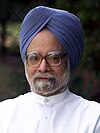
Johan Norberg on Manmohan Singh
“India held back a little longer, but an Indian economist, Parth Shah, tells me that the country started looking at what was happening around them, in Taiwan, South Korea and now also China: ‘We saw that they actually changed their model and they did succeed in what they had done, and it was time for India to learn the lesson.’ That was decisive in 1991, when a debt-financed boom crashed and the foreign exchange reserve had shrunk to such a level that India was three weeks from running out of money. The crisis prompted the Minister of Finance Manmohan Singh to quote the nineteenth-century romantic Victor Hugo in parliament: ‘No power on earth can resist an idea whose time has come.’ The idea was to dismantle trade barriers and stifling regulations that held India back and kept half the population in extreme poverty. In the past, economists spoke condescendingly of the ‘Hindu growth rate’ as if there was some kind of complacency built into the country’s tradition that stopped the economy from growing faster than the population. After the reforms of 1991 and those that followed, this culture changed as if by magic and growth took off. Today, average income is three times greater than before reform and extreme poverty is only one-fifth of previous levels.”
Johan Norberg on Wilbur Ross
“To counteract all this, we are told that big government must now return, to regain control, redistribute resources and, with enlightened industrial policy, steer resources to particular national industries and green technology. This is what the debate looked like even before the pandemic. When the new coronavirus ravaged the planet, suspicion of the outside world and free trade exploded. Governments began to close their borders and demand that supply chains be repatriated. ‘I don’t want to talk about a victory lap,’ Trump’s rather enthusiastic business secretary said about the ravages of the virus, but ‘I think it will help to accelerate the return of jobs to North America.’ Financial Times’ global business columnist Rana Foroohar declared that ‘Globalisation as we’ve known it for the last forty years, has failed.’ Governments, meanwhile, decided that the way to protect the economy was bailouts for everyone – first for the financial sector, then for everybody else. People got used to the idea that gains are to be privatized but a growing share of losses are to be covered by taxpayers or central banks. When they run out of money, they just print more and when this creates inflation, people need another round of bailouts to compensate for higher prices. And so on.”

Johan Norberg on Mao Zedong
“It was no longer possible to say that only the Western world could become rich through capitalism, so a new narrative took hold: although a few developing countries might be able to enter global markets from the periphery, it is only because they are very small, almost insignificant. Strangely enough, today you sometimes hear the opposite: that developing countries might make it, but only if they are very large. This is due to the transformation of two giants, China and India, which for decades were held back by, in one case, a communist despot, and in the other a democratic but strictly protectionist command economy. Therefore, people said that Chinese and Indians will be successful all over the world – except in China and India. But then, in 1976, China’s dictator Mao Zedong, as the US economist Steven Radelet put it, ‘single-handedly and dramatically changed the direction of global poverty with one single act: he died’. His successor, Deng Xiaoping, began to accept the private enterprise that peasants and villagers secretly engaged in and extended it to the entire economy. All the restrained creativity and ambition was finally let loose and China grew at record speed. Ironically, intellectuals around the world – modern-day Max Webers – soon explained that this is itself not that strange, as Confucianism made it easy to modernize the economy.”

Johan Norberg on Deng Xiaoping
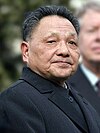
“It was no longer possible to say that only the Western world could become rich through capitalism, so a new narrative took hold: although a few developing countries might be able to enter global markets from the periphery, it is only because they are very small, almost insignificant. Strangely enough, today you sometimes hear the opposite: that developing countries might make it, but only if they are very large. This is due to the transformation of two giants, China and India, which for decades were held back by, in one case, a communist despot, and in the other a democratic but strictly protectionist command economy. Therefore, people said that Chinese and Indians will be successful all over the world – except in China and India. But then, in 1976, China’s dictator Mao Zedong, as the US economist Steven Radelet put it, ‘single-handedly and dramatically changed the direction of global poverty with one single act: he died’. His successor, Deng Xiaoping, began to accept the private enterprise that peasants and villagers secretly engaged in and extended it to the entire economy. All the restrained creativity and ambition was finally let loose and China grew at record speed. Ironically, intellectuals around the world – modern-day Max Webers – soon explained that this is itself not that strange, as Confucianism made it easy to modernize the economy.”
Johan Norberg on Chinese people
“We got used to dividing the world into industrialized countries and developing countries – rich and poor. However, four East Asian tigers would soon disrupt our worldview. The British colony of Hong Kong and the city-state of Singapore did the opposite of all other countries, and opened their economies wide, without trade barriers. The experts claimed that free trade would knock out the small manufacturing sectors they had, but, on the contrary, they industrialized at a record pace and shocked the outside world by becoming even richer than the old colonial master, Britain. Taiwan and South Korea learned from this and began to liberalize their economies with amazing results. Their rapid growth took them from being some of the poorest countries in the world to some of the richest in a few generations. It was a global wake-up call because it was so easy to compare what the Chinese in Taiwan achieved compared to the Chinese in Mao’s China, and what the Koreans in the capitalist south created compared to the Koreans in the communist north. In the mid-1950s, Taiwan was only marginally richer than China. In 1980, it was four times richer. In 1955, North Korea was richer than South Korea. (The north was, after all, where mineral resources and power generation were located when the country was partitioned.) Today, South Korea is twenty times richer than North Korea.”

Johan Norberg on Liz Truss
“The pandemic, explained the Swedish Prime Minister Magdalena Andersson, was the definitive ‘end of the neoliberal era inaugurated by Thatcher and Reagan’. We don’t just hear that from Social Democrats these days. Now right-wing populists, journalists and economists also claim that ‘the Reagan/Thatcher era is over’. These two leaders are often used as symbols of the era of economic liberalization in the early 1980s, and I agree that it feels an awful lot like that era has come to an end. Donald Trump’s advisor Stephen Moore declared that the Republicans are no longer Reagan’s party but Trump’s, and that’s exactly how the party comes across in their recent agitation against free trade, immigration and tech companies, not to mention lies about election fraud. (Reagan once called the peaceful transfer of power the ‘magic’ of the free world.) Thatcher’s Tories have abandoned the European single market she was once instrumental in developing, and have simultaneously abandoned many other economic orthodoxies, toying with more active industrial policies and ‘Buy British’ slogans – a new attitude that Boris Johnson in an unguarded moment happened to summarize as ‘fuck business’. His short-lived successor, Liz Truss, who famously declared that large-scale imports of cheese were ‘a disgrace’, tried to invoke the Iron Lady, albeit through her boldness rather than her policies. Instead, Truss railed against the ‘consensus of the Treasury, of economists, with the Financial Times’ that budgets should be balanced and went on to doom her premiership with a massive, unfunded package of energy subsidies and tax cuts, which markets refused to finance.”

Johan Norberg on Hugo Chávez
“At the same time, on the other side of the Atlantic, in Venezuela, the authoritarian populist Hugo Chávez and his disciple Nicolás Maduro initiated a similar policy of massive spending, corruption and nationalization. The difference was that Chávez had control over the world’s largest oil reserves at a time when oil prices were soaring, so he received almost $1,000 billion that could keep that policy afloat for a little longer. That was enough for Chávez to be the left’s favourite demagogue for a while. Bernie Sanders said that the American dream was more alive in Venezuela than in the US. Labour’s Jeremy Corbyn praised Chávez for showing that ‘the poor matter and wealth can be shared’. Oxfam called Venezuela ‘Latin America’s inequality success story’. In an open letter to ‘Dear President Chávez’, luminaries of the Left such as Jesse Jackson, Naomi Klein, Howard Zinn and others state that they ‘see Venezuela not only as a model democracy but also as a model of how a country’s oil wealth can be used to benefit all of its people.’ On paper, that $1,000 billion was enough to make every extremely poor individual in Venezuela a millionaire. But still, it is not much money if you do not invest it productively and if you destroy the ability to create new wealth with nationalization and price controls. When the price of oil began to fall only slightly, it became obvious that the business sector was in a shambles and the oil industry had been demolished by corrupt mismanagement and underinvestment. The result was one of the worst economic disasters to have occurred anywhere in the world in peacetime. Between 2010 and 2020, Venezuela’s average income plummeted by an incomprehensible 75 per cent. South America’s richest country suddenly turned into South America’s poorest country with breadlines and a mass exodus from an increasingly tyrannical state. Around seven million Venezuelans have fled the crumbling country, an unbelievable 25 per cent of the country’s population. Since then, Venezuela has been less frequently mentioned as the hope of the international working class.”

Johan Norberg on Nicolás Maduro
“At the same time, on the other side of the Atlantic, in Venezuela, the authoritarian populist Hugo Chávez and his disciple Nicolás Maduro initiated a similar policy of massive spending, corruption and nationalization. The difference was that Chávez had control over the world’s largest oil reserves at a time when oil prices were soaring, so he received almost $1,000 billion that could keep that policy afloat for a little longer. That was enough for Chávez to be the left’s favourite demagogue for a while. Bernie Sanders said that the American dream was more alive in Venezuela than in the US. Labour’s Jeremy Corbyn praised Chávez for showing that ‘the poor matter and wealth can be shared’. Oxfam called Venezuela ‘Latin America’s inequality success story’. In an open letter to ‘Dear President Chávez’, luminaries of the Left such as Jesse Jackson, Naomi Klein, Howard Zinn and others state that they ‘see Venezuela not only as a model democracy but also as a model of how a country’s oil wealth can be used to benefit all of its people.’ On paper, that $1,000 billion was enough to make every extremely poor individual in Venezuela a millionaire. But still, it is not much money if you do not invest it productively and if you destroy the ability to create new wealth with nationalization and price controls. When the price of oil began to fall only slightly, it became obvious that the business sector was in a shambles and the oil industry had been demolished by corrupt mismanagement and underinvestment. The result was one of the worst economic disasters to have occurred anywhere in the world in peacetime. Between 2010 and 2020, Venezuela’s average income plummeted by an incomprehensible 75 per cent. South America’s richest country suddenly turned into South America’s poorest country with breadlines and a mass exodus from an increasingly tyrannical state. Around seven million Venezuelans have fled the crumbling country, an unbelievable 25 per cent of the country’s population. Since then, Venezuela has been less frequently mentioned as the hope of the international working class.”

About Johan Norberg
Johan Norberg (born 1973) is a Swedish writer devoted to promoting globalisation and individual liberty.