Link Copied!
Joanna Russ Quotes (1937-2011)
Author, Writer


About Joanna Russ
Joanna Russ (February 22, 1937 – April 29, 2011) was an American writer, academic and feminist. She is the author of a number of works of science fiction, fantasy and feminist literary criticism and is best known for The Female Man, a novel combining utopian fiction and satire.
Best Joanna Russ Quotes
Shortest
Earliest
Explore our curated collection of the most famous and impactful Joanna Russ quotes.
“Sex doesn't last. (p95)”
“Some revolutionary proposals:”

“Fucking, if you will forgive the pun, is an anti-climax.”

“How withered away one can be from a life of unremitting toil.”
“Real artists, it seems to me, are those who don't repeat themselves.”
“people will never be totally at home, spiritually, in any environment.”
“He wished his imagination would not take so impressionistic a turn. It never fails.”


“Dismissing the whole thing as the world’s aberration and not mine, I went back to bed.”
“I often read something and I say, “That's a goddamn lie. I'm going to tell the truth."”
“There are more whooping cranes in the United States of America than there are women in Congress.”


“This is the tale of the Abbess Radegunde and what happened when the Norsemen came. (first line of "Souls")”
“Revision, self-criticism, change-all these are essential for any art form to maintain a sense of vitality.”
“Remember, I don’t threaten. I don’t play. I always carry firearms. The truly violent are never without them.”
Joanna Russ Quotes by Topic
Find exactly what you are looking for by browsing this categorized list of Joanna Russ quotes by topic.
Joanna Russ on Science fiction 2 quotes
“There are plenty of images of women in science fiction. There are hardly any women.”

What Joanna Russ Said About Others
Discover personal opinions Joanna Russ shared regarding contemporaries.
Joanna Russ on Octavia Butler
“Octavia Butler's wild and talented science fiction novels.”
Joanna Russ on James Baldwin
“Baldwin's non-fiction is not only beautiful but genuinely experimental in comparison (for example) with much Joyce- or Nabokov-derived modern work.”
Joanna Russ on Gene Wolfe
“Wolfe writes theology when he writes SF (he's Catholic, you know). I find some of his stories very restrictive because of this, but he does convey this sense of wonder beautifully.”

Joanna Russ on Henry Miller
“You notice that some of the stuff by men that I would call certainly pornographic, Henry Miller, for instance, is taken very seriously. It’s all so obvious. When women do it, it’s silly, when men do it, it’s serious.”

Joanna Russ on Olaf Stapledon
“In a way, Stapledon took SF to its supreme heights, and there are times when I absolutely wish I could kill him because he has made so much SF instantly obsolete. He's unconcerned with, or plain bigoted about, a great deal; but what he does, he does very, very well...Stapledon is the master of supplying his readers with this raw, astronomical feeling.”
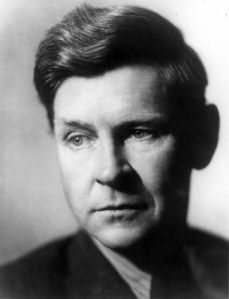
Joanna Russ on George Eliot
“George Eliot never ended her books properly. There's so little for heroines to do; they can fall in love, they can die. As the story begins, you wonder whether the heroine will be happy, but by the middle of it you're beginning to wonder if she will be good. Such is George Eliot's sleight-of-hand. i.e. cheating. We still think this way a hundred years later.”

Joanna Russ on Shulamith Firestone
“The most exciting social extrapolation around nowadays can be found in The Dialectic of Sex by Shulamith Firestone. You will have a hard time with this book if you believe that Capitalism is God's Way or that Manly Competition is the Law of the Universe - but then you can go back to reading The Skylark of Valeron or whatever and forget about the real future. Firestone is a radical, a feminist, a Marxist (or rather, a thinker who has absorbed both Marx and Freud) and the author of a tough, difficult, analytic, fascinating book.”

Joanna Russ on Amy Lowell
“[the story] "Sword Blades and Poppy Seeds" is a tribute to Amy Lowell, I've done a lot of what you might call metaliterature; that is, literature that's saying, "Isn't Amy Lowell wonderful? This is sort of like what she did." (Q: Lowell's underrated now, isn't she?) A: She was a wonderful narrative poet, but narrative verse is totally out of fashion now. I think it was one of her reactions to being a woman and a lesbian. An outsider has to write outsider verse. She's one of those people who wrote so prolifically that a lot of it is not good, but some of it is absolutely superb. She has a collection that attracted me called Down East, which is poems in New England dialect, and she has written stories of the supernatural in verse that I absolutely love.”
Joanna Russ on James Tiptree, Jr
“"James Tiptree, Jr." was a science fiction writer whose very fine work began appearing in the 1960s. No one had ever met "Tiptree" and theories about "him" were rife. Finally "James Tiptree, Jr." was revealed to be a sixty-year-old biologist called Alice Sheldon. We corresponded extensively, both before this revelation and afterwards. I loved James and was sad to lose him but I loved Alice too (she sent postcards typed in blue ink with blue-ink octopi drawn on them) and was much sadder to lose her because her loss (her death) was permanent. Straight people, however sympathetic they may be, don't know the texture or the difficulties of gay lives. When I heard of her death I determined that she wouldn't go down in history as another happy, heterosexual woman (like Virginia Woolf) whose life was edited because her real desires were held to be somehow an "attack" on her character. Sheldon, like Woolf, was married and happily so but she was a lesbian. Therefore I wrote the above note to Extrapolation and donated her letters to what I considered the appropriate place.”
Joanna Russ on Ursula K. Le Guin
“I'm very ambivalent about Le Guin; obviously, she's a wonderfully inventive writer, but her lack of awareness about a lot of political and historical issues just exasperates me. If I read her fiction I usually have to forget a lot I know about people and the dynamics of behavior. And sometimes her moralizing about everything strikes me as not humanist at all. But I'm jealous of her, so all of this is suspect...She's a charming person, incredibly witty and very brilliant. But there are times I'd like to shake her down to her toes until the loose change comes out. I don't think she really knows how political, communal, people processes actually work. Delany, on the other hand, clearly does, and he's applied this awareness to his public criticisms of The Dispossessed...it's clear from what Le Guin writes that she isn't in touch with a lot of political realities, which causes her fiction to fall apart. It's obviously a conscientious thing on her part-no one can doubt her sincerity or genuine concern-but I wish she'd just let go of it and write selfishly about things she enjoys. Because when she does that, she's absolutely splendid. The darkness box, animal languages, and so on. Superb. She has such a remarkable feel for the little details-the stories, the buildings, the language, the histories, the clothing and food, the fiction, the proverbs, the whole self-reflection of cultures.”
Joanna Russ on H. P. Lovecraft
“The view that human relations exist only as engulfment is a serious limitation on a narrative artist. Toward the end of his life Lovecraft seems to have been unhappily aware of this; unfortunately he also underrated his own work and died before it began to be popular. His originality and his undoubted talent (the eerily parodic autobiography of "The Outsider," details like the "gelatinous" voice in "Randolph Carter" or "a warmth that may have been sardonic" of Innsmouth) is best at its quietest, worst in its bravely direct but often inadequate attacks on a theme that requires (at the very least) poetic genius. The very rarity of literary treatments of Lovecraft's main theme give his work added interest, however, and his work will probably always appeal to readers who find his theme compelling. If he had not died young, he might have moved beyond the kind of horror story that says This is what it feels like to the kind that adds And this is what is really happening. The latter moves into tragedy and implied social criticism (as does, for example, Shirley Jackson's The Haunting of Hill House). Lovecraft concludes "the spectral in literature ... is ... a narrow though essential branch of human expression" (p. 106), a comment that might well describe his work: narrow, not appealing to wide tastes and even considerably flawed, yet authentic, and by those who find it congenial, securely loved.”

Quotes About Joanna Russ
Gain deeper perspective through quotes about Joanna Russ from others.
Gwyneth Jones on Joanna Russ 2 quotes
“She had much more intellectual training and intellectual capacity for thinking about science fiction than most writers ever bother with...I think it would be fair to say that she and Samuel Delany, between them, invented science fiction scholarship back in the ’60s and ’70s...In her science fiction reviews, she was always wanting the people she thought were good to be better, to be more intellectual and more challenging.”
Larry McCaffery on Joanna Russ
“Joanna Russ told me the same thing that when she was in high school she thought if she didn't write about men going off to war or hunting big game then she didn't have anything significant to say.”
Marge Piercy "WHY SPECULATE ON THE FUTURE?" on Joanna Russ
“Joanna Russ has written in "Recent Feminist Utopias": "I believe that utopias are not embodiments of universal human values, but are reactive; that is, they supply in fiction what their authors believe society lacks in the here and now. The positive values stressed in the stories can reveal to us what, in the authors' eyes, is wrong with our society. Thus if the stories are familial, communal in feelings, we may safely guess that the authors see our society as isolating people from each other, especially (to judge from the number of all-female utopias in the group) women from women. If the utopias stress a feeling of harmony and connection with the natural world, the authors may be telling us that in reality they feel a lack of such connection."”
Marge Piercy "An Appreciation of Joanna Russ" on Joanna Russ
“All of Joanna Russ's novels are interesting beyond the ordinary. They ask nasty and necessary questions. They are always asking who owns things and what does it cost to survive, how and what do you eat and who do you use, what do you dare to do to make your own choices. They offer a gallery of some of the most interesting female protagonists in current fiction, women who are rarely victims and sometimes even victors, but always engaged sharply and perceptively with their fate...One advantage of working in a genre is that things have to happen, you must create a moving plot, and that discipline keeps Russ's springy intelligence at least somewhat anchored. If she is like any other writer, she makes me think sometimes of Swift. She is as angry, as disgusted, as playful, as often didactic, as airy at times and as crude, as intellectual. The quality of outraged, clear-sighted, pained intelligence, at once incandescent and exacerbated, is one of the major experiences for me in reading her work. Her critical essays tend to be witty and savage. Boredom is a torture to which the world obviously condemns her a lot.”
About Joanna Russ
Joanna Russ (February 22, 1937 – April 29, 2011) was an American writer, academic and feminist. She is the author of a number of works of science fiction, fantasy and feminist literary criticism and is best known for The Female Man, a novel combining utopian fiction and satire.