
















“Can thought be silent?”
— Jiddu Krishnamurti, 1960s)

Explore our curated collection of the most famous and impactful Jiddu Krishnamurti quotes.
“The world is me and I am the world.”

“Truth does not belong to an individual.”

“Where there is fear there is aggression.”

“Psychological knowledge has made us dull.”

“Is it possible to observe without the observer?”
“What is correct action in a deteriorating world?”

“There's a great and unutterable beauty in all this.”

“You can look only when the mind is completely quiet.”

“Does choice exist when I see something very clearly?”

“Can the mind resolve a psychological problem immediately?”
“Can I live a life, daily life, without sense of self-concern?”

“Is there an observation which is not the instrument of thought?”

“Why does the brain retain the memory of the hurt from yesterday?”
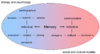
“The very word "sorrow" colours the fact of sorrow, the pain of it.”

“Is it possible to live in this world without the operation of will?”
“The society in which we live is the result of our psychological state.”

“Thought nourishes, sustains and gives continuity to fear and pleasure.”
Find exactly what you are looking for by browsing this categorized list of Jiddu Krishnamurti quotes by topic.
“It is utterly and irrevocably possible to empty all hurts and, therefore, to love, to have compassion. To have compassion means to have passion for all things, not just between two people, but for all human beings, for all things of the earth, the animals, the trees, everything the earth contains. When we have such compassion we will not despoil the earth as we are doing now, and we will have no wars.”

“The only thing that really matters is that there be an action of goodness, love and intelligence in living. Is goodness individual or collective, is love personal or impersonal, is intelligence yours, mine or somebody else? If it is yours or mine then it is not intelligence, or love, or goodness. If goodness is an affair of the individual or of the collective, according to one's particular preference or decision, then it is no longer goodness.”
“Truth does not belong to an individual.”
“To follow implies not only the denying of one's own clarity, investigation, integrity and honesty, but it also implies that your motive in following is reward. Truth is not a reward.”
“I maintain that Truth is a pathless land, and you cannot approach it by any path whatsoever, by any religion, by any sect. That is my point of view, and I adhere to that absolutely and unconditionally.”
“If I draw a conclusion, I act on an idea, on an image, on a symbol, which is the structure of thought, and so I am constantly preventing myself from having insight, from understanding things as they are.”

“To understand fear you must also understand pleasure — they are interrelated; without understanding one you cannot understand the other. This means that one cannot say ‘I must only have pleasure and no fear’; fear is the other side of the coin which is called pleasure.”
“When you separate yourself by belief, by nationality, by tradition, it breeds violence. So a man who is seeking to understand violence does not belong to any country, to any religion, to any political party or partial system; he is concerned with the total understanding of mankind.”
“You must give up all feeling of possession. Karma may take from yon the things which you like best — even the people whom you love most. Even then you must be cheerful — ready to part with anything and everything.”

“You must bear your karma cheerfully, whatever it may be, taking it as an honor that Suffering comes to you, because it shows that the Lords of Karma think you worth helping. However hard it is, be thankful that it is no worse.”
“Just to save himself a few minutes' trouble, a man does not pay his workmen on the proper day, thinking nothing of the difficulties he brings upon them. So much suffering is caused just by carelessness — by forgetting to think how an action will affect others. But karma never forgets, and it takes no account of the fact that men forget.”
“He who would walk upon the Path must learn to think for himself, for superstition is one of the greatest evils in the world, one of the fetters from which you mast utterly free yourself.”

“Three sins there are which work more harm than all else in the world — gossip, cruelty, and superstition — because they are sins against love. Against these three the man who would fill his heart with the love of God must watch ceaselessly... Superstition... has caused much terrible cruelty. The man who is a slave to it despises others who are wiser, tries to force them to do as he does. Think of the awful slaughter produced by the superstition that animals should be sacrificed, and by the still more cruel superstition that man needs flesh for food.”
“You must distinguish between truth and falsehood; you must learn to be true all through, in thought and word and deed. In thought first; and that is not easy, for there are in the world many untrue thoughts, many foolish superstitions, and no one who is enslaved by them can make progress. Therefore you must not hold a thought just because many other people hold it, nor because it has been believed for centuries, nor because it is written in some book which men think sacred; you must think of the matter for yourself, and judge for yourself whether it is reasonable. Remember that though a thousand men agree upon a subject, if they know nothing about that subject their opinion is of no value.”
Gain deeper perspective through quotes about Jiddu Krishnamurti from others.
“I do not want to belong to any organization of a spiritual kind, please understand this. I would make use of an organization which would take me to London, for example; this is quite a different kind of organization, merely mechanical, like the post or the telegraph. I would use a motor car or a steamship to travel, these are only physical mechanisms which have nothing whatever to do with spirituality. Again, I maintain that no organization can lead man to spirituality.”
“I maintain that Truth is a pathless land, and you cannot approach it by any path whatsoever, by any religion, by any sect. That is my point of view, and I adhere to that absolutely and unconditionally. Truth, being limitless, unconditioned, unapproachable by any path whatsoever, cannot be organized; nor should any organization be formed to lead or to coerce people along any particular path. If you first understand that, then you will see how impossible it is to organize a belief. A belief is purely an individual matter, and you cannot and must not organize it. If you do, it becomes dead, crystallized; it becomes a creed, a sect, a religion, to be imposed on others. This is what everyone throughout the world is attempting to do. Truth is narrowed down and made a plaything for those who are weak, for those who are only momentarily discontented. Truth cannot be brought down, rather the individual must make the effort to ascend to it. You cannot bring the mountain-top to the valley. If you would attain to the mountain-top you must pass through the valley, climb the steeps, unafraid of the dangerous precipices.”
“Your prejudices, your fears, your authorities, your churches new and old – all these, I maintain, are a barrier to understanding. I cannot make myself clearer than this. I do not want you to agree with me, I do not want you to follow me, I want you to understand what I am saying. “This understanding is necessary because your belief has not transformed you but only complicated you, and because you are not willing to face things as they are. You want to have your own gods – new gods instead of the old, new religions instead of the old, new forms instead of the old – all equally valueless, all barriers, all limitations, all crutches. Instead of old spiritual distinctions you have new spiritual distinctions, instead of old worships you have new worships. You are all depending for your spirituality on someone else, for your happiness on someone else, for your enlightenment on someone else; and although you have been preparing for me for eighteen years, when I say all these things are unnecessary, when I say that you must put them all away and look within yourselves for the enlightenment, for the glory, for the purification, and for the incorruptibility of the self, not one of you is willing to do it. There may be a few, but very, very few. So why have an organization?”
“Krishnamurti is one of the greatest philosophers of the age.”
“Krishnamurti was, on one hand, a typically self-alienated Indian intellectual criticizing his own culture. But, on the other hand, he possessed a genuine meditative mind in harmony with the same tradition, a strange contradiction but one that was appealing to people who could not relate to traditions. He had important teachings on perception and on the workings of the mind and emotions that added much depth to my meditation.”
“He has received divine honors in India and in the West. I had a long interview with him, found him of average intelligence, of rather lovable disposition, of mediocre spiritual intuitions, and heard him swear in good, round English! I came away feeling that if he is all we, as a race, have to look to in order to get out of the muddle we are in, then God pity us.”
“The qualifications for admission to the Great White Brotherhood, which have to be acquired in the course of the work in the earlier part of the Path, are of a very definite character, and are always essentially the same, although they have been described in many different terms during the last twenty-five centuries. But the latest and simplest account of them is to be found in Mr. J. Krishnamurti’s wonderful little book. At the Feet of the Master, Although Mr. Krishnamurti puts this book before the world, the words which it contains are almost entirely those of the Master Kuthumi. ‘‘ These are not my words,” the author says in the Foreword; " they are the words of the Master who taught me.” When the book was written, Mr. Krishnamurti’s body was thirteen years old, and it was necessary for the Master’s plans that the knowledge requisite for Initiation should be conveyed to him as quickly as possible. The words contained in the book are those in which the Master tried to convey the whole essence of the necessary teaching in the simplest and briefest form.”