Link Copied!
Jerome Quotes (347-420)
























About Jerome
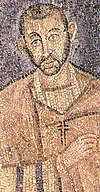
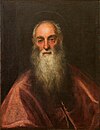
Saint Jerome (c. 347 – 30 September 420), full name Eusebius Sophronius Hieronymus, is best known as the translator of the Bible from Greek and Hebrew into Latin. Jerome's edition, the Vulgate, is still the official biblical text of the Roman Catholic Church. He is canonized in all Christianity and recognized by the Vatican as a Doctor of the Church.
Best Jerome Quotes
Shortest
Earliest
Explore our curated collection of the most famous and impactful Jerome quotes.
“Privilegia paucorum non faciunt legem.”
“Ignoratio Scripturarum, ignoratio Christi est.”
“To sin is human, to lay snares is diabolical.”

“It is no fault of Christianity that a hypocrite falls into sin.”

“Interdum animus dominarum ex ancillarum habitu iudicatur.”
“Facilius enim neglegentia emendari potest quam amor nasci.”
“Ita se natura habet, ut amara sit veritas, blanda vitia existimentur.”
“Quotidie morimur, quotidie commutamur, et tamen aternos nos esse credimus.”

“Facile contemnitur clericus, qui saepe vocatus ad prandium, ire non recusat.”
Jerome Quotes by Topic
Find exactly what you are looking for by browsing this categorized list of Jerome quotes by topic.
Jerome on Christianity 3 quotes
“It is no fault of Christianity that a hypocrite falls into sin[.]”
Jerome on Virginity 3 quotes
“It is not disparaging wedlock to prefer virginity. No one can make a comparison between two things if one is good and the other evil.”
Jerome on Evil speaking 3 quotes
“Speak against nobody, and do not slander your mother's son. Who are you that judgest the servant of another? To his own lord he stands or falls; yea, he shall be made to stand, for the Lord has power to make him stand.”
Jerome on Weather 2 quotes
“But who wants to be foretold the weather? It is bad enough when it comes, without our having the misery of knowing about it beforehand.”

Jerome on Work 2 quotes
“I like work; it fascinates me. I can sit and look at it for hours. I love to keep it by me: the idea of getting rid of it nearly breaks my heart.”

Jerome on Christian views on birth control 2 quotes
“You may see a number of women who are widows before they are wives. Others, indeed, will drink sterility [oral contraceptives] and murder a man not yet born, [and some commit abortion].”

Jerome on Paradise 2 quotes
“In paradise Eve was a virgin, and it was only after the coats of skins that she began her married life. Now paradise is your home too. Keep therefore your birthright and say: Return unto your rest, O my soul.”
Jerome on Religious naturalism 2 quotes
“Religious naturalism is the type of naturalism which affirms a set of beliefs and attitudes that there are religious aspects of this world which can be appreciated within a naturalistic framework. There are some events or process in our experience that elicit responses that can appropriately be called religious.”

Jerome on Chastity 2 quotes
“You will tell me, perhaps, that, high-born as you are, reared in luxury and used to lie softly, you cannot do without wine and dainties, and would find a stricter rule of life unendurable. If so, I can only say: Live, then, by your own rule, since God's rule is too hard for you. Not that the Creator and Lord of all takes pleasure in a rumbling and empty stomach or in fevered lungs; but that these are indispensable as means to the preservation of chastity.”

Jerome on Love of God 2 quotes
“Precious in the sight of the Lord is the death of His saints. The only fitting return that we can make to Him is to give blood for blood; and, as we are redeemed by the blood of Christ, gladly to lay down our lives for our Redeemer. What saint has ever won his crown without first contending for it? Righteous Abel is murdered. Abraham is in danger of losing his wife. And, as I must not enlarge my book unduly, seek for yourself: you will find that all holy men have suffered adversity. Solomon alone lived in luxury and perhaps it was for this reason that he fell. For whom the Lord loves, He chastens, and scourges every son whom He receives.”

Jerome on Vegetarianism 2 quotes
“Dicæarchus in his book of Antiquities, describing Greece, relates that under Saturn, that is in the Golden Age, when the ground brought forth all things abundantly, no one ate flesh, but every one lived on field produce and fruits which the earth bore of itself. ... Xenocrates the philosopher writes that at Athens out of all the laws of Triptolemus only three precepts remain in the temple of Ceres: respect to parents, reverence for the gods, and abstinence from flesh. Orpheus in his song utterly denounces the eating of flesh. I might speak of the frugality of Pythagoras, Socrates, and Antisthenes to our confusion: but it would be tedious, and would require a work to itself.”

Jerome on Devil 2 quotes
“Job was dear to God, perfect and upright before Him; Job 2:3 yet hear what he says of the devil: His strength is in the loins, and his force is in the navel. The terms are chosen for decency's sake, but the reproductive organs of the two sexes are meant. Thus, the descendant of David, who, according to the promise is to sit upon his throne, is said to come from his loins. And the seventy-five souls descended from Jacob who entered Egypt are said to come out of his thigh. Genesis 46:26 So, also, when his thigh shrank after the Lord had wrestled with him, Genesis 32:24-25 he ceased to beget children. The Israelites, again, are told to celebrate the passover with loins girded and mortified. Exodus 12:11 God says to Job: Gird up your loins as a man. Job 38:3 John wears a leathern girdle. Matthew 3:4 The apostles must gird their loins to carry the lamps of the Gospel. Luke 12:35 When Ezekiel tells us how Jerusalem is found in the plain of wandering, covered with blood, he uses the words: Your navel has not been cut. Ezekiel 16:4-6 In his assaults on men, therefore, the devil's strength is in the loins; in his attacks on women his force is in the navel.”

What Jerome Said About Others
Discover personal opinions Jerome shared regarding contemporaries.
Jerome on Peter Greenaway 5 quotes
View all 5 quotes on Peter Greenaway →Jerome on Jerome Bettis
Jerome on Oscar Wilde
“I like work: it fascinates me. I can sit and look at it for hours.”

Jerome on Irving Berlin
Jerome on Horace
Jerome on Nero Wolfe
“True, it is bad to stab a man in the back, but when one is in a hurry the niceties must sometimes be overlooked.”

Jerome on Lewis Carroll
“We lament that we cannot go home again, cannot be a little child once more, and Lewis Carroll's works have enabled us to deny that reality momentarily, to indulge our dreams for one bright interval.”
Jerome on Walter Pitts
“Walter Pitts, who was companion, protege, and friend to Warren, had, for a long time, been convinced that the only way of understanding nature was by logic and logic alone .... Pitts had committed himself to logic as the key to the structure of the world in a way that no other person that [ know had ever done.”
Jerome on Jean-Jacques Rousseau
“You can lock the door upon them, but they burst open their shaky lattices and call out over the house-tops so that men cannot but hear. You hounded wild Rousseau into the meanest garret of the Rue St. Jacques and jeered at his angry shrieks. But the thin, piping tones swelled a hundred years later into the sullen roar of the French Revolution, and civilization to this day is quivering to the reverberations of his voice.”

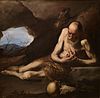
Jerome on Paul of Thebes
“When [Antony] entered the cave he saw the lifeless corpse in a kneeling position, its head erect and its hands stretched out toward heaven. At first he thought that Paul was still alive and so he knelt down beside him to pray, but when he heard no sighs from the praying man, as he usually did, he fell upon him in a tearful embrace, realizing that even as a corpse the holy man, by means of his reverent posture, was praying to God for whom all things live.”
Jerome on Walter Scott
“I am of course aware that there were other influences on Scott besides medieval literature and that sometimes there are alternative sources for a particular motif or detail or point of style. I cannot always pin Scott down to a medieval source to the exclusion of other possible sources. In such cases it is altogether conceivable that three or four or more literary works from different periods of literary history were on his mind at the same time. If so, I am inclined to believe that medieval romance weighed most heavily because of his utter fascination with literature of this sort during his formative years. Although he also read widely in other literature at an early age, ballads and old romances were his passion... I point out what Scott has borrowed and show how he has used the borrowing. When he has covered his tracks, I cannot always say which romance is involved... but the accumulation of interesting parallels provides good circumstantial evidence in support of my belief that medieval romance is the most important source for the Waverly Novels.”

Jerome on Christian Cooper
“As a black man, I am not scared of another person because their race or ethnicity, but this man IS threatening with his body language and screaming. I don’t know Amy Cooper at all, I’ve said hello to her because that’s what dog owners do to other owners in the park, but when I saw that video, I thought, I cannot imagine if he approached her the same way how she may have genuinely been afraid for her life. people need to understand this man is a dick and probably did threaten her. You can read his Facebook post where he tells the world he told her “you’re not gonna like what I’m going to do next.” That’s a threat. And she has no idea if this man is pulling out a knife, a gun, or a treat that (sic) laced with a rat poison. If I wasn’t who I was, I would of called the police on that guy too. Sure, we’re breaking the rules by having our dogs off leash in a park that has 80% of its area off-leash hours, but that gives that guy no authority to accost people in such manner. My two fellow dog owners have had similar situations with this man, but don’t feel comfortable coming forward because they’re white.”

Jerome on Mary, mother of Jesus
“Set before you the blessed Mary, whose surpassing purity made her meet to be the mother of the Lord. When the angel Gabriel came down to her, in the form of a man, and said: Hail, you that are highly favored; the Lord is with you, Luke 1:28 she was terror-stricken and unable to reply, for she had never been saluted by a man before. But, on learning who he was, she spoke, and one who had been afraid of a man conversed fearlessly with an angel. Now you, too, may be the Lord's mother. Take you a great roll and write in it with a man's pen Maher-shalal-hash-baz. And when you have gone to the prophetess, and have conceived in the womb, and have brought forth a son, say: Lord, we have been with child by your fear, we have been in pain, we have brought forth the spirit of your salvation, which we have wrought upon the earth. Then shall your Son reply: Behold my mother and my brethren. Matthew 12:49 And He whose name you have so recently inscribed upon the table of your heart, and have written with a pen upon its renewed surface — He, after He has recovered the spoil from the enemy, and has spoiled principalities and powers, nailing them to His cross Colossians 2:14-15 — having been miraculously conceived, grows up to manhood; and, as He becomes older, regards you no longer as His mother, but as His bride. To be as the martyrs, or as the apostles, or as Christ, involves a hard struggle, but brings with it a great reward.”
Jerome on John H. Freeman
“Freeman’s early research focused on organizational politics and the variations among organizations in the ratios of managers and supervisors to the rest of the work force. Freeman’s empirical studies revealed that organizations in decline have higher “administrative intensity” than similar-sized growing organizations because staffing decisions are made by managers, who might be expected to favor their close associates. The pattern came to be known as the “Freeman effect” and became a staple of macro-organization theory.
Perhaps Freeman’s greatest contribution to the study of organizational theory was an area he helped create with colleague and friend Michael Hannan, professor of management at the Stanford Graduate School of Business and professor of sociology at Stanford University. The two sociologists pioneered “organizational ecology.” Together they sought to answer the question, “Why are there so many kinds of organizations?” Their work included rebuilding the foundations of macro-organization theory by emphasizing change by selection rather than adaptation, shifting the level of analysis to the level of the population of organizations, and introducing a focus on dynamics. Freeman was involved in building many now-standard themes including age dependence in organizational mortality, r and K selection, niche width, organizational forms, and density-dependent legitimation and competition. In 1992, the American Sociological Association awarded Freeman and Hannan the Max Weber Award for Distinguished Scholarship for their book Organizational Ecology, published in 1989.”
About Jerome
Saint Jerome (c. 347 – 30 September 420), full name Eusebius Sophronius Hieronymus, is best known as the translator of the Bible from Greek and Hebrew into Latin. Jerome's edition, the Vulgate, is still the official biblical text of the Roman Catholic Church. He is canonized in all Christianity and recognized by the Vatican as a Doctor of the Church.