Link Copied!
Jeremy Bernstein Quotes (1929-)
Physicist
About Jeremy Bernstein
Jeremy Bernstein (born December 31, 1929 in Rochester, New York) is an American theoretical physicist and science essayist.
Best Jeremy Bernstein Quotes
Shortest
Earliest
Explore our curated collection of the most famous and impactful Jeremy Bernstein quotes.
“Although it is always somewhat dangerous to look for the cause of a complex sociological phenomenon in a single event, nonetheless, I believe that a cause can be made for the proposition that the present widespread interest in the quantum theory can be traced to a single paper with the nontransparent title “On the Einstein-Podolsky-Rosen Paradox,” which was written in 1964 by the then thirty-four-year-old Irish physicist John Bell. It was published in the obscure journal Physics, which expired after a few issues. Bell’s paper was, as it happens, published in its first issue. Bell, who has worked since 1960 at CERN, the gigantic elementary-particle physics laboratory near Geneva, has been known to claim that his paper involves only the use of “high school mathematics”; however, its six pages are dense with an extremely abstract set of arguments, which even professionals in the field must work hard at to understand. In fact, for several years after its publication, few if any professional physicists bothered to try.”
“I once asked Bell whether during the years he was studying the quantum theory it ever occurred to him that the theory might simply be wrong. He thought a moment and answered, “I hesitated to think it might be wrong, but I knew that it was rotten.” Bell pronounced the word “rotten” with a good deal of relish and then added, “That is to say, one has to find some decent way of expressing whatever truth there is in it.” The attitude that even if there is not something actually wrong with the theory, there is something deeply unsettling—“rotten”—about it, was common to most of the creators of the quantum theory. Niels Bohr was reported to have remarked, “Well, I think that if a man says it is completely clear to him these days, then he has not really understood the subject.” He later added, “If you do not getschwindlig [dizzy] sometimes when you think about these things then you have not really understood it.” My teacher Philipp Frank used to tell about the time he visited Einstein in Prague in 1911. Einstein had an office at the university that over looked a park. People were milling around in the park, some engaged in vehement gesture-filled discussions. When Professor Frank asked Einstein what was going on, Einstein replied that it was the grounds of a lunatic asylum, adding, “Those are the madmen who do not occupy themselves with the quantum theory.””

“I have avoided so far the use of the term Higgs boson—the analog in the electroweak theory of the η. Certainly, Higgs deserves the credit for first exhibiting the mechanism in the context of scalar electrodynamics. But as I have tried to show, it took other people to make it work. The Higgs boson is what is being looked for at CERN. If they find it, we shall all be happy and relieved. And if not? I am reminded of a story about Einstein. He had just received a telegram with the news that the eclipse expeditions had confirmed his general relativity prediction about the Sun bending starlight. He was very pleased with himself and showed the telegram to one of his students, Ilse Rosenthal-Schneider. She asked him what he would have done if the telegram had contained the news that the experiments disagreed with the theory. He replied, “Da könt mir halt der lieber Gott leid tun—die theorie stimmt doch. (Then I would have been sorry for the dear Lord. The theory is right).””
“The signs on Bell’s door read “J.Bell” and “M.Bell.” I knocked and was invited in by Bell. He looked about the same as he had the last time I saw him, a couple of years ago. He has long, neatly combed red hair and a pointed beard, which give him a somewhat Shavian figura. On one wall of the office is a photograph of Bell with something that looks like a halo behind his head, and his expression in the photograph is mischievous. Theoretical physicists’ offices run the gamut from chaotic clutter to obsessive neatness; the Bells’ is somewhere in between. Bell invited me to sit down after warning me that the “visitor’s chair” tilted backward at unexpected angles. When I had mastered it, and had a chance to look around, the first thing that struck me was the absence of Mary. “Mary,” said Bell, with a note of some disbelief in his voice, “has retired.” This, it turned out, had occurred not long before my visit. “She will not look at any mathematics now. I hope she comes back,” he went on almost plaintively; “I need her. We are doing several problems together.” In recent years, the Bells have been studying new quantum mechanical effects that will become relevant for the generation of particle accelerators that will perhaps succeed the LEP. Bell began his career as a professional physicist by designing accelerators, and Mary has spent her entire career in accelerator design. A couple of years ago Bell, like the rest of the members of CERN theory division, was asked to list his physics speciality. Among the more “conventional” entries in the division such as “super strings,” “weak interactions,” “cosmology,” and the like, Bell’s read “quantum engineering.””
Jeremy Bernstein Quotes by Topic
Find exactly what you are looking for by browsing this categorized list of Jeremy Bernstein quotes by topic.
Jeremy Bernstein on Electron 2 quotes
“If quantum mechanics is right, there is no way to get around the uncertainty principle. The reason that the electron’s probability wave spread so much after we confined it, Heisenberg would argue, is that its momentum became almost completely indeterminate. In a manner of speaking, it headed off in all directions.”
Jeremy Bernstein on Annus Mirabilis papers
“In contemplating the papers Einstein wrote in 1905, I often find myself wondering which of them is the most beautiful. It is a little like asking which of Beethoven’s symphonies is the most beautiful.”

Jeremy Bernstein on Uncertainty principle
“If quantum mechanics is right, there is no way to get around the uncertainty principle. The reason that the electron’s probability wave spread so much after we confined it, Heisenberg would argue, is that its momentum became almost completely indeterminate. In a manner of speaking, it headed off in all directions.”

Jeremy Bernstein on Photon
“The theory of the light quantum, which Einstein initiated in 1905 and which is with us still, is certainly the most revolutionary development in the history of physics and arguably in the history of science. The creators of the theory, men such as Einstein, Niels Bohr, Werner Heisenberg, Erwin Schrödinger, Wolfgang Pauli, and Paul Dirac, were often struck by the apparent "absurdity"—the utterly noncommonsensical aspects—of the world depicted by the quantum theory.”
Jeremy Bernstein on Vacuum expectation value
“I remember a lunch in which Schwinger began by saying to Weisskopf, “Now I will make you a world.” The “world” was written down on a few paper napkins, one of which I saved. In any event, one of the things that he said, which has stuck with me ever since, was that scalar particles were the only ones that could have nonvanishing vacuum expectation values. He then went on to say that if you couple one of these to a fermion Psi by a coupling of the form Phi overline PsiPsi, then this vacuum expectation value would act like a fermion mass. This sort of coupling is how mass generation is done in principle for the fermions. All particles in this picture would acquire their masses from the vacuum.”



What Jeremy Bernstein Said About Others
Discover personal opinions Jeremy Bernstein shared regarding contemporaries.
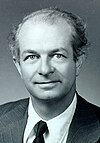
Jeremy Bernstein on Linus Pauling
“He combined scientific brilliance, political courage, and a stubborn, quirky single-mindedness in ways that... will probably always resist simple explanation.”
Jeremy Bernstein on David Bohm
“In the early 1950s, [...] there were two important advances in the interpretation of quantum mechanics, both made by the American physicist David Bohm. Just as there were, it seems, two Bohrs, there were apparently two Bohms: a 1951 Bohm and a 1952 Bohm.”
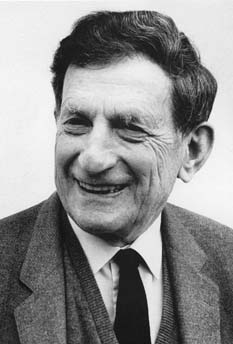
Jeremy Bernstein on Albert Einstein
“[During 1940s], Einstein was pursuing what he called his ‘‘violon d’Ingres’’—his unified field theory... The so-called strange particles were just being discovered, and the quantum theory was proving ever more powerful. Einstein simply was not much interested. His position was that it was useless to try to understand this new physics until the electron was understood. We now believe that understanding the electron is such an intimate part of the new physics that the electron cannot be understood by itself. But Besso took all his old friend’s attempts extremely seriously, and Einstein gave him detailed explanations of his various formal manipulations. It was a dialogue that somehow reminds me of the plays of Samuel Beckett.”

Jeremy Bernstein on John Stewart Bell
“I told Wheeler that I had had a number of conversations with Bell about quantum theory. "He’s a wonderful fellow," Wheeler noted. "Did he say to you," Wheeler asked, laughing, "‘I’d rather be clear and wrong, than foggy and right’?" I told Wheeler that Bell had not used exactly those words, but that it certainly sounded like him. I also told Wheeler that from the time that Bell began to study the quantum theory, he had conceptual problems with it, and that I had asked Bell if, at that time, he thought that the theory might simply be wrong—to which Bell had answered, "I hesitated to think it might be wrong, but I knew that it was rotten." At this, Wheeler burst into a marvelous peal of laughter. The idea of the young Bell rebelling against the "rottenness" of the quantum theory struck Wheeler as incredibly funny.”
Jeremy Bernstein on Erwin Schrödinger
“Schrödinger, who was born in Vienna in 1887, was a fascinating man. I met him a few months before he died in 1961. All the inventors of the quantum theory, as it happened, were men of very broad culture, perhaps attributable in part to their European gymnasium educations, but even in this group Schrödinger stood out. He read very widely in a variety of languages, ancient and modern. He was a scientific polymath with a deep interest in Eastern religions. He was also a rather romantic figure who wrote poetry. I was told by Philipp Frank that when Schrödinger appeared in 1939 at the Institute for Advanced Study in Dublin, where he had been offered sanctuary during the war, he did so with what Professor Frank referred to as two ‘‘wives.’’ (This was the least of it. Schrödinger had several mistresses, with whom he fathered at least two daughters.)”


About Jeremy Bernstein
Jeremy Bernstein (born December 31, 1929 in Rochester, New York) is an American theoretical physicist and science essayist.