Link Copied!
Jeremy Bentham Quotes (1748-1832)
Philosopher







About Jeremy Bentham
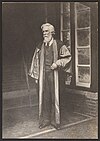
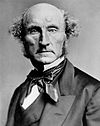
Jeremy Bentham (15 February 1748 – 6 June 1832) was a British gentleman, jurist, philosopher, and legal and social reformer. He is best known as an early advocate of utilitarianism and animal rights.
Best Jeremy Bentham Quotes
Shortest
Earliest
Explore our curated collection of the most famous and impactful Jeremy Bentham quotes.
“[I am] at heart more of a United-States-man than an Englishman.”

Unsourced — Primary work/page citation not yet verified in the QuotesCosmos archive. Per our Unnamed Sources & Verification Policy, quotes without confirmed primary editions are explicitly marked Unsourced while under editorial review.
“To what shall the character of utility be ascribed, if not to that which is a source of pleasure?”

Unsourced — Primary work/page citation not yet verified in the QuotesCosmos archive. Per our Unnamed Sources & Verification Policy, quotes without confirmed primary editions are explicitly marked Unsourced while under editorial review.
“Secrecy is an instrument of conspiracy; it ought not, therefore, to be the system of a regular government.”
Unsourced — Primary work/page citation not yet verified in the QuotesCosmos archive. Per our Unnamed Sources & Verification Policy, quotes without confirmed primary editions are explicitly marked Unsourced while under editorial review.
“Prose is when all the lines except the last go on to the end. Poetry is when some of them fall short of it.”

Unsourced — Primary work/page citation not yet verified in the QuotesCosmos archive. Per our Unnamed Sources & Verification Policy, quotes without confirmed primary editions are explicitly marked Unsourced while under editorial review.
“[I]n principle and in practice, in a right track and in a wrong one, the rarest of all human qualities is consistency.”
Unsourced — Primary work/page citation not yet verified in the QuotesCosmos archive. Per our Unnamed Sources & Verification Policy, quotes without confirmed primary editions are explicitly marked Unsourced while under editorial review.
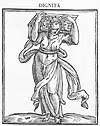
“Want keeps pace with dignity. Destitute of the lawful means of supporting his rank, his dignity presents a motive for malversation, and his power furnishes the means.”
Unsourced — Primary work/page citation not yet verified in the QuotesCosmos archive. Per our Unnamed Sources & Verification Policy, quotes without confirmed primary editions are explicitly marked Unsourced while under editorial review.
“[O]f corruption, the principal and direct use is, to engage the representatives of the people to betray their trust, and sell themselves and the people to the universal corrupter—the monarch, in his capacity of corrupter-general.”
Unsourced — Primary work/page citation not yet verified in the QuotesCosmos archive. Per our Unnamed Sources & Verification Policy, quotes without confirmed primary editions are explicitly marked Unsourced while under editorial review.
“Ah! when will the yoke of Custom—Custom, the blind tyrant, of which all other tyrants make their slave—ah! when will that misery-perpetuating yoke be shaken off?—when, when will Reason be seated on her throne?”
Unsourced — Primary work/page citation not yet verified in the QuotesCosmos archive. Per our Unnamed Sources & Verification Policy, quotes without confirmed primary editions are explicitly marked Unsourced while under editorial review.
“The community is a fictitious body, composed of the individual persons who are considered as constituting as it were its members. The interest of the community then is what? The sum of the interests of the several members who compose it.”

Unsourced — Primary work/page citation not yet verified in the QuotesCosmos archive. Per our Unnamed Sources & Verification Policy, quotes without confirmed primary editions are explicitly marked Unsourced while under editorial review.
“Intense, long, certain, speedy, fruitful, pure—
Such marks in pleasures and in pains endure.
Such pleasures seek if private be thy end:
If it be public, wide let them extend.
Such pains avoid, whichever be thy view:
If pains must come, let them extend to few.”
Such marks in pleasures and in pains endure.
Such pleasures seek if private be thy end:
If it be public, wide let them extend.
Such pains avoid, whichever be thy view:
If pains must come, let them extend to few.”
Unsourced — Primary work/page citation not yet verified in the QuotesCosmos archive. Per our Unnamed Sources & Verification Policy, quotes without confirmed primary editions are explicitly marked Unsourced while under editorial review.
“Priestley was the first (unless it was Beccaria) who taught my lips to pronounce this sacred truth — that the greatest happiness of the greatest number is the foundation of morals and legislation.”
Unsourced — Primary work/page citation not yet verified in the QuotesCosmos archive. Per our Unnamed Sources & Verification Policy, quotes without confirmed primary editions are explicitly marked Unsourced while under editorial review.
“The principle of utility judges any action to be right by the tendency it appears to have to augment or diminish the happiness of the party whose interests are in question... if that party be the community the happiness of the community, if a particular individual, the happiness of that individual.”

Unsourced — Primary work/page citation not yet verified in the QuotesCosmos archive. Per our Unnamed Sources & Verification Policy, quotes without confirmed primary editions are explicitly marked Unsourced while under editorial review.
“[P]leasure is in itself a good; nay, even setting aside immunity from pain, the only good: pain is in itself an evil; and, indeed, without exception, the only evil; or else the words good and evil have no meaning. And this is alike true of every sort of pain, and of every sort of pleasure.”

Unsourced — Primary work/page citation not yet verified in the QuotesCosmos archive. Per our Unnamed Sources & Verification Policy, quotes without confirmed primary editions are explicitly marked Unsourced while under editorial review.
“It is the principle of antipathy which leads us to speak of offences as deserving punishment. It is the corresponding principle of sympathy which leads us to speak of certain actions as meriting reward. This word merit can only lead to passion and error. It is effects good or bad which we ought alone to consider.”
Unsourced — Primary work/page citation not yet verified in the QuotesCosmos archive. Per our Unnamed Sources & Verification Policy, quotes without confirmed primary editions are explicitly marked Unsourced while under editorial review.
“Liberty therefore not being more fit than other words in some of the instances in which it has been used, and not so fit in others, the less the use that is made of it the better. I would no more use the word liberty in my conversation when I could get another that would answer the purpose, than I would brandy in my diet, if my physician did not order me: both cloud the understanding and inflame the passions.”

Unsourced — Primary work/page citation not yet verified in the QuotesCosmos archive. Per our Unnamed Sources & Verification Policy, quotes without confirmed primary editions are explicitly marked Unsourced while under editorial review.
“Judges of elegance and taste consider themselves as benefactors to the human race, whilst they are really only the interrupters of their pleasure … There is no taste which deserves the epithet good, unless it be the taste for such employments which, to the pleasure actually produced by them, conjoin some contingent or future utility: there is no taste which deserves to be characterized as bad, unless it be a taste for some occupation which has mischievous tendency.”
Unsourced — Primary work/page citation not yet verified in the QuotesCosmos archive. Per our Unnamed Sources & Verification Policy, quotes without confirmed primary editions are explicitly marked Unsourced while under editorial review.
“Create all the happiness you are able to create: remove all the misery you are able to remove. Every day will allow you to add something to the pleasure of others, or to diminish something of their pains. And for every grain of enjoyment you sow in the bosom of another, you shall find a harvest in your own bosom; while every sorrow which you pluck out from the thoughts and feelings of a fellow creature shall be replaced by beautiful peace and joy in the sanctuary of your soul.”
Unsourced — Primary work/page citation not yet verified in the QuotesCosmos archive. Per our Unnamed Sources & Verification Policy, quotes without confirmed primary editions are explicitly marked Unsourced while under editorial review.
“That which has no existence cannot be destroyed — that which cannot be destroyed cannot require anything to preserve it from destruction. Natural rights is simple nonsense: natural and imprescriptible rights, rhetorical nonsense — nonsense upon stilts. But this rhetorical nonsense ends in the old strain of mischievous nonsense for immediately a list of these pretended natural rights is given, and those are so expressed as to present to view legal rights. And of these rights, whatever they are, there is not, it seems, any one of which any government can, upon any occasion whatever, abrogate the smallest particle.”

Unsourced — Primary work/page citation not yet verified in the QuotesCosmos archive. Per our Unnamed Sources & Verification Policy, quotes without confirmed primary editions are explicitly marked Unsourced while under editorial review.
“Rights are, then, the fruits of the law, and of the law alone. There are no rights without law—no rights contrary to the law—no rights anterior to the law. Before the existence of laws there may be reasons for wishing that there were laws—and doubtless such reasons cannot be wanting, and those of the strongest kind;—but a reason for wishing that we possessed a right, does not constitute a right. To confound the existence of a reason for wishing that we possessed a right, with the existence of the right itself, is to confound the existence of a want with the means of relieving it. It is the same as if one should say, everybody is subject to hunger, therefore everybody has something to eat.”
Unsourced — Primary work/page citation not yet verified in the QuotesCosmos archive. Per our Unnamed Sources & Verification Policy, quotes without confirmed primary editions are explicitly marked Unsourced while under editorial review.
“Figure to yourself the mixture of surprise and delight which has this instant been poured into my mind by the sound of my name, as uttered by you, in the speech just read to me out of the Morning Herald... By one and the same man, not only Parliamentary Reform, but Law Reform advocated. Advocated? and by what man? By one who, in the vulgar sense of profit and loss, has nothing to gain by it... Yes, only from Ireland could such self-sacrifice come; nowhere else: least of all in England, cold, selfish, priest-ridden, lawyer-ridden, lord-ridden, squire-ridden, soldier-ridden England, could any approach to it be found.”

Unsourced — Primary work/page citation not yet verified in the QuotesCosmos archive. Per our Unnamed Sources & Verification Policy, quotes without confirmed primary editions are explicitly marked Unsourced while under editorial review.
“In looking over the catalogue of human actions (says a partizan of this principle) in order to determine which of them are to be marked with the seal of disapprobation, you need but to take counsel of your own feelings: whatever you find in yourself a propensity to condemn, is wrong for that very reason. For the same reason it is also meet for punishment: in what proportion it is adverse to utility, or whether it be adverse to utility at all, is a matter that makes no difference. In that same proportion also is it meet for punishment: if you hate much, punish much: if you hate little, punish little: punish as you hate. If you hate not at all, punish not at all: the fine feelings of the soul are not to be overborne and tyrannized by the harsh and rugged dictates of political utility.”
Unsourced — Primary work/page citation not yet verified in the QuotesCosmos archive. Per our Unnamed Sources & Verification Policy, quotes without confirmed primary editions are explicitly marked Unsourced while under editorial review.
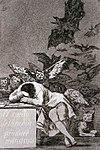
“Nature has placed mankind under the governance of two sovereign masters, pain and pleasure. It is for them alone to point out what we ought to do, as well as to determine what we shall do. On the one hand the standard of right and wrong, on the other the chain of causes and effects, are fastened to their throne. They govern us in all we do, in all we say, in all we think: every effort we can make to throw off our subjection, will serve but to demonstrate and confirm it. In words a man may pretend to abjure their empire: but in reality he will remain subject to it all the while. The principle of utility recognizes this subjection, and assumes it for the foundation of that system, the object of which is to rear the fabric of felicity by the hands of reason and of law. Systems which attempt to question it, deal in sounds instead of sense, in caprice instead of reason, in darkness instead of light.”
Unsourced — Primary work/page citation not yet verified in the QuotesCosmos archive. Per our Unnamed Sources & Verification Policy, quotes without confirmed primary editions are explicitly marked Unsourced while under editorial review.
“It is with government, as with medicine. They have both but a choice of evils. Every law is an evil, for every law is an infraction of liberty: And I repeat that government has but a choice of evils: In making this choice, what ought to be the object of the legislator? He ought to assure himself of two things; 1st, that in every case, the incidents which he tries to prevent are really evils; and 2ndly, that if evils, they are greater than those which he employs to prevent them.
There are then two things to be regarded; the evil of the offence and the evil of the law; the evil of the malady and the evil of the remedy.
An evil comes rarely alone. A lot of evil cannot well fall upon an individual without spreading itself about him, as about a common centre. In the course of its progress we see it take different shapes: we see evil of one kind issue from evil of another kind; evil proceed from good and good from evil. All these changes, it is important to know and to distinguish; in this, in fact, consists the essence of legislation.”

Unsourced — Primary work/page citation not yet verified in the QuotesCosmos archive. Per our Unnamed Sources & Verification Policy, quotes without confirmed primary editions are explicitly marked Unsourced while under editorial review.
“It is part of a work to which if ever it should be completed I intend to give some such title as Principles of Legal Policy; the object of it is to trace out a new model for the Laws: of my own country you may imagine, in the first place: but keeping those of other countries all along in view. To ascertain what the Laws ought to be, in form and tenor as well as in matter: and that elsewhere as well as here. All that I shall say to recommend it to you is that I have taken counsel of you much oftener than of our own Ld. Coke and Hale and Blackstone. The repose of Grotius and Puffendorf and Barbeyrac and Burlamaqui I would never wish to see disturbed. I have built solely on the foundation of utility, laid as it is by Helvetius. Becarria has been lucrative pedibus, or if you please manibus, meis.”

Unsourced — Primary work/page citation not yet verified in the QuotesCosmos archive. Per our Unnamed Sources & Verification Policy, quotes without confirmed primary editions are explicitly marked Unsourced while under editorial review.
“Whenever you are about to be oppressed, you have a right to resist oppression: whenever you conceive yourself to be oppressed, conceive yourself to have a right to make resistance, and act accordingly. In proportion as a law of any kind—any act of power, supreme or subordinate, legislative, administrative, or judicial, is unpleasant to a man, especially if, in consideration of such its unpleasantness, his opinion is, that such act of power ought not to have been exercised, he of course looks upon it as oppression: as often as anything of this sort happens to a man—as often as anything happens to a man to inflame his passions,—this article, for fear his passions should not be sufficiently inflamed of themselves, sets itself to work to blow the flame, and urges him to resistance. Submit not to any decree or other act of power, of the justice of which you are not yourself perfectly convinced. If a constable call upon you to serve in the militia, shoot the constable and not the enemy;—if the commander of a press-gang trouble you, push him into the sea—if a bailiff, throw him out of the window. If a judge sentence you to be imprisoned or put to death, have a dagger ready, and take a stroke first at the judge.”

Unsourced — Primary work/page citation not yet verified in the QuotesCosmos archive. Per our Unnamed Sources & Verification Policy, quotes without confirmed primary editions are explicitly marked Unsourced while under editorial review.
“The day has been, I grieve to say in many places it is not yet past, in which the greater part of the species, under the denomination of slaves, have been treated by the law exactly upon the same footing as, in England for example, the inferior races of animals are still. The day may come when the rest of the animal creation may acquire those rights which never could have been withholden from them but by the hand of tyranny. The French have already discovered that the blackness of the skin is no reason why a human being should be abandoned without redress to the caprice of a tormentor. It may one day come to be recognized that the number of legs, the villosity of the skin, or the termination of the os sacrum are reasons equally insufficient for abandoning a sensitive being to the same fate. What else is it that should trace the insuperable line? Is it the faculty of reason, or perhaps the faculty of discourse? But a full-grown horse or dog is beyond comparison a more rational, as well as a more conversable animal, than an infant of a day or a week or even a month, old. But suppose they were otherwise, what would it avail? '''The question is not Can they reason?, nor Can they talk?, but Can they ''suffer?'''''”
Unsourced — Primary work/page citation not yet verified in the QuotesCosmos archive. Per our Unnamed Sources & Verification Policy, quotes without confirmed primary editions are explicitly marked Unsourced while under editorial review.
Jeremy Bentham Quotes by Topic
Find exactly what you are looking for by browsing this categorized list of Jeremy Bentham quotes by topic.
Jeremy Bentham on Utilitarianism 4 quotes
“By the principle of utility is meant that principle which approves or disapproves of every action whatsoever, according to the tendency it appears to have to augment or diminish the happiness of the party whose interest is in question: or, what is the same thing in other words to promote or to oppose that happiness.”

Unsourced — Primary work/page citation not yet verified in the QuotesCosmos archive. Per our Unnamed Sources & Verification Policy, quotes without confirmed primary editions are explicitly marked Unsourced while under editorial review.
Jeremy Bentham on Animal rights 2 quotes
“The day may come when the rest of the animal creation may acquire those rights which never could have been witholden from them but by the hand of tyranny. [...] A full-grown horse or dog, is beyond comparison a more rational, as well as a more conversable animal, than an infant of a day or a week or even a month, old. But suppose the case were otherwise, what would it avail? The question is not, Can they reason?, nor Can they talk? but, Can they suffer?”

Unsourced — Primary work/page citation not yet verified in the QuotesCosmos archive. Per our Unnamed Sources & Verification Policy, quotes without confirmed primary editions are explicitly marked Unsourced while under editorial review.
Jeremy Bentham on Agriculture
“Three acres and a cow.”

Unsourced — Primary work/page citation not yet verified in the QuotesCosmos archive. Per our Unnamed Sources & Verification Policy, quotes without confirmed primary editions are explicitly marked Unsourced while under editorial review.
Jeremy Bentham on Poetry
“All poetry is misrepresentation.”
Unsourced — Primary work/page citation not yet verified in the QuotesCosmos archive. Per our Unnamed Sources & Verification Policy, quotes without confirmed primary editions are explicitly marked Unsourced while under editorial review.
Jeremy Bentham on Public trust
“All government is a trust. Every branch of government is a trust, and immemorially acknowledged to be so.”

Unsourced — Primary work/page citation not yet verified in the QuotesCosmos archive. Per our Unnamed Sources & Verification Policy, quotes without confirmed primary editions are explicitly marked Unsourced while under editorial review.
What Jeremy Bentham Said About Others
Discover personal opinions Jeremy Bentham shared regarding contemporaries.
Jeremy Bentham on William Petty, 2nd Earl of Shelburne 3 quotes
“He was the only minister he ever heard of who did not fear the people.”
Unsourced — Primary work/page citation not yet verified in the QuotesCosmos archive. Per our Unnamed Sources & Verification Policy, quotes without confirmed primary editions are explicitly marked Unsourced while under editorial review.
Jeremy Bentham on James Mill
“His place is an eminent one in the literary, and even in the political history of his country; and it is far from honourable to the generation which has benefited by his worth, that he is so seldom mentioned, and, compared with men far his inferiors, so little remembered.”

Unsourced — Primary work/page citation not yet verified in the QuotesCosmos archive. Per our Unnamed Sources & Verification Policy, quotes without confirmed primary editions are explicitly marked Unsourced while under editorial review.
Jeremy Bentham on Robert Filmer
“Filmer's origin of government is exemplified everywhere: Locke's scheme of government has not ever, to the knowledge of any body, been exemplified any where. In every family there is government, in every family there is subjection, and subjection of the most absolute kind: the father, sovereign, the mother and the young, subjects. According to Locke's scheme, men knew nothing at all of governments till they met together to make one. Locke has speculated so deeply, and reasoned so ingeniously, as to have forgot that he was not of age when he came into the world. ... Under the authority of the father, and his assistant and prime-minister the mother, every human creature is enured to subjection, is trained up into a habit of subjection. But, the habit once formed, nothing is easier than to transfer it from one object to another. Without the previous establishment of domestic government, blood only, and probably a long course of it, could have formed political government.”

Unsourced — Primary work/page citation not yet verified in the QuotesCosmos archive. Per our Unnamed Sources & Verification Policy, quotes without confirmed primary editions are explicitly marked Unsourced while under editorial review.
Quotes About Jeremy Bentham
Gain deeper perspective through quotes about Jeremy Bentham from others.
Lord Acton on Jeremy Bentham
“A century ago it was perfectly well known that whoever had one audience of a Master in Chancery was made to pay for three, but no man heeded the enormity until it suggested to a young lawyer that it might be well to question and examine with rigorous suspicion every part of a system in which such things were done. The day on which that gleam lighted up the clear hard mind of Jeremy Bentham is memorable in the political calendar beyond the entire administration of many statesmen.”
Unsourced — Primary work/page citation not yet verified in the QuotesCosmos archive. Per our Unnamed Sources & Verification Policy, quotes without confirmed primary editions are explicitly marked Unsourced while under editorial review.
Aaron Burr on Jeremy Bentham
“You will well recollect to have heard me place this man second to no one, ancient or modern, in profound thinking, in logical and analytic reasoning... Mr. Bentham's countenance has all that character of intense thought which you would expect to find; but it is impossible to conceive a physiognomy more strongly marked with ingenuousness and philanthropy. He is about sixty, but cheerful even to playfulness.”

Unsourced — Primary work/page citation not yet verified in the QuotesCosmos archive. Per our Unnamed Sources & Verification Policy, quotes without confirmed primary editions are explicitly marked Unsourced while under editorial review.
Henry Brougham on Jeremy Bentham
“The age of Law Reform and the age of Jeremy Bentham are one and the same. He is the father of the most important of all the branches of Reform, the leading and ruling department of human improvement... He it was who first made the mighty step of trying the whole provisions of our jurisprudence by the test of expediency, fearlessly examining how far each part was connected with the rest; and with a yet more undaunted courage, inquiring how far even its most consistent and symmetrical arrangements were framed according to the principle which should pervade a Code of Laws—their adaptation to the circumstances of society, to the wants of men, and to the promotion of human happiness. Not only was he thus eminently original among the lawyers and the legal philosophers of his own country; he might be said to be the first legal philosopher that had appeared in the world.”
Unsourced — Primary work/page citation not yet verified in the QuotesCosmos archive. Per our Unnamed Sources & Verification Policy, quotes without confirmed primary editions are explicitly marked Unsourced while under editorial review.
Thomas Carlyle on Jeremy Bentham
“Bentham is a denyer, he denies with a loud and universally convincing voice: his fault is that he can affirm nothing, except that money is pleasant in the purse and food in the stomach, and that by this simplest of all Beliefs he can reorganise Society.”

Unsourced — Primary work/page citation not yet verified in the QuotesCosmos archive. Per our Unnamed Sources & Verification Policy, quotes without confirmed primary editions are explicitly marked Unsourced while under editorial review.
Lord Denning on Jeremy Bentham
“Jeremy Bentham opposed Blackstone most bitterly... He made a critical attack on Blackstone's Commentaries in a book called Fragment on Government. He started it, I am sorry to say, when he was staying at my little town of Whitchurch in Hampshire – one of the few bad things to come out of it. But there, I never thought anything of Jeremy Bentham. He was the most pretentious person that ever lived. Like Archimedes in his bath, he cried "Eureka!" (I have found it) in 1768 when he discovered the phrase "the greatest happiness of the greatest number". He regarded that – the philosophy of utilitarianism – as the solution for all legal problems as well as social ones. It solves nothing. He started many books but finished none of them.”
Unsourced — Primary work/page citation not yet verified in the QuotesCosmos archive. Per our Unnamed Sources & Verification Policy, quotes without confirmed primary editions are explicitly marked Unsourced while under editorial review.





Disputed Quotes
Quotes attributed to Jeremy Bentham that are questionable.
“Lawyers are the only persons in whom ignorance of the law is not punished.”
Unsourced — Primary work/page citation not yet verified in the QuotesCosmos archive. Per our Unnamed Sources & Verification Policy, quotes without confirmed primary editions are explicitly marked Unsourced while under editorial review.
“All poetry is misrepresentation”
Unsourced — Primary work/page citation not yet verified in the QuotesCosmos archive. Per our Unnamed Sources & Verification Policy, quotes without confirmed primary editions are explicitly marked Unsourced while under editorial review.
About Jeremy Bentham
Jeremy Bentham (15 February 1748 – 6 June 1832) was a British gentleman, jurist, philosopher, and legal and social reformer. He is best known as an early advocate of utilitarianism and animal rights.