Link Copied!
Jean-Paul Demoule Quotes (1947-)
Best Jean-Paul Demoule Quotes
Shortest
Earliest
Explore our curated collection of the most famous and impactful Jean-Paul Demoule quotes.
“It is presumptuous to say the least to claim that the migratory routes traveled by the Indo-Europeans from their original Homeland have now been clearly traced.”
“We do not find any evidence for the diffusion of the entire material culture of the steppes to those regions where historically attested Indo-European languages were spoken”
“There is in fact no evidence for the gradual progression of an entire material culture from the shores of the Black Sea to those of the Atlantic or the Ganges—unless, of course, we drastically force the data.”
“The idea of a single, localized, original Homeland (Urheimat) which was the cradle of the original People is just one of the possible hypotheses that might account for the similarities between the Indo-European languages.”
“The past and present exploitation by nationalist and extremist movements of the canonical Indo-European model of an original People who emerged from an original Homeland is a magnified reflection of the ideological representations that are underpinned by this model.”
“Without exaggeration and in a definitive reply to Momigliano (who paradoxically was a member of the Italian Fascist Party before having to flee Mussolini’s anti-Semitic laws) and Ginzburg, we can state that Dumézil was not a Nazi supporter in the 1930s. He was, however, a fascist in the precise meaning of the term.”
“In his “Que sais-je?” on the Indo-Europeans, which is a follow-on to a first volume almost entirely devoted to Indo-European linguistics, Jean Haudry describes an ideal proto Indo-European society, which for the most part belongs to the realm of fantasy as becomes more and more obvious as the book progresses.”

“The 'problem' is primarily in the head of Indo-Europeanists: It is a problem of interpretative logic and ideology. We have seen that one primarily places the lE's in the north if one is German, . . . in the east if one is Russian, and in the middle if, being Italian or Spanish, one has no chance of competing for the privilege.”

“The model of diffusion of “archaeological cultures,” each corresponding to a given “people,” is both naturalist and directly inspired by the nation states of the nineteenth century; it does not correspond to numerous situations provided, for example, by the ethnology of other continents or by the history and archaeology of protohistoric peoples of Early Medieval Europe.”
“We will now turn our attention to the two other principal hypotheses, both migrationist and both with a long history (although regularly updated): on the one hand, a Near Eastern origin linked to the arrival of Neolithic colonists, and, on the other, an origin in the steppes to the north of the Black Sea. We will see that the difficulties which they pose ought to prompt us to question the overly simplistic model on which they are both founded.”
“There are no traces of Andronovan objects south of the BMAC, and the same is true in the Hindu Kush mountain passes that lead to India. As we have seen, there are no traces either in the Indus Valley. But since the current languages spoken in Northern India indeed belong to the Indo-European group, there is only one solution left to save the invasionist model, or at least the concept of an “arrival of the Indo-Iranians”: invisible migrations.”

“While such reactions were foreseeable, I was nonetheless taken aback by their scale and by the use of certain language which I consider unacceptable. I was thus described as a “negationist” on the pretext that I had denied the existence of the original People. In French, this term is generally reserved for those who deny the reality of the Holocaust. While the process of twisting the meaning of words is typical of extreme right-wing rhetoric, it is nonetheless obscene when it concerns the very real assassination of six million human beings.”

“...Just as the cultures of the steppes have various historical origins and not solely Pontic, similarly, the BMAC has predecessors which are archaeologically visible in the material culture, both within its home area and further west, when the Neolithic way of life was being established. It is therefore very difficult to assign it a steppic origin. Incidentally, this is confirmed by biological anthropology, with all its limitations, which shows the permanency of physical characteristics within the BMAC and the very limited extent of mixing with steppic populations.57”
“While no one would dream of questioning the resemblances between the various so-called Indo-European languages, the centrifugal arborescent model in its current forms cannot be considered as validated due to the numerous contradictions that it contains. Furthermore, abuses, both past and present, of this model should incite us to the utmost rigor. We must therefore turn toward much more complex and multidisciplinary models concerning historical phenomena that span millennia if we are to meaningfully explore the multiplicity of problems that make up the “Indo-European question.””
“...The currently irresolvable contradictions that mar the many attempts made to reconcile the linguistic and archaeological evidence (and indeed biological anthropological evidence) for the “arrival of the Aryans in India” do not mean that the supposed “original Indo-European People” emerged in India (this would pose the same problems, but in reverse), nor do they mean that “invisible migrations” did not exist in the past. It simply means that, in the current state of knowledge, none of the hypotheses forwarded can be seriously demonstrated. Given the stakes involved, extreme caution needs to be exercised when attempting to solve this issue.”

“In the postwar years, British anthropologist Roger Pearson founded the Northern League for North European Friendship, which brought together former Nazis, like raciologist Hans Günther (who at the time was writing under a pseudonym); former SS member Arthur Ehrhardt; Franz Altheim, one time collaborator of Himmler within the Ahnenerbe (after the war he held a professorship at Halle in East Germany and then in West Berlin); and various neo-Nazis and neo-fascists such as Colin Jordan, Alastair Harper, and John Tyndall in Great Britain. In 1960, Pearson established the Mankind Quarterly journal, the mouthpiece of “scientific racism,” in collaboration with Robert Gayre and, most notably, with Nazi geneticist Ottmar von Verschuer, Mengele’s former superior.”
“In France, the movement known as “Nouvelle Droite” would become one of the most mediatized, most developed, and best known examples, even though, strictly speaking it was not a fully formed doctrine but rather an evolving nebulous body made up of individuals, movements, publications, and doctrines and within which we encounter the classic themes of prewar right-wing extremism: hatred of equality, democracy, Judeo-Christianity, American imperialism, the neoliberal plutocracy, and racial mixing; the exaltation of an imperial, aristocratic, elitist, and even “pagan” Europe; and advocacy of racial inequality and, of course, of an “Indo-European heritage.” All of this was wrapped up in the traditional “neither left nor right” rhetoric of the extreme right.”
“At least one thing is sure: the collapse of both these urban civilizations (i.e., those of the BMAC and the Indus) was not caused by attacks by Andronovan barbarians from the steppes. In fact, it was the result of the slow breakdown of centralized authoritarian power, which did not leave behind a wasteland but rather gave way to more modest, village-type settlements. There are no traces of Andronovan objects south of the BMAC, and the same is true in the Hindu Kush mountain passes that lead to India. As we have seen, there are no traces either in the Indus Valley. But since the current languages spoken in Northern India indeed belong to the Indo-European group, there is only one solution left to save the invasionist model, or at least the concept of an “arrival of the Indo-Iranians”: invisible migrations.”
“Which components of the reconstructed Indo-European proto-culture can be used as evidence of a steppic location?... two arguments are generally singled out by the proponents of the steppic theory: the case of the horse and that of the chariot. The domesticated horse, on the one hand, and the chariot on the other, are supposedly well-attested in the shared vocabulary and are particularly valorized in the earliest Indo-European mythologies, where the sacrifice of a horse is the ultimate royal sacrifice... The most common root for the horse is certainly found in a significant number of Indo-European languages... Its absence in Slavic is all the more surprising since the historical “cradle” of the Slavs is often said to be located in the North Pontic Steppes, or close by, precisely where the earliest domestication of the horse is reputed to have occurred.”
“There is a degree of coherence when, in the context of the Indo-European question, such robust biological racism is associated with a thesis that is both Euro-centrist and migrationist; this is in contrast to Broca’s “entrenched” anti-linguistic autochtonism. In the opinion of Clémence Royer, “a race that is powerful enough to overrun all of Europe and all of western Asia cannot have had its origins in a Pamirian valley; mountain peoples are peoples who have retreated and defend themselves; they are never conquering peoples.” Yet “the blond European race, as a whole, appears to have always been a race of travelers, a race that is essentially war-like and conquering.” “In the end, these high plateaus of Asia can be discounted; once we wanted to believe that these plateaus were the birthplace of everything but all they have ever given rise to are avalanches.””
“This controversial scholar, the first translator of Darwin and by extension the first promoter of “social Darwinism” in France, stated in her preface to the Origine des espèces that the most courageous “races” had overcome the others since “man, having become the stronger, could impose himself on the mate that pleased him most; and hence woman, who had nothing to do but please and submit, became more and more beautiful, in accordance with man’s ideal, man who himself became even stronger, having only to fight, command, and protect.” Thus we see the “reckless and blind” error of Christianity and democracy which scorned natural selection: “while all care, all devotions of love and pity are considered to be owed to the deposed and degenerate representatives of the species, there is nothing to encourage the development of the emerging force or to propagate merit, talent and virtue.””
“We realize, therefore, that even in these faraway places, whose study requires a certain level of archaeological knowledge, issues that appear to be scientific are, in fact, anything but innocent. Thus, the identification of the Sintashta and Andronovo cultures with the original Indo-Iranians, before their southward migration, is biased from the very start. All the more so since proof of the “Indo-Iranian” character of these cultures is quite weak. The existence of hearths, even in graves, is reminiscent of the fire cult practiced by later Indo-Iranians. But, like sacrifices of horses, bulls, and sheep, it is a practice found in numerous parts of the world. Beyond the caricature of Arkaim, the affirmation of ancient cultural ties between Russia and present day Turkish-speaking Central Asia (part of the USSR until 1992) is clearly a major issue regardless of whether the archaeologists involved are aware of it or not.”
“...there is only one solution left to save the invasionist model, or at least the concept of an “arrival of the Indo-Iranians”: invisible migrations. To this end, James Mallory, for example, came up with the military-inspired notion of Kulturkugel (“culture bullets”)—as if, perhaps, a Germanic term might excuse, almost in a humorous manner, the use of a diffusionist model by an English-speaking author. Mallory’s explanatory drawing shows a rifle cartridge (or a shell, depending) in which the bullet itself is the material culture and the charge is the language. Thus, the Indo-Aryan nomads of the steppes would have traveled across the BMAC, shedding their entire material culture on the way but not their language. Having thus become archaeologically undetectable, they would then have descended toward the Indus Plains to impose their new culture and their preserved language; this new culture would have had no known archaeological equivalent at the time.”

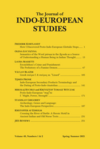
“In 1973, Pearson, through the intermediary of the Institute for the Study of Man, founded the Journal of Indo-European Studies, which would rapidly become a leading reference in the field. The editorial committee was comprised of four members: Roger Pearson himself, archaeologist Marija Gimbutas, Finnish linguist Raimo Anttila, and Belgian Indo-Europeanist Edgar Polomé. Incidentally, Polomé, Pearson and Gimbutas were also part of the patronage committee of Nouvelle École. Assuredly, the scientific standing of these three scholars is indisputable, as is that of most of the editorial advisory board of the Journal of Indo-European Studies, which initially numbered thirty-six members. However, in their midst we once again encounter Franz Altheim, Himmler’s collaborator, who was also on the patronage committee of Nouvelle École; indeed several other members, such as Mircea Eliade, Scott Littleton, and Rüdiger Schmitt, belonged to both committees, and it is not always possible to ascertain if these scientists were fully aware of the nature of the journal.”
“A closer reading of the issues of Nouvelle École and Éléments both reinforces and refines this impression. For example, in each issue, the section headed “Éphémérides” singles out important historical dates and rarely misses an occasion to evoke the atrocities committed by the Allied forces during the Second World War. The iconography employed highlights the work of artists affiliated with the Nazi regime, such as the sculptor Arno Breker, the painter Wilhelm Petersen, and the illustrator and lithographer Georg Sluyterman van Langeweyde.19 One of the illustrations used in Vue de droite is particularly telling in this regard: from the pen of Georg Sluyterman van Langeweyde, it represents a proud medieval knight armed with a lance and originally graced the cover of the August 1940 edition of Germanien, the journal of the SS Ahnenerbe’s “cultural” institute; Alain de Benoist is happy to simply invert the image from left to right and—a tiny detail—replace the swastika on the knight’s shield with a two-headed eagle. Other illustrations are lifted directly from Germanien to embellish the pages of Nouvelle École and the official magazine of the GRECE.”
Jean-Paul Demoule Quotes by Topic
Find exactly what you are looking for by browsing this categorized list of Jean-Paul Demoule quotes by topic.
Jean-Paul Demoule on Bactria–Margiana Archaeological Complex 5 quotes
“...Just as the cultures of the steppes have various historical origins and not solely Pontic, similarly, the BMAC has predecessors which are archaeologically visible in the material culture, both within its home area and further west, when the Neolithic way of life was being established. It is therefore very difficult to assign it a steppic origin. Incidentally, this is confirmed by biological anthropology, with all its limitations, which shows the permanency of physical characteristics within the BMAC and the very limited extent of mixing with steppic populations.57”

Jean-Paul Demoule on Indo-European migrations 2 quotes
“It is presumptuous to say the least to claim that the migratory routes traveled by the Indo-Europeans from their original Homeland have now been clearly traced.”

Jean-Paul Demoule on Indigenous Aryans
“In the current state of knowledge, none of the hypotheses forwarded can be seriously demonstrated. [...] There is in fact no evidence for the gradual progression of an entire material culture from the shores of the Black Sea to those of the Atlantic or the Ganges—unless, of course, we drastically force the data.”

Jean-Paul Demoule on Indo-Aryan migrations
“In the current state of knowledge, none of the hypotheses forwarded can be seriously demonstrated. [...] There is in fact no evidence for the gradual progression of an entire material culture from the shores of the Black Sea to those of the Atlantic or the Ganges—unless, of course, we drastically force the data.”

Jean-Paul Demoule on Proto-Indo-European homeland
“The 'problem' is primarily in the head of Indo-Europeanists: It is a problem of interpretative logic and ideology. We have seen that one primarily places the lE's in the north if one is German, . . . in the east if one is Russian, and in the middle if, being Italian or Spanish, one has no chance of competing for the privilege.”

Jean-Paul Demoule on Andronovo culture
“There are no traces of Andronovan objects south of the BMAC, and the same is true in the Hindu Kush mountain passes that lead to India. As we have seen, there are no traces either in the Indus Valley. But since the current languages spoken in Northern India indeed belong to the Indo-European group, there is only one solution left to save the invasionist model, or at least the concept of an “arrival of the Indo-Iranians”: invisible migrations.”

Jean-Paul Demoule on Historical negationism
“While such reactions were foreseeable, I was nonetheless taken aback by their scale and by the use of certain language which I consider unacceptable. I was thus described as a “negationist” on the pretext that I had denied the existence of the original People. In French, this term is generally reserved for those who deny the reality of the Holocaust. While the process of twisting the meaning of words is typical of extreme right-wing rhetoric, it is nonetheless obscene when it concerns the very real assassination of six million human beings.”

Jean-Paul Demoule on Nouvelle Droite
“In France, the movement known as “Nouvelle Droite” would become one of the most mediatized, most developed, and best known examples, even though, strictly speaking it was not a fully formed doctrine but rather an evolving nebulous body made up of individuals, movements, publications, and doctrines and within which we encounter the classic themes of prewar right-wing extremism: hatred of equality, democracy, Judeo-Christianity, American imperialism, the neoliberal plutocracy, and racial mixing; the exaltation of an imperial, aristocratic, elitist, and even “pagan” Europe; and advocacy of racial inequality and, of course, of an “Indo-European heritage.” All of this was wrapped up in the traditional “neither left nor right” rhetoric of the extreme right.”

Jean-Paul Demoule on Kurgan
“Which components of the reconstructed Indo-European proto-culture can be used as evidence of a steppic location?... two arguments are generally singled out by the proponents of the steppic theory: the case of the horse and that of the chariot. The domesticated horse, on the one hand, and the chariot on the other, are supposedly well-attested in the shared vocabulary and are particularly valorized in the earliest Indo-European mythologies, where the sacrifice of a horse is the ultimate royal sacrifice... The most common root for the horse is certainly found in a significant number of Indo-European languages... Its absence in Slavic is all the more surprising since the historical “cradle” of the Slavs is often said to be located in the North Pontic Steppes, or close by, precisely where the earliest domestication of the horse is reputed to have occurred.”

Jean-Paul Demoule on Domestication of the horse
“Which components of the reconstructed Indo-European proto-culture can be used as evidence of a steppic location?... two arguments are generally singled out by the proponents of the steppic theory: the case of the horse and that of the chariot. The domesticated horse, on the one hand, and the chariot on the other, are supposedly well-attested in the shared vocabulary and are particularly valorized in the earliest Indo-European mythologies, where the sacrifice of a horse is the ultimate royal sacrifice... The most common root for the horse is certainly found in a significant number of Indo-European languages... Its absence in Slavic is all the more surprising since the historical “cradle” of the Slavs is often said to be located in the North Pontic Steppes, or close by, precisely where the earliest domestication of the horse is reputed to have occurred.”

Jean-Paul Demoule on Journal of Indo-European Studies
“In 1973, Pearson, through the intermediary of the Institute for the Study of Man, founded the Journal of Indo-European Studies, which would rapidly become a leading reference in the field. The editorial committee was comprised of four members: Roger Pearson himself, archaeologist Marija Gimbutas, Finnish linguist Raimo Anttila, and Belgian Indo-Europeanist Edgar Polomé. Incidentally, Polomé, Pearson and Gimbutas were also part of the patronage committee of Nouvelle École. Assuredly, the scientific standing of these three scholars is indisputable, as is that of most of the editorial advisory board of the Journal of Indo-European Studies, which initially numbered thirty-six members. However, in their midst we once again encounter Franz Altheim, Himmler’s collaborator, who was also on the patronage committee of Nouvelle École; indeed several other members, such as Mircea Eliade, Scott Littleton, and Rüdiger Schmitt, belonged to both committees, and it is not always possible to ascertain if these scientists were fully aware of the nature of the journal.”
Jean-Paul Demoule on Nouvelle École
“A closer reading of the issues of Nouvelle École and Éléments both reinforces and refines this impression. For example, in each issue, the section headed “Éphémérides” singles out important historical dates and rarely misses an occasion to evoke the atrocities committed by the Allied forces during the Second World War. The iconography employed highlights the work of artists affiliated with the Nazi regime, such as the sculptor Arno Breker, the painter Wilhelm Petersen, and the illustrator and lithographer Georg Sluyterman van Langeweyde.19 One of the illustrations used in Vue de droite is particularly telling in this regard: from the pen of Georg Sluyterman van Langeweyde, it represents a proud medieval knight armed with a lance and originally graced the cover of the August 1940 edition of Germanien, the journal of the SS Ahnenerbe’s “cultural” institute; Alain de Benoist is happy to simply invert the image from left to right and—a tiny detail—replace the swastika on the knight’s shield with a two-headed eagle. Other illustrations are lifted directly from Germanien to embellish the pages of Nouvelle École and the official magazine of the GRECE.”
What Jean-Paul Demoule Said About Others
Discover personal opinions Jean-Paul Demoule shared regarding contemporaries.
Jean-Paul Demoule on Clémence Royer 3 quotes
“For a long time it was supposed that Semites, Aryans and Mongols may have shared a common birthplace somewhere on top of a mountain, from whence the three races then dispersed and quickly turned their backs on each other, in accordance with the story of the “tri-color” descendants of Noah’s three sons; this is simply the invention of a myth which, unlike its ancient counterparts, does not even have the merit of symbolizing history. It amounts to a retelling and a renewing of the tale of the Earthly Paradise, with less poeticism and even less common sense.”

Jean-Paul Demoule on Jean Haudry
“In his “Que sais-je?” on the Indo-Europeans, which is a follow-on to a first volume almost entirely devoted to Indo-European linguistics, Jean Haudry describes an ideal proto Indo-European society, which for the most part belongs to the realm of fantasy as becomes more and more obvious as the book progresses.”
Jean-Paul Demoule on Georges Dumézil
“Without exaggeration and in a definitive reply to Momigliano (who paradoxically was a member of the Italian Fascist Party before having to flee Mussolini’s anti-Semitic laws) and Ginzburg, we can state that Dumézil was not a Nazi supporter in the 1930s. He was, however, a fascist in the precise meaning of the term.”
Jean-Paul Demoule on Alain de Benoist
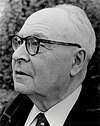
“The “theoretical” capital of the Nouvelle Droite was synthesized in Alain de Benoist’s main work, Vue de droite (1977), which he himself described in the introduction as an “anthology,” if not an “encyclopedia,” since a portion of the work had already been published in the form of articles in various journals... In summary, this “anthology” presents itself as a manual listing the themes to be used by the militants of an intellectually revamped and modernized, even rearmed, extreme right; one that is in a direct line of descent from the extreme right movements of the prewar era.”

Jean-Paul Demoule on Roger Pearson (anthropologist)
“In the postwar years, British anthropologist Roger Pearson founded the Northern League for North European Friendship, which brought together former Nazis, like raciologist Hans Günther (who at the time was writing under a pseudonym); former SS member Arthur Ehrhardt; Franz Altheim, one time collaborator of Himmler within the Ahnenerbe (after the war he held a professorship at Halle in East Germany and then in West Berlin); and various neo-Nazis and neo-fascists such as Colin Jordan, Alastair Harper, and John Tyndall in Great Britain. In 1960, Pearson established the Mankind Quarterly journal, the mouthpiece of “scientific racism,” in collaboration with Robert Gayre and, most notably, with Nazi geneticist Ottmar von Verschuer, Mengele’s former superior.”
About Jean-Paul Demoule
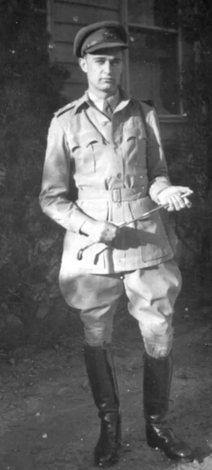
Jean-Paul Demoule (born on August 7, 1947) is a French archaeologist.