Link Copied!
Jean Arp Quotes (1886-1966)
Poet, Painter
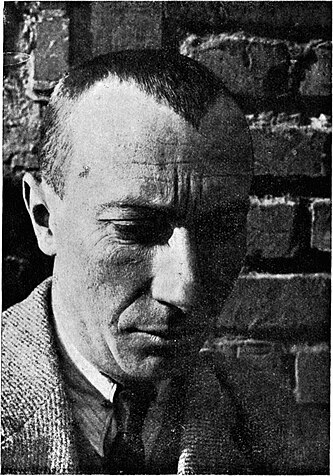
About Jean Arp
Jean/Hans Arp (16 September 1886 – 7 June 1966) was a German/French sculptor, painter, poet and a founding member of Dadaism. Later he engaged himself with the French surrealists, in Paris, but broke with them in 1931. (When Arp spoke in German he referred to himself as 'Hans' Arp; in French he referred to himself as 'Jean' Arp.)
Best Jean Arp Quotes
Shortest
Earliest
Explore our curated collection of the most famous and impactful Jean Arp quotes.
“To be full of joy when looking at an oeuvre is not a little thing.”
“In recent times, Surrealist painters have used descriptive illusionistic academic methods.”
“Dada aimed to destroy the reasonable deceptions of man and recover the natural and unreasonable order.”
“In the good times of Dada, we detested polished works, the distracted air of spiritual struggle, the titans, and we rejected them with all out being.”
“Each one of these bodies [art-works which Arp made] certainly signifies something, but it is only once there is nothing left for me to change that I begin to look for its meaning, that I give it a name.”
“Like the disposition of planes, the proportion of these planes and their colors seemed to depend only upon chance, and I declared that these works were ordered 'according to the law of chance', just like in the order of nature.”
“By the time I was 16, the everlasting copying of stuffed birds and withered flowers at the Strasbourg School of Applied Art not only poisoned drawing for me but destroyed my taste for all artistic activity. I took refuge in poetry.”
“These paintings, these sculptures – these objects – should remain anonymous, in the great workshop of nature, like the clouds, the mountains, the seas, the animals, and man himself. Yes! Man should go back to nature! Artists should work together like the artists of the Middle Ages.”
“These collages were static symmetrical constructions, portico's with pathetic vegetation, the gateway to the realm of dreams. They were done with colored paper in black, orange or blue dye plates. Although cubist painting interested me very much, not a trace of their influence was to be found in my collages.”
“A painting or sculpture not modeled on any real object is every bit as concrete and sensuous as a leaf or a stone.. ..[but] it is an incomplete art which privileges the intellect to the detriment of the senses.. .[art must be like..] fruit that grows in man, like a fruit on a plant or a child in it's mother's womb.”

“the streams buck like rams in a tent
whips crack and from the hills come the crookedly combed
shadows of the shepherds.
black eggs and fools' bells fall from the trees.
thunder drums and kettledrums beat upon the ears of the donkeys.
wings brush against flowers.
fountains spring up in the eyes of the wild boar.”
whips crack and from the hills come the crookedly combed
shadows of the shepherds.
black eggs and fools' bells fall from the trees.
thunder drums and kettledrums beat upon the ears of the donkeys.
wings brush against flowers.
fountains spring up in the eyes of the wild boar.”
“It was Sophie [Taeuber] who, by the example of her work and her life, both of them bathed in clarity, showed me the right way. In her world, the high and the low, the light and the dark, the eternal and the ephemeral, are balanced in prefect equilibrium.”
“Structures of lines, surfaces, forms, colours. They try to approach the eternal, the inexpressible above men. They are a denial of human egotism. They are the hatred of human immodesty, the hatred of images, of paintings.. Wisdom [is] the feeling for the coming reality, the mystical, the definite indefinite, the greatest definite.”
“Sculpture should walk on the tips of its toes, unostentatious, unpretentious, and light as the spoor of an animal in snow. Art should melt into and even merge with nature itself. This is obviously contrary to painting and sculpture based on nature. By so doing, art will rid itself more and more of self-centredness, virtuosity and absurdity.”

“Actually, it was in Paris in 1914 that I did my first collages, for an occultist friend. They were mysterious portico's which were supposed to replace mural paintings and which evoked the structure of palm branches or fish-bones. [remark on the first collages Arp made, in different materials]”
“Ever since my childhood, I was haunted by the search for perfection. An imperfectly cut paper literally made me ill, I would guillotine it. My collages came undone, they became blistered. I then introduced death and decay in my compositions. I reacted by avoiding any precision from one day to another. Instead of cutting the paper, I would tear it with my hands.”
“I like nature but not its substitutes. Naturalist art, illusionism, is a substitute for nature. I remember that in arguing with Piet Mondrian [in Paris, 1920's], he opposed art to nature saying that art is artificial and nature is natural. I do not share this opinion. I do not think that nature is in natural opposition to art. Art's origins are natural.”
“I wanted to find another order, another value for man in nature. He should no longer be the measure of all things, nor should everything be compared with him, but, on the contrary, all things, and man as well, should be like nature, without measure. I wanted to create new appearances, to extract new forms from man. This is made clear in my objects from 1917.”

“Dadaism has launched an attack on the fine arts. It has declared art to be a magic opening of the bowels, administered an enema to the Venus of Milo, and finally enabled 'Laocoon and Sons' to ease themselves after a thousand-year struggle with the rattlesnake. Dadaism has reduced positive and negative to utter nonsense. It has been destructive in order to achieve indifference.”
Jean Arp Quotes by Topic
Find exactly what you are looking for by browsing this categorized list of Jean Arp quotes by topic.
Jean Arp on Dada 7 quotes
“Dada aimed to destroy the reasonable deceptions of man and recover the natural and unreasonable order.”

Jean Arp on Surrealism
“In recent times, Surrealist painters have used descriptive illusionistic academic methods.”
Jean Arp on Clarity
“It was Sophie who, by the example of her work and her life, both of them bathed in clarity, showed me the right way. In her world, the high and the low, the light and the dark, the eternal and the ephemeral, are balanced in perfect equilibrium.”

Jean Arp on Abstract art
“We do not wish to copy nature. We do not want to reproduce, we want to produce. We want to produce as a plant produces a fruit and does not itself reproduce. We want to produce directly and without meditation. As there is not the least trace of abstraction in this art, we will call it 'Concrete Art'.”

Jean Arp on Machine
“Soon silence will have passed into legend. Man has turned his back on silence. Day after day he invents machines and devices that increase noise and distract humanity from the essence of life, contemplation, meditation... tooting, howling, screeching, booming, crashing, whistling, grinding, and trilling bolster his ego. His anxiety subsides. His inhuman void spreads monstrously like a gray vegetation.”

What Jean Arp Said About Others
Discover personal opinions Jean Arp shared regarding contemporaries.
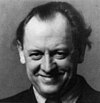
Jean Arp on Kurt Schwitters
“Whatever became of '''Kurt Schwitters'''' novel Franz Müllers Drahtfrühling (Franz Müller's Wire Spring), several chapters of which we composed together? Is it buried under the bomb ruins of his house on Waldhausenstrasse in Hannover? For hours, Schwitters and I [Hans Arp] sat together and spun dialogue, in rhapsody. He took these writings and channeled them into his novel.. .We sat together again, writing Franz Müllers Drahtfrühling:
Hans Arp: The nightingales have had enough of your hymnal Karagösen. Play violin on parrots, but avoid the women red hood ans snow widow.
Kurt Schwitters: Should I pe-trify something for you? Or would you like play cry together?
H. A.: Should we wash our tears or drown them?
K. Schw.: You are a sipsnipper, Since when do your diamonds bark?
H. A.: The water is getting hard. A fruit cries out loud and gives birth to a fish.
K. Schw.: I'll p-ut it in the sea, or should I st-ab you with it?”
Quotes About Jean Arp
Gain deeper perspective through quotes about Jean Arp from others.
Quote of Josef Albers on Jean Arp
Quote of André Breton on Jean Arp
“As we liked to do as children, extracting from the soft forest floor the light chestnut trees only a few centimeters high at the base of which the chestnut continues to shine to the sun its clods of soil from the past, the chestnut conserving all of its presence and witnessing with its presence the power of green hands, of shadow, of airy white or pink pyramids of dances.. ..and of future chestnuts which, under new dust, would be discovered by the marveled sight of other children. It is in this perspective that the work of Arp, more than any other, should be situated. He found the most vital in himself in the secrets of this germinating life where the most minimal detail is of the greatest importance, where, on the other hand, the distinction between the elements becomes meaningless, adopting a peculiar under the rock humor permanently.”
Leo Castelli on Jean Arp
“Arp, yes, was one of the artists that I was interested in. And that reminds me of a friend of those times, Frederick Kiesler, who was an architect and painter, a man of all trades, and who said this word about Arp: 'This is Arp, not art.' [Laughs]”
Quote of Marcel Duchamp on Jean Arp
“Based on the metaphysical implications of the Dadaist dogma.. .Arp's Reliefs [carvings] between 1916 and 1922 are among the most convincing illustrations of that anti- rationalistic era...Arp showed the importance of a smile to combat the sophistic theories of the moment. His poems of the same period stripped the word of its rational connotation to attain the most unexpected meaning through alliteration or plain nonsense.”
Werner Haftman on Jean Arp
“Tzara would draw [during Dada-evenings in Zürich, Switzerland] slips of paper with words described on them from a hat, and present the resulting combination of words as a poem. Arp allowed cut-outs of free or geometric shapes to arrange themselves in a random order, then pasted them on a surface and presented the result as a picture. In the course of such experiments Arp also used 'automatic writing', i.e.: irrational, spontaneously traced forms, rising from the unconsciousness.”
Quote of Barbara Hepworth on Jean Arp
“We visited Meudon [c.1938] to see Hans Arp and though, to our disappointment, he was not there and his wife, Sophie Taeuber showed us his studio. It was very quiet in the room so that one was aware of the movement in the forms.. .I thought of the poetic idea in Arp's sculptures. I had never had any first-hand knowledge of the Dadaist movement, so that seeing his work for the first time freed me of many inhibitions and this helped me to see the figure in landscape with new eyes.. .Perhaps in freeing himself from material demands his idea transcended all possible limitations. I began to imagine the earth rising and becoming human.”
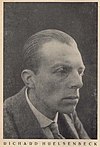
Richard Huelsenbeck on Jean Arp
“Dada was founded in Zurich in the spring of 1916 by Hugo Ball, Tristan Tzara, Jean Arp, Marcel Janco and Richard Huelsenbeck at the Cabaret Voltaire [in Zurich, Switzerland].. .Arp was an Alsatian; he had lived through the beginning of the war and the whole nationalistic frenzy in Paris, and was pretty well disgusted with all the petty chicanery there, and in general with the sickening changes that had taken place in the city and the people on which we had all squandered our love before the war [World War 1., 1914-1918].”
Quote of Andre Munier on Jean Arp
“Mr. Arp hated shiny sculptures. He hated that. Because if it's shiny, you can't appreciate the form. It creates reflections.”
Quote of Kurt Schwitters on Jean Arp
“I never stood under the influence of Dadaism because whereas the Dadaist created Spiegel-dadaismus (Mirror-Dada) on the Zurich Lake [the 'political Dada'], I created MERZ on the Leine-river, under the influence of Rembrandt. Time went on, and when Jean Arp made concrete Art, I stayed Abstract. Now I do concrete Art, and Marcel Duchamp went over to the Surrealists.. ..and at all I have much fun about Art.”
About Jean Arp
Jean/Hans Arp (16 September 1886 – 7 June 1966) was a German/French sculptor, painter, poet and a founding member of Dadaism. Later he engaged himself with the French surrealists, in Paris, but broke with them in 1931. (When Arp spoke in German he referred to himself as 'Hans' Arp; in French he referred to himself as 'Jean' Arp.)