Link Copied!
Jane Addams Quotes (1860-1935)
Author, Activist, Leader


About Jane Addams
Laura Jane Addams (6 September 1860 – 21 May 1935) was an American settlement activist, reformer, social worker, public administrator and author. She was an important leader in the history of social work and women's suffrage in the United States and advocated for world peace. She co-founded Chicago's Hull House, one of America's most famous settlement houses. In 1910, Addams was awarded an honorary master of arts degree from Yale University, becoming the first woman to receive an honorary degree from the school. In 1920, she was a co-founder of the American Civil Liberties Union (ACLU). In 1931, she became the first American woman to be awarded the Nobel Peace Prize and is recognized as the founder of the social work profession in the United States.
Best Jane Addams Quotes
Shortest
Earliest
Explore our curated collection of the most famous and impactful Jane Addams quotes.

“Civilization is a method of living, an attitude of equal respect for all men.”

“Of all the aspects of social misery nothing is so heartbreaking as unemployment ...”

“Private beneficence is totally inadequate to deal with the vast numbers of the city's disinherited.”
“Social advance depends quite as much upon an increase in moral sensibility as it does upon a sense of duty ...”
“Hospitality still survives among foreigners, although it is buried under false pride among the poorest Americans.”

“In his own way each man must struggle, lest the moral law become a far-off abstraction utterly separated from his active life.”

“The common stock of intellectual enjoyment should not be difficult of access because of the economic position of him who would approach it.”

“If the Settlement seeks its expression through social activity, it must learn the difference between mere social unrest and spiritual impulse.”
“I dreamed night after night that everyone in the world was dead excepting myself, and that upon me rested the responsibility of making a wagon wheel.”

“… this dream that men shall cease to waste strength in competition and shall come to pool their powers of production is coming to pass all over the earth.”

“A Settlement is above all a place for enthusiasms, a spot to which those who have a passion for the equalization of human joys and opportunities are early attracted.”
“Life cannot be administered by definite rules and regulations; that wisdom to deal with a man’s difficulties comes only through some knowledge of his life and habits as a whole ...”


“[The Settlement House] must be grounded in a philosophy whose foundation is on the solidarity of the human race, a philosophy which will not waver when the race happens to be represented by a drunken woman or an idiot boy.”

“I had a consuming ambition to possess a miller's thumb. I believe I have never since wanted anything more desperately than I wanted my right thumb to be flattened as my father’s had become, during his earlier years of a miller’s life.”
“We fatuously hoped that we might pluck from the human tragedy itself a consciousness of a common destiny which should bring its own healing, that we might extract from life’s very misfortunes a power of cooperation which should be effective against them.”


“The Settlement … is an experimental effort to aid in the solution of the social and industrial problems which are engendered by the modern conditions of life in a great city. It insists that these problems are not confined to any one portion of the city. It is an attempt to relieve, at the same time, the overaccumulation at one end of society and the destitution at the other ...”

“If the underdog were always right, one might quite easily try to defend him. The trouble is that very often he is but obscurely right, sometimes only partially right, and often quite wrong; but perhaps he is never so altogether wrong and pig-headed and utterly reprehensible as he is represented to be by those who add the possession of prejudices to the other almost insuperable difficulties of understanding him.”
“My temperament and habit had always kept me rather in the middle of the road; in politics as well as in social reform I had been for "the best possible." But now I was pushed far toward the left on the subject of the war and I became gradually convinced that in order to make the position of the pacifist clear it was perhaps necessary that at least a small number of us should be forced into an unequivocal position.”
“I have come to believe … that the stage may do more than teach, that much of our current moral instruction will not endure the test of being cast into a lifelike mold, and when presented in dramatic form will reveal itself as platitudinous and effete. That which may have sounded like righteous teaching when it was remote and wordy, will be challenged afresh when it is obliged to simulate life itself.”

“What after all, has maintained the human race on this old globe despite all the calamities of nature and all the tragic failings of mankind, if not faith in new possibilities, and courage to advocate them. Doubtless many times these new possibilities were declared by a man who, quite unconscious of courage, bore the "sense of being an exile, a condemned criminal, a fugitive from mankind." Did every one so feel who, in order to travel on his own proper path had been obliged to leave the traditional highway?”

“We all bear traces of the starvation struggle which for so long made up the life of the race. Our very organism holds memories and glimpses of that long life of our ancestors which still goes on among so many of our contemporaries. Nothing so deadens the sympathies and shrivels the power of enjoyment as the persistent keeping away from the great opportunities for helpfulness and a continual ignoring of the starvation struggle which makes up the life of at least half the race. To shut one’s self away from that half of the race life is to shut one’s self away from the most vital part of it; it is to live out but half the humanity to which we have been born heir.”
“At one time five of us tried to understand De Quincey's marvelous "Dreams" more sympathetically, by drugging ourselves with opium. We solemnly consumed small white powders at intervals during an entire long holiday, but no mental reorientation took place, and the suspense and excitement did not even permit us to grow sleepy. About four o'clock on the weird afternoon, the young teacher whom we had been obliged to take into our confidence, grew alarmed over the whole performance, took away our De Quincey and all the remaining powders, administered an emetic to each of the five aspirants for sympathetic under- standing of all human experience, and sent us to our separate rooms with a stern command to appear at family worship after supper "whether we were able to or not."”
Jane Addams Quotes by Topic
Find exactly what you are looking for by browsing this categorized list of Jane Addams quotes by topic.
What Jane Addams Said About Others
Discover personal opinions Jane Addams shared regarding contemporaries.
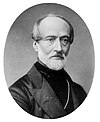
Jane Addams on Giuseppe Mazzini 2 quotes
“I encountered the influence of Mazzini, which was a source of great comfort to me...To me personally the celebration of the hundredth anniversary of Mazzini's birth was a matter of great interest. Throughout the world that day Italians who believed in a United Italy came together. They recalled the hopes of this man who, with all his devotion to his country, was still more devoted to humanity and who dedicated to the workingmen of Italy, an appeal so philosophical, so filled with a yearning for righteousness, that it transcended all national boundaries and became a bugle call for "The Duties of Man."”
Jane Addams on Henry George
“All of his speeches were with high moral enthusiasm and humanitarian fervor.”

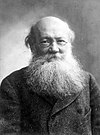
Jane Addams on Peter Kropotkin
“In this wonderful procession of revolutionists, Prince Kropotkin, or, as he prefers to be called, Peter Kropotkin, was doubtless the most distinguished. When he came to America to lecture, he was heard throughout the country with great interest and respect”
Jane Addams on Nathaniel Hawthorne
“Long ago Hawthorne called our attention to the fact that philanthropy ruins, or is fearfully apt to ruin, the heart, “the rich juices of which God never meant should be pressed violently out, and distilled into alcoholic liquor by an unnatural process; but it should render life sweet, bland and gently beneficent.””

Jane Addams on Leo Tolstoy
“The slow progress towards juster international relations may be traced to the distinguished jurist of the Netherlands, Grotius; to the great German, Immanuel Kant, who lifted the subject of “Eternal Peace’ high above controversy; to Count Tolstoy of Russia, who so trenchantly set it forth in our own day, and so on throughout the nations.”

Jane Addams on Immanuel Kant
“The slow progress towards juster international relations may be traced to the distinguished jurist of the Netherlands, Grotius; to the great German, Immanuel Kant, who lifted the subject of “Eternal Peace’ high above controversy; to Count Tolstoy of Russia, who so trenchantly set it forth in our own day, and so on throughout the nations.”

Jane Addams on Theodore Roosevelt
“I second the nomination of Theodore Roosevelt because he is one of the few men in our public life who has been responsive to the social appeal and and who has caught the significance of the modern movement. Because of that, because the program will require a leader of invincible courage, of open mind, of democratic sympathies, one endowed with power to interpret the common man and to identify himself with the common lot, I heartily second the nomination.”

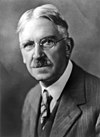
Jane Addams on John Dewey
“Could we not interest the people working in the neighboring factories, in these older forms of industry, so that, through their own parents and grandparents, they would find a dramatic representation of the inherited resources of their daily occupation. If these young people could actually see that the complicated machinery of the factory had been evolved from simple tools, they might at least make a beginning towards that education which Dr. Dewey defines as "a continuing reconstruction of experience." They might also lay a foundation for reverence of the past which Goethe declares to be the basis of all sound progress.”
Jane Addams on Thomas De Quincey
“At one time five of us tried to understand De Quincey's marvelous "Dreams" more sympathetically, by drugging ourselves with opium. We solemnly consumed small white powders at intervals during an entire long holiday, but no mental reorientation took place, and the suspense and excitement did not even permit us to grow sleepy. About four o'clock on the weird afternoon, the young teacher whom we had been obliged to take into our confidence, grew alarmed over the whole performance, took away our De Quincey and all the remaining powders, administered an emetic to each of the five aspirants for sympathetic under- standing of all human experience, and sent us to our separate rooms with a stern command to appear at family worship after supper "whether we were able to or not."”

Quotes About Jane Addams
Gain deeper perspective through quotes about Jane Addams from others.
Catherine Breshkovsky writing included on Jane Addams
Catherine Breshkovsky on Jane Addams
“Somebody said Miss Addams is living proof that a woman can do very much without voting. One can answer: She would do much more when the votes of her sisters were with her.”

Martha P. Cotera on Jane Addams
“Jane Addams and others spoke and acted on behalf of women labor leaders like Lucy Parsons, assisting them in rallies, providing bail when they were arrested, and using their tremendous power and influence on behalf of working women...Although many social workers like Jane Addams, Florence Kelley, and Sophonisba P. Breckenridge, and socialists like Emma Goldman advocated the rights of immigrants and working women, in most instances during the 1890 to 1910 period their advocacy had little or no effect on the suffragist movement's attitude toward minority or working-class women”

The Autobiography of W.E.B. Du Bois: A Soliloquy on Viewing My Life from the Last Decade of Its First Century on Jane Addams
“Jane Addams attended our conference in 1908 and commended our work.”
Gerda Lerner on Jane Addams
“It was Jane Addams, the founder of Hull House in Chicago, who most consistently carried Tolstoyan ideas into practice. Addams had visited Tolstoy in Russia and was a lifelong admirer of his work. She well understood the practical implications of his ideas, which she expressed as follows: "Tolstoy would make non-resistance aggressive. He would carry over into the reservoirs of moral influence all the strength which is now spent in coercion and resistance." In his spirit, she advocated "a newer humanitarianism," aggressive in its pursuit of social welfare and international in its reach, as a moral equivalent for war. Addams steadfastly carried these convictions into practice in her peace activities during World War I and her leadership in the postwar Women's International League for Peace and Freedom. She suffered ostracism, vilification and isolation for her pacifism, but she was one of a handful of people who kept the idea and tradition alive in a time of conformity and reaction.”

Peter C. Moskos on Jane Addams
“Chicago's Greektown was adjacent to Hull House, Jane Addams' famed settlement project, whose activities played an important and beneficial role for many early Greek immigrants. The special attention Jane Addams gave to Greek immigrants and her espousal of Greek culture did much to buttress the ethnic pride of the sorely tried Greek immigrants of Chicago.”
Alice Paul on Jane Addams
“It was in 1912 that I was appointed by the National American Woman Suffrage Association to the chairmanship of their Congressional Committee in Washington, which was to work for the passage of the amendment that Susan B. Anthony had helped draw up. And Lucy Burns was asked to go with me. Miss Jane Addams, who was on the national board, made the motion for our appointments. They didn’t take the work at all seriously, or else they wouldn’t have entrusted it to us, two young girls. They did make one condition, and that was that we should never send them any bills, for as much as one dollar. Everything we did, we must raise the money ourselves.”

Ida Tarbell on Jane Addams 3 quotes
View all 3 quotes on Ida Tarbell →
Mary Heaton Vorse on Jane Addams
“As a background was Jane Addams, unassertive, contemplative and sensitive. All the way over we discussed our program. All the way over, that great woman, Miss Addams, listened with as much patience to the suggestions of the worst crank among us as she did to such trained minds as Miss Breckinridge. I have never known anyone who had a greater intellectual hospitality or courtesy. When I spoke of this to her one day, she said quietly, “I have never met anyone from whom I could not learn.””
Crusade for Justice: The Autobiography of Ida B. Wells on Jane Addams
“one whom I regarded as the greatest woman in the United States (about Jane Addams)”
About Jane Addams
Laura Jane Addams (6 September 1860 – 21 May 1935) was an American settlement activist, reformer, social worker, public administrator and author. She was an important leader in the history of social work and women's suffrage in the United States and advocated for world peace. She co-founded Chicago's Hull House, one of America's most famous settlement houses. In 1910, Addams was awarded an honorary master of arts degree from Yale University, becoming the first woman to receive an honorary degree from the school. In 1920, she was a co-founder of the American Civil Liberties Union (ACLU). In 1931, she became the first American woman to be awarded the Nobel Peace Prize and is recognized as the founder of the social work profession in the United States.