Link Copied!
James Tobin Quotes (1918-2002)

About James Tobin
James Tobin (March 5, 1918 – March 11, 2002) was an American economist who served on the Council of Economic Advisers and consulted with the Board of Governors of the Federal Reserve System, and taught at Harvard and Yale Universities. He developed the ideas of Keynesian economics, and advocated government intervention to stabilize output and avoid recessions. His academic work included pioneering contributions to the study of investment, monetary and fiscal policy and financial markets. He also proposed an econometric model for censored dependent variables, the well-known Tobit model.
Best James Tobin Quotes
Shortest
Earliest
Explore our curated collection of the most famous and impactful James Tobin quotes.
“In a complete equilibrium... financial inputs to the real side must reproduce the assumed values of the real inputs to the financial side.”
“There is no reason to think that the impact [of monetary policy] will be captured in any single [variable]... , whether it is a monetary stock or a market interest rate.”
“I... set forth and illustrate a general framework for monetary analysis. It is not... new... but... shared... in spirit with many monetary economists. My purpose... is exposition and recapitulation.”
“Each sector is... constrained by its own net worth... The individual economic unit can neither change the legacy of the past nor... affect by... portfolio choices... market valuations of his assets.”
“The rate of investment – the speed at which investors wish to increase the capital stock – should be related, if to anything, to , the value of capital relative to its replacement cost.”
“I shall argue that Keynesian macroeconomics neither asserts nor requires nominal wage and/or price rigidity. It does assert and require that markets not be instantaneously and continuously cleared by prices.”

“According to [the general equilibrium approach to monetary theory], the principal way in which financial policies and events affect aggregate demand is by changing the valuations of physical assets relative to their replacement costs.”

“The historic terrain of macro-economic theory is the explanation of the levels and fluctuations of overall economic activity. Macro-economists have been especially interested in the effects of alternative fiscal, financial, and monetary policies.”
“The central message is still that, as Keynes argued, fiscal policy is the answer to liquidity traps, financial or political. The arguments against fiscal policy in Japan, so far as I understand them are intellectually fallacious; they would receive failing grades in an undergraduate macro exam.”

“In economic surveys of households, many variables have the following characteristics: The variable has a lower, or upper, limit and takes on the limiting value for a substantial number of respondents. For the remaining respondents, the variable takes on a wide range of values above, or below, the limit.”
“For me, growing up in the 1930s, the two motivations powerfully reinforced each other. The miserable failures of capitalist economies in the Great Depression were root causes of worldwide social and political disasters. The crisis triggered a fertile period of scientific ferment and revolution in economic theory.”
“I studied economics and made it my career for two reasons. The subject was and is intellectually fascinating and challenging, particularly to someone with taste and talent for theoretical reasoning and quantitative analysis. At the same time it offered the hope, as it still does, that improved understanding could better the lot of mankind.”

“[F]or monetary analysis... assign... to each asset a rate of return and... [imagine] each sector to have a net demand for each asset, , which is a function of the vector and possibly of other variables... [I]n practice, many of the cells are empty...”
“I had, to be sure, been drawn into economics when the General Theory was an exciting revelation for students hungry for explanation and remedy of the Great Depression. At the same time, I was uncomfortable with several aspects of Keynes’ theory, and I sought to improve what would now be called the microfoundations of his macroeconomic relations.”

“Treatment of the capital account separately from the production and income account of the economy is... a first step, a simplification... justified by convenience... The strategy is to regard income account variables as tentatively exogenous... and to find equilibrium in the markets for stocks of assets conditional upon assumed... outputs, incomes, and other flows.”
“The important Keynesian insight is that a high propensity to save will not generate high national saving unless it goes into investment, into accumulation of real capital. The "paradox of thrift" makes this point in an extreme way. In certain circumstances, when there is no demand for investment around, the economy can be no better off, or even worse off, if a thrifty public cuts consumption.”
“[M]onetary assets fall into place as a part, but not the whole, of the menu of assets; and the commercial banking system is one sector, but not the only one, whose balance sheet behavior must be specified.”
“[C]onsider an economy with only one private sector and only two assets: money issued by the government to finance its budget deficits, and homogeneous physical capital. Let be the price of currently produced... consumer goods and capital goods. ...[A]llow the value of existing capital goods ...to diverge from their current reproduction cost—let be the market price of existing capital goods.”
“The key behavioral assumption... spending... and portfolio decisions are independent... [A]ccumulation of wealth... [is] separable from... its allocation. As savers, people... add to their wealth; as portfolio managers, they... distribute among... assets and debts the net worth... The propensity to consume may depend upon interest rates, but... not... directly on the... mix of asset supplies or... rates... these... are growing.”

“Keynesian economics was, in the context of those times, essentially conservative. The message was that capitalism was not doomed; its major failing, chronic large-scale unemployment, could be remedied fairly easily, by intelligent use of the fiscal and monetary instruments governments already had at their disposal. This message was not welcome news to Marxists committed to the view that the system was no longer structurally capable of prosperity and progress.”

“Ball, Mankiw, Romer and others style themselves as New Keynesians. Their program is to develop improved microeconomic foundations for imperfectly flexible prices. In the process, they hope to illuminate the paradox that individually rational or near-rational behavior can result in significant collective market failures. These are certainly laudable objectives. In the end, I suspect, the program will not change the essential substance of Keynesian macroeconomics. But it will make Keynes more palatable to theorists.”
“I probably always say the same things; I hope people don't remember. One of the same things I say is that Japanese macroeconomic policy is perversely and inexcusably incompetent, and I surely would say that again. It's true-as Paul Krugman, a fellow participant in this program, has been saying and as I have said here in previous years-that Japan has reinvented the Keynesian liquidity trap. It can now reappear in classrooms where it had been long ignored or at best barely mentioned as a curiosum of the Great Depression.”
“Keynes did not challenge the efficacy of price adjustment mechanisms in clearing particular markets in the Marshallian partial equilibrium theory on which he had been reared. He did challenge the mindless application of those mechanisms to economy-wide markets. Founding what came to be known as macroeconomics, he was modeling a whole economy as a closed system. He knew he could not use the Marshallian assumption that the clearing of one market could be safely described on the assumption that the rest of the economy was unaffected.”
“A[n]... example of this strategy is the "LM curve." Macroeconomics... immortalized Hick's decomposition of the Keynesian system into sub-models. One... tells what asset stock equilibrium corresponds to... tentative... aggregate real income and the commodity price level. ..."[T]he" interest rate equates... demand and supply of money and clears... markets for other assets.”
“Economics has always flourished and acquired energy from controversies generated by practical policy questions of the day. That was true in the times of Smith, and Ricardo, and Keynes, and it is true today. These periods of division and revolution and counterrevolution are generally followed by periods of synthesis and consolidation from which the science emerges stronger. i am optimistic that this will happen again, and that the best of the insights of the new clasicals will be absorbed in a mainstream, in which the essential insights of Keynesian economists also survive.”
James Tobin Quotes by Topic
Find exactly what you are looking for by browsing this categorized list of James Tobin quotes by topic.
James Tobin on Keynesian economics 3 quotes
“Keynesian economics was, in the context of those times, essentially conservative. The message was that capitalism was not doomed; its major failing, chronic large-scale unemployment, could be remedied fairly easily, by intelligent use of the fiscal and monetary instruments governments already had at their disposal. This message was not welcome news to Marxists committed to the view that the system was no longer structurally capable of prosperity and progress.”

James Tobin on New classical macroeconomics 2 quotes
“You could say that [new classical revolution] is as much a revolution against old monetarism as it is against Keynesianism. The disagreement between monetarists and Keynesians was about the value of some parameters. It is not as fundamental a split as we experience now.”
James Tobin on Great Depression 2 quotes
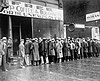
“For me, growing up in the 1930s, the two motivations powerfully reinforced each other. The miserable failures of capitalist economies in the Great Depression were root causes of worldwide social and political disasters. The crisis triggered a fertile period of scientific ferment and revolution in economic theory.”
James Tobin on Democracy in Deficit 2 quotes
“I was at a meeting where Buchanan was speaking just a couple of weeks after his prize was announced. It was a meeting on Keynes on the golden anniversary of the General Theory –there are endless anniversaries these days. Speaking before Buchanan, I predicted that he would blame Reagan's deficits on Keynes. And sure enough, he did.”
James Tobin on Neoclassical synthesis
“That was building up during the '50s, in the so-called neoclassical synthesis, better called the neoclassical-neo-Keynesian synthesis, I think. The main thing was that classical economics didn't explain the Great Depesssion and didn't give you any hope of solving it. Keynesian economics did.”

James Tobin on Neo-Keynesian economics
“I think the basic issue there is the question of whether there are any dead weight losses or market filures of a macroeconomic nature in a market economy. Neo-Keynesians think there are and that the government can do something about them. They think that demand management policy can assist the economy to stay close to its equilibrium track.”
James Tobin on Phillips curve
“I was never under any illusion about the theoretical possibility that the Phillips curve is vertical. In fact, I could cite passages that precede Friedman and Phelps, which say that it could well be. But all the empirical findings before 1966 suggested that the feedback term from price inflation to wages was considerably less than one so I accepted a nonvertical Phillips curve. I was probably overoptimistic about the degree to which you could expand employment in the '60s. In fact, I have acknowledged that in print. We at the council had stated 4 percent as what would now be called the natural rate of unemployment, I suppose, with a nonaccelerating rate of inflation. We did get the 4 percent before the Vietnam War, and we didn't have any accelerating rate of inflation. Maybe that was because we had an incomes policy. It was a rather weak one; it was sometimes called "open-mouth" policy. It was an informal guide-post policy, but in retrospect it looks like it made more difference than people credited it for. At any rate, the acceleration of inflations came when Johnson disobeyed his economic advisers. We went down to 3 percent unemployment which was probably well below the natural rate. So, I could admit to having been too optimistic.”
What James Tobin Said About Others
Discover personal opinions James Tobin shared regarding contemporaries.
James Tobin on John Maynard Keynes 2 quotes
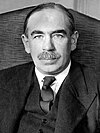
“The central message is still that, as Keynes argued, fiscal policy is the answer to liquidity traps, financial or political. The arguments against fiscal policy in Japan, so far as I understand them are intellectually fallacious; they would receive failing grades in an undergraduate macro exam.”
James Tobin on Robert Lucas Jr. 2 quotes
“He didn't really discuss my interpretations and criticisms of new classical economics. Instead he took the opportunity of the review to say that Keynesian economics was discredited by the stagflation of the '70s, as he and Sargent had already argued in their polemical piece "After Keynesian Economics" at the Nantucket conference in 1978. The idea seems to be that we were very wrong about the 1970s and therefore had no standing to criticize the new classical macroeconomics. Of course, I do not agree with that interpretation of the events of the last 15 years. In that review article Lucas didn't explain anything new. He just restated his point of view.”

James Tobin on Harry Markowitz
“A forthcoming book by Harry Markowitz, Techniques of Portfolio Selection, will treat the general problem of finding dominant sets and computing the corresponding opportunity locus, for sets of securities all of which involve risk. Markowitz's main interest is prescription of rules of rational behaviour for investors; the main concern of this paper is the implications for economic theory, mainly comparative statics, that can be derived from assuming that investors do in fact follow such rules.”
James Tobin on Simon Kuznets
“GDP! The right concept of economy-wide output, accurately measured. The U.S. and the world rely on it to tell where we are in the business cycle and to estimate long-run growth. It is the centerpiece of an elaborate and indispensable system of social accounting, the national income and product accounts. This is surely the signal innovative achievement of the Commerce Department in the 20th century. I was fortunate to become an economist in the 1930's when Kuznets, Nathan, Gilbert, and Jaszi were creating this most important set of economic time series. In economic theory, macroeconomics was just beginning at the same time. Complementary, these two innovations deserve much credit for the improved performance of the economy in the second half of the century.”

James Tobin on Milton Friedman
“Friedman came to Yale once and gave a talk called "Yale versus Chicago in Monetary Theory" before a house of 500 people. [...] It was quite interesting. I didn't get much involved at all in public, but we had a small private session afterwards. The thing I remember most about the occasion was that there was a very earnest, well-meaning graduate student who stood up at the big meeting and asked Friedman politely: "In your mode, money is the basic concept, and yet, you haven't ever told us exactly what money is conceptually. Could you help us understand it now?" Friedman cut the guy down in the withering way he can do by telling him that he didn't understand scientific methods. He said Newton didn't have to tell what gravity was; he only had to tell what it does. The same applied to money. That illustrates Friedman's methodology of positive economics which I think has done great damage. [...] You see that in Lucas, too. Their idea is the as-if methodology in which it is not a question whether the assumptions are realistic, but whether the results derived from the assumptions are consonant with the facts of observation. My reaction is that we are not so good at testing hypotheses so that we can give up any information we have at whatever stage of the argument. The realism of assumptions does matter. Any evidence you have on that, either casual or empirical, is relevant.”

Quotes About James Tobin
Gain deeper perspective through quotes about James Tobin from others.
Terence Hutchison on James Tobin
“Back in 1982, a brief but brusque exchange … took place between James Tobin … and Robert Nozick … Tobin exclaimed at Nozick: ‘There is nothing more dangerous than a philosopher who’s learned a little bit of economics.’ To which Nozick immediately responded: ‘Unless it’s an economist who hasn’t learned any philosophy.’”
Arjo Klamer on James Tobin 2 quotes
“The other economic camp made for quite a different story. James Tobin (an east-coast Ivy League policy advisor) had already won the Nobel Prize when I spoke with him. A true gentleman, he spoke softly about his life and his Keynesian approach to economics. With due respect, I worried after a time that the interview sounded so automatic, so “done” before, that it would add little to the book. Then I brought up Lucas’s criticism. Tobin began to speak much louder and faster (on transcribing the tape I actually had to adjust the volume). He remained reasonable and gentlemanly but his voice betrayed his indignation toward Lucas and his camp, about how they were misleading sensible Keynesian economic thought.”
Robert E. Lucas on James Tobin
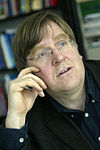
“Tobin asked me to come and talk at Yale in 1977, and I was there for a couple of days. He was really nice in a personal way. He made it clear that he respected my work as a professional, so I didn't feel my professional standing was at risk. When I got there he gave me a nice introduction. It wasn't a question of whether I was a competent economist or not; there was nothing personal involved. These guys, however, had lots of disagreements and criticisms. I'd been thinking along these lines for many years, so I thought I did a pretty good job of taking care of the questions, but I don't know how it looked from the other side. It left me with a feeling of being way ahead of the game. It was an exciting feeling.”
Thomas J. Sargent on James Tobin
“I want to tell you a story about Tobin. There was a conference at the Minnesota Fed in honor of Walter Heller, and all the old people, the heroes of my youth in economics, were there. It was a really nice occasion. Gardner Ackley was giving a talk; it was very negative about the direction of modern macro. saying that there was too much mathematics and that too many assumptions were unrealistic. He also was very critical of rational expectations and of all sorts of modern theorizing. It occurred after two days of really negative things being said about rational expectations. Nobody on our side said anything, in deference to Heller, I suppose. Then Tobin stood up and said that listening to Ackley's talk reminded him of going to the AEA meetings, after the war in 1946, at which the most-prominent old members of the profession were criticizing the young Keynesians for being unrealistic and too mathematical. Tobin said "We've had our chance, we haven't solved all the problems. There are a lot of problems left, there are unsatisfactory things about our models, and it's time to give these guys a chance." It was very gracious.”

Janet Yellen on James Tobin
“Tobin was a person who really impressed me, because he had a passion for social justice and for public policy (...) for Tobin it was always something that was about making the lives of people better.”

Arnold Zellner on James Tobin
“When James Tobin, a Nobel Prize winner in economics, was on the US Council of Economic Advisors some years ago, I asked him if he used complicated macroeconometric models in his work for the Council. He responded that he didn’t because he and others could not understand the workings and output of such models and thus did not have much confidence in them. When I asked what he actually did use to analyse problems, he remarked that he used a simple multiplier–accelerator model on the back of an envelope and even though he didn’t have too much confidence in it, he said at least he understood what he was doing.”
About James Tobin
James Tobin (March 5, 1918 – March 11, 2002) was an American economist who served on the Council of Economic Advisers and consulted with the Board of Governors of the Federal Reserve System, and taught at Harvard and Yale Universities. He developed the ideas of Keynesian economics, and advocated government intervention to stabilize output and avoid recessions. His academic work included pioneering contributions to the study of investment, monetary and fiscal policy and financial markets. He also proposed an econometric model for censored dependent variables, the well-known Tobit model.