Link Copied!
James M. McPherson Quotes (1936-)
Leader


About James M. McPherson
James M. "Jim" McPherson (born 11 October 1936) is an American historian, best known for his writings on the American Civil War.
Best James M. McPherson Quotes
Shortest
Earliest
Explore our curated collection of the most famous and impactful James M. McPherson quotes.


“People are going to dislike you if you make a decision, even if it turns out to be the right one.”
“The unending quest of historians for understanding the past — that is, 'revisionism' — is what makes history vital and meaningful.”
“What were these rights and liberties for which Confederates contended? The right to own slaves; the liberty to take this property into the territories.”
“Southern political leaders were threatening to take their states out of the Union if a Republican president was elected on a platform restricting slavery.”


“The risk of making a decision that's wrong is so enormous that sometimes it just crushes people so that they can't make any decision at all because they're afraid of making the wrong decision. And that's exactly what McClellan's problem was.”
“Defeat would blot the Confederate States of America from the face of the earth. Confederate victory would destroy the United States and create a precedent for further balkanization of the territory once governed under the Constitution of 1789.”
“Lincoln. His commitment to preserving the United States was so strong and so deep that he was willing to do whatever it took to succeed. Would you like to be in his shoes? Just think about that for a moment. Not just Lincoln. There are hundreds of examples in history.”
“Scorned and ridiculed by many critics during his presidency, Lincoln became a martyr and almost a saint after his death. His words and deeds lived after him, and will be revered as long as there is a United States. Indeed, it seems quite likely that without his determined leadership the United States would have ceased to be.”
“Slavery was at the root of what the Civil War was all about. If there had been no slavery, there would have been no war, and that ultimately what the Confederacy was fighting for was to preserve a nation based on a social system that incorporated slavery. Had that not been the case, there would have been no war. That's an issue that a lot of Southern whites today find hard to accept.”

“There are all kinds of myths that a people has about itself, some positive, some negative, some healthy and some not healthy. I think that one job of the historian is to try to cut through some of those myths and get closer to some kind of reality. So that people can face their current situation realistically, rather than mythically. I guess that's my sense of what a historian ought to do.”
“By the time of the Gettysburg Address, in November 1863, the North was fighting for a 'new birth of freedom' to transform the Constitution written by the founding fathers, under which the United States had become the world's largest slaveholding country, into a charter of emancipation for a republic where, as the northern version of 'The Battle Cry of Freedom' put it, 'Not a man shall be a slave'.”

“To a good many southerners the events of 1861–1865 have been known as 'The War of Northern Aggression'. Never mind that the South took the initiative by seceding in defiance of an election of a president by a constitutional majority. Never mind that the Confederacy started the war by firing on the American flag. These were seen as preemptive acts of defense against northern aggression.”
“General Sherman, who had lived in the South, liked Southerners and did not at all sympathize with Northern racial views, yet became the most hated and feared destroyer of the South and its whole civilization. And I think he did so because he saw that as necessary to win the war. And I think Lincoln made some of his decisions—issuing the Emancipation Proclamation, for example, or turning Sherman loose — because he saw that as necessary to win the war.”
“While one or more of these interpretations remain popular among the Sons of Confederate Veterans and other Southern heritage groups, few professional historians now subscribe to them. Of all these interpretations, the states' rights argument is perhaps the weakest. It fails to ask the question, states' rights for what purpose? States' rights, or sovereignty, was always more a means than an end, an instrument to achieve a certain goal more than a principle.”

“What has changed is that I've gained a lot more sympathy for Lincoln. At the time I was doing my dissertation I tended to take the Wendell Phillips view of Lincoln. Why didn't he move more quickly? Why was he so conservative on some of these issues? Why didn't he seize this revolutionary moment? The more I've learned about it, the more I realize that Lincoln was under extraordinary pressure from all sides. In his position he could not have acted like Wendell Phillips. He would have lost the whole war.”
“These soldiers were using the word slavery in the same way that Americans in 1776 had used it to describe their subordination to Britain. Unlike many slaveholders in the age of Thomas Jefferson, Confederate soldiers from slaveholding families expressed no feelings of embarrassment or inconsistency in fighting for their own liberty while holding other people in slavery. Indeed, white supremacy and the right of property in slaves were at the core of the ideology for which Confederate soldiers fought.”

“The Alabama Democratic convention [instructed] its delegates to walk out of the national convention if the party refused to adopt a platform pledging a federal slave code for the territories. Other lower-South Democratic organizations followed suit. In February, Jefferson Davis presented the substance of southern demands to the Senate in resolutions affirming that neither Congress nor a territorial legislature could impair the constitutional right of any citizen of the United States to take his slave property into the common territories.”
“Powerful racial prejudices? That was not true of Thomas Wentworth Higginson, or Norwood P. Hallowell, or George T. Garrison, or many other abolitionists and sons of abolitionists who became officers in black regiments. Indeed, the contrary was true. They had spent much of their lives fighting the race prejudice endemic in American society, sometimes at the risk of their careers and even their lives. That is why they jumped at the chance of help launch an experiment with black soldiers which they hoped would help African Americans.”

“The great crisis facing the country was the rebellion and anybody in the North who wanted to preserve the Union now found the principal enemy to be those Southern slave owners who had broken up the country. The institution which sustained them and the institution they went to war to defend was slavery. And more and more northerners became convinced of that. As a consequence, a lot of them went the whole way over, from being conservative, pro-Southern, pro-slavery Democrats to becoming radical Republicans. Benjamin Butler is a good example, and Edwin M. Stanton is another one.”

“Rioters were mostly Irish Catholic immigrants and their children. They mainly attacked the members of New York's small black population. For a year, Democratic leaders had been telling their Irish-American constituents that the wicked Black Republicans were waging the war to free the slaves who would come north and take away the jobs of Irish workers. The use of black stevedores as scabs in a recent strike by Irish dockworkers made this charge seem plausible. The prospect of being drafted to fight to free the slaves made the Irish even more receptive to demogogic rhetoric.”
James M. McPherson Quotes by Topic
Find exactly what you are looking for by browsing this categorized list of James M. McPherson quotes by topic.
James M. McPherson on American Civil War 14 quotes
View all 14 quotes on American Civil War →James M. McPherson on Assassination of Abraham Lincoln 2 quotes
View all 2 quotes on Assassination of Abraham Lincoln →James M. McPherson on Abolitionism 2 quotes
“In this study the term "abolitionist" will be applied to those Americans who before the Civil War had agitated for immediate, unconditional, and universal abolition of slavery in the United States. Contemporaries of the antislavery movement and later historians have sometimes mistakenly used the word "abolitionist" to describe adherents of the whole spectrum of antislavery sentiment. Members of the Free Soil and Republican parties have often been called abolitionists, even though these parties were pledged officially before 1861 only to the limitation of slavery, not to its extirpation. It is a moot question whether such radical anti-slavery leaders such as Charles Sumner, John Andrew, George Julian, Thaddeus Stevens, or Owen Lovejoy were genuine "abolitionists". In their hearts they probably desired an immediate end to slavery as fervently as did William Lloyd Garrison. But they were committed publicly by political affiliation and party responsibility to a set of principles that fell short of genuine abolitionism.”
James M. McPherson on Republican Party (United States)
“Southern political leaders were threatening to take their states out of the Union if a Republican president was elected on a platform restricting slavery.”

James M. McPherson on Historicism
“Interpretations of the past are subject to change in response to new evidence, new questions asked of the evidence, new perspectives gained by the passage of time. [...] The unending quest of historians for understanding the past — that is, "revisionism" — is what makes history vital and meaningful.”
James M. McPherson on States' rights
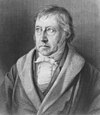
“While one or more of these interpretations remain popular among the Sons of Confederate Veterans and other Southern heritage groups, few professional historians now subscribe to them. Of all these interpretations, the states' rights argument is perhaps the weakest. It fails to ask the question, states' rights for what purpose? States' rights, or sovereignty, was always more a means than an end, an instrument to achieve a certain goal more than a principle.”
James M. McPherson on Progress
“Regarded as "progress" by most Americans, this unrestrained growth had negative as well as positive consequences. For Indians it was a story of contraction rather than expansion, of decline from a vital culture toward dependence and apathy. The one-seventh of the population that was black also bore much of the burden of progress while reaping few of its benefits. Slave-grown crops sustained part of the era's economic growth and much of its territorial expansion. The cascade of cotton from the American South dominated the world market, paced the industrial revolution in England and New England, and fastened the shackles of slavery more securely than ever on Afro-Americans.”

James M. McPherson on Education in the United States
“A fourth reason offered by British observers to explain American economic efficiency was an educational system that had produced widespread literacy and "adaptative versatility" among American workers. By contrast a British workman trained by long apprenticeship "in the trade" rather than in schools lacked "the ductility of mind and the readiness of apprehension for a new thing" and was "unwilling to change the methods which he has been used to," according to an English manufacturer. The craft apprenticeship system was breaking down in the United States, where most children in the Northeast went to school until age fourteen or fifteen. "Educated up to a far higher standard than those of a much superior social grade in the Old World . . . every [American] workman seems to be continually devising some new thing to assist him in his work, and there is a strong desire . . . to be 'posted up' in every new improvement."”

James M. McPherson on Consumerism
“Balloon-frame houses illustrated four of the factors cited then and later to explain the emergence of the American system of manufactures. The first was what economists call demand and what social historians might call a democracy of consumption: the need or desire of a growing and mobile population for a variety of ready-made consumer goods at reasonable prices. Considering themselves members of the "middling classes," most Americans in the 1850s were willing and able to buy ready-made shoes, furniture, men's clothing, watches, rifles, even houses. If these products lacked the quality, finish, distinction, and durability of fine items made by craftsmen, they were nevertheless functional and affordable. A new institution, the "department store," sprang up to market the wares of mass production to a mass public. European visitors who commented (not always favorably) on the relationship between a political system of universal (white) manhood suffrage and a socioeconomic system of standardized consumption were right on the mark. Grinding poverty and luxurious wealth were by no means absent from the United States, but what impressed most observers was the broad middle.”

James M. McPherson on Evangelicalism in the United States
“Meanwhile, a wave of Protestant revivals known as the Second Great Awakening swept the country during the first third of the nineteenth century. In New England, upstate New York, and those portions of the Old Northwest above the 41st parallel populated by the descendants of New England Yankees, this evangelical enthusiasm generated a host of moral and cultural reforms. The most dynamic and divisive of them was abolitionism. Heirs of the Puritan notion of collective accountability that made every man his brother's keeper, these Yankee reformers repudiated Calvinist predestination, preached the availability of redemption to anyone who truly sought it, urged converts to abjure sin, and worked for the elimination of sins from society. The most heinous social sin was slavery. All people were equal in God's sight; the souls of black folks were as valuable as those of whites; for one of God's children to enslave another was a violation of the Higher Law, even if it was sanctioned by the Constitution. By midcentury this antislavery movement had gone into politics and had begun to polarize the country. Slaveholders did not consider themselves egregious sinners. And they managed to convince most non-slaveholding whites in the South (two-thirds of the white population there) that emancipation would produce economic ruin, social chaos, and racial war. Slavery was not the evil that Yankee fanatics portrayed; it was a positive good, the basis of prosperity, peace, and white supremacy, a necessity to prevent blacks from degenerating into barbarism, crime, and poverty.”

What James M. McPherson Said About Others
Discover personal opinions James M. McPherson shared regarding contemporaries.
James M. McPherson on Abraham Lincoln 2 quotes
View all 2 quotes on Abraham Lincoln →James M. McPherson on Historian
“Interpretations of the past are subject to change in response to new evidence, new questions asked of the evidence, new perspectives gained by the passage of time. [...] The unending quest of historians for understanding the past — that is, "revisionism" — is what makes history vital and meaningful.”
James M. McPherson on William Tecumseh Sherman
“General Sherman, who had lived in the South, liked Southerners and did not at all sympathize with Northern racial views, yet became the most hated and feared destroyer of the South and its whole civilization. And I think he did so because he saw that as necessary to win the war. And I think Lincoln made some of his decisions—issuing the Emancipation Proclamation, for example, or turning Sherman loose — because he saw that as necessary to win the war.”

James M. McPherson on Thomas Wentworth Higginson
“Powerful racial prejudices? That was not true of Thomas Wentworth Higginson, or Norwood P. Hallowell, or George T. Garrison, or many other abolitionists and sons of abolitionists who became officers in black regiments. Indeed, the contrary was true. They had spent much of their lives fighting the race prejudice endemic in American society, sometimes at the risk of their careers and even their lives. That is why they jumped at the chance of help launch an experiment with black soldiers which they hoped would help African Americans.”
James M. McPherson on Edwin M. Stanton
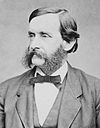
“The great crisis facing the country was the rebellion and anybody in the North who wanted to preserve the Union now found the principal enemy to be those Southern slave owners who had broken up the country. The institution which sustained them and the institution they went to war to defend was slavery. And more and more northerners became convinced of that. As a consequence, a lot of them went the whole way over, from being conservative, pro-Southern, pro-slavery Democrats to becoming radical Republicans. Benjamin Butler is a good example, and Edwin M. Stanton is another one.”
James M. McPherson on Benjamin Butler
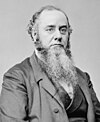
“The great crisis facing the country was the rebellion and anybody in the North who wanted to preserve the Union now found the principal enemy to be those Southern slave owners who had broken up the country. The institution which sustained them and the institution they went to war to defend was slavery. And more and more northerners became convinced of that. As a consequence, a lot of them went the whole way over, from being conservative, pro-Southern, pro-slavery Democrats to becoming radical Republicans. Benjamin Butler is a good example, and Edwin M. Stanton is another one.”
James M. McPherson on Robert E. Lee
“Lee at Gettysburg who decided to attack, attack, attack, even though he knew that it was going to result in thousands of deaths. He made that decision because he thought it necessary in order to win that battle. And in turn perhaps to win the war, to accomplish his objectives. It's not quite so crude as 'the end justifies the means', but I think that all of these extremely difficult decisions, which in the context of a war do mean life and death for tens of thousands of people or destruction of property and the ruin of lives, were made on the grounds of absolute necessity in a crisis situation, not only a war but in some respects a revolutionary situation. The same kinds of things I suppose could be applied to any of the great revolutions in history, the French Revolution, the Russian Revolution, and so on.”

James M. McPherson on Frederick Douglass
“Many Negroes responded enthusiastically to such appeals [as those by Douglass]. But others still held back. This was especially true in New York City, where Douglass, Henry Highland Garnet, and other speakers urged colored men to enlist at a meeting in Shiloh Church on April 27. In spite of their eloquence, only one recruit came forward. Douglass was appalled, and told the audience that he was ashamed of them. A Mr. Robert Johnson arose and defended the Negroes of New York, and, according to the report of the affair, "by a few well-spoken words, [he] convinced the meeting that it was not cowardice which made the young men hesitate to enlist, but a proper respect for their own manhood. If the Government wanted their services, let it guarantee to them all the rights of citizens and soldiers, and, instead of one man, he would insure them 5,000 men in twenty days. Mr. J's remarks were received with tremendous and long-continued applause."”

James M. McPherson on Thaddeus Stevens
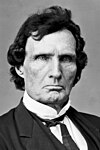
“In this study the term "abolitionist" will be applied to those Americans who before the Civil War had agitated for immediate, unconditional, and universal abolition of slavery in the United States. Contemporaries of the antislavery movement and later historians have sometimes mistakenly used the word "abolitionist" to describe adherents of the whole spectrum of antislavery sentiment. Members of the Free Soil and Republican parties have often been called abolitionists, even though these parties were pledged officially before 1861 only to the limitation of slavery, not to its extirpation. It is a moot question whether such radical anti-slavery leaders such as Charles Sumner, John Andrew, George Julian, Thaddeus Stevens, or Owen Lovejoy were genuine "abolitionists". In their hearts they probably desired an immediate end to slavery as fervently as did William Lloyd Garrison. But they were committed publicly by political affiliation and party responsibility to a set of principles that fell short of genuine abolitionism.”
Quotes About James M. McPherson
Gain deeper perspective through quotes about James M. McPherson from others.
William R. Ferris on James M. McPherson
“James M. McPherson has helped millions of Americans better understand the meaning and legacy of the American Civil War. By establishing the highest standards for scholarship and public education about the Civil War and by providing leadership in the movement to protect the nation's battlefields, he has made an exceptional contribution to historical awareness in America.”
About James M. McPherson
James M. "Jim" McPherson (born 11 October 1936) is an American historian, best known for his writings on the American Civil War.