Link Copied!
James Jeans Quotes (1877-1946)
Physicist, Mathematician
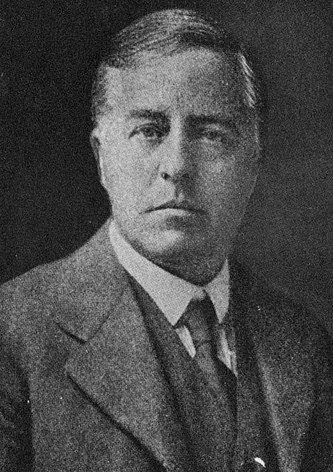
About James Jeans
Sir James Hopwood Jeans (11 September 1877 – 16 September 1946) was a British physicist, astronomer and mathematician.
Best James Jeans Quotes
Shortest
Earliest
Explore our curated collection of the most famous and impactful James Jeans quotes.
“One must stand stiller than still.”
“Life exists in the universe only because the carbon atom possesses certain exceptional properties.”

“From the intrinsic evidence of his creation, the Great Architect of the Universe now begins to appear as a pure mathematician.”

“The human race, whose intelligence dates back only a single tick of the astronomical clock, could hardly hope to understand so soon what it all means.”

“Physics and philosophy are at most a few thousand years old, but probably have lives of thousands of millions of years stretching away in front of them. They are only just beginning to get under way...”

“If we assume that the last breath of, say, Julius Caesar has by now become thoroughly scattered through the atmosphere, then the chances are that each of us inhales one molecule of it with every breath we take.”
“We saw that radiation cannot suitably be pictured as particles when it is traveling through space. There is a corresponding property for electrons; these should not be pictured as waves so long as they are traveling through empty space.”
“...a detailed mathematical discussion shows that whatever kind of wave-packet we select to represent the electron, the product of the two uncertainties of position and momentum can never be less than h, which is precisely what Heisenberg found...”
“Before the quantum theory appeared, the principle of the uniformity of nature - that like causes produce like effects - had been accepted as a universal and indisputable fact of science. As soon as the atomicity of radiation became established, this principle had to be discarded.”
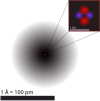
“An extension of Planck's ideas, due to Prof. Niels Bohr of Copenhagen, went on to suggest that... the ultimate particles of matter would be seen to move not like railway trains running smoothly on tracks, but like kangaroos hopping about in a field.”
“It can hardly be a matter for surprise that our race has not succeeded in solving any large part of its most difficult problems in the first millionth part of its existence. Perhaps life would be a duller affair if it had. For to many it is not knowledge but the quest for knowledge that gives the greater interest to thought - to travel hopefully is better than to arrive.”

“When two hypotheses are possible, we provisionally choose that which our minds adjudge to be simpler, on the supposition that this is the more likely to lead in the direction of truth. It includes as a special case the principle of Occam's razor-entia non multiplicana praeter necessitatem.”
“As the pattern of events is unaltered by motion, the mechanism must be the same when the electron is in motion as when it is at rest. But experiment shows that an electron in motion exerts additional forces which are not the same for all directions in space; if we picture this electron as moving head-foremost through space, these forces surround it like a belt around its waist.”
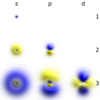
“At this time, space was supposed to be filled with an ether, a substance which might well serve, among other functions, to transmit forces across space. So long as such an ether could be called on, the transmission of force to a distance was easy to understand; it was like ringing a distant bell by pulling a bell-rope.”
“Now these three concepts form the foundation-stones of the philosophy of materialism and determinism to which the physics of the nineteenth century seemed to lead. Thus, as soon as any one of the three has to be rejected, the philosophical implications of physics undergo a great change; the mechanical age has passed, both in physics and philosophy, and materialism and determinism again become open questions...”
“The complete closed world consists of three parts-substratum, phenomenal world, and observer. By our experiments we drag up activities from the substratum into the phenomenal world of space and time, but there is no clear line of demarcation between subject and object, and by performing observations on the world, we alter it, much as a fisherman dragging up fish from the depths of the seas disturbs the waters and also damages the fish.”

“if a shower of electrons is shot on to a zinc sulfide screen, a number of flashes are produced - one for each electron - and we may picture the electrons as bullet-like projectiles hitting a target. But if the same shower is made to pass near a suspended magnet, this is found to be deflected as the electrons go by. The electrons may now be pictured as octopus-like structures with tentacles or 'tubes of force' sticking out from it in every direction.”

“Today there is a wide measure of agreement, which on the physical side of science approaches almost to unanimity, that the stream of knowledge is heading towards a non-mechanical reality; the universe begins to look more like a great thought than like a great machine. Mind no longer appears as an accidental intruder into the realm of matter; we are beginning to suspect that we ought rather to hail it as a creator and governor of the realm of matter...”

“This fallacious result is not... a peculiarity of classical mechanics; it is given also by a very wide class of possible systems of mechanics. This being so, no minor modification of the classical mechanics can possibly put things right. Something far more drastic is needed; we are called upon to surrender either the [1] continuity or the [2] causality of classical mechanics, or else the possibility of [3] representing changes by motions in time and space.”

James Jeans Quotes by Topic
Find exactly what you are looking for by browsing this categorized list of James Jeans quotes by topic.
James Jeans on Physics 4 quotes
“And the substance out of which this bubble is blown, the soap-film, is empty space welded onto empty time.”
James Jeans on Luminiferous aether 4 quotes
“Faraday, Maxwell, Larmor and a great number of others tried to explain electromagnetic action on these lines, but all attempts failed, and it began to seem impossible that any properties of ether could explain the observed pattern of events.”

James Jeans on Phenomenon 2 quotes
“As discontinuity marched into the world of phenomena through one door, causality walked out through another.”

James Jeans on Mechanics 2 quotes
“Experimental physics was particularly interested in the processes taking place inside the atom, and in this field the classical mechanics was failing conspicuously and completely. Perhaps its most spectacular failure was with the fundamental problem with the structure of the atom.”
James Jeans on Electron 2 quotes
“Clearly, if electric action is to be explained in mechanical terms, the mechanism must be supposed to be attached to the electric charges, and to move through space with them. It must extend through the whole of space, because the attraction and repulsion of an electron extend through the whole of space, and it must be the same for all directions in space. Further, as the pattern of events is unaltered by motion, the mechanism must be the same when the electron is in motion as when it is at rest. But experiment shows that an electron in motion exerts additional forces which are not the same for all directions in space; if we picture this electron as moving head-foremost through space, these forces surround it like a belt around its waist. Thus direct experimental evidence shows that the forces exerted by an electron (or... any charged body) can neither be attributed to any mechanism attached to the body, nor through action transmitted through an ether or any medium surrounding the body. We have a perfect specification of the pattern of events written... in the language of mathematics, but this does not admit of interpretation in mechanical terms, or indeed in any terms other than those of mathematics.”
James Jeans on Philosophy
“Physics and philosophy are at most a few thousand years old, but probably have lives of thousands of millions of years stretching away in front of them. They are only just beginning to get under way.”
James Jeans on Mind
“The stream of knowledge is heading toward a non-mechanical reality; the universe begins to look more like a great thought than like a great machine. Mind no longer appears to be an accidental intruder into the realm of matter, we ought rather hail it as the creator and governor of the realm of matter—not of course our individual minds, but the mind in which the atoms out of which our individual minds have grown exist as thoughts.”

James Jeans on Spacetime
“Then the theory of relativity came and explained the cause of the failure. Electric action requires time to travel from one point of space to another, the simplest instance of this being the finite speed of travel of light... Thus electromagnetic action may be said to travel through space and time jointly. But by filling space and space alone [excluding time] with an ether, the pictorial representations had all supposed a clear-cut distinction between space and time.”

James Jeans on Kinetic theory of gases
“In 1909 Perrin suspended particles of gamboge in a liquid of slightly lower density, and found that the heavy particles did not sink to the bottom of the lighter liquid; they were prevented from doing so by their own Brownian movements. If the liquid had been infinitely fine-grained, with molecules of infinitesimal size and weight, every solid particle would have had as many impacts from above as below; these impacts, coming in a continuous stream, would have just cancelled one another out, so that each particle would have been free to fall to the bottom under its own weight. But when they were bombarded by molecules of finite size and weight, the solid particles were hit, now in one direction and now in another, and so could not lie inertly on the bottom of the vessel. From the extent to which they failed to do this, Perrin was able to form an estimate of the weights of the molecules of the liquid... and this agreed so well with other estimates that there could be but little doubt felt as to the truth either of the kinetic theory of liquids, or of the associated explanation of the Brownian movements.”
Quotes About James Jeans
Gain deeper perspective through quotes about James Jeans from others.
David L. Block on James Jeans
“To be historically accurate, Hubble failed to acknowledge two of his pivotal sources for those ideas which now bear his name: Reynolds and Jeans. As agreed by Allan Sandage, the graphical representation of the Hubble tuning fork [style diagram of the Hubble sequence] must be attributed to Sir James Jeans - a scientist who adored music, and who wrote the famous book Science and Music on that theme. In the Lowell Observatory archives, Hubble revealed to Slipher that he had "been trying to construct a classification of non-galactic nebulae analogous to Jeans' evolution sequence, but from purely observational material."”
Freeman Dyson on James Jeans
“What philosophical conclusions should we draw from the abstract style of the superstring theory? We might conclude, as Sir James Jeans concluded long ago, that the Great Architect of the Universe now begins to appear as a Pure Mathematician, and that if we work hard enough at mathematics we shall be able to read his mind. Or we might conclude that our pursuit of abstractions is leading us far away from those parts of the creation which are most interesting from a human point of view. It is too early yet to come to conclusions.”

E. A. Milne on James Jeans 3 quotes
“He pointed out that amongst the hindrances to a joint discussion by philosophers and physicists are differences of idiom, if not language. He stated that, whether one understands the meaning of a sentence in Newton or not, one knows at least the meaning of the words, whereas philosophy has no agreed terminology. He was right in pointing out that various old problems in philosophy owed their existence to imperfections of language... he argued that the philosopher thinks and speaks in the subjective, the scientist in objective, terms.”
S.C. Roberts on James Jeans
“Jeans was not a man of many friends, partly because of his temperamental shyness and reticence and partly because of his intolerance of what he deemed to be second-rate. With his own quick perception he lacked the patience which would have enabled him to understand and appreciate a slower-moving mind and consequently he missed those intimacies which he fundamentally desired.”
Edwin Hubble on James Jeans
“Therefore the observer may well look to Jeans' theory for the thread of physical significance that shall vitalize a system of classification of non-galactic nebulae. In the scheme presently to be proposed, a conscious attempt was made to ignore the theory and to arrange the data purely from an observational point of view. The analogy however was so suggestive that at several points... there was no hesitation in accepting the one favored by Jeans' theory of spirals.”
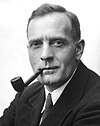
About James Jeans
Sir James Hopwood Jeans (11 September 1877 – 16 September 1946) was a British physicist, astronomer and mathematician.