Link Copied!
James H. Cone Quotes (1936-2018)
Theologian

About James H. Cone
James Hal Cone (August 5, 1936 – April 28, 2018) was an African-American Christian theologian in the Methodist tradition.
Best James H. Cone Quotes
Shortest
Earliest
Explore our curated collection of the most famous and impactful James H. Cone quotes.

“Any talk about God that fails to make God's liberation of the oppressed its starting point is not Christian.”
“A man is free when he sees clearly the fulfillment of his being and is thus capable of making the envisioned self a reality.”
“The Christian does not decide between violence and nonviolence, evil and good. He decides between the less and the greater evil.”

“Black Power seeks not understanding but conflict; addresses blacks and not whites; seeks to develop black support, but not white good will.”

“As long as man is a slave to another power, he is not free to serve God with mature responsibility. He is not free to become what he is—human.”

“What difference does it make that one should "prove" a philosophical point, if that point has nothing to do with spreading freedom throughout the land?”

“Therefore, simply to say that Jesus did not use violence is no evidence relevant to the condition of black people as they decide on what to do about white oppression.”

“By becoming poor and entrusting divine revelation to a carpenter from Nazareth, God makes clear where one has to be in order to hear the divine word and experience divine presence.”


“If the church ... does not make God's liberation of the oppressed central in its mission and proclamation, how can it rest easy with a condemned criminal as the dominant symbol of its message?”
“The revolution which Black Theology advocates … [means] confronting white racists and saying: 'If it's a fight you want, I am prepared to oblige you.' This is what the black revolution means.”

“We cannot solve ethical questions of the twentieth century by looking at what Jesus did in the first. Our choices are not the same as his. Being Christians does not mean following 'in his steps.'”

“Since most professional theologians are the descendants of the advantaged class and thus often represent the consciousness of the class, it is difficult not to conclude that their theologies are in fact a bourgeois exercise in intellectual masturbation.”

“How can Christian theology truly speak of the hope of Jesus Christ, unless that hope begins and ends with the liberation of the poor in the social existence in which theology takes shape? In America this means that there can be no talk about hope in the Christian sense unless it is talk about the freedom of black, red, and brown people.”

“The dialectic between the social situation of the believer and Scripture and the traditions of the Church is the place to begin the investigation of the question, Who is Jesus Christ for us today? Social context, Scripture, and tradition operate together to enable the people of God to move actively and reflectively with Christ in the struggle of freedom.”
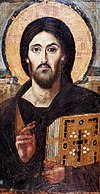
“Racism is a complete denial of the Incarnation and thus of Christianity. ... If there is any contemporary meaning of the Antichrist (or "the principalities and powers"), the white church seems to be a manifestation of it. It was the white "Christian" church which took the lead in establishing slavery as an institution and segregation as a pattern in society by sanctioning all-white congregations.”

“Is it possible to understand what God's love means for the oppressed without making wrath an essential ingredient of that love? What could love possibly mean in a racist society except the righteous condemnation of everything racist? Most theological treatments of God's love fail to place the proper emphasis on God's wrath, suggesting that love is completely self-giving without any demand for obedience.”

“As ambassadors of Jesus Christ, Christians have no choice but to join the movement of liberation on the side of the poor, fighting against the structures of injustice. Faith in Jesus Christ, therefore, is not only an affirmation that we utter in Sunday worship and at other church gatherings. Faith is a commitment, a deeply felt experience of being called by the Spirit of Christ to bear witness to God's coming liberation by fighting for the freedom of the poor now.”
“According to the Bible, the cross and resurrection of Jesus are God’s decisive acts against injustice, against the humiliation and suffering of the little ones. Indeed, it is because God disclosed himself as the Oppressed One in Jesus that the oppressed now know that their suffering is not only wrong but has been overcome. This new knowledge of God in Jesus grants the oppressed the freedom of fighting against the political structures of servitude which make for pain and suffering.”

“This is the dialectic of Christian thought: God enters into the social context of human existence and appropriates the ideas and actions of the oppressed as his own. When this event of liberation occurs in thought and praxis, the words and actions of the oppressed become the Word and Action of God. They no longer belong to the oppressed. Indeed, the word of the oppressed becomes God’s Word insofar as the former recognize it not as their own but as given to them through divine grace.”

James H. Cone Quotes by Topic
Find exactly what you are looking for by browsing this categorized list of James H. Cone quotes by topic.
James H. Cone on Black theology 2 quotes
“By becoming poor and entrusting divine revelation to a carpenter from Nazareth, God makes clear where one has to be in order to hear the divine word and experience divine presence.”

James H. Cone on Liberation theology 2 quotes
“If the church ... does not make God's liberation of the oppressed central in its mission and proclamation, how can it rest easy with a condemned criminal as the dominant symbol of its message?”

James H. Cone on Crime
“If the church ... does not make God's liberation of the oppressed central in its mission and proclamation, how can it rest easy with a condemned criminal as the dominant symbol of its message?”

James H. Cone on Solidarity
“As ambassadors of Jesus Christ, Christians have no choice but to join the movement of liberation on the side of the poor, fighting against the structures of injustice. Faith in Jesus Christ, therefore, is not only an affirmation that we utter in Sunday worship and at other church gatherings. Faith is a commitment, a deeply felt experience of being called by the Spirit of Christ to bear witness to God's coming liberation by fighting for the freedom of the poor now.”
James H. Cone on Collective responsibility
“All white men are responsible for white oppression. It is much too easy to say, "Racism is not my fault," or "I am not responsible for the country's inhumanity to the black man. ... But insofar as white do-gooders tolerate and sponsor racism in their educational institutions, their political, economic and social structures, their churches, and in every other aspect of American life, they are directly responsible for racism. ... Racism is possible because whites are indifferent to suffering and patient with cruelty. Karl Jaspers' description of metaphysical guilt is pertinent here. "There exists among men, because they are men, a solidarity through which each shares responsibility for every injustice and every wrong committed in the world, and especially for crimes that are committed in his presence or of which he cannot be ignorant."”

About James H. Cone
James Hal Cone (August 5, 1936 – April 28, 2018) was an African-American Christian theologian in the Methodist tradition.