Link Copied!
James Branch Cabell Quotes (1879-1958)
Author

















About James Branch Cabell
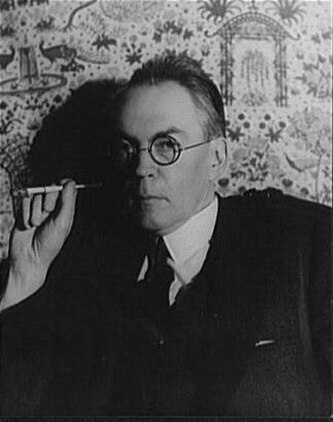
James Branch Cabell (14 April 1879 – 5 May 1958) was an American author of satirical fantasy works, most notably The Cream of the Jest, Jurgen, A Comedy of Justice, Figures of Earth, and other works in the series known as Biography of the Life of Manuel.
Best James Branch Cabell Quotes
Shortest
Earliest
Explore our curated collection of the most famous and impactful James Branch Cabell quotes.
“Tell the rabble my name is Cabell.”

“Whatever there is to know,
That shall we know one day.”
That shall we know one day.”
“At what cost, now, may one attempt to write perfectly of beautiful happenings?”
“Good and evil keep very exact accounts... and the face of every man is their ledger.”
“Love, I take it, must look toward something not quite accessible, something not quite understood.”
“I have followed after the truth, across this windy planet upon which every person is nourished by one or another lie.”
“You touch on a disheartening truth. People never want to be told anything they do not believe already.”
“Whatever pretended pessimists in search of notoriety may say, most people are naturally kind, at heart.”
“The Terrible and Marvellous History of Manuel Pig-Tender That Afterwards Was Named Manuel the Redeemer.”
“The desire to write perfectly of beautiful happenings is, as the saying runs, old as the hills — and as immortal.”
“Hey, my masters, lords and brothers, ye that till the fields of rhyme,
Are ye deaf ye will not hearken to the clamor of your time?”
Are ye deaf ye will not hearken to the clamor of your time?”

“Time changes all things and cultivates even in herself an appreciation of irony, — and, therefore, why shouldn't I have changed a trifle?”
“Oh, do the Overlords of Life and Death always provide some obstacle to prevent what all of us have known in youth was possible from ever coming true?"”
“While it is well enough to leave footprints on the sands of time, it is even more important to make sure they point in a commendable direction.”
“Coth admitted that, say what you might as to the Manuel who had really lived, the squinting rascal did as a rule know what he was talking about.”
“"Eh, Manuel, and will you re-model the world?"
"Who knows?" says Manuel, in the high pride of his youth. "At all events, I do not mean to leave it unaltered."”
"Who knows?" says Manuel, in the high pride of his youth. "At all events, I do not mean to leave it unaltered."”
“Some few there must be in every age and every land of whom life claims nothing very insistently save that they write perfectly of beautiful happenings.”
James Branch Cabell Quotes by Topic
Find exactly what you are looking for by browsing this categorized list of James Branch Cabell quotes by topic.
James Branch Cabell on Dreams 6 quotes
View all 6 quotes on Dreams →James Branch Cabell on Love 4 quotes
View all 4 quotes on Love →James Branch Cabell on Absurdism 4 quotes
“I have followed after the truth, across this windy planet upon which every person is nourished by one or another lie.”
James Branch Cabell on Trivialism 4 quotes
“I have followed after the truth, across this windy planet upon which every person is nourished by one or another lie.”
James Branch Cabell on Life 3 quotes
“Life is very marvelous … and to the wonders of the earth there is no end appointed.”

James Branch Cabell on Kalki 3 quotes
“Now, the redemption which we as yet await (continued Imlac), will be that of Kalki, who will come as a Silver Stallion: all evils and every sort of folly will perish at the coming of this Kalki: true righteousness will be restored, and the minds of men will be made as clear as crystal.”

James Branch Cabell on Time 2 quotes
View all 2 quotes on Time →James Branch Cabell on Truth 2 quotes
“You touch on a disheartening truth. People never want to be told anything they do not believe already.”

James Branch Cabell on Pessimism 2 quotes
“Whatever pretended pessimists in search of notoriety may say, most people are naturally kind, at heart.”

James Branch Cabell on Optimism 2 quotes
“The optimist proclaims that we live in the best of all possible worlds; and the pessimist fears this is true. So I elect for neither label.”

James Branch Cabell on Vampires 2 quotes
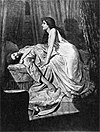
“You must understand that it is little rest a vampire gets on earth, with so many fine young fellows like yourself going about everywhere eager to be destroyed.”
James Branch Cabell on Now 2 quotes
“Now, the redemption which we as yet await (continued Imlac), will be that of Kalki, who will come as a Silver Stallion: all evils and every sort of folly will perish at the coming of this Kalki: true righteousness will be restored, and the minds of men will be made as clear as crystal.”

Quotes About James Branch Cabell
Gain deeper perspective through quotes about James Branch Cabell from others.
Ch. on James Branch Cabell
“At the gate of the garden, beside the lingham post which stood there in eternal erection, sat a boy who was diverting himself by whittling, with a small green-handled knife, a bit of cedar-wood into the quaint shaping which the post had. His hair was darkly red: and now, as he regarded Alfgar with brown and wide-set eyes, the face of this boy was humorously grave, and he nodded now, as the complacent artist nods who looks upon his advancing work and finds all to be near his wishes.”
Horvendile on James Branch Cabell 5 quotes
View all 5 quotes on Horvendile →Nyki Blatchley on James Branch Cabell 3 quotes
“A strange thing happened to the American fantasy author James Branch Cabell in 1920. Cabell was a writer of novels, short stories and poetry who'd been published regularly for about twenty years to great critical acclaim (fans included Mark Twain, Sinclair Lewis and H. L. Mencken) but no commercial success whatsoever. The previous year, his latest mediaeval fantasy novel, Jurgen: A Comedy of Justice, had been published to the usual glowing reviews and public indifference, and appeared destined for the same obscurity as the rest of his work. Then the New York Society for the Suppression of Vice, under John S. Sumner, brought an action against the novel for obscenity. The case went to court, amid considerable publicity – one side dedicated to protecting outraged public morals, the other championing the author as a martyr to the philistines – and dragged on for two years, at the end of which Cabell and his publishers were fully vindicated. The result was inevitable: Jurgen became a huge bestseller, and for several years everything Cabell wrote was a commercial success.”
Lin Carter on James Branch Cabell
Aleister Crowley on James Branch Cabell
“There is an outcry against epoch-making masterpieces of philosophy like Jurgen. The salacious musical comedy goes its libidinous way rejoicing, while Ibsen and Bernard Shaw are on the black list. The fact is, of course, that the puritan has been turned by sexual repression into a sexual pervert and degenerate, so that he is insane on the subject.”

Philip H. Farber on James Branch Cabell
“In the early part of the 20th century, there was a fantasy writer named James Branch Cabell who had a theory of writing as magic. His books (highly recommended, especially Jurgen) are both funny and mythological ... and it's easy to see how his process of creating characters was really a process of evocation and invocation.”
Neil Gaiman on James Branch Cabell 4 quotes
“Actually, my favorite treatment of bad reviews is James Branch Cabell who, in the back of the 18 volume beautiful, huge collection of all of his works the Biography of Manuel, did a final section detailing what the reviewers said for each of his books. The book reviews go like this. The first 5 or 6 books, the reviews he quotes say something like: "Beautiful illustrations by the artist; such a pity about the words." Then you get to the reviews of Jurgen: A Comedy of Justice and the reviews say: "This a terrible book. It has no redeeming features; it's simply awful; a major misstep." And then every single review for every book he wrote after Jurgen begins, "Well, this isn't Jurgen. Apparently the author has lost the facility with which he wrote that delightful book." So he did put this wonderful parade of the ridiculous things that the reviewers said over time. As I mentioned in the blog, the only final thing that you can say about the reviewers, is this. The same day that the Publisher's Weekly review came in which said, "The road trip plot was completely aimless, but I liked the stuff in Lakeside," the Summer Book Forum book review came in which said, "The roadside stuff is amazing -- the novel only loses focus when you get to the stuff in Lakeside." ... If you actually pay any credence to it, it does make you crazy. So you just kind of smile and think, "Maybe someday I'll review all the reviewers someday." But you probably won't.”

William L. Godshalk on James Branch Cabell 3 quotes
“Among the literary men of the time, Cabell's circle of friends was large: Sinclair Lewis, Joseph Hergesheimer, Carl Van Vechten, Burton Rascoe, Arthur Machen, to name a few. In his Nobel Prize Address in 1930, Lewis mentioned Cabell as one of the three American writers, along with Hemingway and Faulkner, worthy of the attention of the Swedish Academy. All in all, Cabell's reputation in the 20's must have seemed unassailable. But fortune's wheel turned, and the years that followed his initial popularity gave rise to a series of hostile critics. Cabell's novels were attacked from almost every conceivable position: stylistically, ideologically, socially, personally. In 1933, Granville Hicks, abdicating the critic's responsibility of balanced judgment, strikes at the author himself, calling him "a sleek, smug egoist," and his work "a structure of lies." Hicks begins the series of attacks; and Oscar Cargill in Intellectual America (1941), after damning "Cabell's reputation as a stylist" as "overblown," attempts to have the final word. He sums Cabell up "as a museum piece representing the psychology of a Virginian who would be an intellectual leader yet had not quite what it takes." However, the 1950's had better words for Cabell. Edward Wagenknecht in the Cavalcade of the American Novel (1952) reminds us that "James Branch Cabell …is still a unique and incomparable figure in American literature … He will never be the voice of a 'party' or of a 'movement'; he will never speak for anything smaller or more limited than the human spirit itself." Four years later, Edmund Wilson in a long article in the New Yorker suggested that Cabell's work had been maligned by partial critics and called for a reevaluation of his novels. In the 60's two book-length studies have appeared, and a biography is in preparation. Joe Lee Davis concludes that "one must — in common decency and simple justice — rank him among the major rather than the minor authors of the twentieth century... . Cabell is both the Spenser and the Boccaccio of the second American Renaissance." After years of neglect, Cabell's work is again receiving the attention it deserves.”
Robert A. Heinlein on James Branch Cabell
Alfred Kazin on James Branch Cabell
Sinclair Lewis on James Branch Cabell
Arthur Machen on James Branch Cabell
“A curious, singular and enchanting book. I have read it with admiration and delight.”
About James Branch Cabell
James Branch Cabell (14 April 1879 – 5 May 1958) was an American author of satirical fantasy works, most notably The Cream of the Jest, Jurgen, A Comedy of Justice, Figures of Earth, and other works in the series known as Biography of the Life of Manuel.