Link Copied!
James Baldwin Quotes (1924-1987)
Writer, Playwright, Novelist











-100px.png)















About James Baldwin
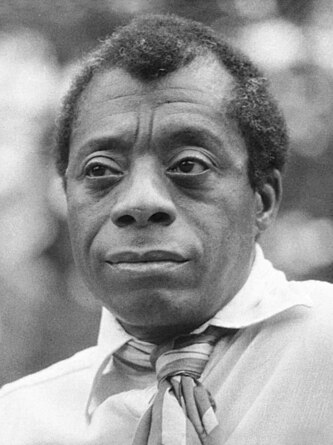
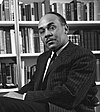
James Arthur Baldwin (2 August 1924 – 1 December 1987) was an American novelist, short story writer, playwright, essayist, and social critic.
Best James Baldwin Quotes
Shortest
Earliest
Explore our curated collection of the most famous and impactful James Baldwin quotes.
“I am beginning to feel like part of a travelling circus.”
“Nothing is more unbearable, once one has it, than freedom.”


“You don't realize that you're intelligent until it gets you into trouble.”
“We are responsible to the future, and not to Chase Manhattan Bank. (1973)”

“Close up, the person's imperfections matter, but from far away, you see your own.”

“I conceive of God, in fact, as a means of liberation and not a means to control others.”
“'Maybe everything bad that happens to you makes you weaker, and so you can stand less and less.'”

“The price one pays for pursuing any profession or calling is an intimate knowledge of its ugly side.”


“Not everything that is faced can be changed; but nothing can be changed until it is faced.”
“I think that mankind can do better than that, and I wish to be a witness to this small and stubborn possibility.”
“Nobody is more dangerous than he who imagines himself pure in heart; for his purity, by definition, is unassailable.”

“Whatever white people do not know about Negroes reveals, precisely and inexorably, what they do not know about themselves.”
“Perhaps the turning point in one's life is realizing that to be treated like a victim is not necessarily to become one. (1984)”
“a child’s major attention has to be concentrated on how to fit into a world which, with every passing hour, reveals itself as merciless.”

“There're two things we have to do love each other and raise our children. We have to do that! The alternative, for me, would be suicide. (1984)”


“I imagine one of the reasons people cling to their hates so stubbornly is because they sense, once hate is gone, they will be forced to deal with pain.”
“People pay for what they do, and, still more, for what they have allowed themselves to become. And they pay for it very simply: by the lives they lead.”
“Everyone wishes to be loved, but, in the event, nearly no one can bear it. Everyone desires love but also finds it impossible to believe that he deserves it.”
“All art is a kind of confession, more or less oblique. All artists, if they are to survive, are forced, at last, to tell the whole story, to vomit the anguish up.”

“It is not merely that the rain falls differently on each of you, for that can be a wonder and a joy: it is that what is rain for the one is not rain for the other.”

“The primary distinction of the artist is that he must actively cultivate that state which most men, necessarily, must avoid: the state of being alone.”

“Confronted with the impossibility of remaining faithful to one’s beliefs, and the equal impossibility of becoming free of them, one can be driven to the most inhuman excesses.”

“Passion is terrifying, it can rock you, change you, bring your head under, as when a wind rises from the bottom of the sea, and you're out there in the craft of your mortality, alone.”

“All over Harlem, Negro boys and girls are growing into stunted maturity, trying desperately to find a place to stand; and the wonder is not that so many are ruined but that so many survive.”
“If the word integration means anything, this is what it means: that we, with love, shall force our brothers to see themselves as they are, to cease fleeing from reality and begin to change it.”
“This may be why we appear to learn absolutely nothing from experience, or may, in other words, account for our incoherence: memory does not require that we reconstitute the event, but that we justify it.”

“Christianity has operated with an unmitigated arrogance and cruelty — necessarily, since a religion ordinarily imposes on those who have discovered the true faith the spiritual duty of liberating the infidels.”

“'And, at the risk of losing forever your so remarkably candid friendship, let me tell you something. Confusion is a luxury which only the very, very young can possibly afford, and you are not that young any more.'”
“But people can't, unhappily, invent their mooring posts, their lovers and their friends, anymore than they can invent their parents. Life gives these and also takes them away and the great difficulty is to say Yes to life.”

“I shall never be able to have any more of these boyish, zestful affairs — which are, really, when one thinks about it, a kind of higher, or, anyway, more pretentious masturbation. People are too various to be treated so lightly.”

“ 'Somebody,' said Jacques, 'your father or mine, should have told us that not many people have ever died of love. But multitudes have perished, and are perishing every hour — and in the oddest places! — for the lack of it.'”
“I began plotting novels at about the time I learned to read. The story of my childhood is the usual bleak fantasy, and we can dismiss it with the restrained observation that I certainly would not consider living it again.”


“I am not a black nationalist but some of my best friends are...Why aren't I a black nationalist? Because I don't believe it is enough to be black-one has to be human as well. We did not struggle for four hundred years just to become like the white man". (1985)”

“Words like "freedom," "justice," "democracy" are not common concepts; on the contrary, they are rare. People are not born knowing what these are. It takes enormous and, above all, individual effort to arrive at the respect for other people that these words imply.”


“Now, for the first time, I began to be aware of my heart, the heart itself: and with this awareness, conscious terror came. I realized that I knew nothing whatever about the way we are put together; and I realized that what I did not know might be in the process of killing me.”

“Perhaps I did not succumb to ideology … because I have never seen myself as a spokesman. I am a witness. In the church in which I was raised you were supposed to bear witness to the truth. Now, later on, you wonder what in the world the truth is, but you do know what a lie is.”

“Perhaps the whole root of our trouble, the human trouble, is that we will sacrifice all the beauty of our lives, will imprison ourselves in totems, taboos, crosses, blood sacrifices, steeples, mosques, races, armies, flags, nations, in order to deny the fact of death, which is the only fact we have.”

“One writes out of one thing only — one's own experience. Everything depends on how relentlessly one forces from this experience the last drop, sweet or bitter, it can possibly give. This is the only real concern of the artist, to recreate out of the disorder of life that order which is art.”

“Sentimentality, the ostentatious parading of excessive and spurious emotion, is the mark of dishonesty, the inability to feel; the wet eyes of the sentimentalist betray his aversion to experience, his fear of life, his arid heart; and it is always, therefore, the signal of secret and violent inhumanity, the mask of cruelty.”
“(“How do you assess the results of the war in Vietnam on the American people?”) Americans are terrified. For the first time they know that they are capable of genocide. History is built on genocide. But they can't face it. And it doesn't make any difference what Americans think that they think-they are terrified. (1985)”

“The American war in Vietnam raises several questions. One is whether or not small nations, in this age of super-states and and live as they feel they should. For only the people of a superpowers, will be allowed to work out their own destinies country have the right, or the spiritual power, to determine that country's way of life.”
“...the world is present, and the world is not white, and America is not the symbol of civilization. Neither is England. Neither is France. Something else is happening that will engulf them by and by. You, Quincy, will be here, but I'll be gone. It's the only hope the world has-that Western hegemony and civilization be contained. (1988)”

“You read something which you thought only happened to you, and you discover that it happened 100 years ago to Dostoyevsky. This is a very great liberation for the suffering, struggling person, who always thinks that he is alone. This is why art is important. Art would not be important if life were not important, and life is important.”
“Art has to be a kind of confession. I don't mean a true confession in the sense of that dreary magazine. The effort it seems to me, is: if you can examine and face your life, you can discover the terms with which you are connected to other lives, and they can discover them, too — the terms with which they are connected to other people.”
“I say a new language. I might say a new morality, which, in my terms, comes to the same thing. And that's on all levels the level of color, the level of identity, the level of sexual identity, what love means, especially in a consumer society, for example. Everything is in question, according to me. One has to forge a new language to deal with it. (1984)”

“recently I went along with a field secretary of the N.A.A.C.P. in Mississippi to investigate a murder that had been hushed up. We rode around through those back roads for hours talking to people who had known the dead man, trying to find out what had happened. And the Negroes talked to us as the German Jews must have talked when Hitler came to power. (1969)”

“"...but you were never really white in the first place. Nobody is. Nobody has, even, ever wanted to be white, unless they are afraid of being black. But being black is nothing to be afraid of. I knew that before I met you, and I have learned it again, through you. Perhaps being white is not a conceivable condition, but a terrifying fantasy, a moral choice.””

“'You think,' he persisted, 'that my life is shameful because my encounters are. And they are. But you should ask yourself why they are.'
'Why are they — shameful?' I asked him.
'Because there is no affection in them, and no joy. It's like putting an electric plug in a dead socket. Touch, but no contact. All touch, but no contact and no light.'”
'Why are they — shameful?' I asked him.
'Because there is no affection in them, and no joy. It's like putting an electric plug in a dead socket. Touch, but no contact. All touch, but no contact and no light.'”

“'I don't believe in this nonsense about time. Time is just common, it's like water for a fish. Everybody's in this water, nobody gets out of it, or if he does the same thing happens to him that happens to the fish, he dies. And you know what happens in this water, time? The big fish eat the little fish. That's all. The big fish eat the little fish and the ocean doesn't care.'”

“When the Israelis pick up guns, or the Poles, or the Irish, or any white man in the world says “give me liberty, or give me death,” the entire white world applauds. When a black man says exactly the same thing, word for word, he is judged a criminal and treated like one and everything possible is done to make an example of this bad nigger so there won't be any more like him.”
“It will be a great day for America, incidentally, when we begin to eat bread again, instead of the blasphemous and tasteless foam rubber that we have substituted for it. And I am not being frivolous here, either. Something very sinister happens to the people of a country when they begin to distrust their own reactions as deeply as they do here, and become as joyless as they have become.”
“If one could accept the fact that it is no longer important to be white, it would begin to cease to be important to be black. If we could accept the fact that no nation with 20 million black people in it for so long and with such a depth of involvement, that no nation under these circumstances can be called a white nation, this would be a great achievement, and it would change a great many things.”
“I read everything. I read my way out of the two libraries in Harlem by the time I was thirteen. One does learn a great deal about writing this way. First of all, you learn how little you know. It is true that the more one learns the less one knows. I'm still learning how to write. I don't know what technique is. All I know is that you have to make the reader see it. This I learned from Dostoyevsky, from Balzac. (1984)”
“Most of us, no matter what we say, are walking in the dark, whistling in the dark. Nobody knows what is going to happen to him from one moment to the next, or how one will bear it. This is irreducible. And it's true of everybody. Now, it is true that the nature of society is to create, among its citizens, an illusion of safety; but it is also absolutely true that the safety is always necessarily an illusion. Artists are here to disturb the peace. (p. 21)”

“One of the reasons, for example, I think that our youth is so badly educated and it is inconceivably badly educated-is because education demands a certain daring, a certain independence of mind. You have to teach some people to think; and in order to teach some people to think, you have to teach them to think about everything. There mustn't be something they can not think about. If there is one thing they can not think about, very shortly they can't think about anything.”
“Some moments in a life, and they needn’t be very long or seem very important, can make up for so much in that life; can redeem, justify, that pain, that bewilderment, with which one lives, and invest one with the courage not only to endure it, but to profit from it; some moments teach one the price of the human connection: if one can live with one’s own pain, then one respects the pain of others, and so, briefly, but transcendentally, we can release each other from pain.”

“The roles that we construct are constructed because we feel that they will help us to survive and also, of course, because they fulfill something in our personalities; and one does not, therefore, cease playing a role simply because one has begun to understand it. All roles are dangerous. The world tends to trap you in the role you play and it is always extremely hard to maintain a watchful, mocking distance between oneself as one appears to be and oneself as one actually is.”
“The civilized have created the wretched, quite coldly and deliberately, and do not intend to change the status quo; are responsible for their slaughter and enslavement; rain down bombs on defenseless children whenever and wherever they decide that their "vital interests" are menaced, and think nothing of torturing a man to death: these people are not to be taken seriously when they speak of the "sanctity" of human life, or the "conscience" of the civilized world.”
“Leaving aside all the physical facts which one can quote, leaving aside rape or murder, leaving aside the bloody catalog of oppression, which we are in one way too familiar with already—what this does to the subjugated, the most private, the most serious thing this does to the subjugated, is to destroy his sense of reality. It destroys, for example, his father's authority over him. His father can no longer tell him anything, because the past has disappeared, and his father has no power in the world.”
“I do not know many Negroes who are eager to be "accepted" by white people, still less to be loved by them; they, the blacks, simply don't wish to be beaten over the head by the whites every instant of our brief passage on this planet. White people will have quite enough to do in learning how to accept and love themselves and each other, and when they have achieved this — which will not be tomorrow and may very well be never — the Negro problem will no longer exist, for it will no longer be needed.”
“It is true that two wrongs don't make a right, as we love to point out to the people we have wronged. But one wrong doesn't make a right, either. People who have been wronged will attempt to right the wrong; they would not be people if they didn't. They can rarely afford to be scrupulous about the means they will use. They will use such means as come to hand. Neither, in the main, will they distinguish one oppressor from another, nor see through to the root principle of their oppression.”
“The celebrity never sees himself. I have some idea what I'm doing on that stage; above all, I have some idea what sustains me on that stage. But the celebrity is not exactly Jimmy, though he comes out of Jimmy and Jimmy nourishes that, too. I can see now, with hindsight, that I would've had to become a celebrity in order to survive. A boy like me with all his handicaps, real and fancied, could not have survived in obscurity. I can say that it would have had to happen this way, though I could not see it coming.”

“Long, long before the Americans decided to liberate the Southeast Asians, they decided to liberate me: my ancestors carried these scars to the grave, and so will I. A racist society can't but fight a racist war-this is the bitter truth. The assumptions acted on at home are also acted on abroad, and every American Negro knows this, for he, after the American Indian, was the first "Viet Cong" victim. We were bombed first. How, then, can I believe a word you say, and what gives you the right to ask me to die for you?”
“(How do you see the role of the artist in general?) JB: The role of the artist is exactly the same role, I think, as the role of the lover. If you love somebody, you honor at least two necessities at once. One of them is to recognize something very dangerous, or very difficult. Many people cannot recognize it at all, that you may also be loved; love is like a mirror. In any case, if you do love somebody, you honor the necessity endlessly, and being at the mercy of that love, you try to correct the person whom you love. (1973)”

“Any real change implies the breakup of the world as one has always known it, the loss of all that gave one an identity, the end of safety. And at such a moment, unable to see and not daring to imagine what the future will now bring forth, one clings to what one knew, or dreamed that one possessed. Yet, it is only when a man is able, without bitterness or self-pity, to surrender a dream he has long cherished or a privilege he has long possessed that he is set free — he has set himself free — for higher dreams, for greater privileges.”
“'Nobody can stay in the garden of Eden,' Jacques said. And then: 'I wonder why.'
I have thought about Jacques' question since. Everyone, after all, goes the same dark road — and the road has a trick of being most dark, most treacherous, when it seems most bright — and it's true that nobody stays in the garden of Eden. Perhaps everybody has a garden of Eden, I don't know; but they have scarcely seen their garden before they see the flaming sword. Then, perhaps, life only offers the choice of remembering the garden or forgetting it. Either, or.”
I have thought about Jacques' question since. Everyone, after all, goes the same dark road — and the road has a trick of being most dark, most treacherous, when it seems most bright — and it's true that nobody stays in the garden of Eden. Perhaps everybody has a garden of Eden, I don't know; but they have scarcely seen their garden before they see the flaming sword. Then, perhaps, life only offers the choice of remembering the garden or forgetting it. Either, or.”
“You think your pain and your heartbreak are unprecedented in the history of the world, but then you read. It was Dostoevsky and Dickens who taught me that the things that tormented me most were the very things that connected me with all the people who were alive, or who ever had been alive. Only if we face these open wounds in ourselves can we understand them in other people. An artist is a sort of emotional or spiritual historian. His role is to make you realize the doom and glory of knowing who you are and what you are. He has to tell, because nobody else can tell, what it is like to be alive.”
“It's no credit to this enormously rich country that there are more oppressive, less decent governments elsewhere. We claim superiority of our institutions. We ought to live up to our own standards, not use misery elsewhere as an endless source of self-gratification and justification. Of course, people tell me all the time in the West that they are trying, they are trying hard. Some have tears in their eyes and let me know how awful they feel about the way our poor live, our blacks, or those in dozens of other countries. People can cry much easier than they can change, a rule of psychology people like me picked up as kids on the street.”
“One must say Yes to life, and embrace it wherever it is found — and it is found in terrible places. … For nothing is fixed, forever and forever, it is not fixed; the earth is always shifting, the light is always changing, the sea does not cease to grind down rock. Generations do not cease to be born, and we are responsible to them because we are the only witnesses they have. The sea rises, the light fails, lovers cling to each other and children cling to us. The moment we cease to hold each other, the moment we break faith with one another, the sea engulfs us and the light goes out.”

“The brutal truth is that the bulk of white people in American never had any interest in educating black people, except as this could serve white purposes. It is not the black child's language that is in question, it is not his language that is despised: It is his experience. A child cannot be taught by anyone who despises him, and a child cannot afford to be fooled. A child cannot be taught by anyone whose demand, essentially, is that the child repudiate his experience, and all that gives him sustenance, and enter a limbo in which he will no longer be black, and in which he knows that he can never become white. Black people have lost too many black children that way.”
“Well, if one really wishes to know how justice is administered in a country, one does not question the policemen, the lawyers, the judges, or the protected members of the middle class. One goes to the unprotected — those, precisely, who need the law's protection most! — and listens to their testimony. Ask any Mexican, any Puerto Rican, any black man, any poor person — ask the wretched how they fare in the halls of justice, and then you will know, not whether or not the country is just, but whether or not it has any love for justice, or any concept of it. It is certain, in any case, that ignorance, allied with power, is the most ferocious enemy justice can have.”
“A change, a real change is brought about when the people make a change. The poet or the revolutionary is there to articulate the necessity, but until the people themselves apprehend it, nothing can happen. When the people have taken the necessity, when the movement starts moving, then the world moves. Perhaps, it can't be done without the poet, but, it certainly can't be done without the people. The poet and the people get on generally very badly, and yet they need each other. The poet knows it sooner than the people do. The people usually know it after the poet is dead; but, that's all right. The point is to get your work done, and your work is to change the world. (1973)”

“I don't like people who like me because I'm a Negro; neither do I like people who find in the same accident grounds for contempt. I love America more than any other country in the world, and, exactly for this reason, I insist on the right to criticize her perpetually. I think all theories are suspect, that the finest principles may have to be modified, or may even be pulverized by the demands of life, and that one must find, therefore, one's own moral center and move through the world hoping that this center will guide one aright. I consider that I have many responsibilities, but none greater than this: to last, as Hemingway says, and get my work done.
I want to be an honest man and a good writer.”
I want to be an honest man and a good writer.”
“Change does come, but not when or in the ways we want it to come. George Jackson, Malcolm X-now people all over the world were changed by them. Because they told the secret; now, the secret was out. (“And the secret?”) Put it this way. In 1968, along with Lord Caradon (British Delegate to the United Nations then), I addressed an assembly of the World Council of Churches in Switzerland on "white racism or world community?" When Lord Caradon was asked why the West couldn't break relations with South Africa, he brought out charts and figures that showed that the West would be bankrupt if they did that: the prosperity of the West is standing on the back of the South African miner. When he stands up, the whole thing will be over. (1985)”
“The American endeavor in Vietnam is totally indefensible and totally doomed, and I wish to go on record as having no part of it. When the black population of America has a future, so will America have a future-not till then. And when the black populations of the world have a future, so will the Western nations have a future-and not till then. But the terrible probability is that the Western populations, struggling to hold on to what they have stolen from their captives, and unable to look into their mirror will precipitate a chaos throughout the world which, if it does not bring life on this planet to an end, will bring about a racial war such as the world has never seen, and for which generations yet unborn will curse our names forever.”
“When one begins looking for influences one finds them by the score. I haven't thought much about my own, not enough anyway; I hazard that the King James Bible, the rhetoric of the store-front church, something ironic and violent and perpetually understated in Negro speech — and something of Dickens' love for bravura — have something to do with me today; but I wouldn't stake my life on it. Likewise, innumerable people have helped me in many ways; but finally, I suppose, the most difficult (and most rewarding) thing in my life has been the fact that I was born a Negro and was forced, therefore, to effect some kind of truce with this reality. (Truce, by the way, is the best one can hope for.)”
“For this village, even were it incomparably more remote and incredibly more primitive, is the West, the West onto which I have been so strangely grafted. These people cannot be, from the point of view of power, strangers anywhere in the world; they have made the modern world, in effect, even if they do not know it. The most illiterate among them is related, in a way that I am not, to Dante, Shakespeare, Michelangelo, Aeschylus, Da Vinci, Rembrandt, and Racine; the cathedral at Chartres says something to them which it cannot say to me, as indeed would New York’s Empire State Building, should anyone here ever see it. Out of their hymns and dances come Beethoven and Bach. Go back a few centuries and they are in their full glory—but I am in Africa, watching the conquerors arrive.”
“Any writer, I suppose, feels that the world into which he was born is nothing less than a conspiracy against the cultivation of his talent — which attitude certainly has a great deal to support it. On the other hand, it is only because the world looks on his talent with such a frightening indifference that the artist is compelled to make his talent important. So that any writer, looking back over even so short a span of time as I am here forced to assess, finds that the things which hurt him and the things which helped him cannot be divorced from each other; he could be helped in a certain way only because he was hurt in a certain way; and his help is simply to be enabled to move from one conundrum to the next — one is tempted to say that he moves from one disaster to the next.”
“Another question this war raises is just how what we call the under-developed countries became under developed in the first place. Why, for example, is Africa under-populated, and why do the resources of, say, Sierra Leone belong to Europe? Why, in short, does so much of the world eat too little and so little of the world eat too much? I am also curious to know just how a people calling itself sovereign allows itself to be fighting a war which has never been officially declared, and I am curious to know why so few people appear to be worried about the arresting precedent thus established. I am curious indeed to know how it happens that the mightiest nation in the world has been unable, in all these years, to conquer one of the smallest. I am curious to know what happens to the moral fabric, the moral sense, of the people engaged in so criminal an endeavor.”
“'Love him,' said Jacques, with vehemence, 'love him and let him love you. Do you think anything else under heaven really matters? And how long, at the best, can it last, since you are both men and still have everywhere to go? Only five minutes, I assure you, only five minutes, and most of that, helas! in the dark. And if you think of them as dirty, then they will be dirty — they will be dirty because you will be giving nothing, you will be despising your flesh and his. But you can make your time together anything but dirty, you can give each other something which will make both of you better — forever — if you will not be ashamed, if you will only not play it safe. He paused, watching me, and then looked down to his cognac. 'You play it safe long enough,' he said, in a different tone, 'and you'll end up trapped in your own dirty body, forever and forever and forever — like me.'”
“The prison is overcrowded, the calendars full, the judges busy, the lawyers ambitious, and the cops zealous. What does it matter if someone gets trapped here for a year or two, gets ruined here, goes mad here, commits murder or suicide here? It's too bad, but that's the way the cookie crumbles sometimes. I do not claim that everyone in prison here is innocent, but I do claim that the law, as it operates, is guilty, and that the prisoners, therefore, are all unjustly imprisoned. Is it conceivable, after all, that any middle-class white boy — or, indeed, almost any white boy — would have been arrested on so grave a charge as murder, with such flimsy substantiation, and forced to spend, as of this writing, three years in prison? What force, precisely, is operating when a prisoner is advised, requested, ordered, intimidated, or forced, to confess to a crime he has not committed, and promised a lighter sentence for so perjuring and debasing himself? Does the law exist for the purpose of furthering the ambitions of those who have sworn to uphold the law, or is it seriously to be considered as a moral, unifying force, the health and strength of a nation?”
“To tell you the truth, the results of the civil rights movement to me has nothing to do with civil rights. (I'm talking with hindsight. I might not have said this two years ago.) The one thing it revealed to me was a profound nobility, a real nobility on the part of a whole lot of black people, old and young. There is no other word for it. It was a passionate example. It was doomed to political failure, but that doesn't make any difference. The example will never, never die. And on another level, it exposed white people. Some of them understood it and some of them didn't. Some of them really understood what it meant to have all those kids cattleprodded and hosed and beaten and murdered and chained and castrated. The moral image of a cattleprod against a woman's breast or against a man's testicles. It exposed some things for some people and on the other hand most of the people hid. They did not want to see it and don't see it until today. That's how we have Nixon in the White House and we see this hood Agnew on his way to jail. And then, once again, to keep the nigger in his place, they called it law and order. They brought into office law and order, but I call it the Fourth Reich. I must say, I claim for the black people of America the example of nobility which I have never seen before and no one in this century has seen before. Malcolm was noble. Martin was noble. Medgar was noble and those kids were noble and it exposed an entire country, it exposed an entire civilization. Now we have to take it from there. (1973)”
“I speak as an American Negro. I challenge anyone alive to tell me why any black American should go into those jungles to kill people who are not white and who have never done him any harm, in defense of a people who have made that foreign jungle, or any jungle anywhere in the world, a more desirable jungle than that in which he was born, and to which, supposing that he lives, he will inevitably return. I challenge anyone alive to convince me that a people who have not achieved anything resembling freedom in their own country are empowered, with bombs, to free another people whom they do not know at all, who rather resemble me-whom they do not know at all. I challenge any American, and especially Mr. Lyndon Johnson and Mr. Hubert Humphrey and Mr. Dean Rusk and Mr. Robert McNamara to tell me, and the black population of the United States, how, if they cannot liberate their brothers-repeat: brothers-and have not even learned how to live with them, they intend to liberate Southeast Asia. I challenge them to tell me by what right, and in whose interest, they presume to police the world, and I, furthermore, want to know if they would like their sisters, or their daughters to marry any one of the people they are struggling so mightily to save. And this is by no means a rhetorical challenge, and all the men I have named, and many, many more will be dishonored forever if they cannot rise to it. I want an answer: If I am to die, I have the right to know why. And the non-white population of the world, who are most of the world, would also like to know. The American idea of freedom and, still more, the way this freedom is imposed, have made America the most terrifying nation in the world. We have inherited Spain's title: the nation with the bloody foot-print.”
James Baldwin Quotes by Topic
Find exactly what you are looking for by browsing this categorized list of James Baldwin quotes by topic.
James Baldwin on History 2 quotes
View all 2 quotes on History →James Baldwin on Art 2 quotes
“Art would not be important if life were not important, and life is important.”

James Baldwin on God 2 quotes
“I conceive of God, in fact, as a means of liberation and not a means to control others.”
James Baldwin on Justice 2 quotes
“Words like "freedom," "justice," "democracy" are not common concepts; on the contrary, they are rare. People are not born knowing what these are. It takes enormous and, above all, individual effort to arrive at the respect for other people that these words imply.”
James Baldwin on Artist 2 quotes
“One writes out of one thing only — one's own experience. Everything depends on how relentlessly one forces from this experience the last drop, sweet or bitter, it can possibly give. This is the only real concern of the artist, to recreate out of the disorder of life that order which is art.”

What James Baldwin Said About Others
Discover personal opinions James Baldwin shared regarding contemporaries.
James Baldwin on White people 2 quotes
“Whatever white people do not know about Negroes reveals, precisely and inexorably, what they do not know about themselves.”

James Baldwin on James Joyce 2 quotes
“Joyce is right about history being a nightmare — but it may be the nightmare from which no one can awaken. People are trapped in history and history is trapped in them.”

James Baldwin on Richard Wright 2 quotes
“Richard went to Paris in 1946, when I was 22, he was 38. Now, it took me a long time; I had to get to be much older to realize something. I didn't realize it that day at all. I was not born in Mississippi; I was born in New York. And I did not leave Mississippi to go to Chicago. And endure all that. I was much too young to realize what I was looking at really. But, that's a journey. To go from Mississippi to Chicago to New York to Paris in 38 years is amazing. You might as well have walked all that distance, it's almost that remarkable.”

James Baldwin on William Faulkner 2 quotes
“It is difficult for a young person today to know what to do. You cannot take advertising seriously; you cannot be truly involved with selling, or respect yourself, if the product you make is meant to become obsolete in a year or two. There is very little real, important work to do. And where there is no work, something goes, because we discover through working what we cannot discover any other way. As Faulkner says, you cannot make love eight hours a day, or drink or walk eight hours a day. You have to do something with your life, you have to find out what it is.”

James Baldwin on Charles Dickens 2 quotes
“You think your pain and your heartbreak are unprecedented in the history of the world, but then you read. It was Dostoevsky and Dickens who taught me that the things that tormented me most were the very things that connected me with all the people who were alive, or who ever had been alive. Only if we face these open wounds in ourselves can we understand them in other people. An artist is a sort of emotional or spiritual historian. His role is to make you realize the doom and glory of knowing who you are and what you are. He has to tell, because nobody else can tell, what it is like to be alive.”

Quotes About James Baldwin
Gain deeper perspective through quotes about James Baldwin from others.
Maya Angelou on James Baldwin
“James Baldwin was born for truth. It called upon him to tell it on the mountains, to preach it in Harlem, to sing it on the Left Bank in Paris. His honesty and courage would lead him to see truth and to write truth in poetry, drama, fiction, and essay. He was a giant.”

Michael Bronski on James Baldwin
“James Baldwin's 1955 Giovanni's Room and 1962 Another Country dealt with the complicated intersections of sexuality and race through homosexual characters. As early as 1949, in his essay "The Preservation of Innocence," Baldwin directly connected heterosexual hostility toward homosexuals to white hostility toward African Americans. He saw both as a failure of the imagination to connect fully with one's own humanity. He explores this idea in his 1963 The Fire Next Time: "White people in this country will have quite enough to do in learning how to accept and love themselves and each other, and when they have achieved this-which will not be tomorrow and may very well be never-the Negro problem will no longer exist, for it will no longer be needed."”

Angela Davis on James Baldwin 2 quotes
“The one thing that did excite me during that freshman year was the news that James Baldwin was scheduled to deliver a series of lectures on literature. Since I had first discovered Go Tell It on the Mountain, I read all of Baldwin's writings I could find. When he came to Brandeis, I made sure I captured a front seat. But he had hardly gotten into his lecturing when the news broke that the world was teetering on the edge of the abyss of World War III. The Cuban Missile Crisis had erupted. James Baldwin announced that he could not continue his lectures without contradicting his moral conscience and abdicating his political responsibilities.”

Henry Louis Gates Jr. on James Baldwin
“He named for me the things you feel but couldn't utter... articulated for the first time to white America what it meant to be American and a black American at the same time.”

Henry Giroux on James Baldwin
“I want to conclude by quoting from James Baldwin, a courageous writer who refused to let the hope of democracy die in his lifetime and who offered that mix of politics, passion and courage that deserves not just admiration but emulation. His sense of rage was grounded in a working-class sensibility, eloquence and passion that illuminates a higher standard for what it means to be a public intellectual and an engaged intellectual. His words capture something that is missing from the American cultural and political landscape, something affirmative that needs to be seized upon, rethought, and occupied - as part of both the fight against the new authoritarianism and its cynical, dangerous and cruel practices, and the struggle to reclaim a notion of justice and mutuality that seems to be dying in all of us.”





Misattributed Quotes
Quotes mistakenly credited to James Baldwin
“The longer I live, the more deeply I learn that love — whether we call it friendship or family or romance — is the work of mirroring and magnifying each other’s light. Gentle work. Steadfast work. Life-saving work in those moments when life and shame and sorrow occlude our own light from our view, but there is still a clear-eyed loving person to beam it back. In our best moments, we are that person for another.”
About James Baldwin
James Arthur Baldwin (2 August 1924 – 1 December 1987) was an American novelist, short story writer, playwright, essayist, and social critic.