Link Copied!
James Anthony Froude Quotes (1818-1894)
Novelist













About James Anthony Froude
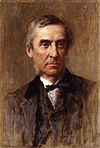
James Anthony Froude (April 23 1818 – October 20 1894) was a controversial English historian, novelist, biographer, and editor of Fraser's Magazine.
Best James Anthony Froude Quotes
Shortest
Earliest
Explore our curated collection of the most famous and impactful James Anthony Froude quotes.


“The men that write books, Carlyle says, are now the world's priests, the spiritual directors of mankind.”
“I cannot think the disputes and jealousies of Heaven are tried and settled by the swords of earth.”
“Woe to the unlucky man who as a child is taught, even as a portion of his creed, what his grown reason must forswear.”
“The first duty of an historian is to be on his guard against his own sympathies; but he cannot wholly escape their influence.”
“Nature is less partial than she appears, and all situations in life have their compensations along with them.”
“Fling away your soul once for all, your own small self; if you will find it again. Count not even on immortality.”
“It is ill changing the creed to meet each rising temptation. The soul is truer than it seems, and refuses to be trifled with.”

“I scarcely know a professional man I can like, and certainly not one who has been what the world calls successful, that I should the least wish to resemble.”


“The war of good and evil is mightiest in mightiest souls, and even in the darkest time the heart will maintain its right against the hardest creed.”
“The Providence that watches over the affairs of men works out of their mistakes, at times, a healthier issue than could have been accomplished by their wisest forethought.”


“Charity is from person to person; and it loses half, far more than half, its moral value when the giver is not brought into personal relation with those to whom he gives.”
“Perhaps the heart does not deceive; never does give a false answer, except to those double-minded unhappy ones who do care about themselves, and so play tricks with it and tamper with it.”
“Scepticism, like wisdom, springs out in full panoply only from the brain of a god, and it is little profit to see an idea in its growth, unless we track its seed to the power which sowed it.”

James Anthony Froude Quotes by Topic
Find exactly what you are looking for by browsing this categorized list of James Anthony Froude quotes by topic.
James Anthony Froude on Character 3 quotes
“Our thoughts and our conduct are our own.”
James Anthony Froude on Experience 3 quotes
“Experience teaches slowly, and at the cost of mistakes.”

James Anthony Froude on Law 2 quotes
“Our human laws are but the copies, more or less imperfect, of the eternal laws, so far as we can read them.”

James Anthony Froude on Religion 2 quotes
“Sacrifice is the first element of religion, and resolves itself in theological language into the love of God.”

James Anthony Froude on Opinion 2 quotes
“We are complex, and therefore, in our natural state, inconsistent, beings, and the opinion of this hour need not be the opinion of the next.”

James Anthony Froude on Assassination 2 quotes
“The philosophic historian, studying hereafter this present age, in which we are ourselves living, may say that it was a time of unexampled prosperity, luxury, and wealth; but catching at certain horrible murders which have lately disgraced our civilisation, may call us a nation of assassins. It is to invert the pyramid and stand it on its point.”
James Anthony Froude on Ignorance
James Anthony Froude on Life
“We live merely on the crust or rind of things.”

James Anthony Froude on Ability
“As we advance in life, we learn the limits of our abilities.”
What James Anthony Froude Said About Others
Discover personal opinions James Anthony Froude shared regarding contemporaries.
James Anthony Froude on Desiderius Erasmus 3 quotes
“I am going to speak to you this evening about the 'Encomium Moriæ,' if not the most remarkable, yet the most effective of all Erasmus's writings. It originated... in his conversations with More at Chelsea. ...and the title is a humorous play on More's own name.”
James Anthony Froude on John Bunyan 2 quotes
“Bunyan was a true artist, though he knew nothing of the rules, and was not aware that he was an artist at all.”
James Anthony Froude on John Dalberg-Acton, 1st Baron Acton
James Anthony Froude on Baruch Spinoza
“...We may deny his conclusions; we may consider his system of thought preposterous and even pernicious, but we cannot refuse him the respect which is the right of all sincere and honourable men. [...] Spinoza's influence over European thought is too great to be denied or set aside...”

James Anthony Froude on Richard Hakluyt
“And yet those five volumes may be called the Prose Epic of the modern English nation. They contain the heroic tales of the exploits of the great men in whom the new era was inaugurated; not mythic, like the Iliads and the Eddas, but plain broad narratives of substantial facts, which rival legend in interest and grandeur. What the old epics were to the royally or nobly born, this modern epic is to the common people.”
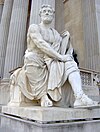
James Anthony Froude on Tacitus
“The greatest man who has as yet given himself to the recording of human affairs is, beyond question, Cornelius Tacitus. Alone in Tacitus a serene calmness of insight was compatible with intensity of feeling. He took no side; he may have been Imperialist, he may have been Republican, but he has left no sign whether he was either: he appears to have sifted facts with scrupulous integrity; to administer his love, his scorn, his hatred, according only to individual merit: and his sentiments are rather felt by the reader in the life-like clearness of his portraits, than expressed in words by himself. Yet such a power of seeing into things was only possible to him, because there was no party left with which he could determinedly side, and no wide spirit alive in Rome through which he could feel.”
James Anthony Froude on Henry VIII of England
“Like all princes of the Plantagenet blood, he was a person of a most intense and imperious will. His impulses, in general nobly directed, had never known contradiction; and late in life, when his character was formed, he was forced into collision with difficulties with which the experience of discipline had not fitted him to contend. Education had done much for him, but his nature required more correction than his position had permitted, whilst unbroken prosperity and early independence of control had been his most serious misfortune. He had capacity, if his training had been equal to it, to be one of the greatest of men. With all his faults about him, he was still perhaps the greatest of his contemporaries; and the man best able of all living Englishmen to govern England, had been set to do it by the conditions of his birth.”

James Anthony Froude on Thomas Carlyle
“He was a teacher and a prophet in the Jewish sense of the word. The prophecies of Isaiah and Jeremiah have become a part of the permanent spiritual inheritance of mankind, because events proved that they had interpreted correctly the signs of their own times, and their prophecies were fulfilled. Carlyle, like them, believed that he had a special message to deliver to the present age. Whether he was correct in that belief, and whether his message was a true message, remains to be seen. He has told us that our most cherished ideas of political liberty, with their kindred corollaries, are mere illusions, and that the progress which has seemed to go along with them is a progress towards anarchy and social dissolution. If he was wrong, he has misused his powers. The principles of his teaching are false. He has offered himself as a guide upon a road of which he had no knowledge; and his own desire for himself would be the speediest oblivion both of his person and his works. If, on the other hand, he has been right; if, like his great predecessors, he has read truly the tendencies of this modern age of ours, and his teaching is authenticated by facts, then Carlyle, too, will take his place among the inspired seers, and he will shine on, another fixed star in the intellectual sky. Time only can show how this will be.”

Quotes About James Anthony Froude
Gain deeper perspective through quotes about James Anthony Froude from others.
Thomas Carlyle on James Anthony Froude
“After my death I wish no other herald, no other speaker of my living actions, to keep my honour from corruption, but such an honest chronicler as Froude.”
George Pomeroy Colley on James Anthony Froude
“I came home from the Cape, and almost lived on the way, with Mr. Froude; a mind which I am sure you would have appreciated and enjoyed as thoroughly as I did. I don't know if you are as warm an admirer of his writing as I am; to me there is no English prose equal to some passages of his; such, for instance, as that about the middle of the first chapter of his history—"For indeed a change was coming upon the world." It was rather a sad mind too, sometimes grand, sometimes pathetic and tender, usually cynical, but often relating with the highest appreciation and with wonderful beauty of language some gallant deed of one of his heroes of the fifteenth or sixteenth centuries. He seemed to have gone through every phase of thought, and come to the end "all is vanity." He himself used to say the interest of life to a thinking man was exhausted at thirty or thirty-five. After that there remained nothing but disappointment of earlier visions and hopes. Thank goodness I have not thought quite so fast! Sometimes there was something almost fearful in the gloom and utter disbelief and defiance of his mind.”
Moncure D. Conway on James Anthony Froude
“Froude's novel must be introduced to the twentieth century with the distinction of being the only book piously burnt at Oxford in the nineteenth century. On February 27, 1849, a few weeks after its publication, Professor Sewell, lecturer in Exeter College, vehemently denounced the work in his lecture, and discovering that a student present had a copy before him seized it furiously and dashed it in the Hall fire.”
George Eliot on James Anthony Froude
“We seem to be in companionship with a spirit who is transfusing himself into our souls, and so vitalising them by his superior energy, that life, both outward and inward, presents itself to us in higher relief, in colours brightened and deepened.”

John Fortescue on James Anthony Froude
“I do not think that sufficient credit has ever been given to James Anthony Froude for the manful industry that he showed in wrestling with the Spanish sixteenth-century archives at Simancas. No one who has not attempted a like task has any idea of its difficulties. The bitterest of Froude's critics, Professor Freeman, probably could not have read a Spanish sixteenth century letter to save his life.”
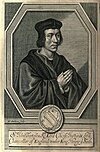
Edward Augustus Freeman on James Anthony Froude
“So you have taken the trouble to make a list of Froude's blunders in detail. I should simply assume that his Roman work must be just like his other work. My saying is that Froude has a negative use. When he has said a thing happened one way, you don't know how it did happen, but you know one way in which it did not happen.”
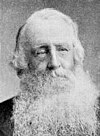
Henry Bartle Frere on James Anthony Froude
“An essay in which for whole pages a truth expressed in brilliant epigrams regularly alternates with mistakes or misstatements which would be scarcely pardoned in a "special" war correspondent hurriedly writing against time.”
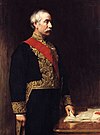
Richard Haldane on James Anthony Froude
“What he [Charles Stewart Parnell] did say was that there were two ways, and two ways only, in which Ireland could be governed. One was by full Home Rule. The other was through a Dictator. But for such Dictatorship there was one man unfit, and he was Mr. Arthur Balfour. I was the more impressed by this because he had said to me only a few minutes before that he had been reading a most remarkable book, which threw more light on the Irish question than any book he had seen. I had eagerly asked what this new source of knowledge was, and he replied, "It is a book called The English in Ireland by a Mr. Froude."”
Lord George Hamilton on James Anthony Froude
“In the spring of 1879... I sat next to Froude [at dinner], who had just returned from South Africa. He had, during his stay there, contributed a number of articles to the public press upon the condition and future of that country. He talked delightfully, but he took an extraordinarily pessimistic view of the position of the white races in South Africa. He pointed out to me that there was a virile and intelligent race, physically stronger than the average European, who were multiplying and increasing faster than white men under the influence of civilisation, and that these Zulus and Kaffirs would ultimately demolish the white race. I asked him what was his policy, and in a gloomy tone he informed me there was no policy but to exterminate them. I pointed out to him the extreme difficulty of such a policy in these days of sentiment and humanitarianism. He replied: "If you do not adopt that policy, they will exterminate you." A few months afterwards I noted that he was giving a series of lectures at the Philosophical Institute in Edinburgh on South Africa. My curiosity was excited as to how he would put his singularly bloodthirsty theories into a shape which would be palatable to his audience. In the meantime he had entirely changed his views, and his method for settling the South African problem was to treat the native races with firmness but perfect justice. Notwithstanding his rare literary ability, he did not impress me as a reliable or far-seeing thinker.”
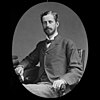
Albert Pollard on James Anthony Froude
“The general modern histories, such as Lingard's and Froude's are too well known to need further description; but it may be remarked that there is inadequate justification for the systematic detraction of Froude's History which has become the fashion. He held strong views, and he made some mistakes; but his mistakes were no greater than those of other historians, and there are not half a dozen histories in the English language which have been based on so exhaustive a survey of original materials.”
Entry for Froude on James Anthony Froude
“The classic for the period from the fall of Wolsey to the defeat of the Armada and one of the great masterpieces of English historical literature. Based upon very wide research in English and continental archives. Not accurate in detail and coloured throughout by a strong anti-catholic bias, but invaluable.”
John Skelton on James Anthony Froude 2 quotes
“He had a very high standard of right and wrong. He hated all shams, religious, literary, political. The casuistry of the rhetorician, the sophistical make-believe of the worldly ecclesiastic, he could not abide. In public as in private they were abhorrent to him. But while he had a passionate scorn of meanness and truckling, he had an equally passionate reverence for truth, as he understood it, whatever guise it assumed. The mask might be sometimes as impassive as Disraeli's; but behind it was an almost tremulous sensitiveness—a tenderness easily wounded. His presence was striking and impressive,—coal-black eyes, wonderfully lustrous and luminous ("eyes full of genius—the glow from within,"—as Dr John Brown wrote); coal-black hair, only latterly streaked with grey; massive features strongly lined,—massive yet mobile, and capable of the subtlest play of expression. For myself I can say without any reserve that he was, upon the whole, the most interesting man I have ever known.”

Lytton Strachey on James Anthony Froude
“James Anthony Froude was one of the salient figures of mid-Victorian England. In that society of prepotent personages he more than held his own. He was not merely the author of the famous History; he was a man of letters who was also a man of the world, an accomplished gentleman, whose rich nature overflowed with abounding energy, a sportsman, a yachtsman, a brilliant and magnificent talker—and something more: one in whose presence it was impossible not to feel a hint of mystery, of strange melancholy, an uncomfortable suggestion of enigmatic power.”
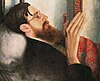
William Stubbs on James Anthony Froude

About James Anthony Froude
James Anthony Froude (April 23 1818 – October 20 1894) was a controversial English historian, novelist, biographer, and editor of Fraser's Magazine.