Link Copied!
Jamelle Bouie Quotes (1987-)





About Jamelle Bouie
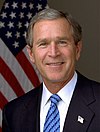
Jamelle Bouie (born April 12, 1987) is an American journalist and columnist for The New York Times. He was formerly chief political correspondent for Slate magazine.
Best Jamelle Bouie Quotes
Shortest
Earliest
Explore our curated collection of the most famous and impactful Jamelle Bouie quotes.
“Making the city less car dependent is making the city less expensive for people.”


“one consequence of the fact that our popular historical understanding erases roughly 1870 to 1932 from public memory is that many Americans have a distinctly warped view of how resilient american democracy actually is”

“if you could get 10 percent of people doing their daily life on a bike,that clears up roads, that kind of makes it easier for everyone else who does rely on cars and does rely on motorized transportation to get around.”
“there is no national drive, no national politician saying the United States needs to construct much more housing than it does. And I think it has everything to do with how the party coalitions right now are what their nature is.”

“I occasionally tweet very vociferously about land-use decisions in this city. And a lot of that’s inspired just by actually seeing, like, 70 percent, 80 percent of lots in the city. Like, I’ve actually seen much of the built environment of Charlottesville just from biking around.”
“Republicans stepped onto this path after America elected its first Black president, and they thereafter embraced a racist demagogue and his attacks on the legitimacy of the nation's multiracial character; these actions speak to how the threads of history tie past and present together.”
“A multiracial coalition of Black, brown, and white Americans had defeated Trump and put Biden and Kamala Harris, the first woman and first woman of color to become vice president, in the White House, and the president's supporters, with his direct encouragement, stormed the national legislature to try to nullify the result.”

“There is a homegrown ideology of reaction in the United States, inextricably tied to our system of slavery. And while that ideology no longer carries the explicit racism of the past, the basic framework remains: fear of rival political majorities; of demographic "replacement"; of a government that threatens privilege and hierarchy.”

“There is a homegrown ideology of reaction in the United States, inextricably tied to our system of slavery. And while that ideology no longer carries the explicit racism of the past, the basic framework remains: fear of rival political majorities; of demographic "replacement"; of a government that threatens privilege and hierarchy.”
“I think nationally, we have the Republican Party, which sort of doesn’t really believe it can win without changing the rules and, like, kicking people out the electorate. And then in cities like New York and the state of California, you have a party that does not think it can lose. And so that creates its own set of dysfunctions.”

“Big, massive relief bill was passed, $1.9-trillion, by the Biden administration and Democrats in Congress, and then the Republicans in Congress are going on about Dr. Seuss or whatever...I think the right response is just not even to engage it. To say, “You guys can talk about that if you want, but here are actual problems that we’re trying to solve.””
“I just became super attuned to how much space cars take up in a way that I just don’t think people appreciate. It’s very easy to say we need more parking in a place, but there’s not that much conversation of, like, what you’re giving up when you do that. And I think being a biker or pedestrian helps you see what actually you’re giving up by prioritizing car infrastructure.”
“The larger implication is clear enough: a majority made up of liberals and nonwhites isn't a real majority. And the solution is clear, too: to write those people out of the polity, to use every available tool to weaken their influence on American politics-whether that means raising barriers to voting and registration or slashing access to the ballot box itself or anything in between.”
“the price of equality, or at least of the promise of an equal society, is vigilance against those who would make government the tool of hierarchy. And, in turn, we must recognize that this struggle-to secure democracy against privilege on the one hand, and to secure privilege against democracy on the other-is the unresolvable conflict of American life. It is the push and pull that will last for as long as the republic stands.”

“And Trumpism, as the iconography of his movement demonstrates, has race at its core. Trump began his march to the White House as the chief proponent of the "birther" conspiracy, arguing relentlessly that the country's first Black president was foreign-born and therefore illegitimate. His appeal as a presidential candidate was to white Americans who believed that their racial identity and the country's national identity were one and the same.”

“The speaker of the Wisconsin state assembly, Robin Vos, made his point more explicitly: "If Madison and Milwaukee out of the state election formula, we would have a clear majority-we would have all five constitutional officers, and we would probably have many more seats in the Legislature." The argument is straight-forward: Their mostly white voters should count. Other voters-Black people and other people of color who live in cities-shouldn't.”

“State control of the kind we've seen during the lockdowns has historically been associated with nonwhites and the extent to which some white Americans are viciously apposed to it may reflect the extent to which the social meaning of whiteness is freedom from that control...as well as the right to impose it on racial others. The lockdown is thus an assault on "liberty" *and* the inability to force (disproportionately black and brown) others to labor is *also* an assault on liberty”

“why this moment? Why Juneteenth has sort of erupted in this way over the past couple weeks, why people find it so resonant right now is that Juneteenth is very much a holiday about the distance between freedom that is promised and freedom that is lived. And right now, millions of Americans are seeing with regards to police brutality, with regard to inequality, the distance that still exists between freedom and liberty, as we imagine it, as we have proclaimed it, and that has actually experienced by ordinary people.”

“After Trump lost, with the majority of mail-in ballots going to his opponent, his campaign argued that illegal voting had been particularly rampant in a few cities within the states that had determined the election: Atlanta, Detroit, Philadelphia, and Milwaukee. No one has ever accused Donald Trump of being subtle, but even for him, this was blatant. Atlanta is 51 percent Black; Detroit, 78 percent. Philadelphia is 42 percent Black, and Milwaukee has a Black population of just under 39 percent. So-called illegal votes were, in actuality, just Black votes.”

“I think that's progress. I think that represents Americans coming to recognize what those statues were erected for. They weren't erected as memorials for the war. They were very much erected as symbols of Jim Crow, as symbols of white supremacy. I think it's the public beginning to come to the recognition that public space is ours to shape. Right? That when we put up memorials or monuments, we are trying to present a particular memory of the past that we want to remember. And do we want to remember, honor a past where someone like Robert E. Lee was a central figure, a figure of esteem?”
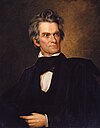
“Arguably the most prominent and accomplished of these planter-politicians was John Calhoun...On this defense of the prerogatives of the Southern section of the nation, Calhoun built an entire theory of government. Seeing the threat democracy posed to slavery, he set out to limit democracy...The problem, in Calhoun's eyes, was that the will of the majority, as expressed in the House of Representatives and the election of the president, had too much power. It had to be curbed, lest it overrun this "true and perfect voice of the people." And those "people" whose voices must be heard, of course, were those like him. Those with power. Those with property. Those who enslaved others.”

“Donald Trump's false claims of electoral fraud in the wake of the 2020 presidential election were an expression of the idea that only certain majorities are real majorities, that only some Americans deserve to hold power. And while Trump lost and left office, the idea persists. Rather than mobilize new voters or persuade existing ones, Republicans throughout the country have set about restricting access to the forms of voting that helped Democrats win in traditionally Republican states like Georgia and Arizona. In Michigan, likewise, Republican lawmakers want to change the way the state distributes its Electoral College votes to nullify the influence of Detroit on the final result.”
Jamelle Bouie Quotes by Topic
Find exactly what you are looking for by browsing this categorized list of Jamelle Bouie quotes by topic.
Jamelle Bouie on Socioeconomic mobility in the United States 3 quotes
“For millions of more ordinary black Americans, [...] even with more income and more education, they’re stuck in segregated neighborhoods. Yes, there isn’t much mobility for anyone, but that fact is especially true for blacks. Indeed, when someone says that America has a “racial hierarchy,” this is what they mean: Whether times are good or bad, blacks remain at the bottom.”
Jamelle Bouie on Residential segregation in the United States 3 quotes
“For millions of more ordinary black Americans, [...] even with more income and more education, they’re stuck in segregated neighborhoods. Yes, there isn’t much mobility for anyone, but that fact is especially true for blacks. Indeed, when someone says that America has a “racial hierarchy,” this is what they mean: Whether times are good or bad, blacks remain at the bottom.”

Jamelle Bouie on Youth in the United States 2 quotes
“Middle-class blacks are far more likely than middle-class whites to live in areas with significant amounts of poverty. Among today’s cohort of middle- and upper-class blacks, about half were raised in neighborhoods of at least 20 percent poverty. Only 1 percent of today’s middle- and upper-class whites can say the same. In short, if you took two children—one white, one black—and gave them parents with similar jobs, similar educations, and similar values, the black child would be much more likely to grow up in a neighborhood with higher poverty, worse schools, and more violence.”
Jamelle Bouie on American middle class 2 quotes
“[L]eaving home is hard, and the social distance of wealth makes it even harder. [...] Just a quick comparison of black and white neighborhoods is enough to illustrate the particular challenges that face black families as they reach for middle class, or try to keep their position. The key fact is this: Even after you adjust for income and education, black Americans are more likely than any other group to live in neighborhoods with substantial pockets of poverty. [...] Black Americans live with a level of poverty that is simply unknown to the vast majority of whites. It’s tempting to attribute this to the income disparity between blacks and whites. Since blacks are more likely to be poor, it stands to reason that they’re more likely to live in poor neighborhoods. But the fact of large-scale neighborhood poverty holds true for higher-income black Americans as well.”

Jamelle Bouie on Poverty in the United States
“Even after you adjust for income and education, black Americans are more likely than any other group to live in neighborhoods with substantial pockets of poverty. Black Americans live with a level of poverty that is simply unknown to the vast majority of whites. It’s tempting to attribute this to the income disparity between blacks and whites. Since blacks are more likely to be poor, it stands to reason that they’re more likely to live in poor neighborhoods. But the fact of large-scale neighborhood poverty holds true for higher-income black Americans as well. Middle-class blacks are far more likely than middle-class whites to live in areas with significant amounts of poverty. Among today’s cohort of middle- and upper-class blacks, about half were raised in neighborhoods of at least 20 percent poverty. Only 1 percent of today’s middle- and upper-class whites can say the same. In short, if you took two children—one white, one black—and gave them parents with similar jobs, similar educations, and similar values, the black child would be much more likely to grow up in a neighborhood with higher poverty, worse schools, and more violence. This is an outright disaster for income mobility. Given their circumstances, blacks face a reversal of their gains over the last generation. Simply put, the persistence of poor neighborhoods is a fact of life for the large majority of blacks; it’s been transmitted from one generation to the next, and shows little sign of changing.”

What Jamelle Bouie Said About Others
Discover personal opinions Jamelle Bouie shared regarding contemporaries.
Jamelle Bouie on Nancy Pelosi 2 quotes
“I think there’s a deeper divide, between a politics that sees the grass roots as an asset to use and cultivate versus one that treats it as a complication to manage. It’s a “leader knows best” approach that may squander the Democratic Party’s advantage of enthusiasm and drive against a corrupt and unpopular president. It even seems as though for Democrats like Pelosi, the only political actions that truly matter are either in the legislature or at the ballot box. It’s an understandable view for a leadership class whose political memories stretch back to the devastating Democratic losses of 1968 and 1972 (to say nothing of 1980 and 1984). But it’s also bred of a deep aversion to risk-taking, even when circumstances warrant bold action.”

Jamelle Bouie on Ted Cruz
Jamelle Bouie on Ted Kennedy
“In just over seven minutes, Democrats have honored a lion of American liberalism, and reinforced the image that Mitt Romney is utterly devoid of conviction. Not a bad first move.”

Jamelle Bouie on Mitch McConnell
“not shocking but still striking to see mcconnell openly declare that we must deny voting representation to americans in DC and deny puerto ricans a chance to choose their future because republicans don't want to have to compete for their votes”

Jamelle Bouie on Lindsey Graham
“The reason to condemn Trump and Graham for their “lynching” remarks is not to score a partisan point or because it will make a difference in their language or behavior. It’s because we haven’t actually resolved the trauma of the past. Historical spaces are still contested. The scars are still present.”

Jamelle Bouie on Robert E. Lee
“I think that's progress. I think that represents Americans coming to recognize what those statues were erected for. They weren't erected as memorials for the war. They were very much erected as symbols of Jim Crow, as symbols of white supremacy. I think it's the public beginning to come to the recognition that public space is ours to shape. Right? That when we put up memorials or monuments, we are trying to present a particular memory of the past that we want to remember. And do we want to remember, honor a past where someone like Robert E. Lee was a central figure, a figure of esteem?”

Jamelle Bouie on John C. Calhoun
“Arguably the most prominent and accomplished of these planter-politicians was John Calhoun...On this defense of the prerogatives of the Southern section of the nation, Calhoun built an entire theory of government. Seeing the threat democracy posed to slavery, he set out to limit democracy...The problem, in Calhoun's eyes, was that the will of the majority, as expressed in the House of Representatives and the election of the president, had too much power. It had to be curbed, lest it overrun this "true and perfect voice of the people." And those "people" whose voices must be heard, of course, were those like him. Those with power. Those with property. Those who enslaved others.”
Quotes About Jamelle Bouie
Gain deeper perspective through quotes about Jamelle Bouie from others.
Trevor Noah on Jamelle Bouie
“(Which writers — novelists, playwrights, critics, journalists, poets — working today do you admire most?) ...Because of “The Daily Show,” most of my reading time these days is consumed by journalists...Vann R. Newkirk; Jamelle Bouie; and Rembert Browne. All fantastic writers.”

About Jamelle Bouie
Jamelle Bouie (born April 12, 1987) is an American journalist and columnist for The New York Times. He was formerly chief political correspondent for Slate magazine.