Link Copied!
Jadunath Sarkar Quotes (1870-1958)





About Jadunath Sarkar
Sir Jadunath Sarkar (10 December 1870 - 19 May 1958) was a prominent Indian Bengali aristocrat and historian.
Best Jadunath Sarkar Quotes
Shortest
Earliest
Explore our curated collection of the most famous and impactful Jadunath Sarkar quotes.
“The Hindus are so divided and so foolishly selfish that their majority does not count in actual politics. The atmosphere can clear only after a thunderstorm— after showers of blood.”
“In April, 1669 he ordered the provincial governors to ‘destroy the temples and schools of the Brahmans… and to utterly put down the teachings and religious practices of the infidels….”
“The administration is hopelessly inefficient and dishonest and as no improvement can be expected in the course of things, the future of the Hindus here (Calcutta or Bengal) is unspeakably dark.”

“The life of Aurangzib was one long tragedy, — a story of man battling in vain against an invisible but inexorable Fate, a tale of how the strongest human endeavour was baffled by the forces of the age.”

“Jadunath Sarkar writes: “The prime minister’s grandson, Mirza Tafakhkhur used to sally forth from his mansion in Delhi with his ruffians, plunder the shops in the bazar, kidnap Hindu women passing through the public streets in litters or going to the river, and dishonour them; and yet there was no judge strong enough to punish him, no police to prevent such crimes.””
““when a class of men is publicly depressed and harassed (as under Muslim rule)… it merely contents itself with dragging on an animal existence. The Hindus could not be expected to produce the utmost of what they were capable… Amidst such social conditions, the human hand and the human mind cannot achieve their best; the human soul cannot soar to its highest pitch.””

“I would not care whether truth is pleasant or unpleasant, and in consonance with or opposed to current views. I would not mind in the least whether truth is, or is not, a blow to the glory of my country. If necessary, I shall bear in patience the ridicule and slander of friends and society for the sake of preaching truth. But still I shall seek truth, understand truth, and accept truth. This should be the firm resolve of a historian.”

“No peace between Mohammadan king and neighbouring of infidel states : “According to the Quranic law, there can not be peace between a Mohammedan king and his neighbouring infidel states. The latter are Dar-ul-Harb or legitimate stated for war, and it is the Muslim king’s duty to slay and plunder them (non-Muslims) till they accept the true faith (Islam) and become Dar-ul-Islam. (Land of Muslims alone), after which they will become entitled to his (Muslim king’s) protection.”
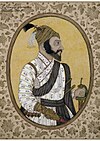
“Shivaji proved, by his example, that the Hindu race could build a nation, found a State, defeat its enemies; they could conduct their own defence; they could protect and promote literature and art, commerce and industry; they could maintain navies and ocean going fleets of their own, and conduct naval battles on equal terms with foreigners. He taught the modern Hindus to rise to the full stature of their growth. He demonstrated that the tree of Hinduism was not dead, and that it could put forth new leaves and branches and once again rise up its head to the skies.”
“The Historian of Shivaji at the end of a careful study of all the records about him in eight different languages, is bound to admit that Shivaji was not only the maker of the Maratha nation, but also the greatest constructive genius of medieval India . States fall, empires break up, dynasties become extinct, but the memory of a true “hero as King” like Shivaji remains an imperishable historical legacy for the entire human race. – The pillar of people’s hope. The center of a world’s desire, to animate the heart, to kindle the imagination, and to inspire the brain of succeeding ages to the highest endeavors.”
“Jadunath wrote to him on 19 November, 1937:, “National history, like every other history worthy of the name and deserving to endure, must be true as regards the facts and reasonable in the interpretation of them. It will be national not in the sense that it will try to suppress or white-wash everything in our country’s past that is disgraceful, but because it will admit them and at the same time point out that there were other and nobler aspects in the stages of our nation’s evolution which offset the former.. . . In this task the historian must be a judge He will not suppress any defect of the national character, but add to his portraiture those higher qualities which, taken together with the former, help to constitute the entire individual.””

“The Hindu Bethlehem now lay utterly prostrate before the invaders. Early at dawn on 1st March the Afghan cavalry burst into the unwalled and unsuspecting city of Mathura, and neither by their master’s orders nor from the severe handling they had received in yesterday’s fight, were they in a mood to show mercy. For four hours there was an indiscriminate massacre and rape of the unresisting Hindu population, all of them non-combatants and many of them priests, Even the few Muslim residents could not always save themselves by taking their trousers off and showing that they were really followers of the Prophet. "Idols were broken and kicked about like polo-balls by the Islamic heroes." Houses were demolished in search of plunder and then wantonly set on fire. Glutted with the blood of 3,000 men, Jahin Khan laid a contribution of one lakh on what remained of the population and marched away from the smoking ruins the same night. After the tiger came the jackal. "When after the massacre Ahmad Shah’s troops marched onward from Mathura, Najib and his army remained there for three days, plundered much money and buried treasure, and carried off many beautiful females as captives.”
““The poison lay in the very core of Islamic theocracy. Under it there can be only one faith, one people, and one all overriding authority. The State is a religious trust administered solely by His people (the Faithful) acting in obedience to the Commander of the Faithful, who was in theory, and very often in practice too, the supreme General of the Army of militant Islam (Janud). There could be no place for non-believers. Even Jews and Christians could not be full citizens of it, though they somewhat approached the Muslims by reason of their being ‘“‘People of the Book” or believers in the Bible, which the Prophet of Islam accepted as revealed.
“As for the Hindus and Zoroastrians, they had no place in such a political system. If their existence was tolerated, it was only to use them as hewers of wood and drawers of water, as tax-payers, “Khiraj-guzar’’, for the benefit of the dominant sect of the Faithful, They were called Zimmis or people under a contract of protection by the Muslim State on condition of certain service to be rendered by them and certain political and civil disabilities to be borne by them to prevent them from growing strong. The very term Zimmi is an insulting title. It connotes political inferiority and helplessness like the status of a minor proprietor perpetually under a guardian; such protected people could not claim equality with the citizens of the Muslim theocracy.
“Thus by the basic conception of the Muslim State all non-Muslims are its enemies, and it is the interest of the State to curb their growth in number and power. The ideal aim was to exterminate them totally, as Hindus, Zoroastrians and Christian nationals have been liquidated (sometimes totally, sometimes leaving a negligible remnant behind) in Afghanistan, Persia and the Near East.
“The Quran (IX.29) calls upon the Muslims ‘to fight those who do not profess the true faith, till they pay jizya with the hand in humility (ham sagkhirun)’. This was a poll-tax payable by Hindus (and also Christians) for permission to live in their ancestral homes under a Muslim sovereign.
“In addition to the obligation to pay this poll-tax, the Hindu was subjected to many disabilities by the very constitution of the Muslim theocracy. He must distinguish himself from the Muslims by wearing a humble dress, and sometimes adding a label of a certain colour to his coat. He must not ride on horse-back or carry arms, though wearing the sword was a necessary part of the dress of every gentle- man of that age. He must show a generally respectful attitude towards Muslims. The Hindu was also under certain legal disabilities in giving testimony in law-courts, protection under the criminal law, and in marriage. Finally, in the exercise of his religion he must avoid any publicity that may rouse the wrath of the followers of the Prophet. “Under the Canon Law. as followed in Islamic countries, a man who converts a Muslim to some other faith is liable to death at the hands of any private Muslim, and so also is the apostate from Islam.’’”
Jadunath Sarkar Quotes by Topic
Find exactly what you are looking for by browsing this categorized list of Jadunath Sarkar quotes by topic.
Jadunath Sarkar on Jizya 6 quotes
“The officially avowed policy in reimposing the jaziya was to increase the number of Muslims by putting pressure on the Hindus.”

Jadunath Sarkar on Dhimmi 3 quotes
“He must pay a tax for his land (kharaj), from which the early Muslims were exempt; he must pay other exactions for the maintenance of the army, in which he cannot enlist even if he offers to render personal service instead of paying the poll-tax; and he must show by humility of dress and behaviour that he belongs to a subject class. No non-Muslim (zimmi) can wear fine dresses, ride on horseback or carry arms; he must behave respectfully and submissively to every member of the dominant sect.”

Jadunath Sarkar on Theocracy 3 quotes
“Therefore, the growth and progress of non- Muslims, even their continued existence, is incompatible with the basic principles of a Muslim State. The political community is in a condition of unstable equilibrium, till either the dissenters are wiped out or the sceptre passes out of Muslim hands. The literal interpretation of the Quranic Law sets up a chronic antagonism between the rulers and the ruled, which has, in the end, broken up every Islamic State with a composite population. And the reign of Aurangzib was to illustrate this truth in a form clear to the meanest intellect.”

Jadunath Sarkar on Mughal Empire 2 quotes
“The glitter of gems and gold in the Taj Mahal or the Peacock Throne ought not to blind us to the fact that in Mughal India, man was considered vile; - the mass of the people had no economic liberty, no indefeasible right to justice or personal freedom, when their oppressor was a noble or high official or landowner; political rights were not dreamt of... The Government was in effect despotism tempered by revolution or fear of revolution.”

Jadunath Sarkar on Mathura 2 quotes
“The holy city of Mathura has always been the special victim of Muslim bigotry. It was the birth- place of Krishna, the most popular of the ‘‘false gods’’ of India,—a deity for whom _ millions of “‘infidels’’ felt a personal love. The city stood on the king's highway between Agra and Delhi, and its lofty spires, almost visible from the Agra palace, —-seemed to taunt the Mughal emperors with lukewarmness in “‘exalting [slam and casting in- fidelity down.’" Aurangzib’s baleful eye had been directed to the Hindu Bethlehem very early. He had appointed a “‘religious man,’’ Abdun Nabi, as faujdar of Mathura to repress the Hindus.”

Jadunath Sarkar on Religious discrimination 2 quotes
“When public offices are distributed in consideration of race or creed and not of merit, when birth and not efficiency is the qualification demanded in those who are to serve the State, public posts rightly come to be regarded as the spoils of war ; the official system becomes a hereditary form of military pension and not a machinery for doing certain necessary services to the community at a minimum cost and maximum efficiency. The non- Muslim populations are, therefore, driven to conclude that they have no lot or part in such a State; it is alien to them, and its fall would mean no injury to the community but only a personal loss to a body of self-seekers. The Islamic theocracy when set up over a composite population has the worst vices of oligarchy and of alien rule combined.”
Jadunath Sarkar on Hindu–Islamic relations 2 quotes
“When a class of men is publicly depressed and harassed by law and executive caprice alike, it merely contents itself with dragging on an animal existence. With every generous instinct of the soul crushed out of them, with intellectual culture merely adding a keen edge to their sense of humiliation, the Hindus could not be expected to produce the utmost of which they were capable; their lot was to be hewers of wood and drawers of water to their masters, to bring grist to the fiscal mill, to develop a low cunning and flattery as the only means of saving what they could out of the fruits of their own labour. Amidst such social conditions, the human hand and the human mind cannot achieve their best; the human soul cannot soar to its highest pitch. The barrenness of the Hindu intellect and the meanness of spirit of the Hindu upper classes are the greatest condemnation of Muhammadan rule in India. The Islamic political tree, judged by its fruit, was an utter failure.”

Jadunath Sarkar on Krishna Janmasthan Temple Complex 2 quotes
“The temple of Kešavadeva was destroyed in January, 1670. This was done in obedience to an imperial firmãn proclaimed by Aurangzeb on April 9, 1669. On that date, according to Ma’sîr-i-Ãlamgîrî, “The Emperor ordered the governors of all provinces to demolish the schools and temples of the infidels and strongly put down their teaching and religious practices.” Jadunath Sarkar has cited several sources regarding the subsequent destruction of temples which went on all over the country, and right up to January 1705, two years before Aurangzeb died. None of the instances cited by him make any reference whatsoever to booty or the political problem of rebellion. The sole motive that stands out in every case is religious zeal. Our Marxist professors will find it very hard, if not impossible, to discover economic and/or political motives for all these instances of temple destruction. The alibis that they have invented in defence of Aurangzeb’s destruction of the Kešavadeva temple are, therefore, only plausible, if not downright fraudulent. It is difficult to believe that the learned professors did not know of Aurangzeb’s firmãn dated April 9, 1669 and the large-scale destruction of Hindu temples that followed. If they did not, one wonders what sort of professors they are, and by what right they pronounce pontifically on this subject.”

Jadunath Sarkar on Gujarat
Jadunath Sarkar on Somnath temple
“Neither age nor experience of life softened Aurangzib’s bigotry. When an old man of over eighty, we find him inquiring whether the Hindu worship, which he had put down at Somnath early in his reign, had been revived through the slackness of the local governor...”

Jadunath Sarkar on Iconoclasm
“No new temple was allowed to be built nor any old one to be repaired, so that the total disappearance of all places of Hindu worship was to be merely a question of time. But even this delay, this slow operation of Time, was intolerable to many of the more fiery spirits of Islam, who tried to hasten the abolition of “‘infidelity’” by anticipating the destructive hand of Time and forcibly pulling down temples.”
Jadunath Sarkar on Hindu temple
“No new temple was allowed to be built nor any old one to be repaired, so that the total disappearance of all places of Hindu worship was to be merely a question of time. But even this delay, this slow operation of Time, was intolerable to many of the more fiery spirits of Islam, who tried to hasten the abolition of “‘infidelity’” by anticipating the destructive hand of Time and forcibly pulling down temples.”

What Jadunath Sarkar Said About Others
Discover personal opinions Jadunath Sarkar shared regarding contemporaries.
Jadunath Sarkar on Ahmed Shah Durrani 4 quotes
“But the Jat peasantry were determined that it was over their corpses that the ravager should enter the sacred capital of Braja. 'eight miles north of MathurA, JawAhir Singh barred the invader's path with less than 10,000 men and offered a desperate resistance (28th February, 1757). From sunrise the battle raged for nine hours, and at the end of it 'ten to twelve thousand infantry lay dead on the two sides taken together, the wounded were beyond count”
Jadunath Sarkar on Aurangzeb 2 quotes
“No new temple was allowed to be built nor any old one to be repaired, so that the total disappearance of all places of Hindu worship was to be merely a question of time. But even this delay, this slow operation of Time, was intolerable to many of the more fiery spirits of Islam, who tried to hasten the abolition of ‘infidelity’ by anticipating the destructive hand of Time and forcibly pulling down temples.”

Jadunath Sarkar on Shivaji 2 quotes
“Shivaji proved, by his example, that the Hindu race could build a nation, found a State, defeat its enemies; they could conduct their own defence; they could protect and promote literature and art, commerce and industry; they could maintain navies and ocean going fleets of their own, and conduct naval battles on equal terms with foreigners. He taught the modern Hindus to rise to the full stature of their growth. He demonstrated that the tree of Hinduism was not dead, and that it could put forth new leaves and branches and once again rise up its head to the skies.”
Jadunath Sarkar on Women in India
“In 1635 AD, Shah Jahan’s soldiers captured some ladies of the royal Bundela family after Jujhar Singh and his sons failed to kill them in the time-honoured Rajput tradition. In the words of Jadunath Sarkar, “Mothers and daughters of kings, they were robbed of their religion and forced to lead the infamous life of the Mughal harem.””

Jadunath Sarkar on Harem
“In 1635 AD, Shah Jahan’s soldiers captured some ladies of the royal Bundela family after Jujhar Singh and his sons failed to kill them in the time-honoured Rajput tradition. In the words of Jadunath Sarkar, “Mothers and daughters of kings, they were robbed of their religion and forced to lead the infamous life of the Mughal harem.””

Jadunath Sarkar on Guru Gobind Singh
“Govind Rai, the tenth and last guru (1676 — 1708) and the only son of Tegh Bahadur, was a man of whom it had been prophesied before his birth that ‘’he would convert jackals into tigers and sparrows into hawks." He was not the person to leave his father’s death unavenged. [...] Govind steadily drilled his followers, gave them a distinctive dress and a new oath of baptism... “Mother dear, I have been considering how I may confer empire on the Khalsa. ’ ’ And, again, “I shall make men of all four castes lions and destroy the Mughals.’’”

Jadunath Sarkar on Muslim
“The Muslim, on the other hand, is taught to feel that he is nothing if not a soldier of the militant force of Islam; he must pray in congregation; he must give proof of the sincerity of his faith by undertaking jihad or active exertion for the spread of his religion and the destruction of unbelief among other men. He is a missionary and cannot be indifferent to the welfare of his neighbours’ souls; nay, he must be ever alive to his duty of promoting the salvation of others by all means at his command, physical as much as spiritual. Then, again, Islam boldly avows that it is good for us to be here, that God has given the world to the faithful as an inheritance for their enjoyment.”
Jadunath Sarkar on Amir Khusrow
“The intellectual decline of the Muslims was hastened by the peculiar position of the faithful in India: They had made India their permanent home; many of them were Indians by race; and all had become so in their personal appearance, thoughts, manners and customs. And yet their religious teachers urged them to look back to ancient Arabia and draw their mental sustenance from the far-off age of the Prophet. The language of their religion must be Arabic, which not one in a hundred fully understood ; their cultural language was Persian, which a few more learnt with difficulty and used with an impurity that excited the laughter and acorn of the Persian born. The greatest Indo-Persian poet was Amir Khusrau, but even he was ranked with third-class poets among the natives of Persia. Faizi, our second best, was held to be still inferior. Witness the scorn poured by Babur and Shaikh Ali Hazin alike on the Persian style of the Indian Muslims.”

Jadunath Sarkar on Shah Jahan
“The pendulum started swinging towards the true spirit of Islam at the very start of Shah Jahan’s reign in 1628 AD. Its outer symbol was the reappearance of the beard on the face of the emperor. .... In 1635 AD, Shah Jahan’s soldiers captured some ladies of the royal Bundela family after Jujhar Singh and his sons failed to kill them in the time-honoured Rajput tradition. In the words of Jadunath Sarkar, “Mothers and daughters of kings, they were robbed of their religion and forced to lead the infamous life of the Mughal harem.” Shah Jahan himself made a triumphal entry into Orchha, the capital of the Bundelas, demolished the lofty and massive temple of Bir Singh Dev, and raised a mosque in its place. Two sons and one grandson of Jujhar Singh who were of tender age, were made Musalmans. Another son of Jujhar Singh, Udaybhan, and a minister, Shyam Dawa, had fled to Golconda where they were captured by Qutbul-Mulk and sent to Shah Jahan. According to Badshahnama again, “Udaybhan and Shyam Dawa, who were of full age, were offered the alternative of Islam or death. They chose the latter and were sent to hell.””
Quotes About Jadunath Sarkar
Gain deeper perspective through quotes about Jadunath Sarkar from others.
R. C. Majumdar on Jadunath Sarkar
“But his voice remained a voice in the wilderness. Fourteen years later, he [R.C. Majumdar] had to return to the theme and give specific instances of falsification. “It is very sad,” he observed, “that the spirit of perverting history to suit political views is no longer confined to politicians, but has definitely spread even among professional historians… It is painful to mention though impossible to ignore, the fact that there is a distinct and conscious attempt to rewrite the whole chapter of the bigotry and intolerance of the Muslim rulers towards Hindu religion. This was originally prompted by the political motive of bringing together the Hindus and Musalmans in a common fight against the British but has continued ever since. A history written under the auspices of the Indian National Congress sought to repudiate the charge that the Muslim rulers broke Hindu temples, and asserted that they were the most tolerant in matters of religion. Following in its footsteps, a noted historian has sought to exonerate Mahmud of Ghazni’s bigotry and fanaticism, and several writers in India have come forward to defend Aurangzeb against Jadunath Sarkar’s charge of religious intolerance. It is interesting to note that in the revised edition of the Encyclopaedia of Islam, one of them, while re-writing the article on Aurangzeb originally written by William Irvine, has expressed the view that the charge of breaking Hindu temples brought against Aurangzeb is a disputed point. Alas for poor Jadunath Sarkar, who must have turned in his grave if he were buried. For, after reading his History of Aurangzib, one would be tempted to ask, if the temple-breaking policy of Aurangzeb is a disputed point, is there a single fact in the whole recorded history of mankind which may be taken as undisputed? A noted historian has sought to prove that the Hindu population was better off under the Muslims than under the Hindu tributaries or independent rulers.””
Lal on Jadunath Sarkar 2 quotes
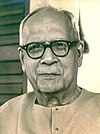
“Sir Jadunath Sarkar's Aurangzib was avidly read, and also criticised. But those were the days of a different culture not found now among Marxists and progressives. For instance, when there was criticism of some statement of Jadunath Sarkar, it was also acknowledged in and outside the class room (by R.P. Tripathi, for example) that Sarkar was the doyen of Indian historians and "head and shoulders above all of us".”
Jagdish Narayan Sarkar on Jadunath Sarkar
The Calling of History on Jadunath Sarkar 5 quotes
“Jadunath Sarkar was once a name every educated Indian knew...he was easily the most highly-regarded Indian historian and had a very strong public presence in late colonial India.”
S. Balakrishna on Jadunath Sarkar
“Naturally, Jadunath Sarkar began to earn the ire of his contemporary academics at a time when the field of historical research was slowly beginning to acquire ideological tinges. Thus, this ire, in the hands of such ideological scholars turned into vicious enmity and single-minded witch hunt. Perhaps the definitive reason for this was Sarkar’s no-holds-barred expose of Aurangzeb in his majestic, History of Aurangzib in five volumes....The subsequent generations of historians and scholars—trained under them— carried forward this slander. Among other big names, this calumnious campaign was led by Irfan Habib, son of the same Muhammad Habib. In his scholarly work titled Agrarian System of Mughal India, Irfan Habib wrote about this subject without any reference to Sarkar’s work as if Sarkar’s volumes did not exist. Irfan Habib calculatedly chose only such themes which allowed him to reject Sarkar’s sources. The result was that he succeeded in breaking Sarkar’s image as a towering historical scholar. Which is consistent with Habib’s credentials as an avowed Marxist as we shall see. With this move, Habib killed two birds with one stone: he deflected attention away from Aurangzeb’s legendary cruelty and Islamic bigotry by presenting the fall of Mughals as rooted in a mere “revenue crisis of the Empire!””
Source on Jadunath Sarkar 3 quotes
“His works are characterized by unity of conception, of theme and presentation, and are delivered to the reader in direct, easy flowing language and a charming style free from cant, verbosity and affectation.”
E. Sreedharan - A Textbook of Historiography on Jadunath Sarkar
“Jadunath Sarkar may be compared with Ranke and Momsen. He was unquestionably the greatest Indian historian of his time and one of the greatest in the world. His powerful personality and erudite works have established a tradition of honest and scholarly historiography whose tenets have exerted a healthy influence on many an individual historian.”
About Jadunath Sarkar
Sir Jadunath Sarkar (10 December 1870 - 19 May 1958) was a prominent Indian Bengali aristocrat and historian.