Link Copied!
Jacob Bronowski Quotes (1908-1974)
Writer, Mathematician














About Jacob Bronowski
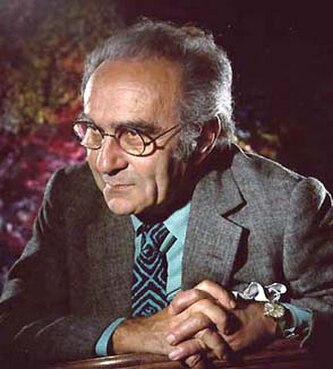
Jacob Bronowski (January 18, 1908 – August 22, 1974) was a British mathematician, biologist, and science historian of Polish origin. He is remembered as the writer and presenter of the 1973 BBC television documentary series, The Ascent of Man.
Best Jacob Bronowski Quotes
Shortest
Earliest
Explore our curated collection of the most famous and impactful Jacob Bronowski quotes.

“The world can only be grasped by action, not by contemplation.”
“A good prediction is one which defines its area of uncertainty; a bad prediction ignores it.”
“Almost everything that we do that is worth doing is done in the first place in the mind's eye.”
“When a child begins to play games... he enters the gateway to reason and imagination together.”
“To imagine means to make images and to move them about inside one's head in new arrangements.”

“This ability to order things into likes and unlikes is, I think, the foundation of human thought.”
“We do not construct the world from our experiences; we are aware of the world in our experiences.”

“To imagine is the characteristic act, not of the poet's mind, or the painter's, or the scientist's, but of the mind of man.”

“All great scientists have used their imaginations freely, and let it ride them to outrageous conclusions without crying "Halt!"”


“The strength of the imagination, its enriching power and excitement, lies in its interplay with reality—physical and emotional.”
“Imagination is the manipulation of images in one's head... the rational manipulation... as well as the literary and artistic manipulation.”
“Order is the selection of one set of appearances rather than another because it gives a better sense of the reality behind the appearances.”
“In a parched African landscape like this at Omo, man first put his foot to the ground. That seems a pedestrian way to begin the ascent of man.”


“Human beings can imagine situations which are different from those in front of their eyes... because they make and hold in their minds images for absent things.”

“I grew up to be indifferent to the distinction between literature and science, which in my teens were simply two languages for experience that I learned together.”

“Fifty years from now, if an understanding of man's origins, his evolution, his history, his progress is not in the common place of the school books, we shall not exist.”

“The language of ideas creates a different universe: a universe which has multiplied the monkey's vocabulary of forty words to the million words in the English dictionary.”

“At bottom, we have remain individually too greedy to distribute our surplus, and collectively too stupid to pile it up in any more useful form than the traditional mountains of arms.”
Jacob Bronowski Quotes by Topic
Find exactly what you are looking for by browsing this categorized list of Jacob Bronowski quotes by topic.
Jacob Bronowski on Science 9 quotes
“Science, like art, is not a copy of nature but a re-creation of her.”

Jacob Bronowski on Consciousness 3 quotes
“What we really mean by free will... is the visualizing of alternatives and making a choice between them. ...the central problem of human consciousness depends on this ability to imagine.”

Jacob Bronowski on Dissent 2 quotes
View all 2 quotes on Dissent →Jacob Bronowski on War 2 quotes
“[War] is a highly planned and cooperative form of theft.”
Jacob Bronowski on Symbols 2 quotes
“The symbol is the tool which gives man his power, and it is the same tool whether the symbols are images or words, mathematical signs or mesons.”

Jacob Bronowski on Imagination 2 quotes
“What we really mean by free will... is the visualizing of alternatives and making a choice between them. ...the central problem of human consciousness depends on this ability to imagine.”
Jacob Bronowski on Inductive reasoning 2 quotes
“[T]he human reason discovers new relations between things not by deduction, but by that unpredictable blend of speculation and insight... induction, which—like other forms of imagination—cannot be formalized.”
Jacob Bronowski on History of science 2 quotes
“If I were giving this lecture fifty years from now, the word "gravitation" would be as old-fashioned as the word "phlogiston" is to us. Relativity has certainly demoted gravitation as a real explanation, just as Priestley's and Lavoisier's analyses and decoding of chemical reactions destroyed the word "phlogiston."”

Jacob Bronowski on Ambiguity 2 quotes
“Why do I require an hour to give this lecture when all I have to say really could go into roughly six sentences? Because I could not utter six sentences which are not so heavily charged with ambiguity that no one... would get the picture... Most human sentences are... aimed at getting rid of the ambiguity which you unfortunately left trailing in the last sentence. ...It is not possible to get rid of ambiguity in our statements, because that would press symbolism beyond its capabilities. And it is not possible to get rid of ambiguity because the number of responses that the brain could make never has a sharp edge because the thing is not a digital machine.”
Jacob Bronowski on History of mathematics 2 quotes
“Now Gödel's proof, Russell's original paradox, all these things, all stem from one common root which is inherent in all symbolic languages, including the language we use. ...the problem which dogs all formal systems, the problem of self-reference; that is, the language can be used to refer to sentences in the language. Indeed, between 1900 and 1910 Russell tried to forbid this, to say you cannot do mathematics if you can do that, and so he invented the theory of types. Of course, no sooner had he invented it than it turned up you could not do mathematics at all if you obeyed the theory of types. So then he had to put in an axiom of reducibility, which allows a certain amount of self-reference. And by this time everyone was pretty bored.”

Jacob Bronowski on Foundations of mathematics 2 quotes
“Now Gödel's proof, Russell's original paradox, all these things, all stem from one common root which is inherent in all symbolic languages, including the language we use. ...the problem which dogs all formal systems, the problem of self-reference; that is, the language can be used to refer to sentences in the language. Indeed, between 1900 and 1910 Russell tried to forbid this, to say you cannot do mathematics if you can do that, and so he invented the theory of types. Of course, no sooner had he invented it than it turned up you could not do mathematics at all if you obeyed the theory of types. So then he had to put in an axiom of reducibility, which allows a certain amount of self-reference. And by this time everyone was pretty bored.”
Jacob Bronowski on Time
“Time is not bought ready-made at the watchmaker's.”

What Jacob Bronowski Said About Others
Discover personal opinions Jacob Bronowski shared regarding contemporaries.
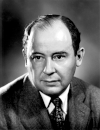
Jacob Bronowski on John von Neumann 3 quotes
“Mathematics is not a pompous activity, least of all in the hands of extraordinarily fast and penetrating minds like Johnny von Neumann.”
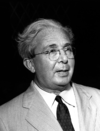
Jacob Bronowski on Leó Szilárd
“I had not been long back from Hiroshima when I heard someone say, in Szilárd's presence; that it was the tragedy of scientists that their discoveries were used for destruction. Szilárd replied, as he more than anyone else had the right to reply; that it was not the tragedy of scientists, it is the tragedy of mankind.”
Jacob Bronowski on Alfred Tarski
“In 1931, Tarski proved quite simply that... there is no complete language of science. ...Tarski's proof... essentially consists in showing that, as soon as you not only exhibit the statements but add to them the statement, "is true," you are in trouble because you are bound to be landed in contradictions like the one which arises in the Epimenides paradox.”

Jacob Bronowski on Christiaan Huygens
“Like Hooke, Huygens made fundamental improvements to the clock as a time-keeping mechanism; and Hooke invented the first passable escapement for the same purpose. ...Huygens discovered the rings of Saturn, and the formula for centrifugal force. He did important work in mechanics and optics, and one of his merits was that he made young Leibnitz enthusiastic for these subjects.”

Jacob Bronowski on Frank P. Ramsey
“[M]y teacher Frank Ramsey... showed that if a scientific system was so completely precise that you could replace every word in it, such as "electrons," by the totality of all observations on the electron, then you could never discover anything new. ...Ramsey's theorem is really equivalent to all the Tarski-Turing theorems in essence because it says that if you push the symbolism even in a word like "mass" so that you say, as operationalists do... mass is everything you do when you weigh the mass, you are never going to discover that mass and energy are interchangeable. You have closed the system to new discoveries.”

Jacob Bronowski on Albert Einstein
“It is almost impertinent to talk of the ascent of man in the presence of two men, Newton and Einstein, who stride like gods. Of the two, Newton is the Old Testament god; it is Einstein who is the New Testament figure. He was full of humanity, pity, a sense of enormous sympathy. His vision of nature herself was that of a human being in the presence of something god-like, and that is what he always said about nature. He was fond of talking about God: 'God does not play at dice', 'God is not malicious'. Finally Niels Bohr one day said to him, 'Stop telling God what to do'. But that is not quite fair. Einstein was a man who could ask immensely simple questions. And what his life showed, and his work, is that when the answers are simple too, then you hear God thinking.”

Jacob Bronowski on Gottfried Leibniz
“[T]he program which Immanuel Kant proposed back in the 1760s... was this: our knowledge of the outside world depends on our modes of perception... Unfortunately, a great revolution took place in or about the year 1768, when he read a paper by Euler which intended to show that space was indeed absolute as Newton had suggested and not relative as Leibnitz suggested. (...in the eighteenth century the question of whether Newton's... or Leibnitz's view of the world was right profoundly affected all philosophy.) After reading Euler's argument... Kant... for the first time proposed that... we must be conscious of [absolute space] a priori. ...Kant died in 1804, long before new ideas about space... had been published... And since one of the things that happened in [our] lifetime has been the substitution of... a Leibnitz universe, the universe of relativity, for Newton's universe... we should think that out again.”

Quotes About Jacob Bronowski
Gain deeper perspective through quotes about Jacob Bronowski from others.
Laurence D. Chalem on Jacob Bronowski
“He first became familiar to the British public through appearances on the BBC television version of The Brains Trust in the late 1950s, but is better known for his... series The Ascent of Man (1973). This was an inspiration for Carl Sagan to make Cosmos in 1980. During the making of The Ascent of Man he was interviewed by Michael Parkinson, and Bronowski's description of a visit to Auschwitz—he had lost many family members during the Nazi era—was described by Parkinson as one of his most memorable interviews. ...Bronowski died of a heart attack in East Hampton, New York a year after The Ascent of Man was completed, and was buried in the western side of London's Highgate Cemetery...”
Philipp Frank on Jacob Bronowski 3 quotes
“[V]on Mises and Hilda Geiringer raised the objection that in Reichenbach's theory a theory was said to be "valid with a probability of 70%," if 70 per cent of the conclusions of the theory were confirmed by experiment. However, we know... a theory which is in disagreement with experience in 30% of... experiments is called "false" or "wrong." We come to the same conclusion if we apply Carnap's "inductive probability." An attempt to avoid these difficulties and to advance a radically different approach... was made by Jacob Bronowski. His purpose was to formalize the criterion for the validity of a theory that was advocated by men like John Frederick Herschel and William Whewell. ...these scientists and philosophers saw the main achievement of a theory in its unifying and simplifying power. The simpler the theory... the more probable the theory. If the theory consists in a complete enumeration of all observable facts, the "theory" would have a very high probability... However, von Mises and Bronowski rejected this... If we have two theories which yield the same observable facts, the scientist prefers the... more economical or just simpler. Bronowski compares the scientific theory with a code... We prefer the code which is more practical, more efficient. ...to improve the code, we try systematically... "to break down the code into its constituent symbols and their laws of arrangement." ...If we break down [chemical] elements into... elementary particles (protons, neutrons, and electrons) and the forces acting between them, we have a code which describes... the interaction between hydrogen and oxygen... from which can be derived much more information than from any theory in which "oxygen" and "hydrogen"...occur as primitive symbols. ...Bronowski calls a theory the more probable, the more the code... is broken down into constituent symbols and laws of arrangement.”
About Jacob Bronowski
Jacob Bronowski (January 18, 1908 – August 22, 1974) was a British mathematician, biologist, and science historian of Polish origin. He is remembered as the writer and presenter of the 1973 BBC television documentary series, The Ascent of Man.