Link Copied!
Italo Calvino Quotes (1923-1985)
Writer
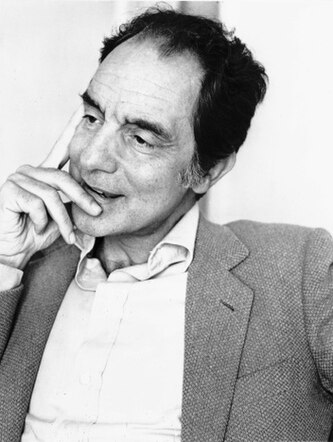

About Italo Calvino
Italo Calvino (October 15, 1923 – September 19, 1985) was an Italian journalist and writer of short stories and novels. Lionized in Britain and America, he was, at the time of his death, the most-translated contemporary Italian writer.
Best Italo Calvino Quotes
Shortest
Earliest
Explore our curated collection of the most famous and impactful Italo Calvino quotes.
“Gore is a man without an unconscious.”
“Reading is going toward something that is about to be, and no one yet knows what it will be.”
“«What makes love making and reading resemble each other most is that within both of them times and spaces open, different from measurable time and space»
• "If on a winter's night a traveller". Chapter 7. Translated from the Italian by William Weaver (1981).”
• "If on a winter's night a traveller". Chapter 7. Translated from the Italian by William Weaver (1981).”
“As this wave from memories flows in, the city soaks it up like a sponge and expands. (di quest'onda che rifluisce dai ricordi la città s'imbeve coma una spugna e si dilata). The city, however, does not tell of its past, but contains it like the lines of a hand...”
“If one wanted to depict the whole thing graphically, every episode, with its climax, would require a three-dimensional, or, rather, no model: every experience is unrepeatable. What makes lovemaking and reading resemble each other most is that within both of them times and spaces open, different from measurable time and space.”
“With cities, it is as with dreams: everything imaginable can be dreamed, but even the most unexpected dream is a rebus that conceals a desire or, its reverse, a fear. Cities, like dreams, are made of desires and fears, even if the thread of their discourse is secret, their rules are absurd, their perspectives deceitful, and everything conceals something else.”

“In an age when other fantastically speedy, widespread media are triumphing and running the risk of flattening all communication onto a single, homogeneous surface, the function of literature is communication between things that are different simply because they are different, not blunting but even sharpening the differences between them, following the true bent of the written language.
• English translation: Patrick Creagh (1996).”
• English translation: Patrick Creagh (1996).”

“The inferno of the living is not something that will be; if there is one, it is what is already here, the inferno where we live every day, that we form by being together. There are two ways to escape suffering it. The first is easy for many: accept the inferno and become such a part of it that you can no longer see it. The second is risky and demands constant vigilance and apprehension: seek and learn to recognize who and what, in the midst of inferno, are not inferno, then make them endure, give them space.”
“He was carried away by that mania of the storyteller, who never knows which stories are more beautiful—the ones that really happened and the evocation of which recalls a whole flow of hours past, of petty emotions, boredom, happiness, insecurity, vanity, and self-disgust, or those which are invented, and in which he cuts out a main pattern, and everything seems easy, then begins to vary it as he realizes more and more that he is describing again things that had happened or been understood in lived reality.
• The Baron in the Trees (1957), Chapter 16; English translation: Archibald Colquhoun (1959).”
• The Baron in the Trees (1957), Chapter 16; English translation: Archibald Colquhoun (1959).”
“I set my hand to the art of writing early on. Publishing was easy for me, and I at once found favor and understanding. But it was a long time before I realized and convinced myself that this was anything but mere chance.
Everything can change, but not the language that we carry inside us, like a world more exclusive and final than one's mother's womb.
Your first book already defines you, while you are really far from being defined. And this definition is something you may then carry with you for the rest of your life, trying to confirm it or extend or correct or deny it; but you can never eliminate it.
• English translation: Archibald Colquhoun (1957), HarperCollins.”
“Then we have computer science. It is true that software cannot exercise its powers of lightness except through the weight of hardware. But it is the software that gives the orders, acting on the outside world and on machines that exist only as functions of software and evolve so that they can work out ever more complex programs. The second industrial revolution, unlike the first, does not present us with such crushing images as rolling mills and molten steel, but with "bits" in a flow of information traveling along circuits in the form of electronic impulses. The iron machines still exist, but they obey the orders of weightless bits.
• English translation: Patrick Creagh (1996).”
• English translation: Patrick Creagh (1996).”

“And he waves the pages of the papers, black and white the way space was when the galaxies were being formed, and crammed—as space was then—with isolated corpuscles, surrounded by emptiness, containing no destination or meaning. And I think how beautiful it was then, through that void, to draw lines and parabolas, pick out the precise point, the intersection between space and time where the event would spring forth, undeniable in the prominence of its glow; whereas now events come flowing down without interruption, like cement being poured, one column next to the other, one within the other, separated by black and incongruous headlines....
• Pages 92-93, "How Much Shall We Bet?"”
• Pages 92-93, "How Much Shall We Bet?"”
“Don't be amazed if you see my eyes always wandering. In fact, this is my way of reading, and it is only in this way that reading proves fruitful to me. If a book truly interests me, I cannot follow it for more than a few lines before my mind, having seized on a thought that the text suggests to it, or a feeling, or a question, or an image, goes off on a tangent and springs from thought to thought, from image to image, in an itinerary of reasonings and fantasies that I feel the need to pursue to the end, moving away from the book until I have lost sight of it. The stimulus of reading is indispensable to me, and of meaty reading, even if, of every book, I manage to read no more than a few pages. But those few pages already enclose for me whole universes, which I can never exhaust.”
“And in that moment we all thought of the space that her round arms would occupy moving backward and forward with the rolling pin over the dough, her bosom leaning over the great mound of flour and eggs, [...] and we thought of the space the flour would occupy, and the wheat for the flour, and the fields to raise the wheat, and the mountains from which the water would flow to irrigate the fields; [...] of the space it would take for the Sun to arrive with its rays, to ripen the wheat; of the space for the Sun to condense from the clouds of stellar gases and burn; of the quantities of stars and galaxies and galactic masses in flight through space which would be needed to hold suspended every galaxy, every nebula, every sun, every planet, and at the same time we thought of it, this space was inevitably being formed, at the same time that Mrs. Ph(i)Nk0 was uttering those words: "… ah, what noodles, boys!" the point that contained her and all of us was expanding in a halo of distance in light-years and light-centuries and billions of light-millennia, and we were being hurled to the four corners of the universe, [...] and she, dissolved into I don't know what kind of energy-light-heat, she, Mrs. Ph(i)Nk0, she who in the midst of our closed, petty world had been capable of a generous impulse, "Boys, the noodles I would make for you!," a true outburst of general love, initiating at the same moment the concept of space and, properly speaking, space itself, and time, and universal gravitation, and the gravitating universe, making possible billions and billions of suns, and of planets, and fields of wheat, and Mrs. Ph(i)Nk0s, scattered through the continents of the planets, kneading with floury, oil-shiny, generous arms, and she lost at that very moment, and we, mourning her loss.”
“In the shop window you have promptly identified the cover with the title you were looking for. Following this visual trail, you have forced your way through the shop past the thick barricade of Books You Haven't Read, which were frowning at you from the tables and shelves, trying to cow you. But you know you must never allow yourself to be awed, that among them there extend for acres and acres the Books You Needn't Read, the Books Made For Purposes Other Than Reading, Books Read Even Before You Open Them Since They Belong To The Category Of Books Read Before Being Written. And thus you pass the outer girdle of ramparts, but then you are attacked by the infantry of the Books That If You Had More Than One Life You Would Certainly Also Read But Unfortunately Your Days Are Numbered. With a rapid maneuver you bypass them and move into the phalanxes of the Books You Mean To Read But There Are Others You Must Read First, the Books Too Expensive Now And You'll Wait Till They're Remaindered, the Books ditto When They Come Out In Paperback, Books You Can Borrow From Somebody, Books That Everybody's Read So It's As If You Had Read Them, Too. Eluding these assaults, you come up beneath the towers of the fortress, where other troops are holding out:
the Books You've Been Planning To Read For Ages,
the Books You've Been Hunting For Years Without Success,
the Books Dealing With Something You're Working On At The Moment,
the Books You Want To Own So They'll Be Handy Just In Case,
the Books You Could Put Aside Maybe To Read This Summer,
the Books You Need To Go With Other Books On Your Shelves,
the Books That Fill You With Sudden, Inexplicable Curiosity, Not Easily Justified,
Now you have been able to reduce the countless embattled troops to an array that is, to be sure, very large but still calculable in a finite number; but this relative relief is then undermined by the ambush of the Books Read Long Ago Which It's Now Time To Reread and the Books You've Always Pretended To Have Read And Now It's Time To Sit Down And Really Read Them.”
Italo Calvino Quotes by Topic
Find exactly what you are looking for by browsing this categorized list of Italo Calvino quotes by topic.
Italo Calvino on Charles Eliot Norton Lectures 3 quotes
“Saving time is a good thing because the more time we save, the more we can afford to lose”
Italo Calvino on Books
“Reading is going toward something that is about to be, and no one yet knows what it will be.”
Italo Calvino on Arch
Italo Calvino on Contradiction
“A quarter of America is a dramatic, tense, violent country, exploding with contradictions, full of brutal, physiological vitality, and that is the America that I have really loved and love. But a good half of it is a country of boredom, emptiness, monotony, brainless production, and brainless consumption, and this is the American inferno.”
Italo Calvino on Auspicious
“Were I to choose an auspicious image for the new millennium, I would choose this one: The sudden agile leap of the poet-philosopher who raises himself above the weight of the world, showing that with all his gravity he has the secret of lightness, and that what many consider to be the vitality of the times--noisy, aggressive, revving and roaring--belongs to the realm of death, like a cemetery for rusty, old cars.”
What Italo Calvino Said About Others
Discover personal opinions Italo Calvino shared regarding contemporaries.
Italo Calvino on Gore Vidal
“Gore is a man without an unconscious.”

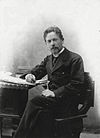
Italo Calvino on Anton Chekhov
“I'm glad you like Chekhov. He is a very great writer, immense. He picks all human arrogances clean to the bone but has an unshakable confidence in the future of humanity.”
Quotes About Italo Calvino
Gain deeper perspective through quotes about Italo Calvino from others.
Marjorie Agosín "Reflections on the Fantastic" Translated from the Spanish by Celeste Kostopulos-Cooperman. In on Italo Calvino
“Both Italo Calvino and Jorge Luis Borges have contributed greatly to our understanding of the fantastic. Calvino in his book, The Uses of Literature says, "I leave the critics the task of placing my novels and short stories within or outside of some classification of Fantasy. For me, the main thing in a narrative is not the explanation of an extraordinary event, but the order of things that this extraordinary event produces in itself and around it; the patterns of symmetry, the network of images deposited around it as in the formation of a crystal." (The Uses of Literature, New York: Norton, 1979, p. 73)”
Kathleen Alcalá "The Madonna on Italo Calvino
“Italo Calvino, in The Uses of Literature, said that "the more technological our houses, the more their walls ooze ghosts." What does that mean? It means that the more abstract our dealings with each other, the more mysteries are created. The more mysteries, the more questions, and that's where the storyteller steps in.”
Natalia Ginzburg on Italo Calvino
“As for Calvino, I have to say honestly that I love especially his earlier work, his stories, his fiction up to and including Invisible Cities—a very beautiful book which I adore. I love less what came after Invisible Cities. The more recent work seems to me too cerebral. But then, that’s just my personal preference, and it is hard to convince readers about what is most authentic in someone’s work. Recently a book by Calvino was published posthumously, a book called La Strada di San Giovanni. In this book there is a beautiful story—the title story, in fact—which is a sort of memoir written in 1965 or so—which he never thought to publish. And there are other wonderful pieces in that collection.”

Gore Vidal on Italo Calvino
“During the last quarter century Italo Calvino has advanced far beyond his American and English contemporaries. As they continue to look for the place where the spiders make their nests, Calvino has not only found this special place but learned how himself to make fantastic webs of prose to which all things adhere.”
About Italo Calvino
Italo Calvino (October 15, 1923 – September 19, 1985) was an Italian journalist and writer of short stories and novels. Lionized in Britain and America, he was, at the time of his death, the most-translated contemporary Italian writer.