Link Copied!
Isaiah Berlin Quotes (1909-1997)
Philosopher, Artist, King
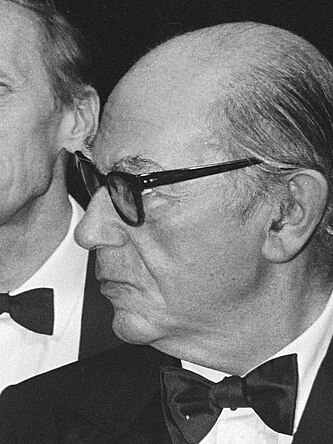


About Isaiah Berlin
Sir Isaiah Berlin (6 June 1909 – 5 November 1997) was a Russian-British political philosopher and historian of ideas, regarded as one of the leading liberal thinkers of the 20th century.
Best Isaiah Berlin Quotes
Shortest
Earliest
Explore our curated collection of the most famous and impactful Isaiah Berlin quotes.
“Philosophers are adults who persist in asking childish questions.”
“Few new truths have ever won their way against the resistance of established ideas save by being overstated.”
“To confuse our own constructions and inventions with eternal laws or divine decrees is one of the most fatal delusions of men.”
“Everything is what it is: liberty is liberty, not equality or fairness or justice or culture, or human happiness or a quiet conscience.”

“Historians of ideas, however scrupulous and minute they may feel it necessary to be, cannot avoid perceiving their material in terms of some kind of pattern.”

“The very desire for guarantees that our values are eternal and secure in some objective heaven is perhaps only a craving for the certainties of childhood or the absolute values of our primitive past.”
“But to manipulate men, to propel them towards goals which you — the social reformer — see, but they may not, is to deny their human essence, to treat them as objects without wills of their own, and therefore to degrade them.”
“The notion that one can discover large patterns or regularities in the procession of historical events is naturally attractive to those who are impressed by the success of the natural sciences in classifying, correlating, and above all predicting.”
“All forms of tampering with human beings, getting at them, shaping them against their will to your own pattern, all thought control and conditioning is, therefore, a denial of that in men which makes them men and their values ultimate.”
“While there may exist no more than the normal extent of disagreement about the meaning of particular terms or theses contained in these works, there is a startling degree of divergence about the central view, the basic political attitude of Machiavelli.”

“Injustice, poverty, slavery, ignorance — these may be cured by reform or revolution. But men do not live only by fighting evils. They live by positive goals, individual and collective, a vast variety of them, seldom predictable, at times incompatible.”

“By freedom he meant a condition in which men were not prevented from choosing both the object and the manner of their worship. For him only a society in which this condition was realised could be called fully human. Its realisation was an ideal which Mill regarded as more precious than life itself.”
“The simple point which I am concerned to make is that where ultimate values are irreconcilable, clear-cut solutions cannot, in principle, be found. To decide rationally in such situations is to decide in the light of general ideals, the overall pattern of life pursued by a man or a group or a society.”
“Those, no doubt, are in some way fortunate who have brought themselves, or have been brought by others, to obey some ultimate principle before the bar of which all problems can be brought. Single-minded monists, ruthless fanatics, men possessed by an all-embracing coherent vision do not know the doubts and agonies of those who cannot wholly blind themselves to reality.”
“What is Life?
(1) Tale told by an idiot full of sound and fury, signifying nothing.
(2) Dictionary definition in biology (chemical process within organic entities involving metabolism etc.)
(3) Mrs Woolf: ‘Life is a luminous halo, a semi-transparent envelope surrounding us from the beginning of consciousness to the end.’
(4) Series of actual and hypothetical behavioural data which differ in certain assignable ways from data defining dead or inanimate entities.
(5) That which the Lord infused into Adam. See Genesis 1. 4 [sc. 2. 7].
Which?
Mental Cramp.”

“If, as I believe, the ends of men are many, and not all of them are in principle compatible with each other, then the possibility of conflict — and of tragedy — can never wholly be eliminated from human life, either personal or social. The necessity of choosing between absolute claims is then an inescapable characteristic of the human condition. This gives its value to freedom as Acton conceived of it — as an end in itself, and not as a temporary need, arising out of our confused notions and irrational and disordered lives, a predicament which a panacea could one day put right.”

“This they do in the service of an imaginary science; and, like the astrologers and soothsayers whom they have succeeded, cast up their eyes to the clouds, and speak in immense, unsubstantiated images and similes, in deeply misleading metaphors and allegories, and make use of hypnotic formulae with little regard for experience, or rational argument, or tests of proven reliability. Thereby they throw dust in their own eyes as well as in ours, obstruct our vision of the real world, and further confuse an already sufficiently bewildered public about the relations of morality to politics, and about the nature and methods of the natural sciences and historical studies alike.”

“I am normally said to be free to the degree to which no man or body of men interferes with my activity. Political liberty in this sense is simply the area within which a man can act unobstructed by others. If I am prevented by others from doing what I could otherwise do, I am to that degree unfree; and if this area is contracted by other men beyond a certain minimum, I can be described as being coerced, or, it may be, enslaved. Coercion is not, however, a term that covers every form of inability. If I say that I am unable to jump more than ten feet in the air, or cannot read because I am blind, or cannot understand the darker pages of Hegel, it would be eccentric to say that I am to that degree enslaved or coerced. Coercion implies the deliberate interference of other human beings within the area in which I could otherwise act.”
“What has been shown by Machiavelli, who is often (like Nietzsche) congratulated for tearing off hypocritical masks, brutally revealing the truth, and so on, is not that men profess one thing and do another (although no doubt he shows this too) but that when they assume that the two ideals are compatible, or perhaps are even one and the same ideal, and do not allow this assumption to be questioned, they are guilty of bad faith (as the existentialists call it, or of “false consciousness,” to use a Marxist formula) which their actual behavior exhibits. Machiavelli calls the bluff not just of official morality—the hypocrisies of ordinary life—but of one of the foundations of the central Western philosophical tradition, the belief in the ultimate compatibility of all genuine values. His own withers are unwrung. He has made his choice. He seems wholly unworried by, indeed scarcely aware of, parting company with traditional Western morality.”
“For there exists a great chasm between those, on one side, who relate everything to a single central vision, one system, less or more coherent or articulate, in terms of which they understand, think and feel - a single, universal, organising principle in terms of which alone all that they are and say has significance - and, on the other side, those who pursue many ends, often unrelated and even contradictory, connected, if at all, only in de facto way for some psychological or physiological cause, related to no moral or aesthetic principle. This last lead lives, perform acts and entertain ideas that are centrifugal rather than centripetal; their thought is scattered or diffused, moving on many levels, seizing upon the essence of a vast variety of experiences and objects; for they are themselves, consciously or unconsciously seeking to fit them into or exclude them from any one unchanging, all-embracing, sometimes self-contradictory and incomplete at times fanatical, military inner vision. The first kind of intellectual and artistic personality belongs to the hedgehogs, the second to the foxes.”

“Knowledge increases autonomy both in the sense of Kant, and in that of Spinoza and his followers. I should like to ask once more: is all liberty just that? The advance of knowledge stops men from wasting their resources upon delusive projects. It has stopped us from burning witches or flogging lunatics or predicting the future by listening to oracles or looking at the entrails of animals or the flight of birds. It may yet render many institutions and decisions of the present – legal, political, moral, social – obsolete, by showing them to be as cruel and stupid and incompatible with the pursuit of justice or reason or happiness or truth as we now think the burning of widows or eating the flesh of an enemy to acquire skills. If our powers of prediction, and so our knowledge of the future, become much greater, then, even if they are never complete, this may radically alter our view of what constitutes a person, an act, a choice; and eo ipso our language and our picture of the world. This may make our conduct more rational, perhaps more tolerant, charitable, civilised, it may improve it in many ways, but will it increase the area of free choice? For individuals or groups?”

Isaiah Berlin Quotes by Topic
Find exactly what you are looking for by browsing this categorized list of Isaiah Berlin quotes by topic.
Isaiah Berlin on New Deal
Isaiah Berlin on Relativism
“To confuse our own constructions and inventions with eternal laws or divine decrees is one of the most fatal delusions of men.”

Isaiah Berlin on Curiosity
“Only barbarians are not curious about where they come from, how they came to be where they are, where they appear to be going, whether they wish to go there, and if so, why, and if not, why not.”

Isaiah Berlin on Society
Isaiah Berlin on Sociology
“To have given clear and unified answers in familiar empirical terms to those theoretical questions which most occupied men's minds at the time, and to have deduced from them clear practical directives without creating obviously artificial links between the two, was the principle achievement of Marx's theory. The sociological treatment of historical and moral problems, which Comte and after him, Spencer and Taine, had discussed and mapped, became a precise and concrete study only when the attack of militant Marxism made its conclusions a burning issue, and so made the search for evidence more zealous and the attention to method more intense.”

What Isaiah Berlin Said About Others
Discover personal opinions Isaiah Berlin shared regarding contemporaries.
Isaiah Berlin on Baruch Spinoza 6 quotes
“Leibniz's doctrine is an evolutionary doctrine. It is not the same thing with Spinoza. Spinoza has no sense of change and evolution. He has no sense of history.”

Isaiah Berlin on Niccolò Machiavelli 2 quotes
“What has been shown by Machiavelli, who is often (like Nietzsche) congratulated for tearing off hypocritical masks, brutally revealing the truth, and so on, is not that men profess one thing and do another (although no doubt he shows this too) but that when they assume that the two ideals are compatible, or perhaps are even one and the same ideal, and do not allow this assumption to be questioned, they are guilty of bad faith (as the existentialists call it, or of “false consciousness,” to use a Marxist formula) which their actual behavior exhibits. Machiavelli calls the bluff not just of official morality—the hypocrisies of ordinary life—but of one of the foundations of the central Western philosophical tradition, the belief in the ultimate compatibility of all genuine values. His own withers are unwrung. He has made his choice. He seems wholly unworried by, indeed scarcely aware of, parting company with traditional Western morality.”
Isaiah Berlin on Lewis Namier
“Namier's most striking personal characteristics were an unremittingly active intellectual power, independence, lack of fear, and an unswerving devotion to his chosen field.”

Isaiah Berlin on Lord David Cecil
“We got on extremely well; I thought he was wonderful; the most agreeable, intelligent charming man I had met in my life... We used to see each other every day, and we talked for about eight hours every day. Endlessly... He was a very sharp delineator of character. His vignettes were absolutely wonderful.”

Isaiah Berlin on Mikhail Bakunin
“To classify the views with those of Bakunin as forms of semi-anarchistic 'populism', or with those of Proudhon or Rodbertus or Chernyshevsky as yet another variant of early socialism with an agrarian bias, is to leave out his most arresting contribution to political theory. This injustice deserves to be remedied.”
Isaiah Berlin on Joseph de Maistre
“Behind the classical mask, behind the classical façade, behind the air of the Grand Seigneur, behind the orthodox Thomism, behind the official complete subservience to the monarchy of his day, which was nothing very splendid or impressive, there is in Maistre something much wilder, much more romantic, much more terrifying. He reminds one of someone like d'Annunzio or Nietzsche – not to seek for later examples. In that way he resembled Rousseau. Just as Rousseau imposed a kind of Calvinist logical strait-jacket upon what was really a kind of burning private lunacy, so Maistre imposes an official legitimist Catholic framework upon what is really a deeply violent, deeply revolutionary inner passion.”

Isaiah Berlin on Archilochus
“There is a line among the fragments of the Greek poet Archilochus which says: "The fox knows many things, but the hedgehog knows one big thing." Scholars have differed about the correct interpretation of these dark words, which may mean no more than that the fox, for all his cunning, is defeated by the hedgehog's one defence. But, taken figuratively, the words can be made to yield a sense in which they mark one of the deepest differences which divide writers and thinkers, and, it may be, human beings in general. For there exists a great chasm between those, on one side, who relate everything to a single, universal, organizing principle in terms of which alone all that they are and say has significance — and, on the other side, those who pursue many ends, often unrelated and even contradictory... Their thought is scattered or diffused, moving on many levels, seizing upon the essence of a vast variety of experiences and objects for what they are in themselves, without, consciously or unconsciously, seeking to fit them into, or exclude them from any one unchanging, all-embracing, sometimes self-contradictory and incomplete, at times fanatical, unitary inner vision. The first kind of intellectual and artistic personality belongs to the hedgehogs, the second to the foxes; and without insisting on a rigid classification, we may, without too much fear of contradiction, say that, in this sense, Dante belongs to the first category, Shakespeare to the second.”

Quotes About Isaiah Berlin
Gain deeper perspective through quotes about Isaiah Berlin from others.
Perry Anderson on Isaiah Berlin
“Neapolitan scholar and Prussian pastor alike, in Berlin’s account of them, move towards the frontier of just such a relativism. They do so because, in tendency if not in letter, their thought (as does Mill’s) denies the existence of any permanent human nature. Variable cultures so shape the different needs and dispositions of their members that no common moral standard is applicable to the species. But after affirming – even applauding – the intransigence of this rejection of ‘the central concept of the Western tradition from the Greeks to Aquinas, from the Renaissance to Grotius, Spinoza, Locke’, Berlin then typically mitigates or retracts it. If The Crooked Timber of Humanity strikes one new note, in fact, it is in the strength of its assurance that Vico or Herder were not after all relativists: ‘this idée reçue seems to me now to be a widespread error, which, I must admit, I have in the past perpetrated myself.’ The reason, Berlin explains, is that however diverse or incompatible cultures may be, ‘their variety cannot be unlimited, for the nature of men, however various and subject to change, must possess some generic nature if it is to be called human at all.’ Values can thus be plural and conflictual, yet at the same time perfectly objective, because, despite everything, a common human nature does exist, in which they all ultimately come to rest. The intention of this solution is clear – to bar the path from the liberal notion of pluralism to the nihilist consequences of relativism. But it falls short of accomplishing it. The human species could exhibit a range of common characteristics, including a capacity for mutual communication (on which Berlin lays special stress), without these necessarily having any moral import; and if the social codes it develops conflict, value-choices between them will on any definition be subjective. In one of his most acute essays, Berlin taxed Montesquieu with a central inconsistency. On the one hand, De l’Esprit des Lois showed that human laws and morals vary according to material and cultural circumstances, while on the other it upheld the existence of an absolute justice independent of time and place. Berlin comments that ‘the only link between the two doctrines is their common libertarian purpose.’ This is a good description of his own construction. For the best of motives, Berlin wishes to defend cultural pluralism without renouncing moral universalism. It is a more demanding task than he appears to believe.”

John Gray on Isaiah Berlin
“RS: If we are still living tomorrow, we at least have the possibility to read good books. For example those of the Jewish liberal Isaiah Berlin, who you also knew in person. What did you learn from him? JG: Isaiah was an incredibly tolerant person – and I believe that tolerance is an essential part of liberalism. Because tolerance means nothing other than everyone can become happy in his or her own way, as long as it does not bother others. Where tolerance is lacking, there is a need for legislation, rights, entitlements. RS: Berlin was a representative of negative liberty. To put it bluntly: to be free means to be left in peace by others. JG: Freedom is the absence of human obstacles that force me to act and live in a way I do not want to act or live. As long as man does not harm anyone, he can live how he wants to live – even if he does harm to himself. That must be borne by the others. Tolerance means precisely that I do not demand from others to live as I want to live. Negative freedom and tolerance are mutually dependent. Berlin was not a liberal fundamentalist – he accepted that in addition to the correct understanding of freedom there are also other values such as justice and social peace. Again, in the end consensus and weighing up are indispensable in a free society.”
Shulamith Hareven "Knowledge on Isaiah Berlin
“Sir Isaiah Berlin has always been unhappy about the possibility of a lack of connection between the intellectual and what is actually happening, and he made a beautiful differentiation between intellectuals and the intelligentsia. The intelligentsia of a country (and the whole definition flourished in Russia), is the community of enlightened people who display a high moral concern with what is happening around them. A member of the intelligentsia does not have to be an intellectual or a scholar, Sir Isaiah.”
Christopher Hitchens on Isaiah Berlin
“Here is the rich man’s John Rawls. Liberalism is for those who don’t need it; free to those who can afford it and very expensive – if even conceivable – to those who cannot. But the clash of ideas here is more chaotic than confused. Should one deduce that liberalism can’t be derived from the experience of pogroms? In that case, why did Berlin argue that liberalism was the answer to the experiences of this uniquely grim – as he thought – century? Meanwhile, if liberalism is geographically and even ethnically limited, where is its universality? (And what became of Namier’s ‘Jews and other coloured peoples’?) Should one be an English invader in order to be a carrier of liberal ideals? Finally, what’s the point of a tumultuous and volatile and above all ‘cosmopolitan’ society, like that of America, if high liberalism can only be established with common blood and on common soil?”
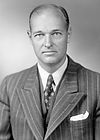
George F. Kennan on Isaiah Berlin
“Bohlen and Isaiah Berlin came to dinner, and we talked until one or two in the morning. Berlin, who is undoubtedly the best informed and most intelligent foreigner in Moscow, said that the only thins he had learned on the occasion of this visit were: (a) the continued existence of the conflict in outlook between age and youth, (b) of the tremendous importance to young people of the feeling of economic security which they have under the Soviet system, and (c) the continued vital importance of Marxist dogma in Soviet thought and action. He agreed with me strongly that American policy must find its expression from now on in action and not in words if it is to do any good. He was firmly convinced that the Russians view a conflict with the Western world as quite inevitable and that their whole policy is predicated on this prospect. I asked him whether they didn't realize that if the conflict came it would be the result of their own tactics and their own insistence that it was inevitable. he said no, that they would view it as inevitable through the logic of the development of social forces. They would say that possibly some of us foreign diplomats and statesmen might consider ourselves friendly to Russia at the moment but that eventually we would find out that we were hostile to them even though we did not know it at the moment.”
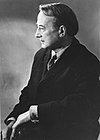
Michael Oakeshott on Isaiah Berlin
“There is no need for me to introduce, much less recommend, Mr Isaiah Berlin to you. His learning is notorious, and joined with it is a brilliant turn of dialectic which has dazzled many audiences. Listening to him you may think that you are in the presence of one of the great intellectual virtuosos of our time: a Paganini of ideas. And you would not be wrong. But do not be deceived. The art of which he is a master is not an easy art.”
Alan Ryan on Isaiah Berlin
“I am a great admirer of Isaiah Berlin, whose essays in the history of ideas provide one model for what I do here; nonetheless, there are moments in his work that make the reader wonder whether it is Montesquieu speaking or Berlin, or whether Machiavelli would have recognized the causes for which Berlin recruited him.”
About Isaiah Berlin
Sir Isaiah Berlin (6 June 1909 – 5 November 1997) was a Russian-British political philosopher and historian of ideas, regarded as one of the leading liberal thinkers of the 20th century.