Link Copied!
Ian Kershaw Quotes (1943-)

About Ian Kershaw
Sir Ian Kershaw (born 29 April 1943) is a British historian and retired University of Sheffield professor. He is a specialist in the study of Nazi Germany and a biographer of Adolf Hitler.
Best Ian Kershaw Quotes
Shortest
Earliest
Explore our curated collection of the most famous and impactful Ian Kershaw quotes.
“The road to Auschwitz was built by hate, but paved with indifference.”
“I should like to think that had I been around at the time I would have been a convinced anti-Nazi engaged in the underground resistance fight. However, I know really that I would have been as confused and felt as helpless as most of the people I am writing about.”
“A history of Hitler has to be a history of his power — how he came to get it, what its character was, how he exercised it, why he was allowed to expand it to break all institutional barriers, why resistance to that power was so feeble. But these are questions to be directed at German society, not just at Hitler.”

“The question of 'historical greatness' was usually implicit in the writing of conventional biography — particularly so in the German tradition. The figure of Hitler, whose attributes — distinguished from his political aura and impact — were scarcely noble, elevating or enriching, posed self-evident problems for such a tradition.”
“If Britain was solidly stable and France not much less so, Germany was more enigmatic. It fitted neatly into neither the model of relatively well-established democracies of the more economically advanced north-western Europe, nor the model of the newly created, fragile democracies of eastern Europe. In many ways, Germany was a hybrid. It looked both west and east.”

“The terrible famine of 1932 was still a searing memory. The heavy hand of Stalinist oppression had not receded since then. ... There was, then, good reason for the deep and widespread hatred for the Soviets among the Ukrainian population, and little wonder that the Germans were welcomed as liberators. Only downright idiocy could have converted that into even greater hatred of the Germans than the Soviets. But that is what the German conquerors achieved.”

“Hitler's power was of an extraordinary kind. He did not base his claim to power (except in a most formal sense) on his position as a party leader, or on any functional position. He derived it from what he saw as his historic mission to save Germany. His power, in other words, was 'charismatic', not institutional. It depended on the readiness of others to see 'heroic' qualities in him. And they did see those qualities — perhaps even before he himself came to believe in them.”

“Never in history has such ruination – physical and moral – been associated with the name of one man. That the ruination had far deeper roots and far more profound causes than the aims and actions of one man has been evident in the preceding chapters. That the previously unprobed depths of inhumanity plumbed by the Nazi regime could draw upon wide-ranging complicity at all levels of society has been equally apparent. But Hitler's name justifiably stands for all time as that of the chief instigator of the most profound collapse of civilization in modern times. The extreme form of personal rule which an ill-educated beerhall demagogue and racist bigot, a narcissistic, megalomaniac, self-styled national saviour was allowed to acquire and exercise in a modern, economically advanced, and cultured land known for its philosophers and poets, was absolutely decisive in the terrible unfolding of events in those fateful twelve years.”
“The last years before her death on 8 April 2013 were spent in increasing isolation, suffering from the tragic onset of dementia. Her funeral was held at St. Paul's Cathedral in London, something accorded only to outstanding national figures. Sir Winston Churchill's in 1965 united practically the whole country. Mrs Thatcher had, however, been a deeply divisive Prime Minister, who had elicited unusually strong devotion, but had also inspired not just dislike, but hatred, at the other end of the spectrum. Attitudes toward her death and subsequent state funeral duly reflected the polarization. More than thirty years after she left 10 Downing Street for the last time, the name Magaret Thatcher still retains the capacity to engender the full range of emotions. The scars felt by the many who had borne the brunt of her government's economic policies are to this day still not healed.
Charles Moore concluded his monumental three-volume biography by describing Mrs Thatcher as "the greatest genius ever to direct the affairs of the United Kingdom." The accolade is surely unwarranted. But, like her or loathe her, she was without doubt an extraordinary political leader.”
Charles Moore concluded his monumental three-volume biography by describing Mrs Thatcher as "the greatest genius ever to direct the affairs of the United Kingdom." The accolade is surely unwarranted. But, like her or loathe her, she was without doubt an extraordinary political leader.”

“For the Socialist and Communist left — with only minor differences between them in this regard — Hitler was portrayed as the hireling of big capitalism, the front-man for the imperialists, the political strike-force of the enemies, of the working class. Such views were to persist after 1933 in the left-wing underground resistance organizations, the underestimation of Hitler they contained hindering clear perceptions of the ideological dynamism of Nazism. For Catholics — the other sub-culture which Nazism found greatest difficulty in penetrating, before and after 1933 — Hitler was above all seen as the head of a ‘godless’, anti-Christian movement. In Protestant church-going circles, impression of Hitler varied. Some looked to the dangers of a neo-heathen movement which had roused the base instincts of the masses. Others saw the potential, at a time when church attendance was dwindling and moral and religious values were allegedly being undermined, of Hitler's 'national renewal' bringing in its wake ethical and religious revival. On the nationalist-conservative Right, the relatively sympathetic treatment of Hitler at the time of the Young Plan Campaign had given way to hostility. Hitler was portrayed for the most part as intransigent and irresponsible, a wild and vulgar demagogue, not a statesman, an obstacle to political recovery, the head of an extreme movement with menacing socialistic tendencies. Against these negative images had to be set the adulation of the third of the population that, despite the setbacks of summer and autumn, still saw in Hitler the only hope for Germany's future.”
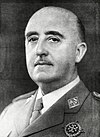
“Franco, it is tempting to think, is too peripheral a figure to be ranked as a 'maker of twentieth-century Europe'- central to Spanish history of the era, naturally, but not necessarily of wider importance. It is, of course, obvious that Franco's wider impact scarcely compares with that of Hitler and Mussolini, or Lenin and Stalin. He presents a case-study in the role and impact of the individual in history at the lower end of the scale. And it is fair to say that for much of the twentieth century Spain was on the periphery of the key developments in Europe. It has been judged that Franco 'at best influenced world history during the 1930s. But the twentieth century would not have been much different without him.'
Such an assessment is too dismissive. European as well as Spanish history would certainly, in indefinable ways, have been different had the republic survived after 1936. That it did not survive owed much to Franco's leadership in the Civil War. Moreover, the importance of that war was such that it drew in- in different measure- Europe's major powers and attracted the participation of volunteer fighters from across the continent. Franco's dealings with the Axis powers during the Second World War and then with the West during the Cold War also gave his long dictatorship a significance not confined to Spain. Moreover, the character of the subsequent transition to pluralist democracy, and the impact of Franco's era on Spanish memory and political culture and on the divisive question of regional separatism in one of Europe's biggest countries, additionally make Franco a figure of relevance to European, not just Spanish, history. Not least, Franco demonstrates how an individual with recognized qualities as a military commander but no experience of political leadership could benefit from the historical conditions that made his assumption of power possible in the first place and enabled him to go on to 'make his own history.'”
Such an assessment is too dismissive. European as well as Spanish history would certainly, in indefinable ways, have been different had the republic survived after 1936. That it did not survive owed much to Franco's leadership in the Civil War. Moreover, the importance of that war was such that it drew in- in different measure- Europe's major powers and attracted the participation of volunteer fighters from across the continent. Franco's dealings with the Axis powers during the Second World War and then with the West during the Cold War also gave his long dictatorship a significance not confined to Spain. Moreover, the character of the subsequent transition to pluralist democracy, and the impact of Franco's era on Spanish memory and political culture and on the divisive question of regional separatism in one of Europe's biggest countries, additionally make Franco a figure of relevance to European, not just Spanish, history. Not least, Franco demonstrates how an individual with recognized qualities as a military commander but no experience of political leadership could benefit from the historical conditions that made his assumption of power possible in the first place and enabled him to go on to 'make his own history.'”
Ian Kershaw Quotes by Topic
Find exactly what you are looking for by browsing this categorized list of Ian Kershaw quotes by topic.
Ian Kershaw on Nazism 3 quotes
“Intensified anti-capitalist rhetoric, which Hitler was powerless to quell, worried the business community as much as ever. During the presidential campaign of spring 1932, most business leaders stayed firmly behind Hindenburg, and did not favour Hitler.”

Ian Kershaw on The Holocaust
“The road to Auschwitz was built by hate, but paved with indifference.”
What Ian Kershaw Said About Others
Discover personal opinions Ian Kershaw shared regarding contemporaries.
Ian Kershaw on Francisco Franco 4 quotes
“Mola shared Franco's ideological obsessions, including his hatred of Freemasonry and Jews. He favoured extreme violence, terror and exemplary punishment in the pursuit of internal enemies and the 'purification' of Spain. Whether the thirst for revenge, so characteristic of Franco, would have been so vicious and lasted so long after the Civil War under another military leader cannot of course be known. Franco's military skill undoubtedly played a significant part in defeating the republican forces. Without the supplies of arms from the Axis powers, however, Franco's prowess as a commander would most likely not have been enough. And with those arms, another nationalist general might well have attained victory. So Franco was in certain respects fortunate to receive all the victory laurels. By the time victory was won, however, there were few in Spain prepared to argue the point.”
Ian Kershaw on Joseph Goebbels
“Goebbels and some other northern leaders thought of themselves as revolutionaries, with more in common with the Communists than with the hated bourgeoisie. There was some sympathies for Russia. And there was talk of a party trade union.”

Ian Kershaw on Franz von Papen
“Franz von Papen – from a Westphalian aristocratic family, married to the daughter of a Saarland industrialist, well connected to industrial leaders, landowners, and Reichswehr officers – a somewhat lightweight, dilettante politician, but one who epitomized the ingrained conservatism, reactionary tendencies, and desire for a return to ‘traditional’ authoritarianism of the German upper class.”

Ian Kershaw on Friedrich Nietzsche
“Nietzsche's attack on belief in rationality and truth, his denial of morality rooted in religious belief, came to seem anything but misplaced. The Churches could not come out of this era untarnished. Yet neither the loss of belief nor fall in the numbers of followers of the main Christian denominations should be exaggerated or pre-dated. After two world wars that influence remained profound. For all their travails the Christian Churches survived the catastrophic first half of the twentieth century remarkably intact. Their main problems would come later.”

About Ian Kershaw
Sir Ian Kershaw (born 29 April 1943) is a British historian and retired University of Sheffield professor. He is a specialist in the study of Nazi Germany and a biographer of Adolf Hitler.