Link Copied!
Howard Zinn Quotes (1922-2010)
Philosopher, Politician, Playwright














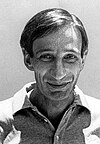


About Howard Zinn
Howard Zinn (August 24, 1922 – January 27, 2010) was an American historian, playwright, philosopher, socialist thinker and World War II veteran. He was chair of the history and social sciences department at Spelman College, and a political science professor at Boston University. Zinn wrote over 20 books, including his best-selling and influential A People's History of the United States in 1980. In 2007, he published a version of it for younger readers, A Young People's History of the United States.
Best Howard Zinn Quotes
Shortest
Earliest
Explore our curated collection of the most famous and impactful Howard Zinn quotes.
“There is no flag large enough to cover the shame of killing innocent people for a purpose which is unattainable.”
“Capitalism has always been a failure for the lower classes. It is now beginning to fail for the middle classes.”

“Americans have been taught that their nation is civilized and humane. But, too often, U.S. actions have been uncivilized and inhumane.”
“I am supposing, or perhaps only hoping, that our future may be found in the past's fugitive moments of compassion rather than in its solid centuries of warfare.”

“If those in charge of our society — politicians, corporate executives, and owners of press and television — can dominate our ideas, they will be secure in their power.”

“To white Americans of the thirties, however, blacks North and South were invisible. Only the radicals made an attempt to break the racial barriers: Socialists, Trotskyists, Communists most of all.”
“One certain effect of war is to diminish freedom of expression. Patriotism becomes the order of the day, and those who question the war are seen as traitors, to be silenced and imprisoned.”

“The term "just war" contains an internal contradiction. War is inherently unjust, and the great challenge of our time is how to deal with evil, tyranny, and oppression without killing huge numbers of people.”
“These ideas are not accepted by all Americans. But they are believed widely enough and strongly enough to dominate our thinking. And as long as they do, those who hold wealth and power in our society will remain secure in their control.”
“Khalil Bendib, with a few ingenious strokes of his pen, gets to the heart of the issues of our time. His cartoons are in the greatest tradition of American political humor, with that combination of wit and intelligence so needed in the struggle for justice.”

“If those in charge of our society — politicians, corporate executives, and owners of press and television — can dominate our ideas, they will be secure in their power. They will not need soldiers patrolling the streets. We will control ourselves.”
“It is possible, reading standard histories, to forget half the population of the country. The explorers were men, the landholders and merchants men, the political leaders men, the military figures men. The very invisibility of women, the overlooking of women, is a sign of their submerged status.”

“Dissident ideas can still exist in such a situation, but they will be drowned in criticism and made disreputable, because they are outside the acceptable choices. Or they may be allowed to survive in the corners of the culture emaciated, but alive-and presented as evidence of our democracy, our tolerance, and our pluralism.”
“But with all the controls of power and punishment, enticements and concessions, diversions and decoys, operating throughout the history of the country, the Establishment has been unable to keep itself secure from revolt. Every time it looked as if it had succeeded, the very people it thought seduced or subdued, stirred and rose.”
“If patriotism were defined, not as blind obedience to government, nor as submissive worship to flags and anthems, but rather as love of one's country, one's fellow citizens (all over the world), as loyalty to the principles of justice and democracy, then patriotism would require us to disobey our government, when it violated those principles.”

“If patriotism were defined, not as blind obedience to government, nor as submissive worship to flags and anthems, but rather as love of one's country, one's fellow citizens (all over the world), as loyalty to the principles of justice and democracy, then patriotism would require us to disobey our government, when it violated those principles.”
“That will happen... when all of us who are slightly privileged and slightly uneasy begin to see that we are like the guards in the prison uprising at Attica - expendable; that the Establishment, whatever rewards it gives us, will also, if necessary to maintain its control, kill us.”
“David Ray Griffin has done admirable and painstaking research in reviewing the mysteries surrounding the 9/11 attacks. It is the most persuasive argument I have seen for further investigation [into] that historic and troubling event.”
“We in the United States are still quite a long way from democracy and certainly a long way from economic democracy. Because of the control of the economy by corporations and the tax structure, which is set up by an unrepresentative Congress and approved by a president, a tax structure which has so far channeled the wealth of the country towards the richest one percent of the population.”

“One of the most influential books to appear in the early seventies was a book assembled by eleven women in the Boston Women's Health Book Collective called Our Bodies, Ourselves...They quoted the English suffragette Christabel Pankhurst: “Remember the dignity/of your womanhood./Do not appeal,/do not beg,/do not grovel./Take courage/join hands,/stand beside us./Fight with us…””
“The white population could not possibly be unaffected by those events — some whites more stubborn in their defense of segregation, but others beginning to think in different ways. And the black population was transformed, having risen up in mass action for the first time, feeling its power, knowing now that if the old order could be shaken it could be toppled.”
Howard Zinn Quotes by Topic
Find exactly what you are looking for by browsing this categorized list of Howard Zinn quotes by topic.
Howard Zinn on Socialism 3 quotes
“We can now reintroduce genuine socialism to a world feeling the sickness of capitalism-its nationalist hatreds, its perpetual warfare, riches for a small number of people in a small number of countries, and hunger, homelessness, insecurity for everyone else.”

Howard Zinn on Neutrality 3 quotes
“Surely, we want to be objective if that means telling the truth as we see it, not concealing information that may be embarrassing to our point of view. But we don’t want to be objective if it means pretending that ideas don’t play a part in the social struggles of our time, that we don’t take sides in those struggles. Indeed, it is impossible to be neutral.”

Howard Zinn on National security 3 quotes
“Is there a "national interest" when a few people decide on war, and huge numbers of others here and abroad-are killed or crippled as a result of such a decision? Should citizens not ask in whose interest are we doing what we are doing? Then why not, I came to think, tell the story of wars not through the eyes of the generals and diplomats but from the viewpoints of the GIs, of the parents who received the black-bordered telegrams, even of "the enemy."”
Howard Zinn on Just war theory 2 quotes
“The term "just war" contains an internal contradiction. War is inherently unjust, and the great challenge of our time is how to deal with evil, tyranny, and oppression without killing huge numbers of people.”

Howard Zinn on Iraq War 2 quotes
“In all the solemn statements by self-important politicians and newspaper columnists about a coming war against Iraq, and even in the troubled comments by some who are opposed to the war, there is something missing. The talk is about strategy and tactics and geopolitics, and personalities. It is about air war and ground war, about alliances and weapons of mass destruction, and arms inspections, about oil and natural gas, about nation-building and “regime change.” What is missing is what an American war on Iraq will do to tens of thousands or hundreds of thousands of ordinary human beings who are not concerned with geopolitics and military strategy, and who just want their children to live, to grow up. They are not concerned with “national security” but with personal security, with food and shelter and medical care and peace. I am speaking of those Iraqis and those Americans who will, with absolute certainty, die in such a war, or lose arms or legs, or be blinded. Or they will be stricken with some strange and agonizing sickness, which will lead to their bringing deformed children into the world (as happened to families in Vietnam, in Iraq, and also in the United States).”
Howard Zinn on Looking Backward: 2000–1887
“when Eugene Debs read Edward Bellamy's Looking Backward, it deeply affected him.”
Howard Zinn on Capitalism
“Capitalism has always been a failure for the lower classes. It is now beginning to fail for the middle classes.”
Howard Zinn on History
Howard Zinn on Communism
“To white Americans of the thirties, however, blacks North and South were invisible. Only the radicals made an attempt to break the racial barriers: Socialists, Trotskyists, Communists most of all.”

Howard Zinn on Control
“If those in charge of our society — politicians, corporate executives, and owners of press and television — can dominate our ideas, they will be secure in their power. They will not need soldiers patrolling the streets. We will control ourselves.”

Howard Zinn on Patriotism
“If patriotism were defined, not as blind obedience to government, nor as submissive worship to flags and anthems, but rather as love of one's country, one's fellow citizens (all over the world), as loyalty to the principles of justice and democracy, then patriotism would require us to disobey our government, when it violated those principles.”
Howard Zinn on Federal Bureau of Investigation
“SNCC workers have found that F.B.I. men in the South often share the segregationist views of the people around them; this is reflected in the lack of enthusiasm which F.B.I. men show in handling civil rights cases. Mrs. Fannie Lou Hamer once told an F.B.I. agent, "If I get to heaven and I see you there, I will tell St. Peter to send me on back to Mississippi!"”

What Howard Zinn Said About Others
Discover personal opinions Howard Zinn shared regarding contemporaries.
Howard Zinn on Fannie Lou Hamer 3 quotes
“SNCC workers have found that F.B.I. men in the South often share the segregationist views of the people around them; this is reflected in the lack of enthusiasm which F.B.I. men show in handling civil rights cases. Mrs. Fannie Lou Hamer once told an F.B.I. agent, "If I get to heaven and I see you there, I will tell St. Peter to send me on back to Mississippi!"”

Howard Zinn on Cesar Chavez 2 quotes
“Abnormal rates of cancer for farmworkers in California aroused the Chicano community. Cesar Chavez of the United Farm Workers fasted for thirty-five days in 1988 to call attention to these conditions.”
Howard Zinn on Dick Gregory 2 quotes
“As Dick Gregory has said, any other group of people in the world who would take arms and rise up against the tyranny of their government would be hailed as "Freedom Fighters." But Negroes are expected to adhere to nonviolence.”

Howard Zinn on Andrew Jackson 2 quotes
“In the 1830s, under Andrew Jackson and then his successor Martin Van Buren, the military moved against the Indians in the southeastern United States in what was officially called, in the title of the law authorizing it, Indian Removal. Today we'd call it ethnic cleansing.”
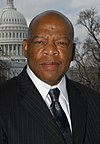
Howard Zinn on John Lewis 2 quotes
“When John Lewis, a young Alabama-born SNCC leader, much arrested, much beaten, tried to introduce a stronger note of outrage at the meeting, he was censored by the leaders of the march, who insisted he omit certain sentences critical of the national government and urging militant action.”
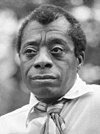
Howard Zinn on James Baldwin 2 quotes
“Then James Baldwin stood at the rostrum, his huge eyes burning into the crowd: "The sheriff and his deputies ... these ignorant people... were created by the good white people on the hill-and in Washington-and they've created a monster they can't control.... It's not an act of God. It is deliberately done, deliberately created by the American Republic."”
Howard Zinn on Bob Moses (activist) 2 quotes
“In his Harlem apartment in New York, a young Negro teacher of mathematics named Bob Moses saw a photo in the newspapers of the Greensboro sit-inners. "The students in that picture had a certain look on their faces, sort of sullen, angry, determined. Before, the Negro in the South had always looked on the defensive, cringing. This time they were taking the initiative. They were kids my age, and I knew this had something to do with my own life."”
Howard Zinn on Dorothy Day
“Dorothy Day lived a very simple life and believed in nonviolence.”

Howard Zinn on William J. Brennan, Jr.
“Justices William Brennan and Thurgood Marshall were the last of the Court's liberals.”
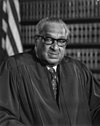
Howard Zinn on Thurgood Marshall
“Justices William Brennan and Thurgood Marshall were the last of the Court's liberals.”
Howard Zinn on Betty Friedan
“A pioneering, early book, strong and influential, was Betty Friedan's The Feminine Mystique.”

Howard Zinn on Margaret Randall
“Randall's writing fuses her commitment to revolutionary change with her remarkable poetic sensibility.”

Quotes About Howard Zinn
Gain deeper perspective through quotes about Howard Zinn from others.
Nadine Dolby on Howard Zinn 2 quotes
“He was a very funny man and warm man. Told jokes all the time. Very self-deprecating. And very humble. When it came to his students and students who disagreed with him -- and a lot of students in our classes disagreed with him; it was the mid-'80s, Reagan and all that, a very conservative era -- he didn't sit there and shut them down. ... He would lecture for a little while, maybe a guest speaker, and then it was an open forum for students to talk and challenge him. He enjoyed being challenged. It kept him fresh and it kept him on his toes and it kept him connected to the next generation. He always wanted to connect to young people.”
Amy Goodman on Howard Zinn
“Historian Howard Zinn observed in a new edition of Soldiers in Revolt, the classic history of the GI Movement: "A point can be reached where men and women in uniform can no longer tolerate what they begin to see as an unjust war. It is encouraging to be reminded of the basic desire of human beings to live at peace with other human beings, once they have divested themselves of the deceptions, the nationalism, and the racism that is provoked by war."”

Cherríe Moraga on Howard Zinn
“You tell me what has changed. You tell me what a Black president means for the average Black American. Tell me how it is humanely permissible to hold undocumented immigrants in detention camps, outfit pregnant women with electronic bracelets to track their where-abouts, and uphold a war where indebted monies continue to be spent on the violent militarized occupation of foreign countries, instead of indigenous-originated programs to rebuild the broken infrastructure resulting from failed regimes. As the late historian and social activist Howard Zinn states, "If you want to end terrorism, you have to stop being terrorists."”

Bill Moyers on Howard Zinn
“Historian and activist Howard Zinn died in 2010, and the progressive world greatly misses his spirit and guidance. One wonders what he’d have to say about America today — one in which senators create legislation in secret and a president denigrates foes and allies alike via Twitter. What would he, a former Cub Scout, think about the president’s recent speech in which he exhorted Boy Scouts to boo a previous president? We can be pretty sure that he’d be dismayed and disgusted by an America where CEOs make 271 times the pay of an average worker... He’d certainly be no fan of a culture that made serious, though unsuccessful, attempts to ban his signature work, A People’s History of the United States.”

Ralph Nader on Howard Zinn 2 quotes
“"We live in a beautiful country," writes historian Howard Zinn. "But people who have no respect for human life, freedom, or justice have taken it over. It is now up to all of us to take it back."”
Arundhati Roy on Howard Zinn
“There are many Americans who would be mortified to be associated with their government's policies. The most scholarly, scathing, incisive, hilarious critiques of the hypocrisy and the contradictions in U.S. government policy come from American citizens. When the rest of the world wants to know what the U.S. government is up to, we turn to Noam Chomsky, Edward Said, Howard Zinn, Ed Herman, Amy Goodman, Michael Albert, Chalmers Johnson, William Blum, and Anthony Arnove to tell us what's really going on.”

About Howard Zinn
Howard Zinn (August 24, 1922 – January 27, 2010) was an American historian, playwright, philosopher, socialist thinker and World War II veteran. He was chair of the history and social sciences department at Spelman College, and a political science professor at Boston University. Zinn wrote over 20 books, including his best-selling and influential A People's History of the United States in 1980. In 2007, he published a version of it for younger readers, A Young People's History of the United States.